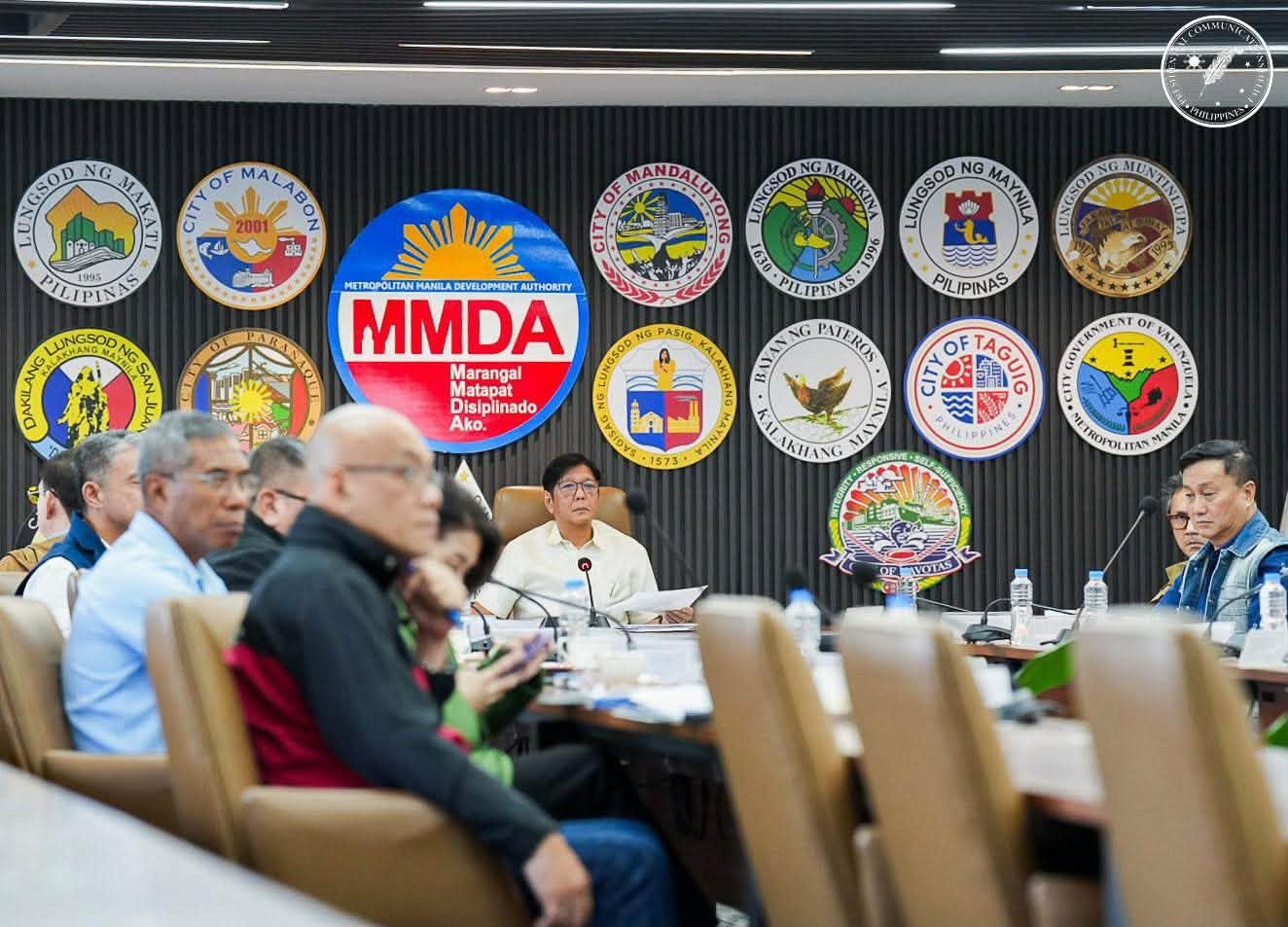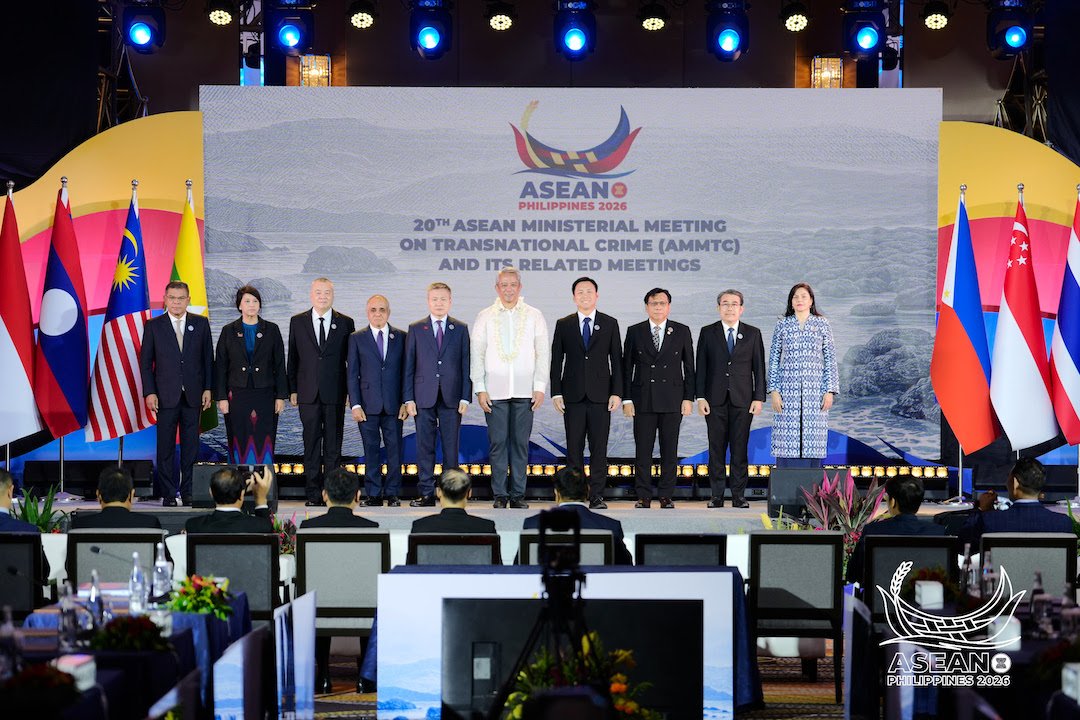
The opening ceremony of the 20th ASEAN Ministerial Meeting on Transnational Crime (AMMTC) in Makati City, Philippines, on October 21. (DILG)
The 20th ASEAN Ministerial Meeting on Transnational Crime (AMMTC) and its related meetings concluded on October 21. This conclave serves as the annual meeting of the highest policy-making institution specialised in dismantling transnational organised crime across the region.
The three-day event gathered security ministers, senior law enforcement officials and ambassadors across ASEAN member states, with discussions focusing on the implementation of the Plan of Action to Combat Transnational Crime (2026-2035) adopted last year.
As the 2026 ASEAN Chair, the Philippines took the leading role, with Philippine AMMTC Leader and Department of the Interior and Local Government (DILG) Secretary, Juanito Victor C. Remulla, chairing the sessions.
Delivering his opening remarks, Remulla acknowledged that “criminal networks are taking advantage of technology, economic integration and cross-border connectivity,” and therefore “no single nation can answer that alone. It takes an ASEAN that is prepared, coordinated and united”.
He further emphasised the significance of a regional collective response, given the intricate nature of these criminal networks. He said that “a threat left unaddressed in one jurisdiction puts others at risk,” and, ultimately, “regional security is about people”.
The chair concluded his speech by setting the tone for the discussion, asserting that “our work must go beyond policy discussions”. He anticipated “concrete steps” involving stronger law enforcement capabilities, timely information sharing and effective practical measures.
Reportedly, consultations with ASEAN’s dialogue partners, namely China, Japan and the Republic of Korea, were also conducted with the aim of advancing cooperation.
What does this mean for businesses?
To put into perspective the severity of transnational organised crime in Southeast Asia, the United Nations Office on Drugs and Crime (UNODC) has labeled the region as “ground zero” for the global scamming industry. While exact total illicit profits remain difficult to trace, a 2026 UNODC assessment revealed that combined annual scam losses in the broader region reached an estimated over 100 billion US dollar in 2025 alone—a staggering figure that outstrips the gross domestic product (GDP) of several nations. Though regional accords and declarations are frequent, without aggressive practical enforcement and deep engagement with experienced dialogue partners, businesses will continue to face unprecedented cyber-risks. Left unchecked, this systemic instability threatens to undermine ASEAN’s long-term economic trajectory toward equitable and resilient growth.
Kala Advisory helps enterprises translate macro-level security updates into resilient, legally sound entry plans across Southeast Asia. Visit kala-advisory.com.
About The Author