
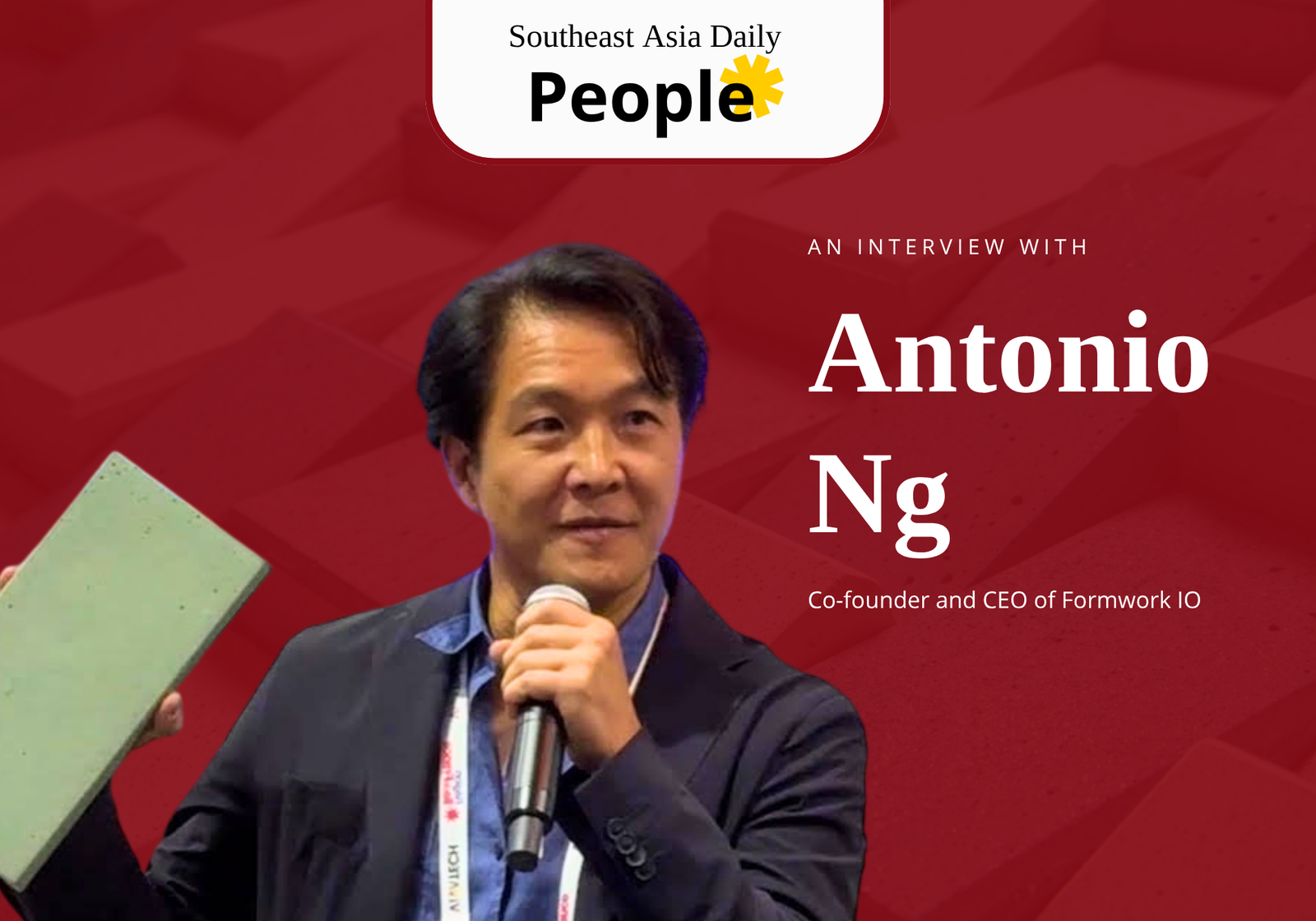
Antonio Ng spent four years working on a building he was sure was part of the answer to climate change. He worked on the California Academy of Sciences in San Francisco which was the first museum in the world to earn LEED platinum certification twice over,
Author: Protasius Isyudanto
Lead Editor
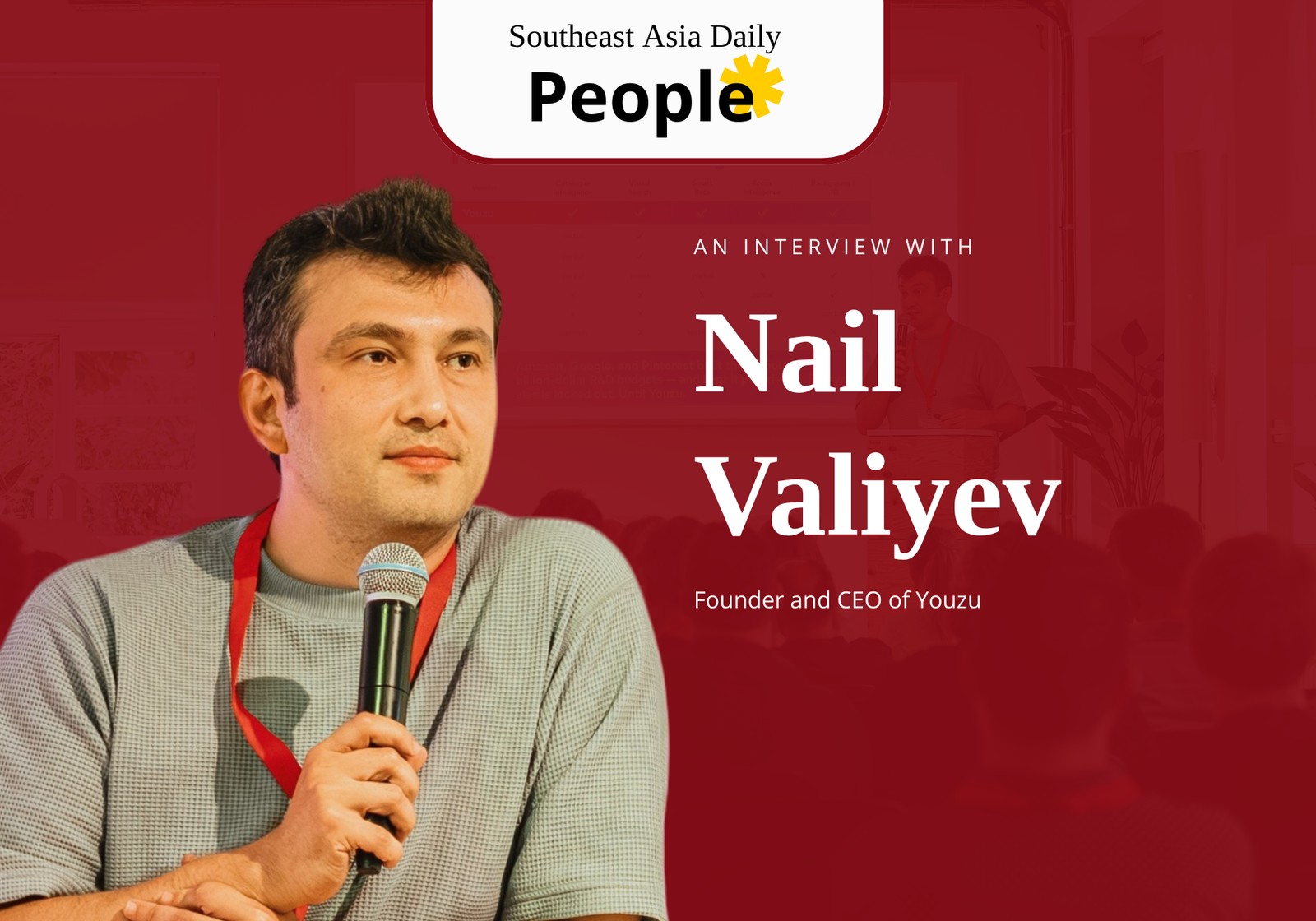
The Catalogue Problem Underneath Southeast Asian E-commerce
One e-commerce listing describes a food container with a frog on it, but the photograph shows a children’s dinner set. Another advertises an Arabic edition of Monopoly and the box in the picture is the standard game. A third offers a Sony headphone model in a colour that model has never been made in, which makes it either mislabelled or counterfeit.
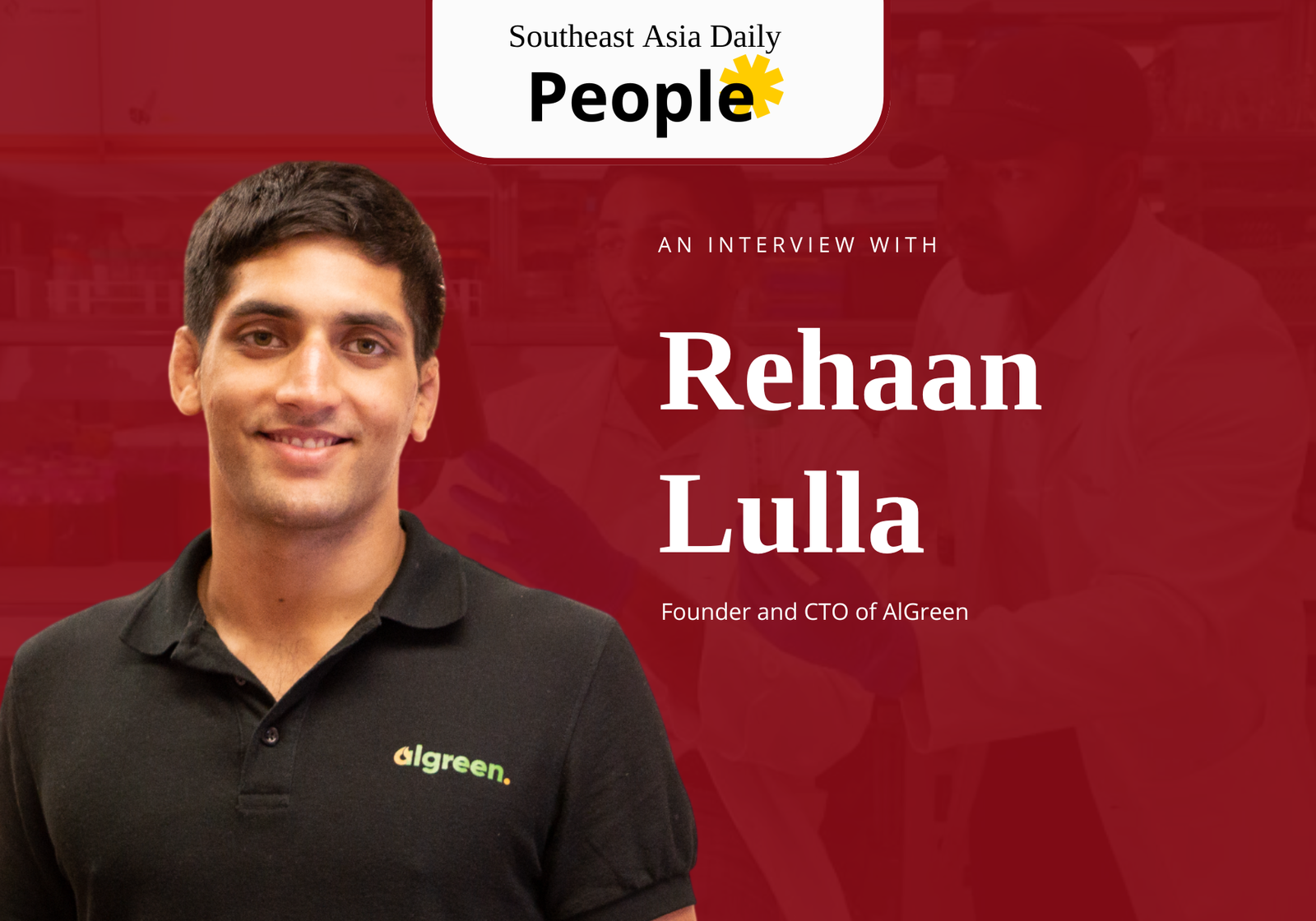
The Fight for Clean Air Has Many Fronts. One of Them Is Algae.
The device on Rehaan Lulla’s desk looks like a lava lamp. A tall glass column, a slow swirl of green and a soft glow. What it is invisibly doing is drawing carbon dioxide out of the room and releasing oxygen more efficiently than the pot plants most people keep for the same reason. The organism inside is microalgae, grown for decades as food and as a cosmetics ingredient, which Rehaan’s start-up AlGreen has repurposed to clean the air.
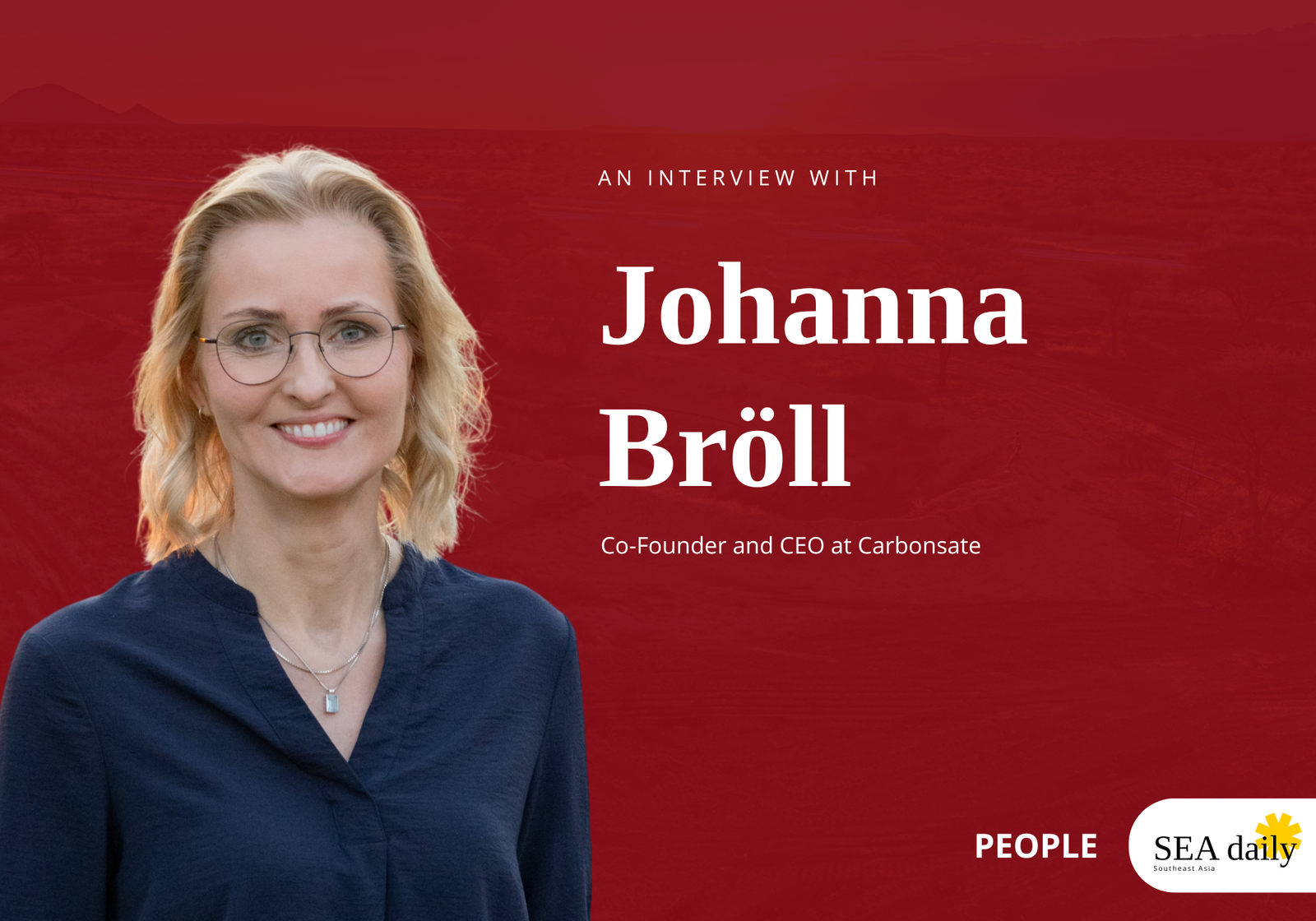
Why Cooling the Planet Means Removing Carbon, Not Just Emitting Less
Johanna has always been drawn to big challenges and to the simple solutions that are often underestimated. When it comes to the question of climate change, her answer is putting to use what is already around her.
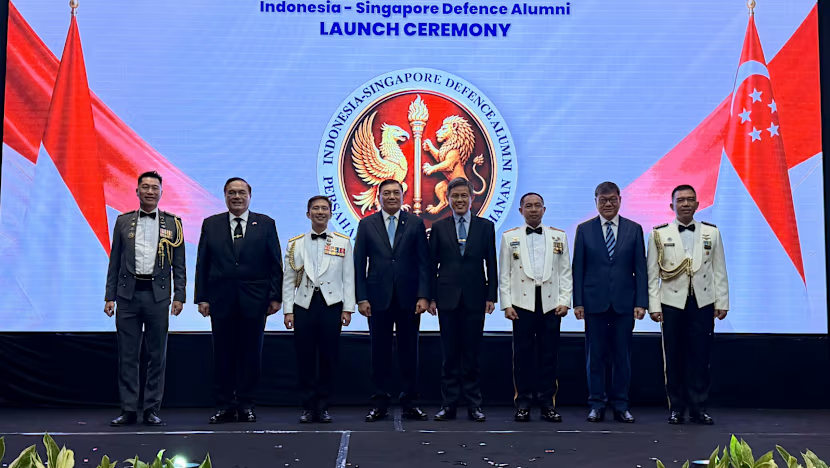
Singapore, Indonesia Formalise Military Officer Ties With New Defence Alumni Initiative
On July 14, Singapore and Indonesia launched a joint defence alumni body in Jakarta, turning decades of informal contact between their officer corps into a standing institution. Singapore Defence Minister Chan Chun Sing and his Indonesian counterpart Sjafrie Sjamsoeddin launched the Indonesia-Singapore (INDOSIN) Defence Alumni Initiative, known as PERSAHAN (Persahabatan Alumni Pertahanan, Indonesian for Defence Alumni Friendship), as co-founders. They signed the body’s initiating directive and unveiled its logo on the sidelines of the Singapore Armed Forces (SAF) Day reception in Jakarta. The two armed forces’ chiefs, SAF chief Vice Admiral Aaron Beng and Indonesian military (TNI) commander General Agus Subiyanto, will serve as co-presidents.
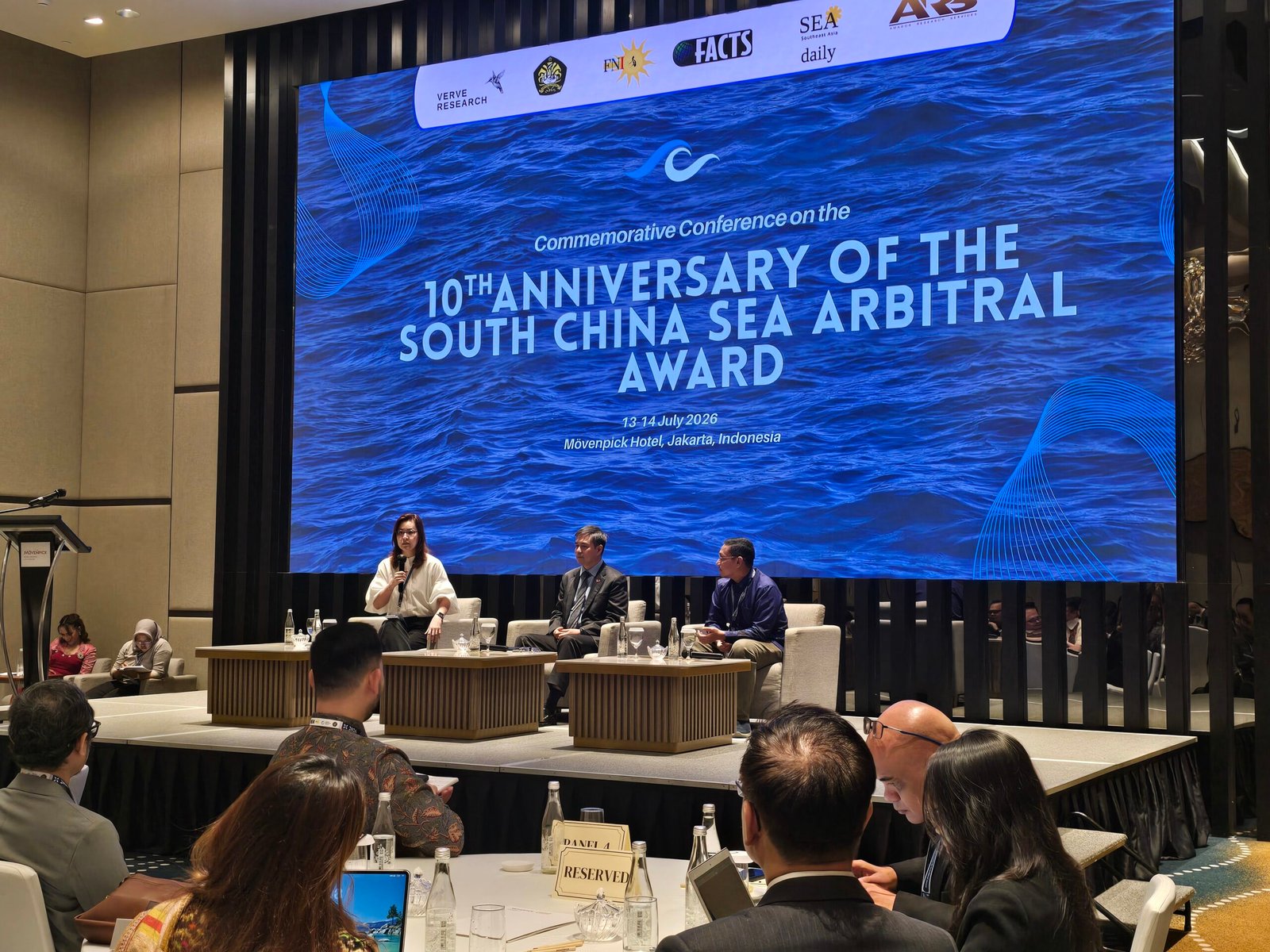
South China Sea Ruling Still Worth Defending, Experts Tell Jakarta Conference
July 12 of this year marks a decade of the Arbitral Award, where the Permanent Court of Arbitration (PCA) in The Hague found no legal basis for China’s nine-dash line claim, a statement it handed down under the UN Convention on the Law of the Sea (UNCLOS) on 2016. Beijing rejected it then and ignores it now, leaving Southeast Asia to manage a verdict that is binding in law but unbacked by any mechanism to compel compliance.
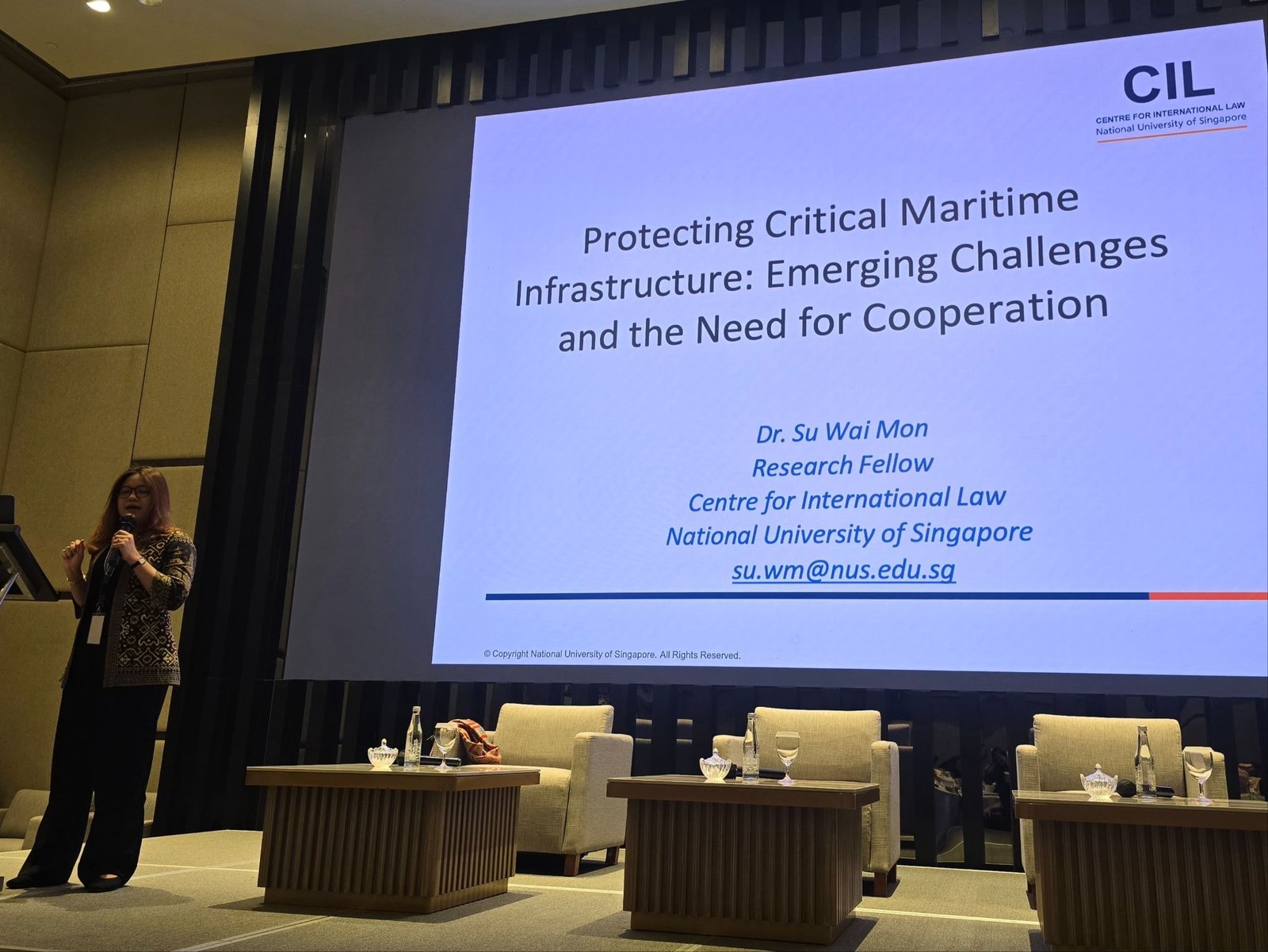
In the South China Sea, US$5.3 Trillion in Trade Rides on An Unsettled Dispute
Around 5.3 trillion US dollar in trade transits the South China Sea each year, a waterway whose legal status remains unsettled. A decade ago, precisely on July 12, 2016, the Arbitral Award issued by the Permanent Court of Arbitration (PCA) in the Hague rejected Beijing’s claims over the sea. However, China’s refusal to recognise it leaves the rules governing one of the world’s busiest trade channels continuously contested. For the region’s economies, that ambiguity is not an abstraction but a durable risk to supply chains, energy flows and food security.

Beyond Tariffs: The Customs Gap Quietly Reshaping Southeast Asia’s E-Commerce Growth
This content is restricted.
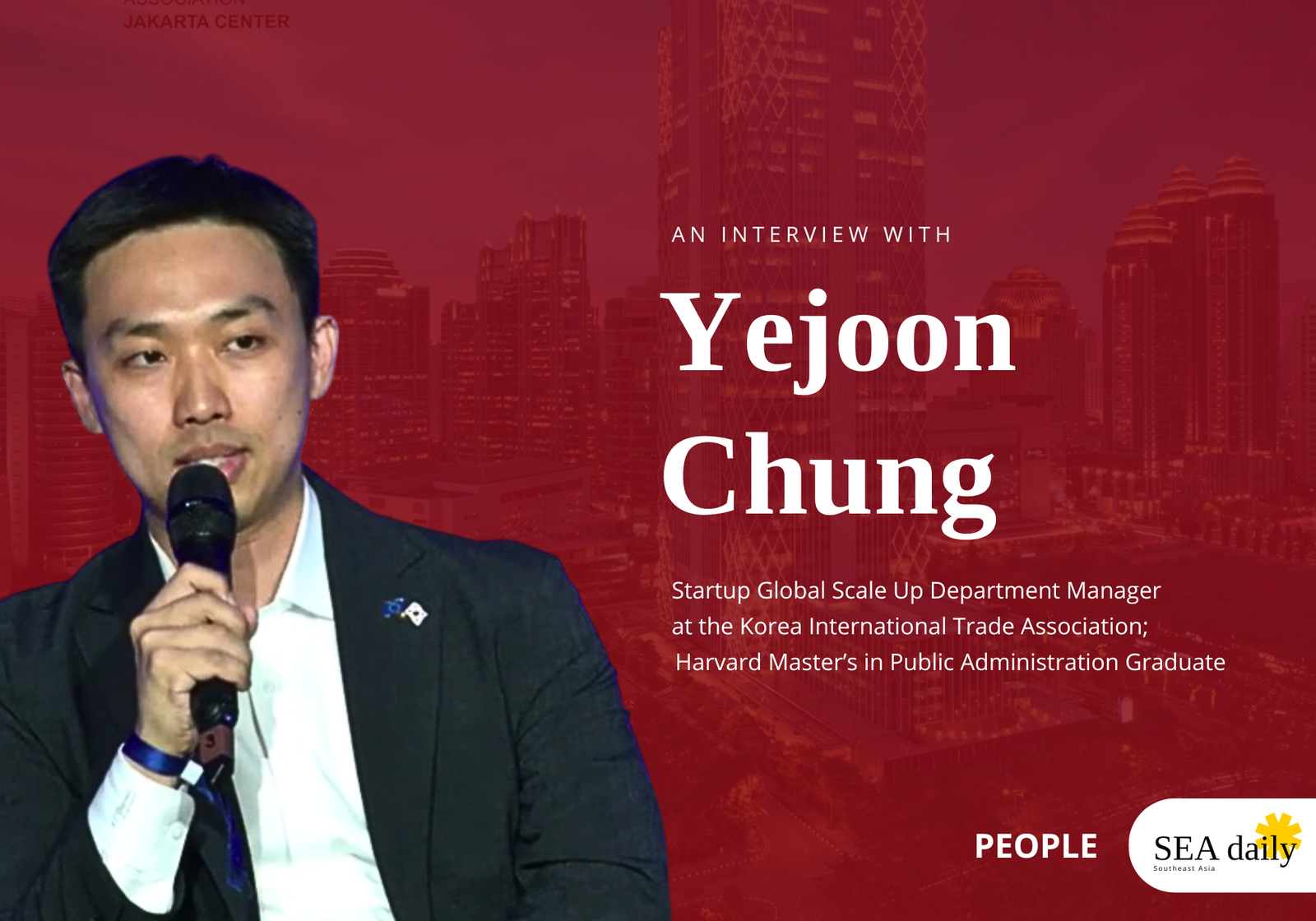
Korea Is Ready to Invest in Southeast Asia, But The Region Needs A Front Door
In the July heat of Aix-en-Provence in the south of France, Yejoon Chung keeps his suit buttoned and his tie straight while other delegates loosen their collars and drift toward the shade. With a public administration master’s degree from Harvard, Chung spends his days connecting Korean startups to the wider world. The paradox he keeps repeating is that the market he most wants Korean companies to enter is also the one they find hardest to read.
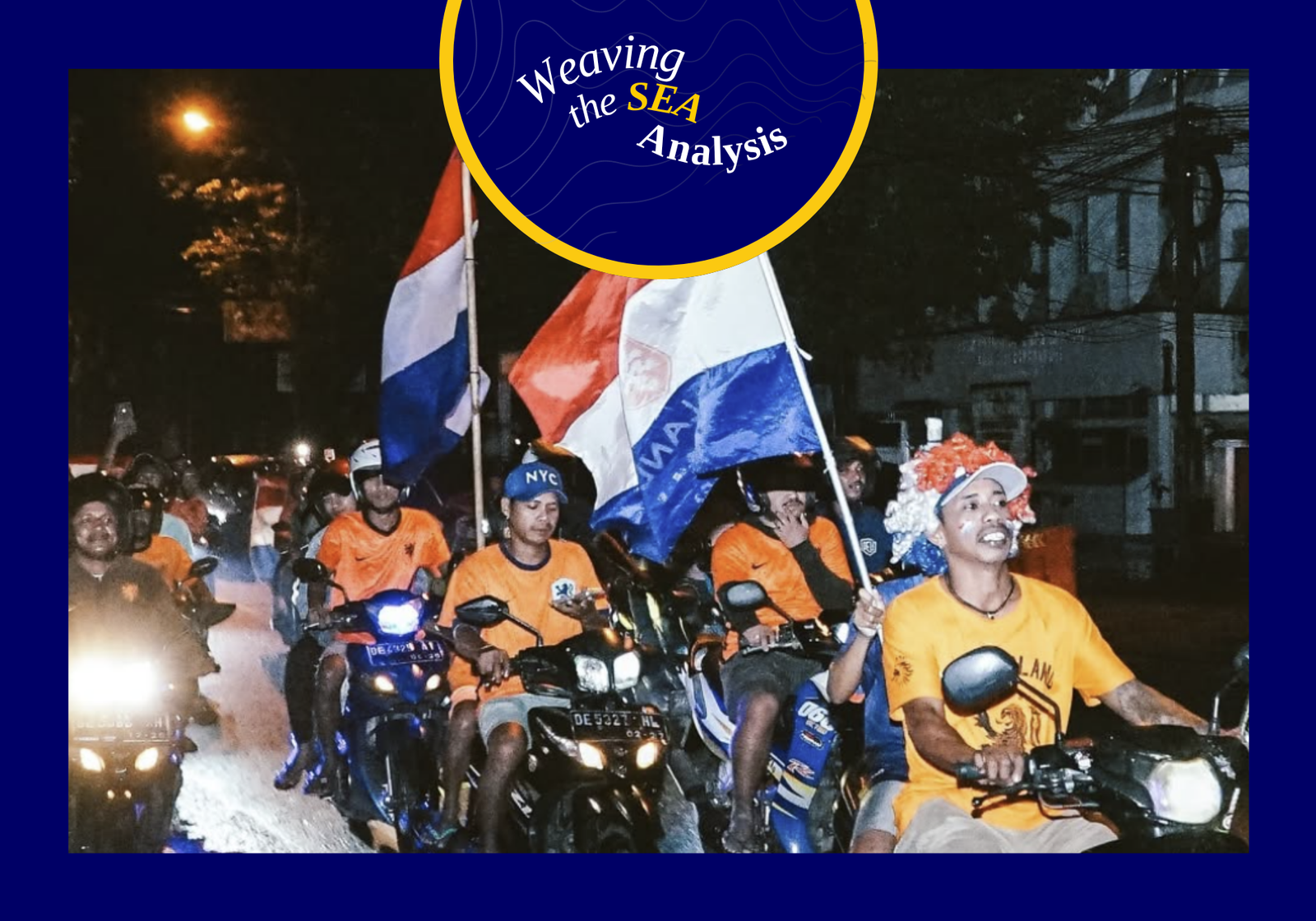
At the World Cup, Why Does Indonesia Cheer for Other Nations More Than Its Neighbours?
The crowd comments flooded the section. It was on June 26, the day when the Netherlands proceeded to the round of 32 of the 2026 World Cup. Something telling happened in the largest Southeast Asian country. Indonesia cheered for the victory over its former colonial ruler as if it were its own. This phenomenon points to an interesting paradox. The World Cup 2026 lacks any Southeast Asian representatives, yet the region is among the top (edging on being fanatic, even) football fans on the entire globe.