
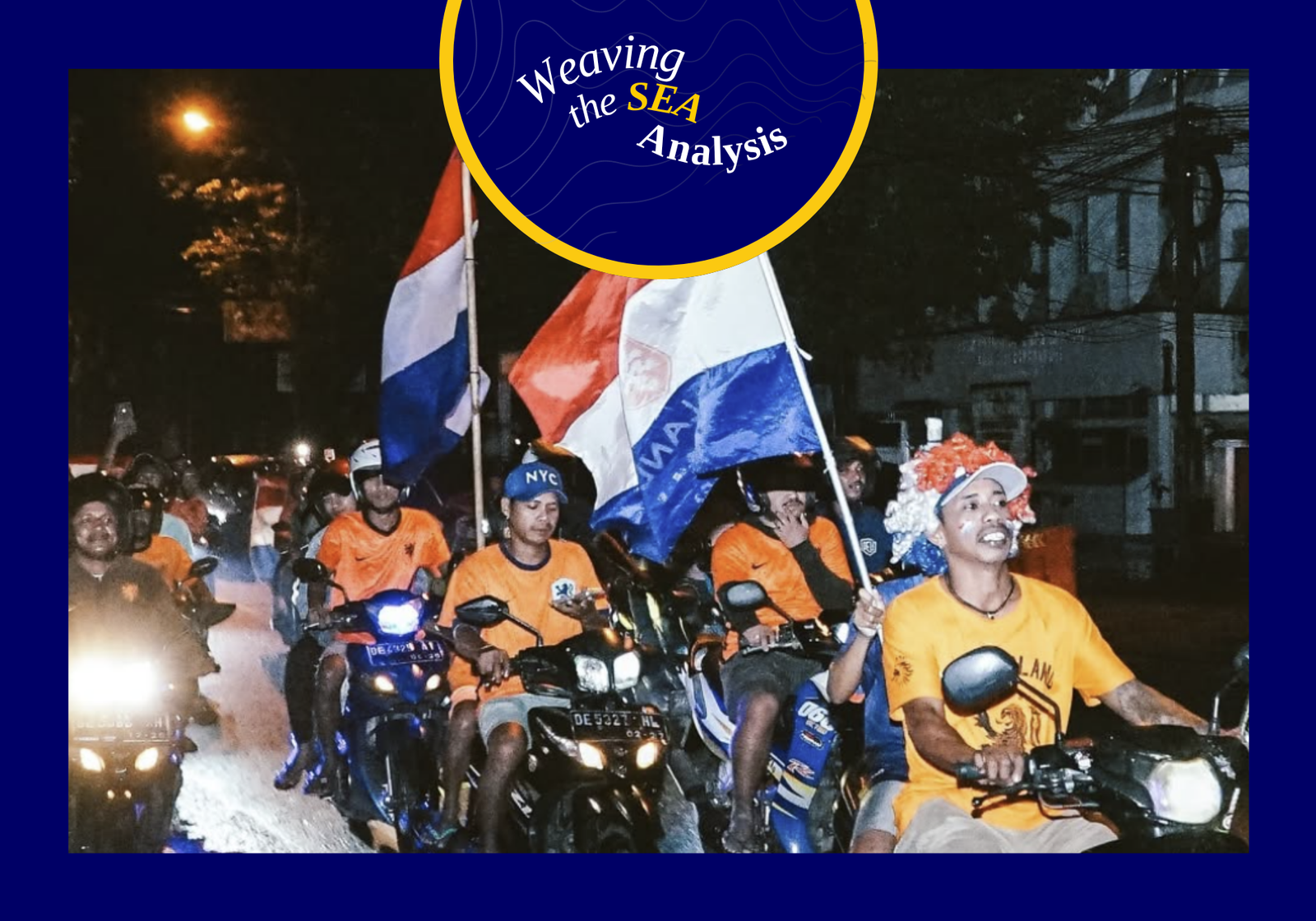
Indonesian football fans in a convoy in support of the Dutch national football team in Maluku in 2022. (Instagram/Oranje Indonesia)
A Region in Love With a Game It Never Reaches
The crowd comments flooded the section. It was on June 26, the day when the Netherlands proceeded to the round of 32 of the 2026 World Cup. Something telling happened in the largest Southeast Asian country. Indonesia cheered for the victory over its former colonial ruler as if it were its own. This phenomenon points to an interesting paradox. The World Cup 2026 lacks any Southeast Asian representatives, yet the region is among the top (edging on being fanatic, even) football fans on the entire globe.
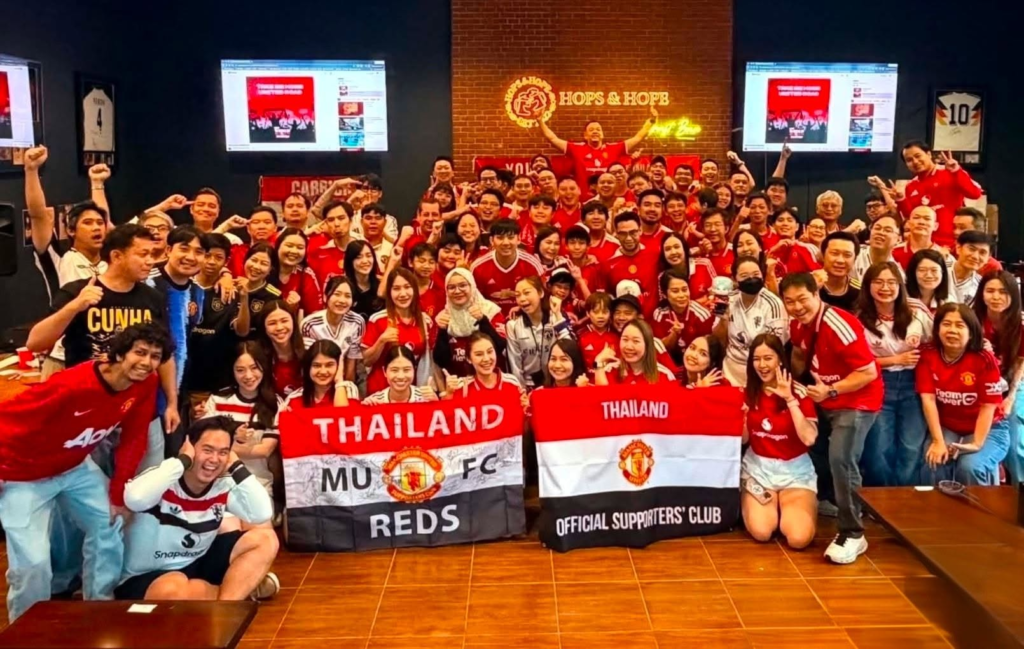
Thai Manchester United fans gather for #ThaiMUSC Meeting 2026, marking the club’s annual get-together with games, prizes and supporter camaraderie ahead of the new football season. (Facebook/Red Army Fanclub)
The prominence of foreign football leagues has become prevalent in the region for decades. About 56% of supporters across the region are fans of the English Premier League (EPL)—a number that therefore overshadows interests for local leagues. Supporters from Cambodia, Indonesia, Laos, Myanmar, Thailand and Vietnam routinely stay up to watch late-night live broadcasts, undaunted by the time difference.
Fans across the region also regularly celebrate when their beloved teams reach the pinnacle moment. Not rarely, fans are engaged in treating matches as a cultural ritual, with things like communal watching spots (sometimes organised by government agencies, even if the match doesn’t include their national team!), wearing jerseys, singing chants and having tactical discussions. To court this spirit of fandom, major EPL clubs, such as Tottenham Hotspur, Arsenal, Liverpool and Manchester United usually stage pre-season tours in the region, further reinforcing loyalties that are already fierce.
Highlights of the 2027 World Cup Playoff between Uzbekistan and the Philippines at the AFC Women’s Asian Cup Australia 2026. (AFC Asian Cup)
Not all countries in the region are passive supporters in the usual game. The Philippines and Indonesia, most notably, are pursuing deliberate long-term strategies—investments in potential talent, expanding youth academies and developing dual-nationality players as the foundation for future success, drawing on lessons learnt from peers such as Malaysia, Vietnam and Thailand. The national teams’ performances, including the women’s national team, are slightly improving, as marked by the historic debut of the Philippines’ women’s football team at the 2023 Women’s World Cup.
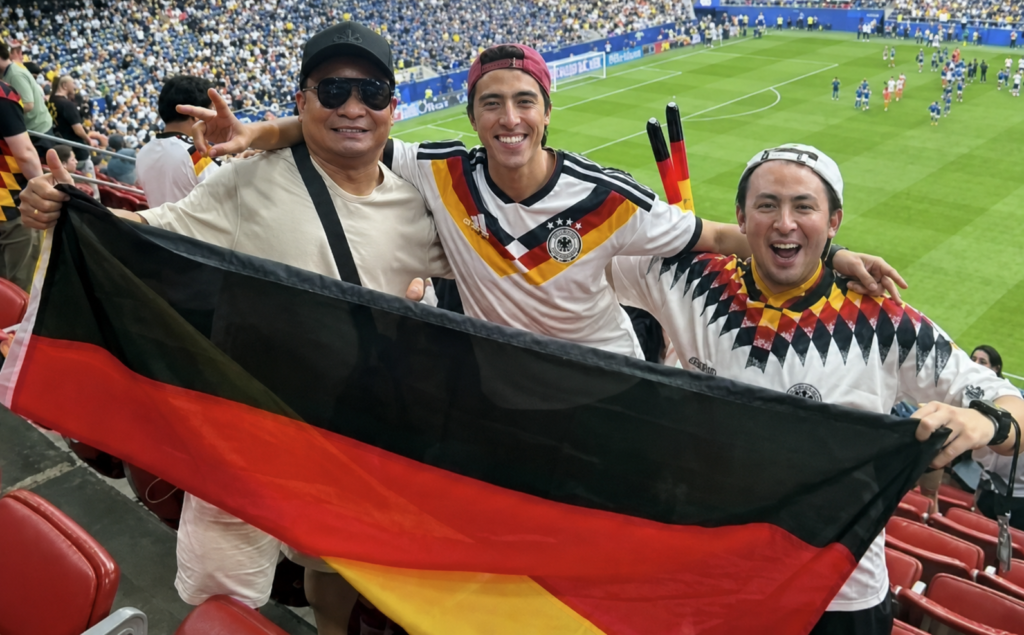
Football fan Lê Hữu Hạnh takes a photo with German supporters during the 2026 World Cup in the US. (Lê Hữu Hạnh)
Conversely, the Vietnamese are perhaps the region’s most committed travelling supporters. Vietnamese fans are willing to travel to the States with almost 10,000 US dollars to watch the 2026 World Cup matches. Despite administrative obstacles such as visa hurdles and high flight costs (and the absence of their national team in the competition), enthusiasm remains strong. Some fans also regularly showcase their Vietnamese identity through jerseys or other wearables, as it is a sporting occasion.
Indonesia, The Outlier
Indonesia, though, occupies a category of its own. The country has the third-largest football fanbase in the world by absolute number, around 165 million fans, or roughly 60% of the population. Yet no Southeast Asian side reached the 2026 World Cup, Indonesia included. However, if absence alone pushed supporters towards foreign teams, the whole region would behave this way, but it does not.
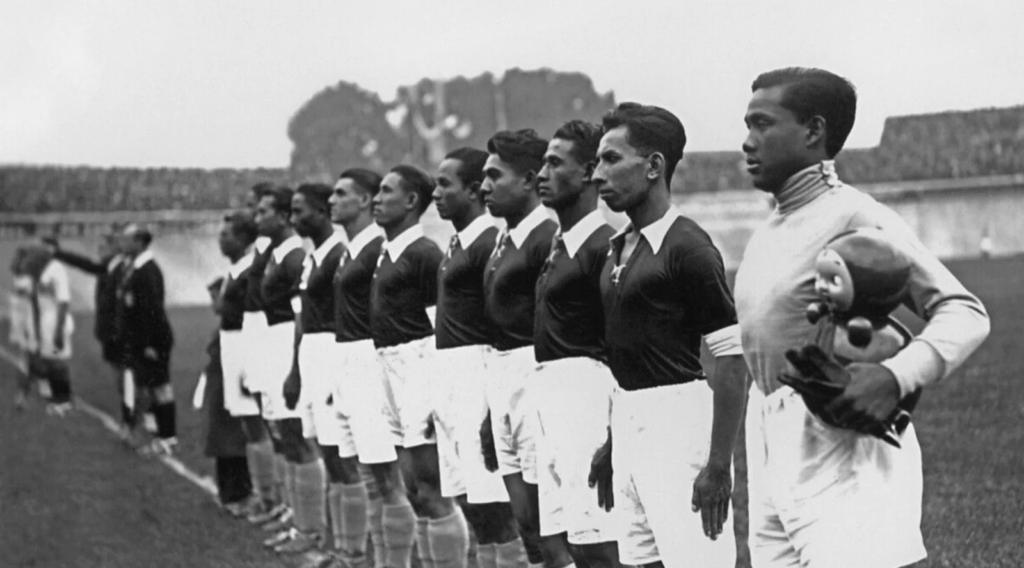
The Dutch East Indies men’s football team in the 1938 FIFA World Cup, the first Asian team to qualify for the cup. (AFC)
Two things deepen that void beyond any of Indonesia’s neighbours. The first is history. Indonesia has not appeared at a World Cup since 1938, when it played as the Dutch East Indies, the first Asian country to reach the final round of the competition. The second is how recently the wound was reopened. In October 2025, the Garuda finished bottom of their final qualifying group without a single point, beaten by Saudi Arabia and Iraq, the closest the country had ever come before falling short once again.
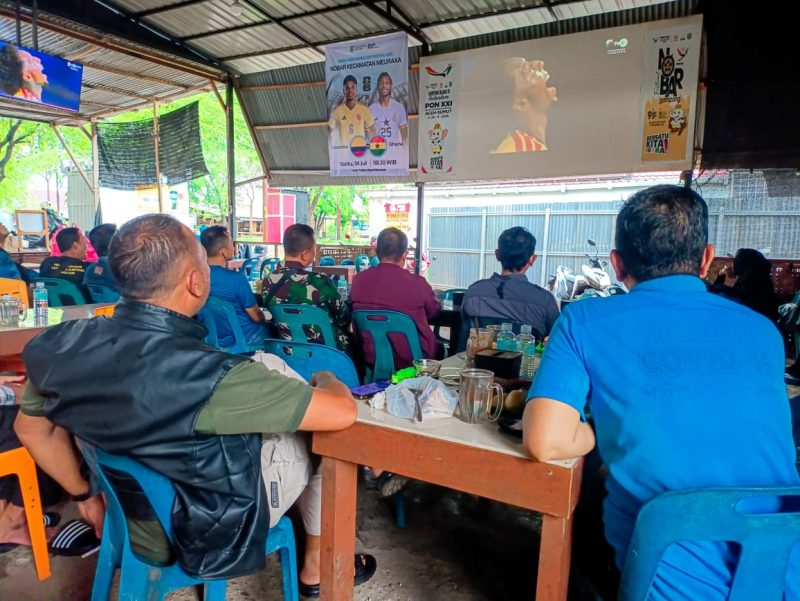
A group of people watching (nonton bareng) the Ghana-Colombia World Cup 2026 match in a mass viewing event organised by the Banda Aceh Municipal Government, which includes some government officials albeit Indonesia not being in the match. (Banda Aceh Municipal Government)
What sets Indonesia apart is that, unlike its peers, it doesn’t have anywhere else to channel the same energy. Vietnam turns it inward, backed by a genuinely competitive side that has won the ASEAN Championship three times, in 2008, 2018 and 2024, with football woven so tightly into national pride that victories empty entire streets. Malaysia, Thailand and Singapore pour their foreign passion into English clubs rather than foreign national teams. Meanwhile, the Philippines, for its part, still ranks football behind basketball. Indonesia alone possesses a vast Premier League following and a mass adopted-team culture at once, amplified by communal events around football, like all-night broadcasts, the mass viewing events (nonton bareng or nobar) and the ultras with their chants. Consequently, its closest parallel lies not in the region but in South Asia, where Bangladeshi fans devoted themselves in supporting Brazil and Argentina. That is what makes Indonesia the outlier.
So what makes Indonesia support some national teams more than the others?
Indonesian fans in a convoy celebrating a French victory in a World Cup game. (Youtube/Ello Aris)
The first factor is global stardom. Decades of televised football have drawn loyalty towards winning, star-led sides, which means support towards top national teams, like Germany, France and Argentina.
Indonesian fans in a convoy celebrating a Dutch victory in a World Cup game. (Youtube/Ichal Kaimudin)
The second reason is the colonial thread. Indonesia’s former ruler happens to be a footballing power, and the Dutch federation openly cultivates what it treats as its Indonesian “second-favourite” fanbase, built on shared history and Oranje players of Indonesian descent. When crowds in Maluku spilled onto the streets for a Dutch win in 2022, they were cheering a team that felt half their own. It is a thread the next section will follow, since naturalisation is now folding it into the Garuda itself.
The weaker but equally real third filter is continental kinship. Support equally flows towards East Asian favourites Japan and South Korea during every World Cup.
An Identity Crisis
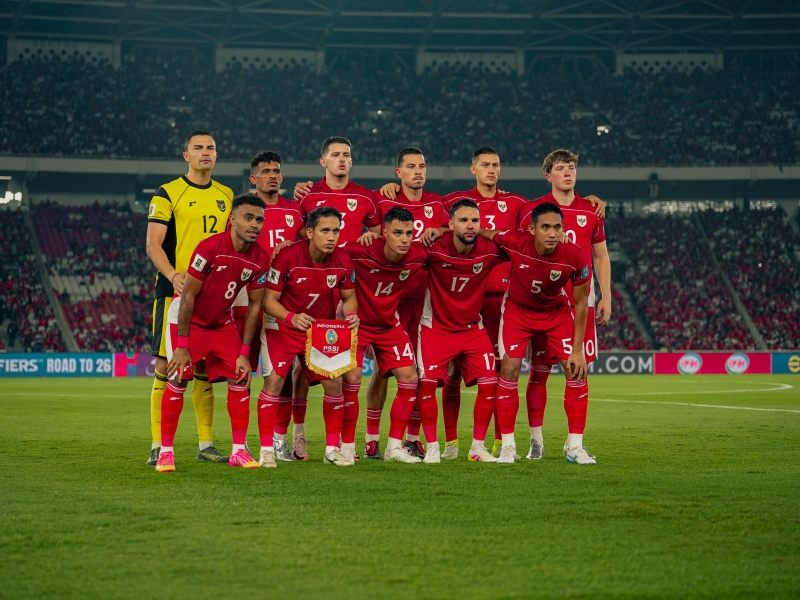
The Indonesian football national team in 2026, many of them naturalised players. (Indonesia Football Federation)
The deeper question this World Cup has raised is one of identity. Naturalisation is a global trend reshaping national teams everywhere, including in Southeast Asia and especially in Indonesia. With 14 out of 23 players in the Garuda squad being naturalised—including the Dutch-born and raised Maarten Paes, Jay Idzes and Ole Romeny—this squad successfully elevated Indonesia to 118th in the FIFA rankings today from 129th in September 2024.
With many having Indonesian and Dutch blood, the very country whose flag Indonesians were waving when the round of 32 draw was made. The colonial link that once defined subjugation has quietly been repurposed into a scouting programme. Indonesia is, in a very real sense, already playing in this World Cup—just not under its own banner.
In a region without a seat at football’s highest table, Indonesia stands apart as the outlier, not the norm. The 2030 World Cup cycle will be the next test of whether that changes. If Indonesia qualifies, something that now feels less like a fantasy and more like a long-term goal, the question that has defined this tournament may finally answer itself. The 2030 cycle will be the next test for Indonesia’s World Cup dream and the future of the fans. Would they still cheer for other countries if Indonesia is in?
About The Author



One thought on “At the World Cup, Why Does Indonesia Cheer for Other Nations More Than Its Neighbours?”