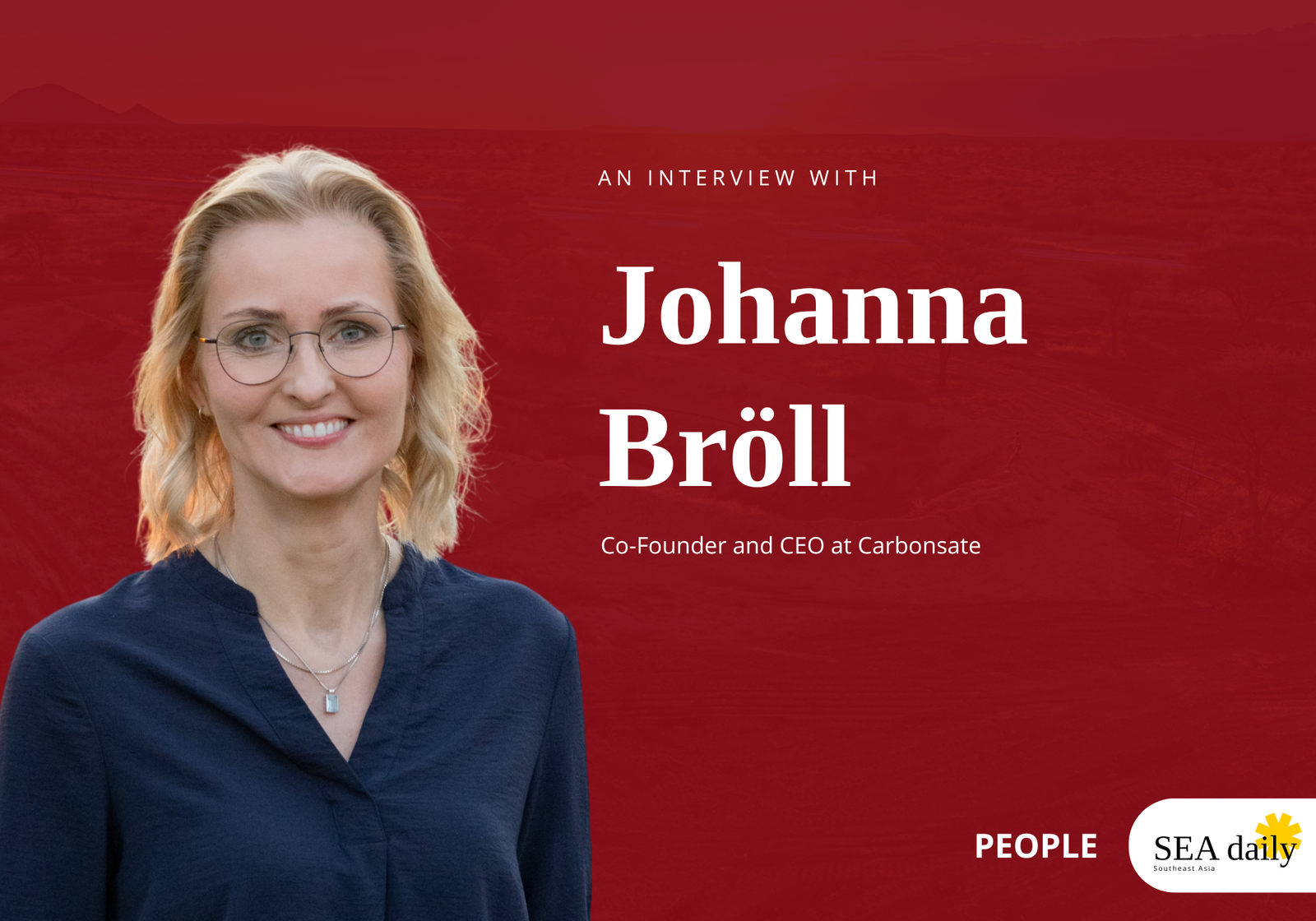
Excess carbon in the atmosphere is one of the most pressing problems of our time and Johanna Bröll’s answer to it starts with something most people would set on fire. Every year, vast amounts of waste wood are produced worldwide and most of it is either burned or left to rot, releasing carbon that a tree pulled from the air locked into its wood over decades. Rather than let that waste wood burn, Johanna’s Berlin-based start-up, Carbonsate, buries it instead, sealing it underground where the carbon stays locked in the wood for centuries, removed from the cycle and turned into carbon credits.
Johanna has always been drawn to big challenges and to the simple solutions that are often underestimated. When it comes to the question of climate change, her answer is putting to use what is already around her. “I noticed that there are large amounts of waste wood all around the world and many of the waste wood streams are still unused,” she says. “Instead of burning the waste wood, how could we preserve the carbon that is already embodied in the biomass to remove it from the cycle?” She landed on a simple method called biomass storage, in which they let plants do the hard work of capturing carbon dioxide from the atmosphere, then seal the wood in engineered underground chambers so the carbon cannot return to the atmosphere. Other carbon removal methods exist, but most are costly, complex and hard to scale. Biomass storage is a carbon removal method that is simpler and more durable, because it relies on a process nature already runs.
“Carbon Removal is hotter than Paris today”
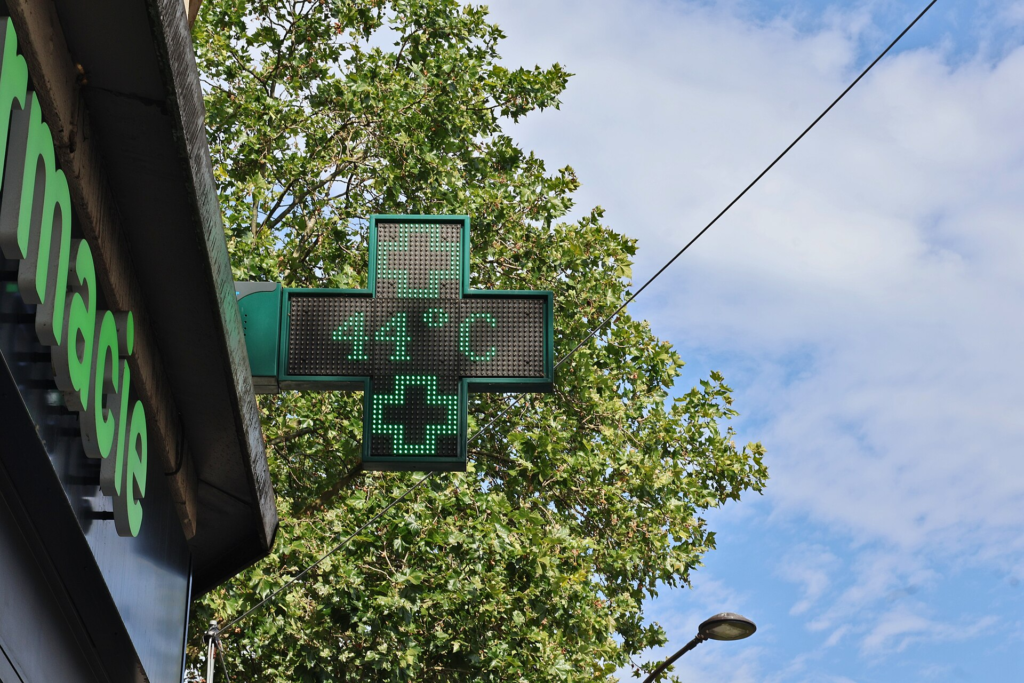
A pharmacy sign in Paris showing a temperature of 44°C on June 26, 2026, far exceeding the the average June peak of 23.4°C. Heatwaves across Europe have become more prevalent and existing infrastructures experience difficulties to adapt. (Wikimedia/FreCha)
That was the slogan on Carbonsate’s stand at the VivaTech event in Paris last June—one of the largest tech exhibitions in the country. It was, indeed, a hot day in the middle of a Europe-wide heatwave, which only made the slogan ring truer. Climate change is no longer an assumption or a talking point. It has reached people’s daily lives and keeping the rise in the earth’s temperature below 1.5°C—a commitment made by hundreds of countries under the landmark 2015 Paris Climate Agreement—now demands efforts both big and small.
Global warming, the driver of climate change, occurs due to carbon dioxide accumulating in the atmosphere which works like a blanket around the earth, trapping heat. Plants like trees work as natural carbon sinks, pulling carbon out of the air, absorbing it into their organic mass and storing it in their wood as they grow. But that storage is fragile, since when a tree is burned, the carbon goes straight back into the atmosphere. This is where a crucial distinction lies. Offsetting means that for every tonne of carbon emitted, an equivalent amount is avoided or reduced somewhere else. Meanwhile, carbon removal means physically taking carbon out of the atmosphere and locking it away, whether by drawing it into soils, capturing it directly from the air with machines, or in Carbonsate’s case, burying the wood that already holds it in sealed underground chambers.
From Invasive Bush to Carbon Credits
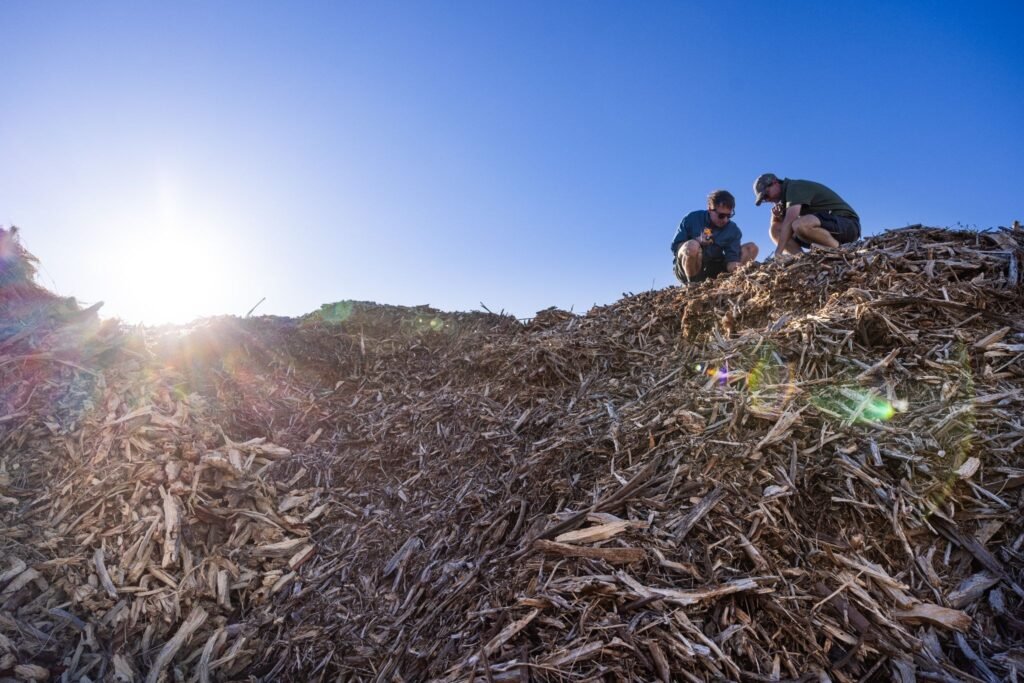
Carbonsate team members inspecting woody biomass before permanent underground storage. Only suitable, low-value biomass that would otherwise be burned or left to decay is used. (Carbonsate/Stefan Redecker)
So far, Carbonsate has operationalised one project in Namibia, with plans to implement the scheme in Bulgaria, Colombia and Cameroon. When implementing the biomass storage in a project, Johanna had to make sure the feedstock is suitable. First, the waste has to be woody, meaning that it is high in lignin, low in nutrients and low-quality wood that would otherwise be burned, never valuable timber. These are necessary to ensure that the wood waste does not decompose. Second, it must come from nearby the burial site, since transporting biomass over long distances would generate the very emissions the framework tries to remove. Lastly, no waste wood should come from deforestation or anything that destroys an ecosystem.
The Namibian initiative shows what those qualifications look like on the ground. There, invasive bush spreads across large farms, a problem known as bush encroachment and Carbonsate identified it as the right source of biomass. The team checked for permits, made agreements with the landowners and harvested the bush, leaving it to sit for a few weeks, so it dried and the leaves fell off. The biomass was chipped and transported a short distance to the storage site, where the wood chips were measured for moisture and weight, to know how much carbon the material holds. The bush was then stored in an engineered underground chamber, around four metres deep, and sealed.
Although biomass storage is one of the carbon removal methods deemed simple, the main challenge is proving that it works and that the carbon stays locked away for centuries, removed from the air. Since the waste wood already holds the carbon, the job is to stop it escaping, so the chamber is conditioned to stay low in oxygen and low in moisture, where the wood cannot decompose. The storage site comes with sensors which measure five things: moisture and oxygen, which must stay low; methane and carbon dioxide, which would signal decomposition happening when it should not; and temperature. To prove the carbon is locked away, Johanna does not rely on the sensors alone. An auditor comes to the site, and a third party verifies the measurements, the calculations and the sustainability data. “It’s not just us claiming it,” she says, “but there are also externals who verify all that.” Only once it is signed and certified is a carbon credit issued for each tonne of carbon dioxide stored, ready to be sold and delivered.
Carbonsate works with two models. In the first, the start-up purchases the waste wood from its owners and implements the scheme itself. In the second, landowners implement their own projects and keep the entire carbon credit revenue, while Carbonsate acts as a technology and service provider, supporting them with the method and the knowledge, while helping them to sell the carbon credits. The costs before revenue are covered by Carbonsate, by the project owner, or through dedicated project finance. For the latter, Johanna typically approaches local banks, which have a keen interest in supporting the region’s economy or international capital providers aiming for sustainability investments. Once the carbon credits are issued, buyers from all over the world can purchase them.
Every carbon credit is a tradable certificate representing one tonne of carbon dioxide kept out of the atmosphere or removed from it. Companies buy them to either compensate for emissions they cannot yet eliminate themselves or as part of their own voluntary climate contribution strategy, which naturally supports high quality carbon removal projects. But not all credits are the same. Some come from avoidance initiatives that prevent emissions (such as protecting a forest) while others come from removal projects like Carbonsate’s, which take carbon already in the air and lock it away.
These carbon credits themselves can be sold anywhere in the world, as this is a completely global market. Johanna mentions that her typical buyers are technology companies or firms with net zero commitments or carbon reduction targets validated by Science-based Target Initiatives (SBTi), mostly in Europe and the US. The market still has to grow, she notes, as much of the carbon market is still voluntary rather than mandatory, although she believes this will gradually change and climate leaders are now looking for more durable carbon removal schemes. Aside from these two regions, Johanna adds how she sees interest emerging in places including Southeast Asia, particularly Singapore.
“A Region with Enormous Potential”
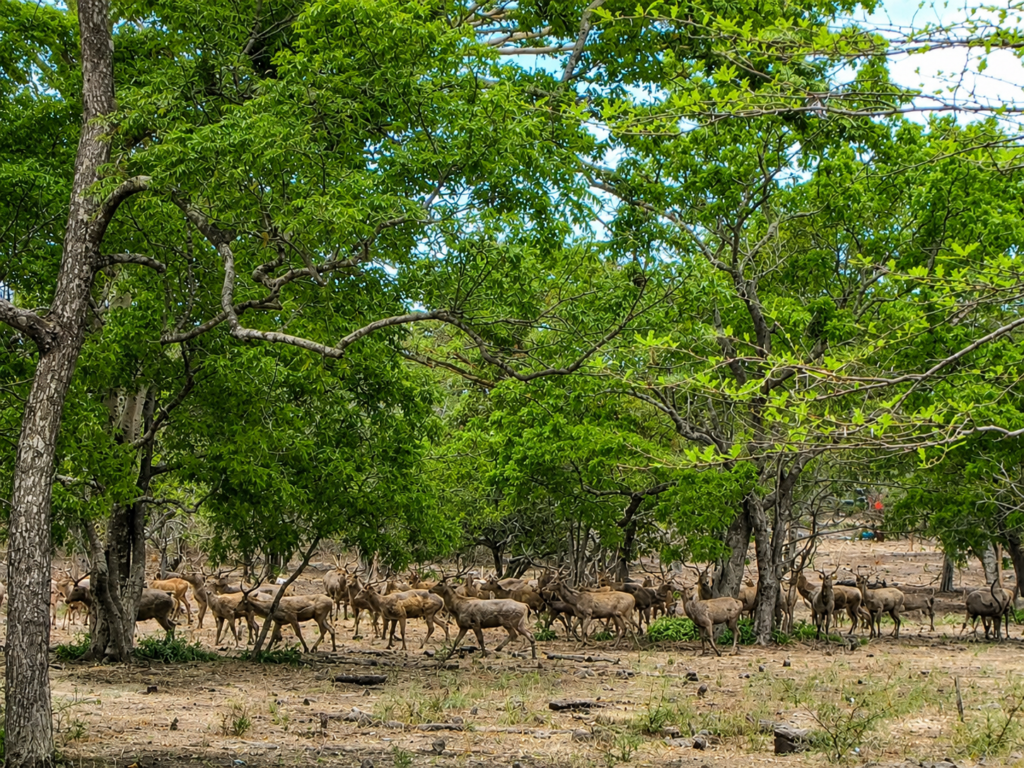
Acacia nilotica in Indonesia’s Baluran National Park, an invasive plant species that has grown in an area of 6,000 hectares in the natural reserve. These kinds of biomass can be used in Carbonsate’s scheme. (Ekuatorial)
Southeast Asia is one of the world’s most vulnerable regions to the effects of climate change, with rising sea levels eroding coastal communities, as well as storms and typhoons bringing heavy rainfall and severe flooding that damage homes and livelihoods. Efforts to reduce carbon—the driver of climate change—have begun across the region and Southeast Asia does not shy away from contributing to global climate action. At the COP30 United Nations (UN) Climate Change Conference in Brazil in November 2025, the region’s bloc, ASEAN, hosted its first-ever pavilion, showcasing regional initiatives and forging carbon trading partnerships, alongside collective efforts to advance energy transition, climate finance, nature-based solutions and a just transition. Among its numerous climate efforts, nearly all of it is aimed at emitting less, rather than removing what is already in the air. Carbon removal, through methods like biomass storage, remains the region’s untapped potential.
The raw material is certainly there. Southeast Asia’s agriculture and forestry sectors generate more than 500 million tonnes of biomass residues a year, much of it low-quality wood that would otherwise be burned or left to decay, which is exactly what Carbonsate looks for. Asked whether the region’s material is as workable as Namibia’s or Cameroon’s, Johanna does not hesitate to say yes. “I feel that the region has enormous potential, simply because the availability of woody biomass is a given there.” For an initiative aiming to remove more than 10 million tonnes of carbon dioxide from the atmosphere every year by 2033, a region setting fire to its feedstock is hard to ignore for Carbonsate.
When asked what stands in the way, Johanna does not point to the method but to what she calls an ecosystem of carbon removal. The technology, she is clear, is rarely the obstacle. Biomass storage is new enough that many people have never heard of it and the reaction she often meets is that it sounds too good to be true, so much of her work becomes convincing people that something this simple genuinely works. Then comes regulation, where supportive rules would help and, just as importantly, the absence of any rules creates ambiguity about what is even allowed. But the harder test is execution. Adapting to unfamiliar regulations, cultures, and ways of doing business, market by market, is where the real difficulty lies.
The Burning Question
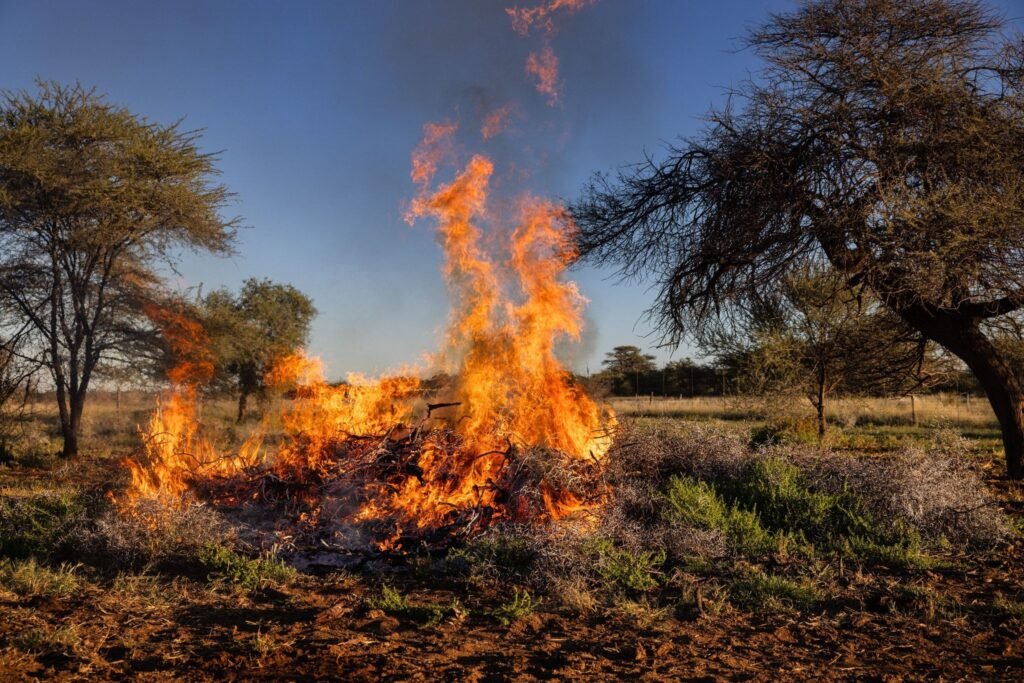
Burning releases the carbon stored in woody biomass back into the atmosphere. Carbonsate’s approach preserves suitable woody biomass underground instead, creating durable carbon removal. (Carbonsate/Stefan Redecker)
In much of Southeast Asia, waste wood is not treated as waste at all, but as fuel. Across the region, agricultural and forestry residues are burned to generate power and ASEAN’s own energy strategy frames biomass as a renewable, low-carbon alternative to fossil fuels, on the logic that the carbon released is reabsorbed by new plant growth. The region still leans heavily on coal, which generated around half its electricity in 2024, so cleaner-burning biomass is widely cast as part of the answer rather than the problem.
This leaves a burning question. In a region that depends on burning this wood for power, why bury it instead? Johanna doesn’t believe every piece of biomass should be burned simply because it can. Burning wood, including as fuel, releases all its carbon at once and as a molecule that carbon ends up in the atmosphere in the end. If stored permanently instead, the same wood becomes a carbon resource that generates durable credits and as Carbonsate’s projects show, waste wood could even become a new export product or a fresh revenue stream for rural communities. There is a real case for burning biomass. The method is cheap, local and renewable enough. But Johanna’s argument is hard to dismiss. Energy can be found in many places, while carbon—once released—is almost impossible to call back.
About The Author