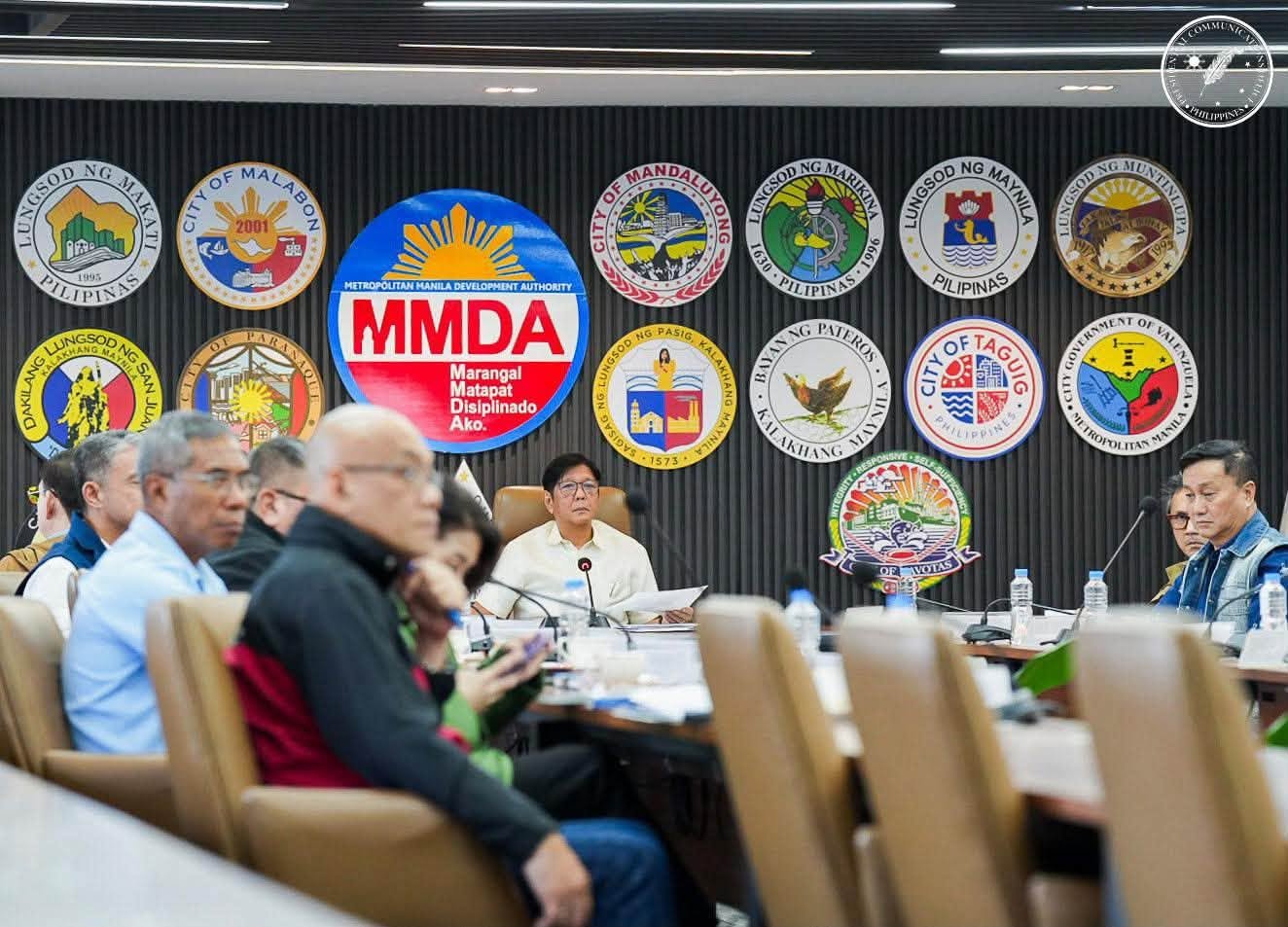
Philippine President Ferdinand R. Marcos Jr. leads a meeting with Metropolitan Manila Development Authority (MMDA) officials on flood mitigation efforts in Metro Manila on August 19. (Presidential Communications Office)
The Philippine President Ferdinand Marcos Jr. administration is strengthening flood control infrastructure to address longstanding gaps exposed by recent investigations into alleged ghost projects.
On August 20, Presidential Communications Office (PCO) Undersecretary Claire Castro said flooding remained a persistent problem despite years of government spending on flood control projects. She said recent investigations had revealed alleged deficiencies under both the current and previous administrations.
She added that the investigations had helped the government identify additional measures and projects needed to improve flood mitigation and ensure infrastructure benefited communities over the long term.
Some of the administration’s initial measures in Metro Manila were discussed during a flood situation briefing presided over by President Marcos. PCO Undersecretary Castro said these recent interventions in Metro Manila had already produced faster drainage in some areas, although heavy rainfall would continue to pose flooding risks.
The administration is addressing inadequate drainage infrastructure, particularly undersized culverts built decades ago that may no longer meet current needs, as part of efforts to improve flood control and accelerate water drainage. Simultaneously, the government is preparing funding for new evacuation centres under the 2027 national budget, with PCO Undersecretary Castro assuring that allocations will be closely monitored to prevent misuse.
Under Republic Act No. 12076, or the Ligtas Pinoy Centres Act, the National Disaster Risk Reduction and Management Council, in coordination with local governments and relevant agencies, is responsible for identifying and prioritising sites based on disaster risk, topography, available land and community needs. For fiscal year 2027, the proposed allocation provides for two Ligtas Pinoy Centres per region at 90 million Philippine peso (1.5 million US dollars) each, including site development costs and adjustments for specific site conditions.
The measures indicate an effort to connect flood mitigation with stronger disaster preparedness and public-finance oversight. The focus on infrastructure standards, legally defined site selection and monitoring of projects reflects the administration’s attempt to address not only physical flood risks but also institutional weaknesses exposed by alleged ghost projects. Strengthening these systems will be important to improving long-term disaster resilience and public confidence in government spending.
About The Author