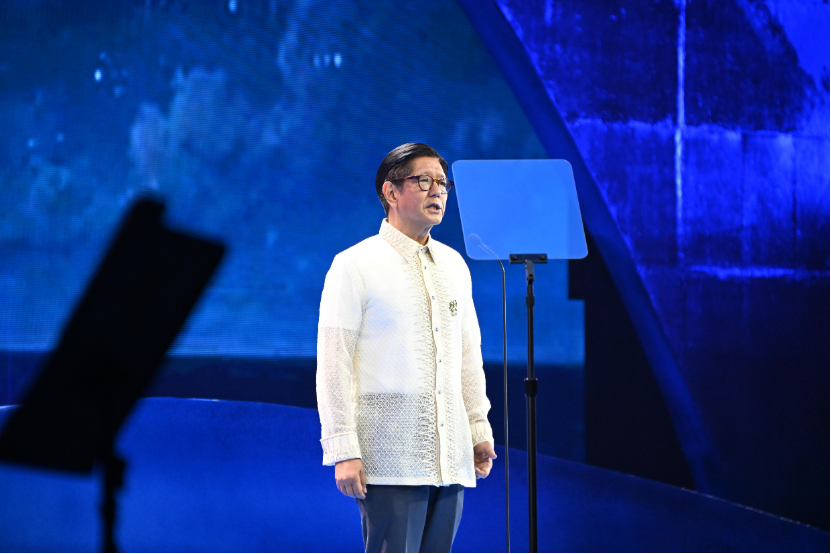
President Ferdinand R. Marcos Jr., ASEAN Chair for 2026, following the successful conclusion of the 48th ASEAN Summit in the Philippines. (ASEAN Secretariat/Kusuma Pandu Wijaya)
On May 8, during the ASEAN Summit, Philippine President Ferdinand Marcos Jr. reiterated ASEAN’s commitment to accommodate the Myanmar government by showing recognition to accelerate its normalisation process, stressing that “Myanmar is part of the ASEAN family and it is a tragedy when a family member is left out of the family for whatever reason,” he stated during the summit’s Retreat Session.
Yet, Marcos acknowledged ASEAN leaders’ frustration over the “thorny problems” of implementing ASEAN’s existing frameworks, noting that “we all agree that we would like to see more progress” and urging leaders to revive what he described as a “moribund process”, on which he noted, “we all agree that we would like to see more progress.”
To break the deadlock, Marcos called ASEAN leaders to promulgate a continuous evaluation of the Five-Point Consensus (5PC) frameworks and regional efforts to restore peace and order in Myanmar. Marcos also urged the ASEAN foreign ministers to foster genuine national reconciliation by exploring viable alternatives to avoid “the stalled process”.
Indonesia echoed the call for a dialogue mechanism. Indonesian President Prabowo Subianto reaffirmed his stance on an inclusive electoral system, a position his Foreign Minister, Sugiono, emphasised to journalists on May 9. “From the outset, Indonesia’s position has been that if the election takes place, it must be inclusive, address the existing problems, bring peace, and create a better situation,” Sugiono said.
Myanmar’s domestic turmoil has become a hallmark of the 48th ASEAN Summit and Related Summits. The ASEAN Chair’s Statement, released on April 24 by the Philippines, officially welcomed Myanmar’s amnesty and release of more than 4,000 prisoners. ASEAN reaffirmed “our commitment to assisting Myanmar, as an integral part of ASEAN, to achieve a peaceful and durable solution.” However, the symbolism of the summit told a different tale, as Myanmar’s high-level leadership was conspicuously absent, with the country represented only by the Permanent Secretary of its Ministry of Foreign Affairs.
ASEAN leaders reiterated that they were not yet ready to accept Myanmar but emphasised their willingness to keep the lines of communication open. It was, in many ways, a portrayal of the bloc’s broader dilemma: unwilling to look away, yet unable to act vehemently.
About The Author