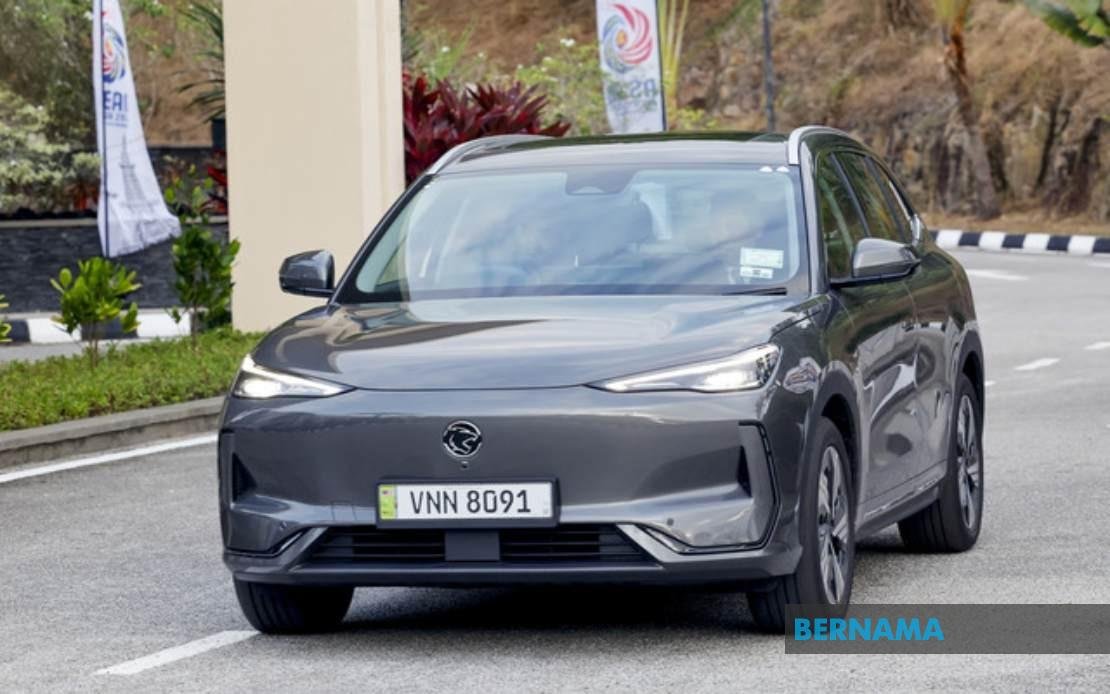
The Proton e.Mas 7, Malaysia’s locally produced electric vehicle, makes its debut at the ASEAN Foreign Ministers’ Retreat, January 2025. (Bernama)
This protectionist move will raise “entry barriers” for completely built-up (CBU) EV imports, demanding a higher threshold for: (1) cost, insurance and freight (CIF) at 200,000 Malaysian Ringgit (51,000 US dollars) and (2) a higher power output of 180 kilowatts.
Such changes could push retail prices for Malaysian car importers to no less than 300,000 Malaysian Ringgit (76,500 US dollar), analysts noted.
According to MITI, this is a follow-up measure to the expiration of the franchise approved permit (AP) scheme on 31 December 2025. The AP scheme is an exclusive permit allowing authorised Malaysian distributors to import vehicles directly from foreign manufacturers. To clarify the transition, MITI briefed franchise AP holders on 30 April, informing them that they are permitted to clear their remaining inventory.
To temper public concern, MITI pledged transparency regarding the policy, reaffirming its commitment to developing the local automotive industry and “safeguarding national economic interests”.
What does this mean for businesses?
For a developing nation like Malaysia, “security” translates less to military concerns and more to everyday economic priorities, with transport accessibility chief among them. Climate commitments, whilst nominally on the agenda, remain secondary when weighed against national economic interest. This explains criticism over the regulation’s conflict with Kuala Lumpur’s EV transition goals gained little traction.
The new thresholds effectively price out most mass-market EVs, leaving only premium models eligible for direct import. This will hit Chinese EV brands particularly hard, as many compete precisely on affordability.
For any foreign manufacturer still seeking a foothold in the Malaysian market at accessible price points, the regulation carries an implicit message: invest locally. Yet protectionist signals alone are insufficient; what follows must include the regulatory frameworks, legal infrastructure and institutional capacity that serious foreign investors look for.
About The Author