A person scrolling through online shopping on phone. (Unsplash/vhtm)
Southeast Asia’s digital economy is on track to pass 300 billion US dollar in gross merchandise value in 2025, growing 15% year-on-year (yoy), or roughly double the global e-commerce growth rate of about 7%. Cross-border e-commerce continues to expand as digital platforms connect buyers and sellers across national borders with unprecedented ease. Yet while consumers increasingly shop across Southeast Asia as though it were a single marketplace, the regulatory systems governing those purchases remain anything but integrated. The biggest barrier to selling across Southeast Asia isn’t the tariff at the border, but the customs gap behind it.
Over the past two years, governments across the region have quietly tightened customs and tax rules for imported goods. Thailand has effectively removed its value-added tax (VAT) exemption for low-value imports. Vietnam has extended VAT to goods that were previously exempt, including fertilisers, specialised agricultural machinery and offshore fishing vessels. Malaysia introduced sales tax on imported low-value goods, while Indonesia has continued refining customs and tax treatment for cross-border e-commerce under mounting fiscal pressure. Although each measure responds to national priorities, together they reveal a broader regional trend where governments are no longer focused solely on facilitating digital trade, but increasingly determined to capture revenue from it.
At first glance, these appear to be routine tax adjustments. But in reality, they point to a much deeper structural shift. Southeast Asia’s digital economy is becoming increasingly regional, but its customs systems remain stubbornly national. The resulting “customs gap” is no longer simply a compliance issue. It is beginning to influence where companies position inventory, design fulfilment networks and build competitive advantage.
From Tax Policy to Business Strategy
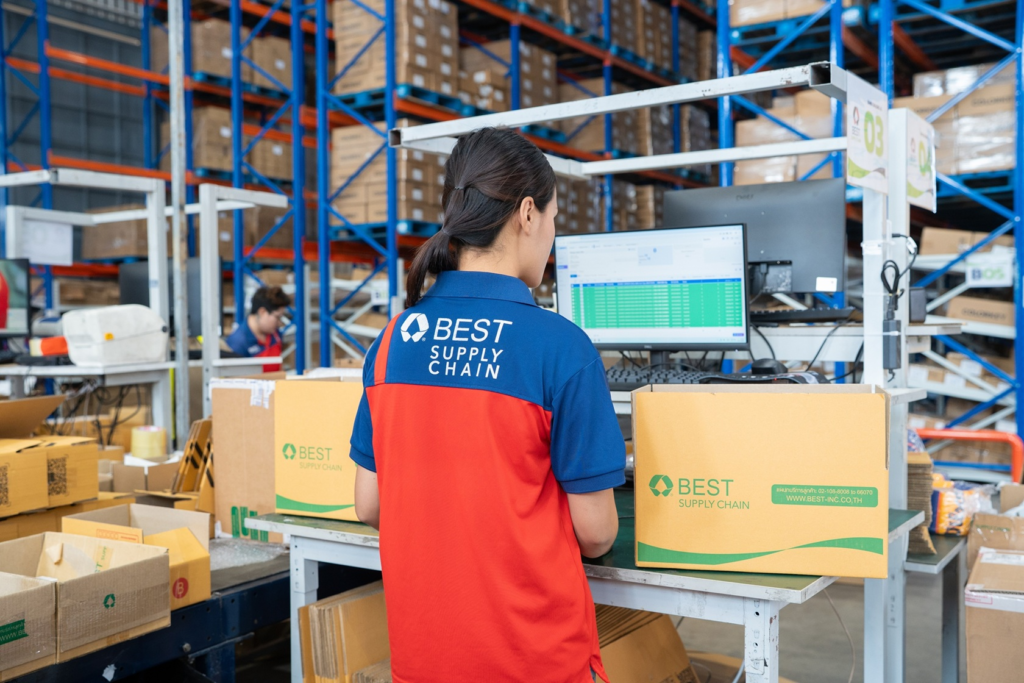
A warehouse operated by BEST Thailand, a provider of express parcel delivery and logistics services in Thailand. (BEST Thailand)
Viewed individually, the policy changes introduced across Southeast Asia appear modest. Each government has legitimate reasons for revising customs thresholds, extending VAT to low-value imports, or tightening tax collection from cross-border digital trade. Rising fiscal pressures, the rapid growth of e-commerce and concerns over the competitive position of domestic retailers have all contributed to these decisions. From a national perspective, the reforms are rational.
The challenges are more apparent for businesses operating across the region rather than within a single Southeast Asian market. Instead of navigating one regulatory framework, companies selling across ASEAN must contend with multiple de minimis thresholds (the value below which an imported parcel clears customs duty and tax-free), different VAT collection mechanisms, varying customs documentation requirements and separate compliance processes. The complexity is no longer limited to paying taxes, it affects how companies design supply chains, allocate inventory and estimate the true cost of serving each market. What appears to be a series of domestic policy adjustments gradually becomes a regional business issue.
The region’s fragmented environment stands in contrast with the European Union (EU). Since introducing the Import One-Stop Shop (IOSS) in 2021, the EU has allowed businesses selling goods valued below 150 euro (171 US dollar) to register once, collect VAT at the point of sale and submit a single monthly VAT return covering all 27 member states. The system replaced what had previously required multiple national VAT registrations, significantly reducing administrative costs while improving tax collection. Southeast Asia has no equivalent mechanism. Although initiatives such as the ASEAN Single Window and the Digital Economy Framework Agreement (DEFA) represent important steps towards deeper regional integration, customs and indirect tax policies remain largely determined at the national level. The region’s digital marketplace is therefore expanding faster than the regulatory architecture needed to support it.
When Platforms Start Rebuilding Themselves

A TikTok Shop event in Padang, Indonesia showing the banner “TikTok Shop by Tokopedia”, a manifestation of TikTok Shop’s acquisition of a controlling stake in Indonesia’s largest e-commerce platform, Tokopedia, which is one of the ways a non-Southeast Asian platform adheres with the region’s regulatory complexity. (TikTok/tokopedia_ttsselleredu)
If customs fragmentation were merely a compliance issue, e-commerce businesses could simply pass the burden on to individual merchants. Southeast Asia’s largest e-commerce platforms, however, are doing something very different. They are instead redesigning their own operating models to absorb much of that complexity themselves.
The responses differ in execution but converge in purpose. Lazada has expanded bonded warehouse operations that allow imported inventory to be stored with duties and taxes deferred until goods enter the domestic market. Operated in partnership with logistics providers such as Dimerco, the model enables inventory to be positioned closer to consumers while improving fulfilment efficiency. Similarly, in March 2026, Maersk opened its 200 million Singaporean dollar (154.9 million US dollar) World Gateway 2 logistics facility, expanding what is already the country’s largest automated customs-bonded warehouse. Beyond its scale, the facility was designed around a specific commercial proposition, which is that imported goods can be stored under customs-bonded status, with goods and services tax (GST) deferred until products enter the domestic market. More tellingly, around 70% of the warehouse had already been committed before the facility officially opened, suggesting strong demand from companies seeking this type of logistics capability.
Meanwhile, Shopee has taken a different approach through its Singapore-based Shopee International Platform (SIP), under which sellers ship products to a single warehouse while Shopee manages cross-border shipping, customs clearance and last-mile delivery across multiple markets. Conversely, TikTok Shop responded to Indonesia’s tightening regulatory environment by restructuring its business through the acquisition of a controlling stake in Tokopedia—Indonesia’s largest e-commerce platform—embedding its e-commerce operations within a domestic platform rather than continuing as a standalone cross-border marketplace.
This represents a subtle but important shift in how competitive advantage is created. For years, Southeast Asia’s major e-commerce platforms competed primarily on price, product selection and delivery speed. Increasingly, however, another capability is moving to the forefront, which is the ability to navigate fragmented regulatory environments more efficiently than competitors. Customs management, once regarded as a back-office function, is quietly becoming part of the strategic architecture of digital commerce. As platforms absorb these hurdles, regulatory capability is becoming part of the platform itself.
Official statements from several e-commerce giants confirm this trend. Sea Limited, Shopee’s parent company, acknowledges in its 2024 Form 20-F that its markets operate under “distinct legal and regulatory systems” that “do not operate seamlessly across borders as a single or common market,” identifying logistics and fulfillment as material operational risks. Meanwhile, Kerry Logistics has linked its Southeast Asian expansion strategy to an increasingly volatile policy environment, while reporting particularly strong growth in Singapore and Vietnam—two markets widely regarded for their relatively predictable customs and trade administration. The next competitive edge in Southeast Asia’s e-commerce market may no longer belong to the platform with the lowest prices, but to the one best equipped to navigate an increasingly fragmented regulatory landscape.
What Businesses Should Be Watching
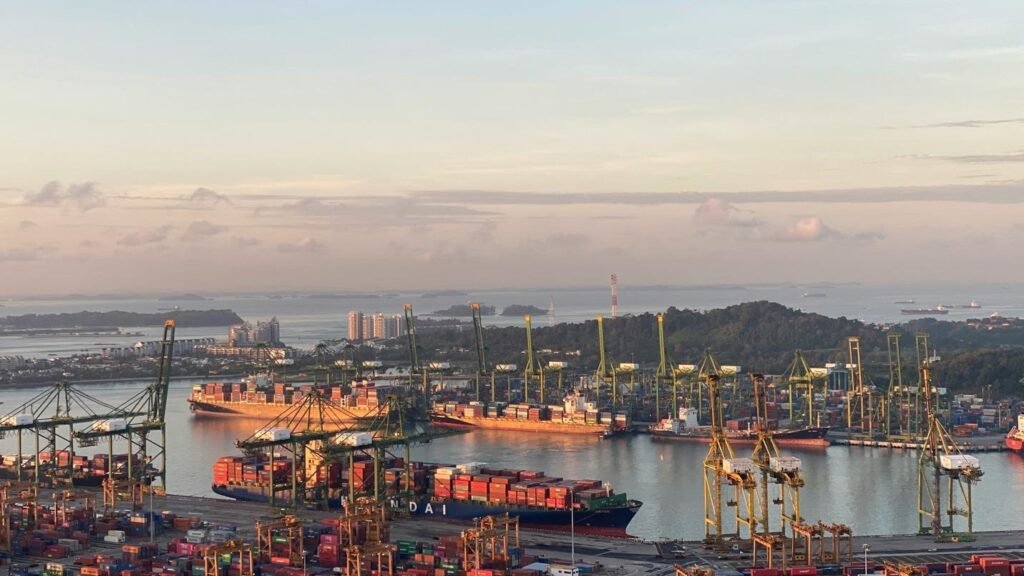
The Singapore Harbour in 2020. (Unsplash/Peter Leong)
This shift requires businesses to rethink how they evaluate regional expansion. Firstly, Market size and consumer demand remain fundamental, but they are no longer the only variables shaping long-term competitiveness. Companies expanding across Southeast Asia should increasingly assess regulatory predictability alongside labour costs, logistics infrastructure and transportation networks. A market with lower operating costs may ultimately prove less competitive if customs procedures are more complex, tax rules change frequently, or cross-border fulfilment becomes operationally uncertain.
Secondly, for supply chain and logistics teams, scenario planning is becoming equally important. Rather than assuming today’s customs thresholds will remain unchanged, businesses should model the financial implications of future policy adjustments—including lower de minimis thresholds, broader VAT coverage and additional processing requirements. They are likely to become more pronounced as governments continue refining digital trade policies. The question is no longer simply how much it costs to move a product across borders, but how resilient the underlying supply chain remains as regulatory conditions evolve.
Thirdly, the same principle applies to investment decisions. The platforms and logistics providers leading Southeast Asia’s digital economy are not waiting for a harmonised regional customs framework before adapting their operations. Instead, they are investing in bonded warehouses, integrated fulfilment networks and regulatory capabilities that allow them to operate effectively despite fragmentation. Businesses of all sizes may not be able to replicate these investments, but they can adopt the same strategic mindset, which is treating regulatory capability as part of the business model rather than simply part of the compliance function.
Ultimately, the future of Southeast Asia’s e-commerce market will be shaped by more than consumer demand or technological innovation. It will also depend on how effectively businesses and governments bridge the widening gap between an increasingly integrated digital marketplace and a regulatory architecture that remains deeply national. The next chapter of the region’s digital economy will not be written only by those who move goods most efficiently, but by those who navigate complexity most intelligently.
This kind of analysis is the work Kala Advisory does for European businesses operating in Southeast Asia. We help companies separate a market’s headline appeal from the real cost of serving it once customs thresholds, VAT rules and fulfilment requirements are factored in, and assess that gap market by market across Indonesia, Thailand, Vietnam and Malaysia. For tailored intelligence on the trends covered here, visit kala-advisory.com.
About The Author