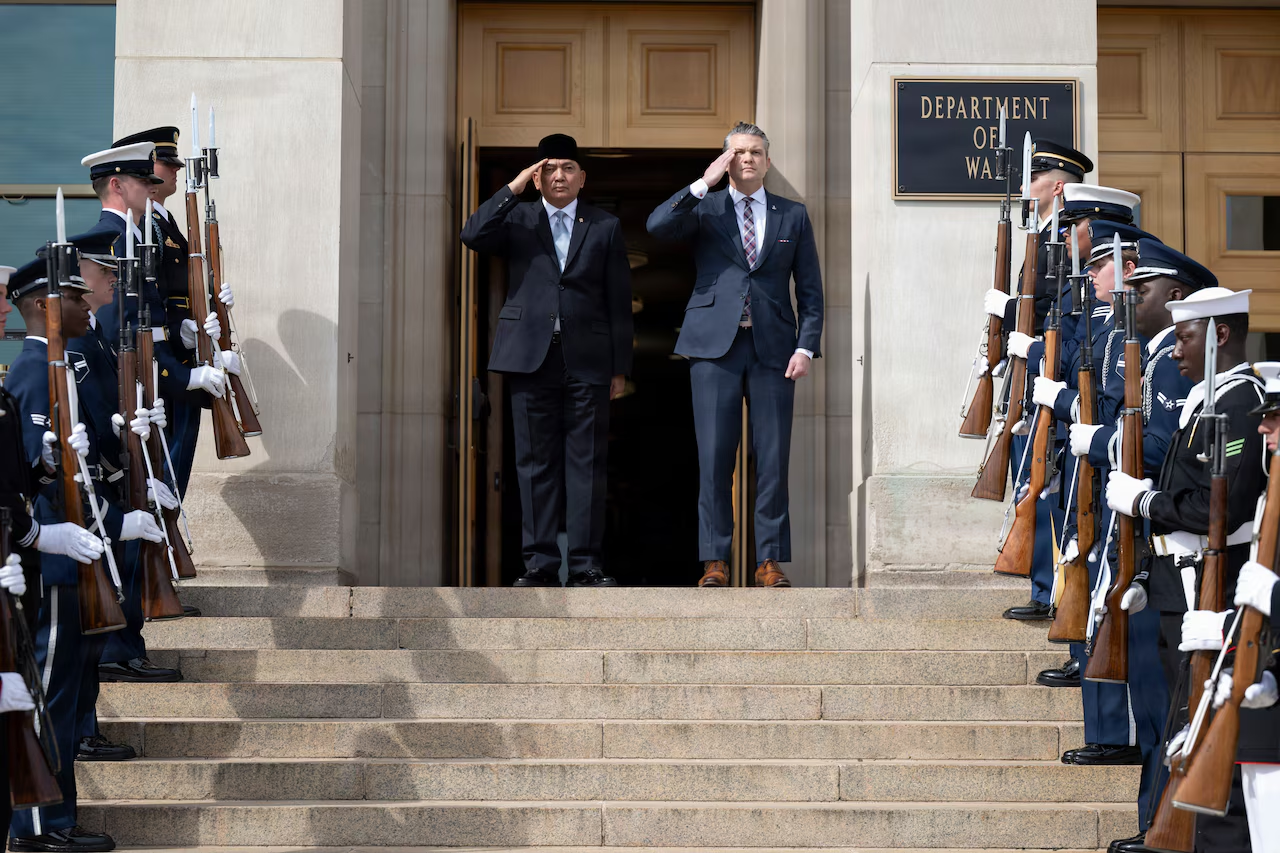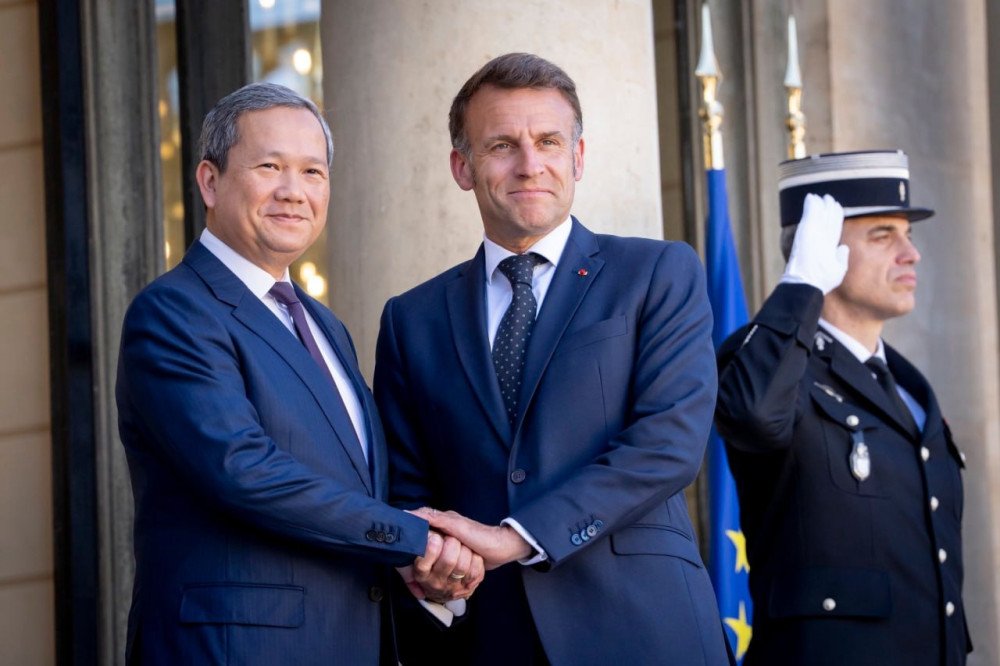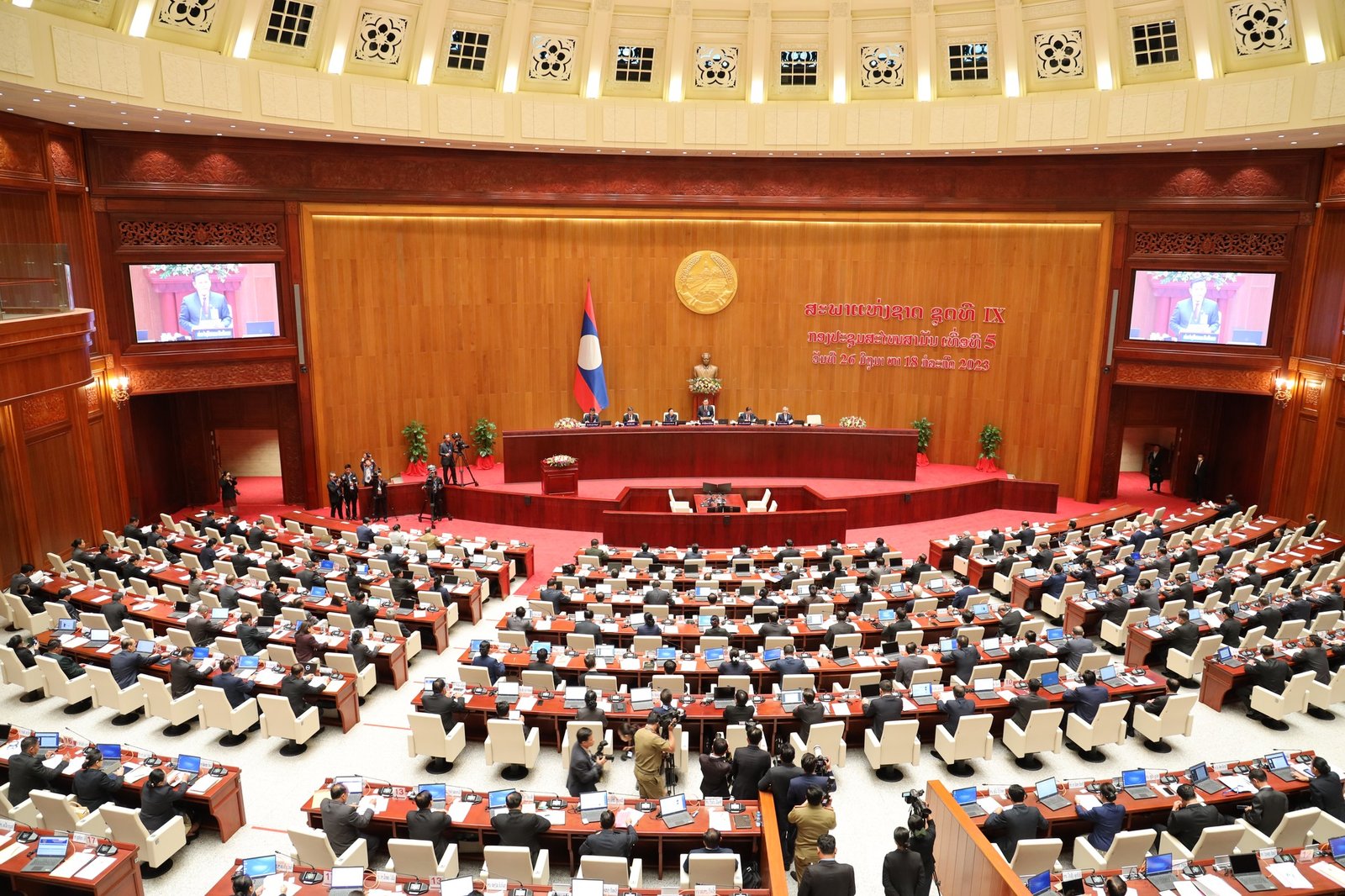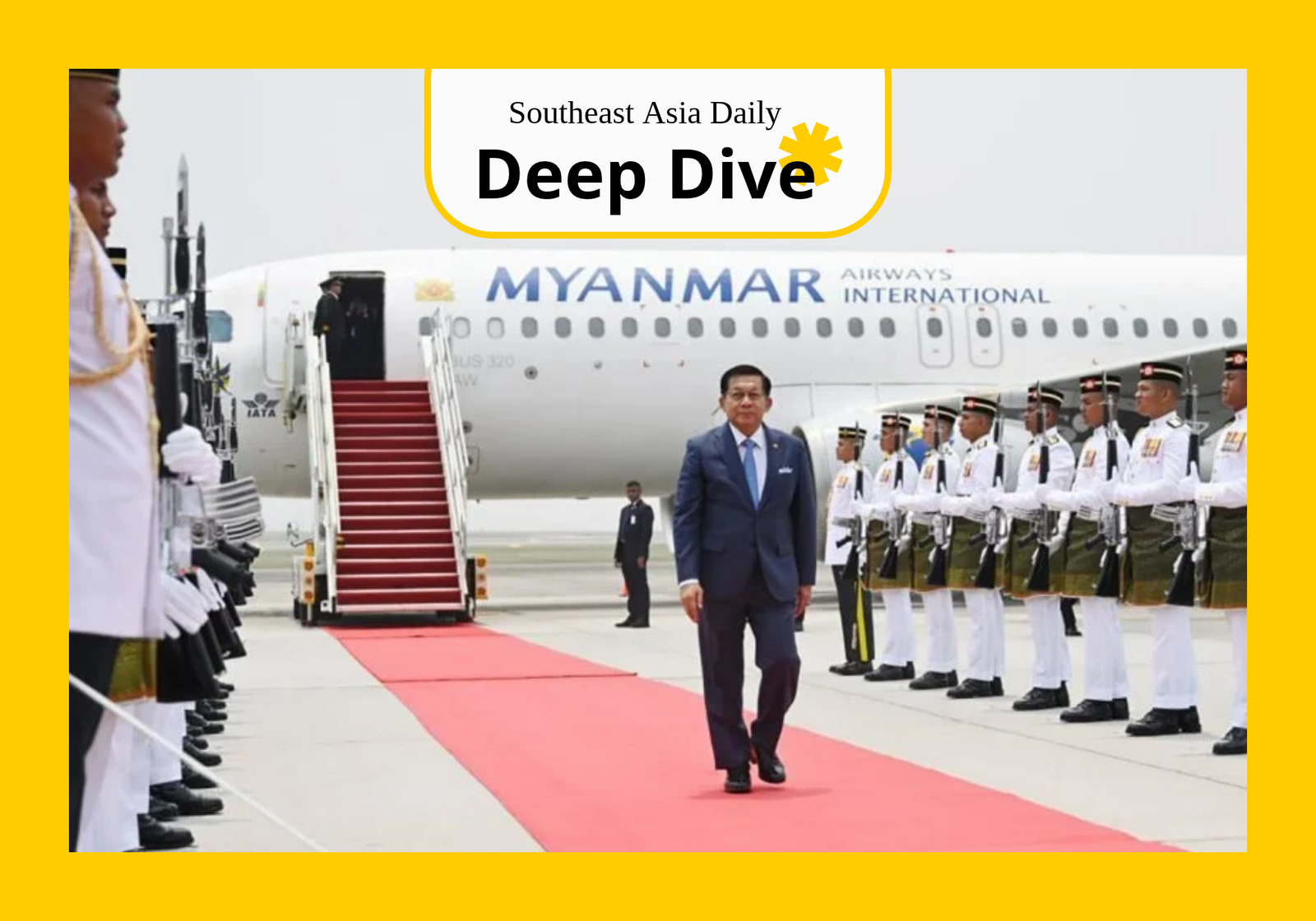
Myanmarese President Min Aung Hlaing arrives at Kuala Lumpur International Airport on October 7. (Myanmarese Presidential Office)
The Mainland Line Breaks
On October 7, Myanmar President Min Aung Hlaing arrived in Malaysia for a two-day official visit, extending a diplomatic return to ASEAN capitals that until this week had remained concentrated in mainland Southeast Asia. His arrival made Malaysia the fifth ASEAN member in the recent sequence—and the first maritime Southeast Asian country to host him.
The sequence began with Laos in early July, followed by Thailand in August, Vietnam on September 4–6 and Cambodia a week later. The substance of the four visits varied considerably. Thailand went furthest, with Prime Minister Anutin Charnvirakul publicly supporting Myanmar’s “full and equal participation” in ASEAN mechanisms. Vietnam paired a full state welcome with a commitment to deepen defence and security cooperation, including military training, officer exchanges, disaster response and crime prevention. Cambodia offered full state protocol and several agreements but avoided Thailand-style language advocating Myanmar’s return to ASEAN’s political table. Laos kept its engagement more conventional and lower profile. Malaysia has now also broken that line.
But the more important finding remains intact. ASEAN itself, however, has not formally changed the restrictions governing Myanmar’s political participation. Myanmar remains an ASEAN member, but its political leadership is still restricted from participating normally in ASEAN Summits and Foreign Ministers’ Meetings. In July, ASEAN foreign ministers reaffirmed the Five-Point Consensus and called for “concrete and measurable steps” toward its implementation, including a permanent cessation of violence, release of political prisoners and safe, unimpeded delivery of humanitarian aid. Singapore Foreign Minister Vivian Balakrishnan separately said the Five-Point Consensus “was and it remains valid.”
The contrast is increasingly difficult to miss. Min Aung Hlaing remains outside ASEAN’s main political room, but he is no longer outside every member state’s capital.
This kind of parallel diplomacy predates 2026. Lowy Institute has described a broader decentralisation of ASEAN’s Myanmar diplomacy, with national initiatives increasingly operating alongside, and sometimes outside, the bloc’s consensus-based framework. Indonesia, for example, has used quiet facilitation with resistance actors, while Thailand has pursued more direct engagement with the military authorities.
Malaysia first signalled the shift on September 16, when Prime Minister Anwar Ibrahim said he would invite Min Aung Hlaing to discuss the repatriation of Myanmar nationals. The invitation has now become an official visit. Wisma Putra says the October 7–8 trip will cover voluntary, dignified and safe repatriation as well as ongoing efforts under ASEAN mechanisms, framing the engagement as consistent with the Five-Point Consensus rather than as an argument for Myanmar’s political rehabilitation.
The timing is also significant because Myanmar itself has taken a harder line toward ASEAN’s formal framework. Min Aung Hlaing has criticised the Five-Point Consensus as discriminatory and questioned whether it still represents consensus among ASEAN members. While maintaining that stance, Naypyidaw has attempted to rebuild diplomatic space through visits to Laos, Thailand, China, especially since the December 2025 elections.
The result is not a single mainland policy. It is something subtler: ASEAN’s restrictions on Myanmar’s top-level political participation and its members’ bilateral diplomacy are increasingly able to operate side by side.
One ASEAN, Two Tracks
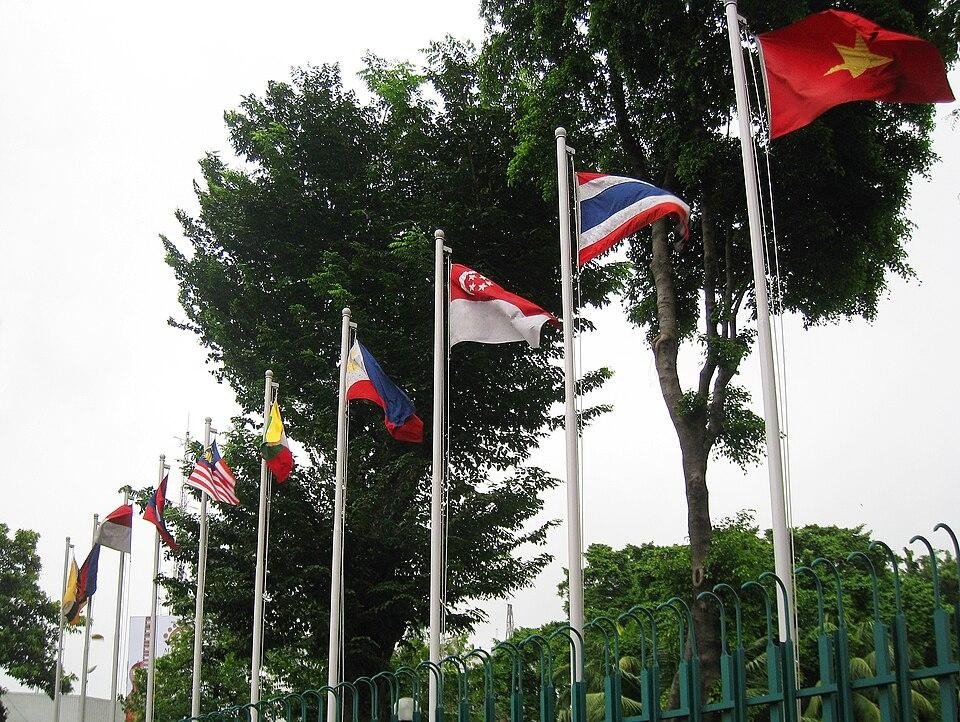
Flags of ASEAN member states at the ASEAN Secretariat in Jakarta. (Wikimedia/Gunawan Kartapranata)
The clearest mistake would be to describe this as ASEAN abandoning the Five-Point Consensus. It has not.
The bloc has repeatedly reaffirmed the framework and the decision to maintain Myanmar’s non-political representation remains in force. Singapore’s position is explicit: meaningful political progress requires cessation of hostilities, inclusive dialogue and participation by all stakeholders, while non-political representation should remain until there is meaningful progress on the Five-Point Consensus.
At the collective level, ASEAN still conditions full political participation on progress inside Myanmar. At the bilateral level, individual governments remain free to receive Min Aung Hlaing, sign agreements, deepen trade or security relations and treat his administration as a working counterpart. The institutional restriction stays intact even while the diplomatic reality around it becomes more permissive.
Thailand has moved furthest politically. Its support for Myanmar’s “full and equal participation” goes beyond the practical argument that neighbouring governments need working relations over border security, migration or cross-border crime. It directly addresses Myanmar’s ASEAN status.
Vietnam’s approach is different. Hanoi paired a full state welcome with more substantive defence and security cooperation, elevating those ties into a major pillar of the relationship. AP reported bilateral trade of 335 million US dollar in the first half of 2026, compared with 853 million US dollar for the whole of 2020. That does not explain Vietnam’s policy, but it does complicate any simple story of diplomatic engagement being driven by already-expanding commerce.
Cambodia is different again. Its September visit combined full state protocol with relatively modest agreements and a defence of engagement rooted in non-interference. Cambodian officials did not publicly adopt Thailand’s reintegration language. The visit therefore carries political symbolism without demonstrating that Phnom Penh has adopted Bangkok’s position on ASEAN participation.
Laos has kept its engagement lower-profile and largely conventional. The visit revolved around bilateral deals, tourism and longstanding diplomatic relations rather than a direct challenge to ASEAN’s restrictions on Myanmar’s political representation.
The mainland states are therefore not pursuing one shared Myanmar policy. What they share is a willingness to conduct bilateral relations that ASEAN itself still refuses to normalise at the highest political level.
Geography explains part of that willingness, though not all of it. Thailand has the most immediate exposure because of its long land border with Myanmar, making border security, trade and cross-border crime difficult to manage through diplomatic distance alone. Laos also operates within continental Southeast Asia’s connectivity networks. Vietnam has no direct border with Myanmar but has longstanding state, commercial and defence-linked interests. Cambodia’s direct economic exposure is smaller, making its decision to host Min Aung Hlaing more clearly political and diplomatic.
The maritime states face a different incentive structure, but their approaches are not identical either.
Indonesia has used quiet diplomacy with resistance actors, a track described as extending ASEAN’s reach rather than legitimising the junta. Malaysia pursued a broad stakeholder approach during its 2025 chairmanship, including contacts with both Min Aung Hlaing and the pro-democracy National Unity Government. Malaysia now adds another form of engagement, but for a different stated purpose. Anwar has tied the visit primarily to repatriation, while Wisma Putra has placed it within ASEAN’s existing framework of constructive and principled engagement. That makes Malaysia different from Thailand: Kuala Lumpur is widening bilateral access without publicly advocating Myanmar’s full return to ASEAN’s political mechanisms. The Philippines is carrying the formal chairmanship and special-envoy process, while Singapore remains one of the clearest defenders of measurable progress before full political participation resumes.
That variation matters. The divergence is not simply “mainland pragmatic, maritime principled.” It is better understood as a difference in the mix of interests, exposure and diplomatic tools available to each government.
The space between those approaches creates an opening for Myanmar itself.
Min Aung Hlaing does not need ASEAN collectively to reverse its policy in order to reduce his government’s diplomatic isolation. Bilateral acceptance can deliver some of the political benefits of regional reintegration without requiring consensus among all ASEAN members.
This may help explain the striking difference between Naypyidaw’s domestic rhetoric and Min Aung Hlaing’s language while travelling. At home, he has attacked the Five-Point Consensus as discriminatory and questioned its legitimacy. On tour, Myanmar’s messaging has been more conciliatory, emphasising cooperation within ASEAN and bilateral partnership. That contrast does not prove a deliberate strategy, but it is consistent with an approach that rejects ASEAN’s conditions while seeking acceptance from member states individually.
Regional diplomacy outside ASEAN reinforces that possibility. Since taking the presidency in April, Min Aung Hlaing has also visited India, China and Russia. The India and China visits are part of his wider attempt to strengthen trade, investment and diplomatic relationships. These external relationships provide Myanmar with additional channels of engagement beyond ASEAN. They do not prove that China, India or Russia caused any ASEAN government to soften its position, but they reduce Myanmar’s dependence on ASEAN as its only source of regional legitimacy.
Institutional policy and practical leverage therefore diverge because ASEAN can decide collectively who sits at its political meetings, but it cannot easily prevent sovereign member states from conducting their own bilateral diplomacy. The same principles that help preserve ASEAN cohesion—consensus, sovereignty and non-interference—also limit the bloc’s ability to make every member implement its Myanmar policy in the same way.
That does not make the Five-Point Consensus meaningless. It makes the limits of ASEAN’s collective leverage more visible.
The result is not one broken ASEAN policy but two tracks operating simultaneously: restricted political participation through the institution and engagement through individual capitals.
The November Test
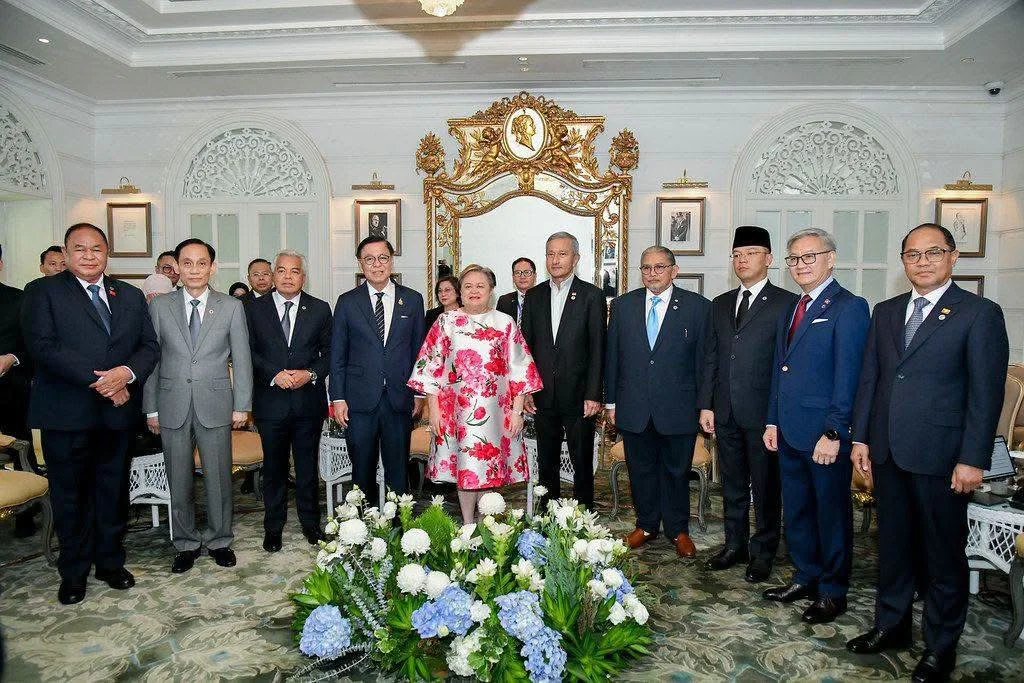
Officials from ASEAN member states attended an informal FMM meeting in Bangkok, Thailand on July 12, 2026 with Myanmarese FM U Tin Maung being first on the right. (Union Minister of Foreign Affairs)
The next major test will come at the ASEAN Leaders’ Summit in November.
Foreign ministers have already called for concrete and measurable progress on the Five-Point Consensus. The most important question is therefore not how many more bilateral meetings take place before then, but whether the widening space for bilateral engagement begins to alter ASEAN’s collective decisions.
Three indicators will matter.
The first is representation. If ASEAN maintains Myanmar’s non-political representation at the November summit despite the recent state visits, that would confirm that the dual-track arrangement remains manageable: individual governments can engage, while the bloc’s collective threshold stays intact. A change in representation would be more consequential because it would turn bilateral acceptance into institutional rehabilitation.
The second is the benchmark process itself. A clearer set of conditions for Five-Point Consensus implementation could strengthen ASEAN’s collective position by making progress easier to measure. But benchmarks without consequences would leave the same problem of limited collective leverage unresolved.
The third is what follows Malaysia’s move beyond the original mainland cluster. The geographic test has already shifted: Min Aung Hlaing is now in Malaysia. The next question is whether Kuala Lumpur’s engagement remains narrowly tied to repatriation and ASEAN mechanisms, or expands into the broader political, security or economic normalisation seen elsewhere. A similar move by Indonesia, Singapore, the Philippines or Brunei would further weaken geography as the main dividing line and strengthen the argument that bilateral engagement is becoming a wider ASEAN pattern.
Singapore will be especially important beyond November. It takes over the ASEAN chairmanship in 2027 and has already defended the validity of the Five-Point Consensus and the continuation of non-political representation until there is meaningful progress.
The mainland visits should also be judged by what follows them. Cambodia’s four agreements remain relatively modest. Vietnam’s defence and security cooperation is more substantive. Thailand has gone furthest politically. Laos has remained more conventional. None of the Cambodia or Laos visits produced the kind of major defence pact that would, by itself, signal a transformation in Myanmar’s regional standing.
If those relationships deepen into major defence agreements, sustained investment flows or coordinated advocacy for Myanmar’s full return to ASEAN meetings, bilateral engagement will have moved beyond diplomatic symbolism. If they remain mostly ceremonial and transactional, the distinction between engagement and institutional reintegration will remain important.
For now, ASEAN is maintaining restrictions at the institutional level while leaving much wider room for engagement at the bilateral one.
Min Aung Hlaing remains barred from the bloc’s main political stage, yet he has now been received by five ASEAN capitals with state protocol, business forums and bilateral agreements. Malaysia’s arrival on that list shows that the pattern is no longer confined to the mainland. That may be uncomfortable, but it is not necessarily incoherent. ASEAN has long allowed national interests to diverge beneath collective language.
The question for November is whether that flexibility still protects ASEAN’s Myanmar policy—or whether the distance between the summit communiqué and the welcome carpet has become too wide to manage.
About The Author