Durairaj Kumarasamy is a Professor and Head of Department of Economics, School of Commerce and Economics (SoCE) of the Manav Rachna International Institute of Research and Studies.
Parthu Venkatesh Penderi is a Research Fellow and Ph.D. Scholar in the Department of Economics, School of Commerce and Economics (SoCE) of the Manav Rachna International Institute of Research and Studies.
The views expressed are the authors’ own and do not represent SEA Daily or that of another organisation.
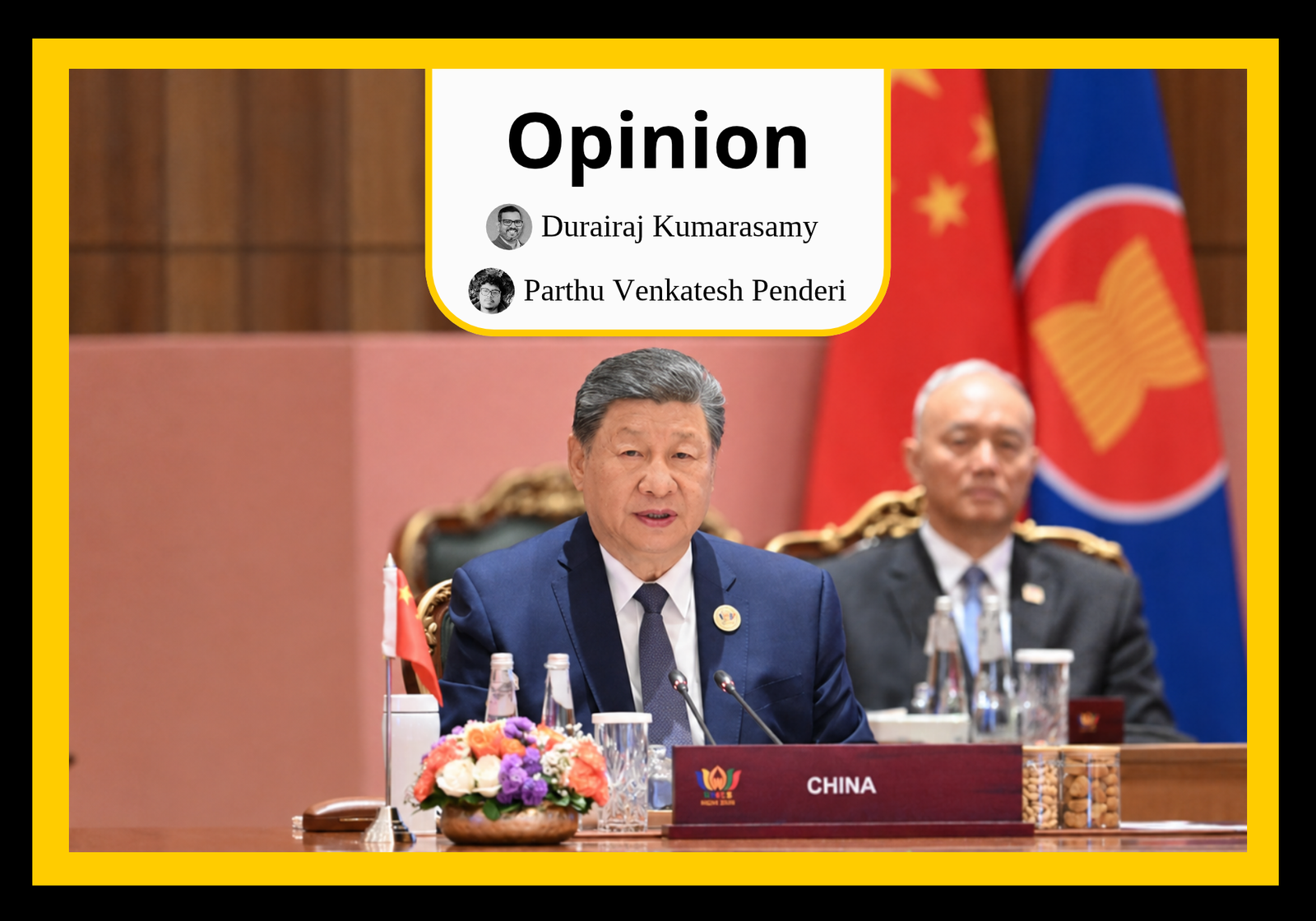
Chinese President Xi Jinping attending the 18th BRICS Summit. (Chinese Ministry of Foreign Affairs)
On September 12-13, the 18th BRICS Summit in New Delhi brought together leaders from China, India, Iran, Russia and South Africa, joined by Southeast Asian delegations from Indonesia, Malaysia, Thailand and Vietnam, with the Philippines attending as ASEAN chair. The international commentary fixated on familiar topics as well; the aim for de-dollarisation, the amplification of world financial architecture and the rise of a multilateral challenge to Western world order. And yet this standard narrative overlooks a big structural vulnerability hiding in plain sight within the bloc itself: China’s near-total monopoly on rare earth permanent magnets (REPMs).
While the bloc projects an image of collective and united economic defiance, the ground reality is deeply asymmetrical. BRICS nations have vast reserves of rare earth elements (REE), yet almost all member countries remain functionally dependent on Beijing’s midstream REE processing monopoly. If Washington and its partners wish to understand the true limits of BRICS unity, they must watch past macro-level summit declarations and analyse the industrial chokehold China has over BRICS member states. Figure-01 displays the resource asymmetry among the BRICS member countries.
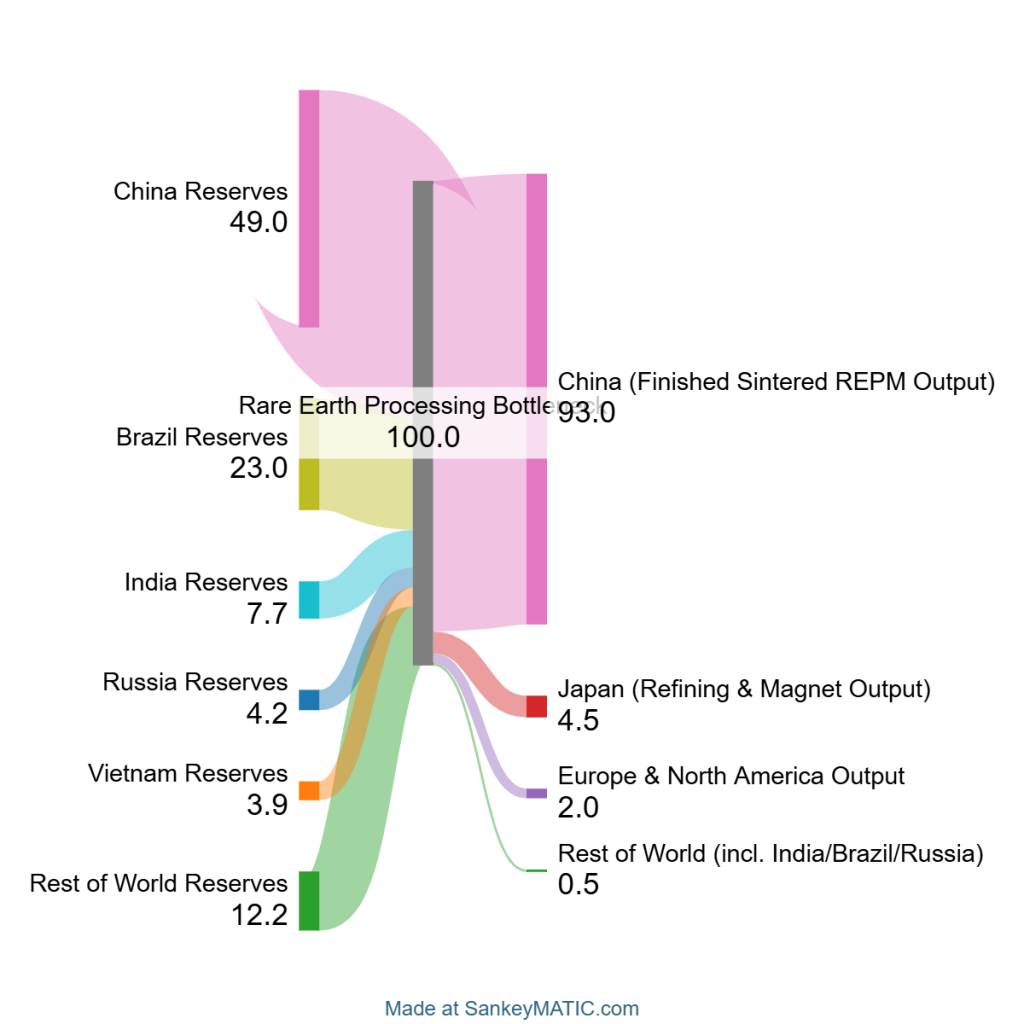
Figure-01: The Resource Asymmetry Diagram (US Geological Survey, IEA)
The Illusions of Resource Wealth
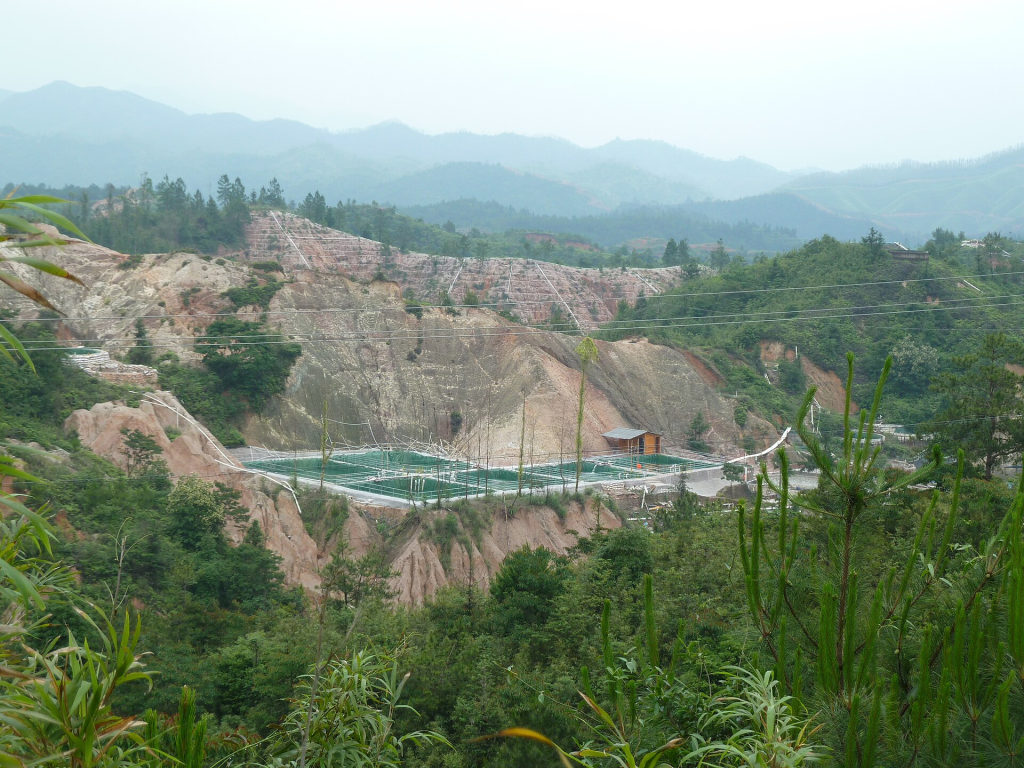
An overview of one of the regolith-hosted rare earth element deposits (a type of Rare Earth Element mine) in South China. (Wikimedia/Kevnmh)
The root of the concern is not a lack of geological mineral deposits, but a severe asymmetry in REE processing capabilities. The production chain for REPMs essential for electric vehicles, defence guidance systems, wind turbines and precision robotics require four distinct stages: mining/exploration, chemical separation, metallic alloying and sintering.
While nations like Brazil and India hold some of the world’s largest unrefined mineral reserves of monazite sands and carbonatite ores, they lack the high-purity solvent extraction and metallurgical infrastructure and technology required to manufacture finished sintered NdFeB (Neodymium-Iron-Boron) magnets. China presently controls over 90% of global rare earth refining and more than 93% of finished magnet manufacturing.
Concurrently, BRICS members except China face the exact same supply-chain vulnerability as what Western nations face. Recently, Beijing has tightened export restrictions and licensing regimes on heavy rare earth elements (HREEs) like dysprosium and terbium. Manufacturing in New Delhi, Brasília and Johannesburg feels a pinch just as acute as industrial hubs in Detroit or Stuttgart. For all the rhetoric of mutual economic cooperation and unity, the midstream critical mineral economy of BRICS remains fundamentally problematic: mineral raw ores flow out of member states and high-value finished technology flows back in from China.
Forging a BRICS Critical Minerals Cooperation Mechanism
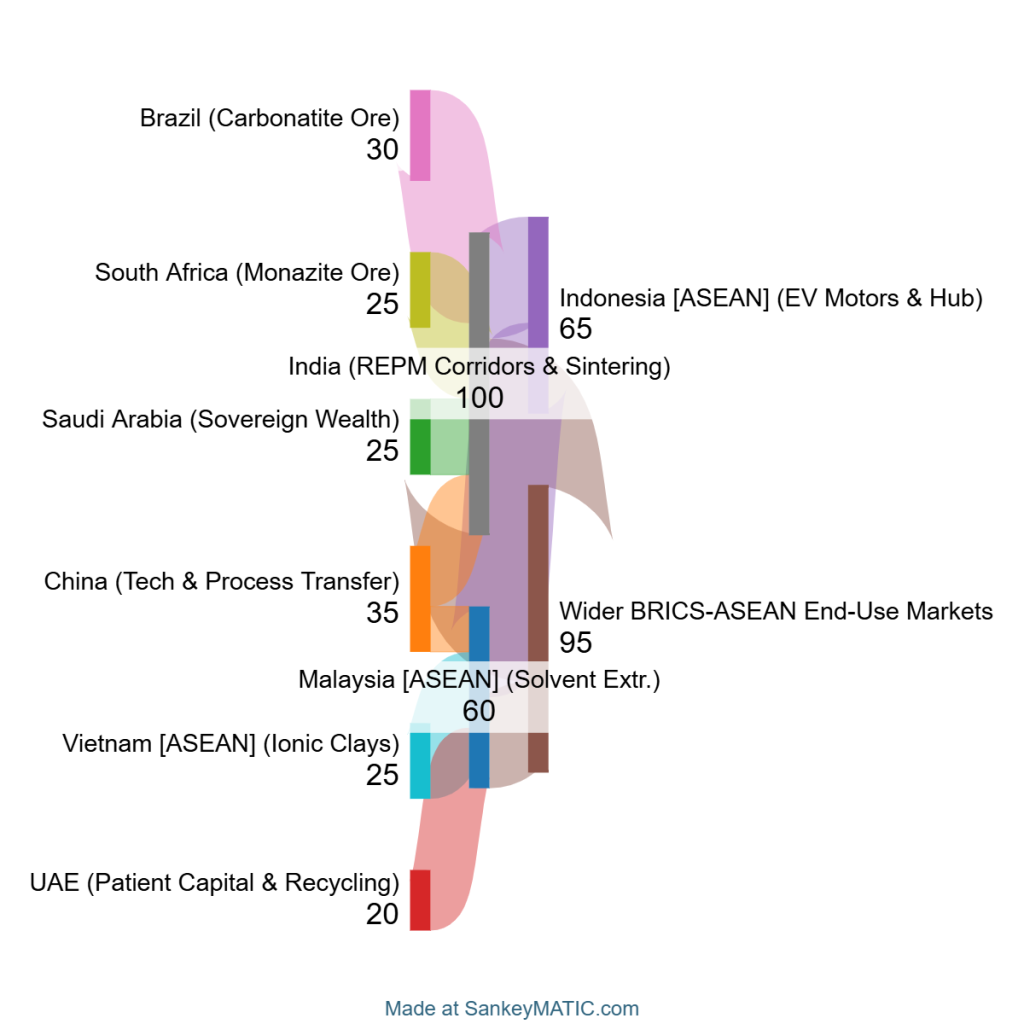
Figure-02: Proposed BRICS Plurilateral Supply Chain Framework (Government of India, OECD/IEA)
To escape this unilateral dependency without causing immediate diplomatic turbulence, BRICS members other than China must change their strategy gradually. Rather than practicing supply-chain diversification arbitrarily, BRICS can call for formal critical minerals cooperation mechanism for strengthening the supply-chain based on member countries capabilities. This mechanism must first and foremost establish technology transfer protocols. Nations such as India, Brazil and South Africa hold significant leverage as resource hubs. Advocating mandatory joint-venture requirements that Chinese midstream processors setting up operations within BRICS borders build complete REE processing from upstream to midstream and downstream, rather than merely exporting raw monazite concentrates for processing in Baotou or Jiangsu in China.
Second, the framework must build standardised environmental, social, and governance (ESG) Guidelines. Heavy rare-earth processing is subject to environmental harm that produces radioactive tailings and hazardous acidic residue. Establishing a unified and common environmental guideline across the bloc helps prevent state-backed entities from undercutting domestic processors through lax environmental practices, placing a level playing field for sustainable refining.
Leveraging Multilateral “BRICS” Synergies
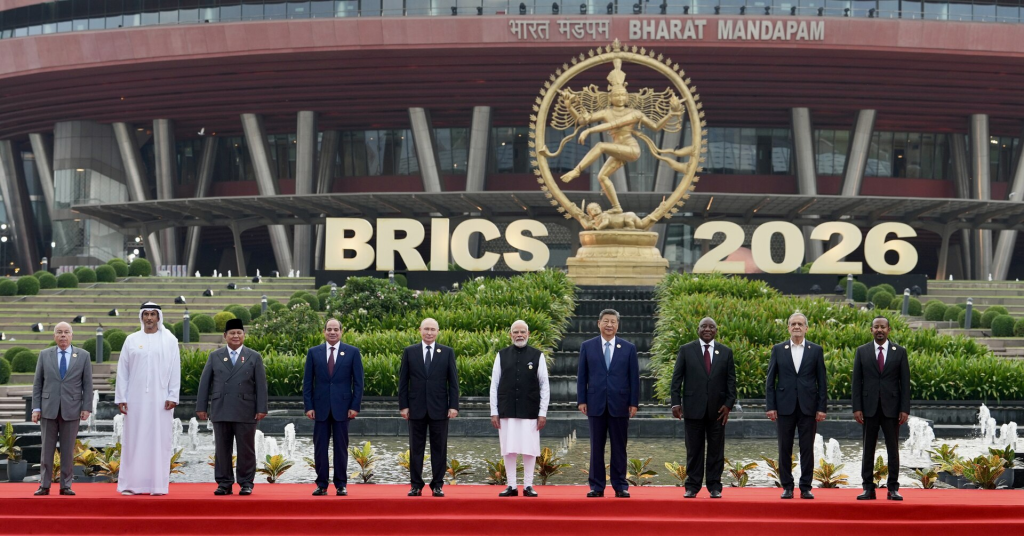
A group photograph of BRICS leaders on the sidelines of the 18th BRICS Summit in New Delhi India on September 12, 2026. (Wikimedia/Indian Prime Minister Office)
Beyond formal summit resolutions, these states can navigate every chokepoint of the REPM supply chain with reference to Beijing’s experience through a practical outcome-based multilateral cooperation among BRICS members to build an independent intra-bloc processing loop by aligning their comparative advantages:
- Upstream Supply (Brazil, South Africa and Vietnam): Brazil holds massive carbonatite deposits and South Africa holds rich monazite reserves and can be the source of the primary raw ore feeds, reducing dependency to Chinese extraction quotas. Vietnam holds large HREEs and other deposits making it a sustainable spot for REE upstream feeds.
- Midstream and Downstream Processing (India and Malaysia): India is strategically positioned to serve as the refining and manufacturing engine for this network. By leveraging initiatives like its REPM Manufacturing Scheme and designated domestic Rare Earth Corridors, India can scale up the midstream separation and sintering infrastructure required to process raw ores from partner nations into finished sintered magnets. Malaysia brings advanced commercial-scale solvent extraction and advanced REE separation experience making it an essential partner. Meanwhile, Indonesia is establishing integrated processing ecosystems for electric vehicle (EV) battery materials and magnet-driven electric powertrains.
- Capital and Project De-Risking (Saudi Arabia and UAE): Capital-intensive REE refining projects suffer long gestation time periods and market instability. The financial depth of Middle Eastern sovereign wealth funds can render the patient, long-term capital required to fund high-capacity processing and advanced recycling infrastructure.
China, on the other hand, can help BRICS members to achieve resilience in the critical mineral supply chain through its technology, cooperation and expertise.
A Potential Partnership
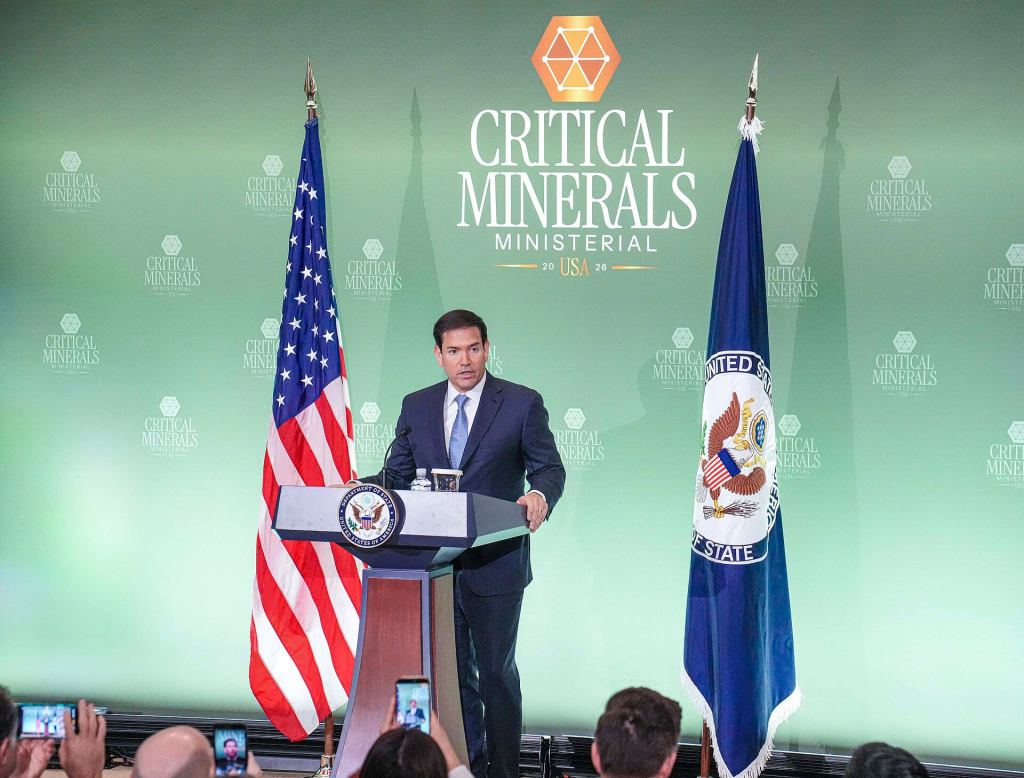
US Secretary of State Marco Rubio at the “2026 Critical Minerals Ministerial”. (Wikimedia/US Department of State)
China’s rare earth monopoly within BRICS can be leveraged within the bloc as the grouping is a heterogeneous coalition whose member states are actively seeking ways to strengthen their position in the existing new world order.
Rather than dismissing BRICS as a geopolitical threat, Washington should involve swing nations like India and Brazil through partnerships like the Minerals Security Partnership (MSP), offering co-development funding programmes, advanced green-refining technologies and secure export markets for REPMs. Countries like the US, which has advanced technologies, can help BRICS member countries build domestic processing capabilities under the extended BRICS track sustainable critical mineral chain. Integrating key ASEAN partner nations; Vietnam, Malaysia and Indonesia, transform this dynamic. Southeast Asia possesses massive unrefined ionic-clay deposits, active commercial separation plants and rapidly growing EV manufacturing hubs.
BRICS member nations can leverage via other multilateral forums like the MSP and the Indo-Pacific Economic Framework (IPEF) to access advanced technology and capital to foster a balanced, multipolar critical mineral architecture.
This will thereby enable structural interdependence on REE processing and use of REPMs to ensure the bloc remains a balanced, multipolar forum rather than an instrument of unilateral leverage.
About The Author