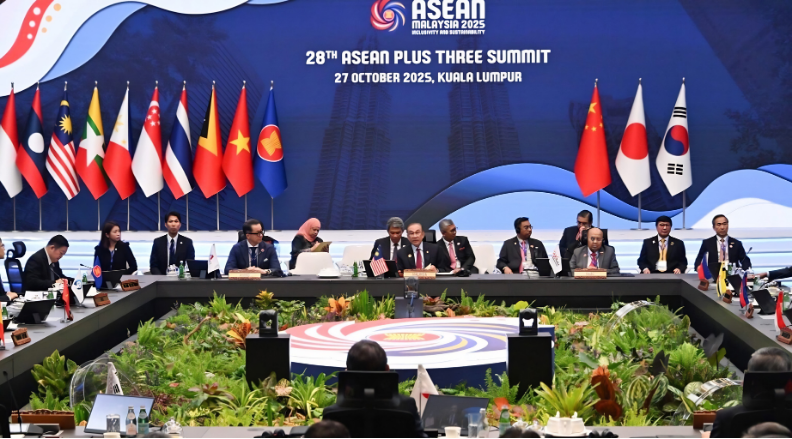
The 28th ASEAN+3 Summit in Kuala Lumpur, Malaysia, on October 27, 2025. (AMRO)
This regional economic outlook reflects the repercussions stemming from the protracted Middle East conflict, which has now entered its fourth month, surpassing initial expectations of a swift resolution.
The disruption has caused an acute surge in global energy prices that has triggered domestic instability for import-dependent regions, like Southeast Asia, and countries such as Japan, South Korea and China to some extent.
A tightening energy supply is further exacerbated by mounting turmoil in energy-related sectors, namely commodities and logistics. AMRO Chief Economist Dong He underscored in a press release that “if the conflict persists, these pressures could broaden and weigh on regional growth”.
Nevertheless, optimism remains warranted as the region recorded exceptional growth in the first quarter.
Dong He concluded that the full scale of the Middle East conflict has yet to materialise and therefore “policy responses need to remain agile as the shock evolves”. He elaborated that “near-term support should be targeted and temporary, while longer-term efforts should focus on strengthening energy security, supply-chain resilience, and regional integration.”
What does this mean for business?
While robust first-quarter growth was successfully propelled by strong domestic demand, tech exports and resilient labour markets, rising geopolitical uncertainty introduces severe headwinds. Surging energy and logistics costs threaten to squeeze corporate profit margins and disrupt industrial supply chains.
Furthermore, prolonged regional volatility risks dampening investor sentiment and making foreign capital more cautious. To navigate this challenging environment, businesses must prioritise operational agility, diversify supply networks and hedge against volatile commodity prices.
_____________________________________________
Kala Advisory helps European investors plan for risks like these, from volatile energy costs to fragile supply chains, across Southeast Asia. Visit kala-advisory.com.
About The Author