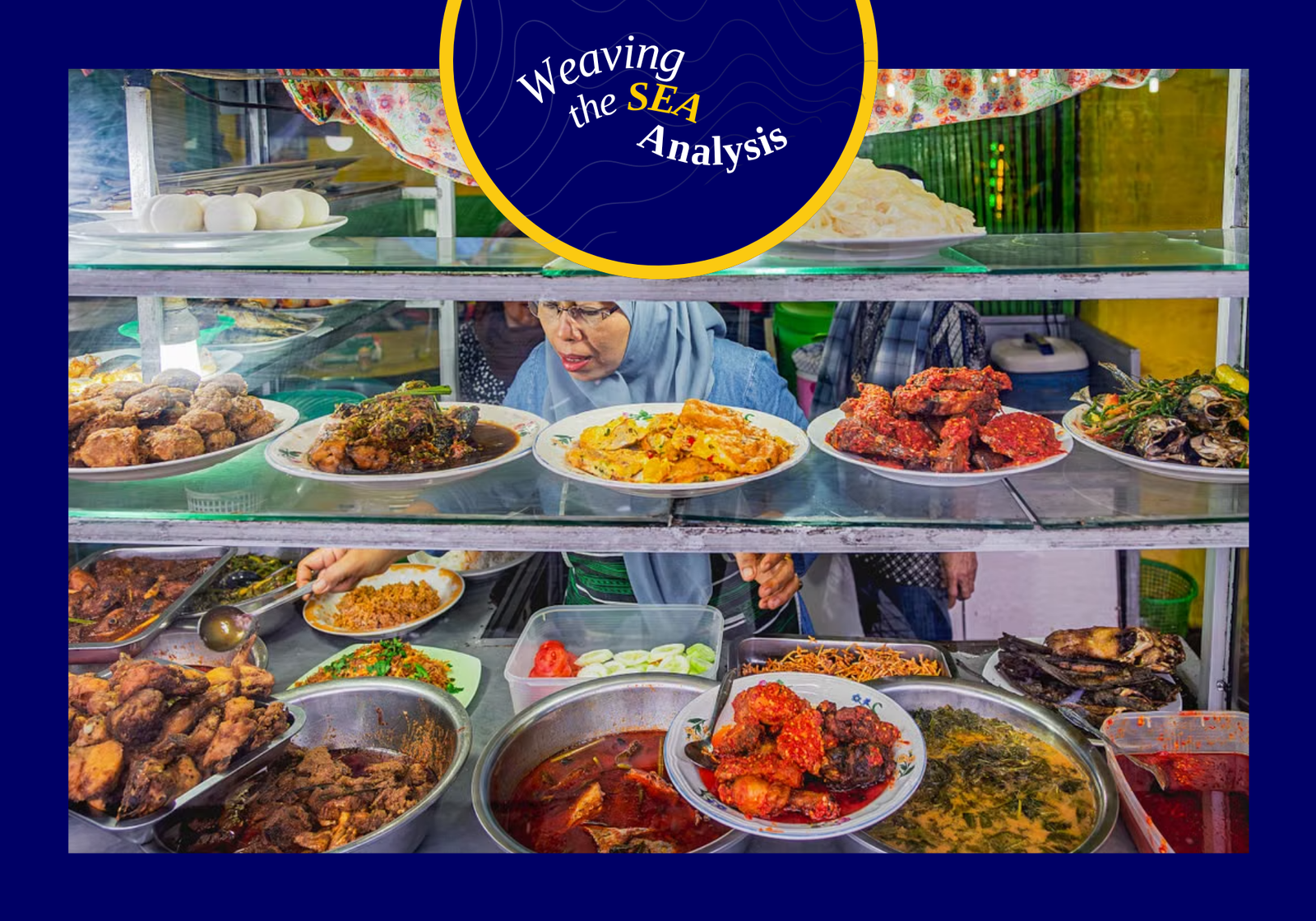
A vendor selects a plate of food from the tray display for a customer at a warteg (Pexels/Man Fong Wong)
A Notebook on the Counter
I was in the Indonesian capital of Jakarta in February 2026 for an ASEAN Foundation programme, alongside a small group of participants from the region. Marylin Nnenna Igboke, a Jakarta local representing Indonesia in the programme, took a few of us to a warteg, on a busy, noisy street. None of us had eaten at one before, so she showed us how it worked: point, watch a plate come together and pay at the end. It felt improvised and warm, nothing like a restaurant. Tempeh, stir-fried greens, a boiled egg, all for a sum that felt almost too small to matter. Sitting there, I thought of nasi campur and nasi kandar counters back home in Malaysia, the same instinct of pointing at what you want and building a plate from small things.
The next day, I went back to a different warteg, this time with my Malaysian friend rather than the group. That visit is the one that stayed with me. A man ahead of us in the queue paid only part of his bill. The rest, the owner wrote down in a small notebook. There was no argument nor hesitation, just a quiet, practised exchange between two people who clearly knew each other well.
I later learned the practice has a name: ngutang, a running tab that trusted regulars are allowed to settle later, sometimes recorded in a notebook, sometimes carried only in the owner’s memory. It is not printed on any menu, not advertised on any sign. It is something you only notice if you are paying close attention, or if, like that man, you have already earned it.
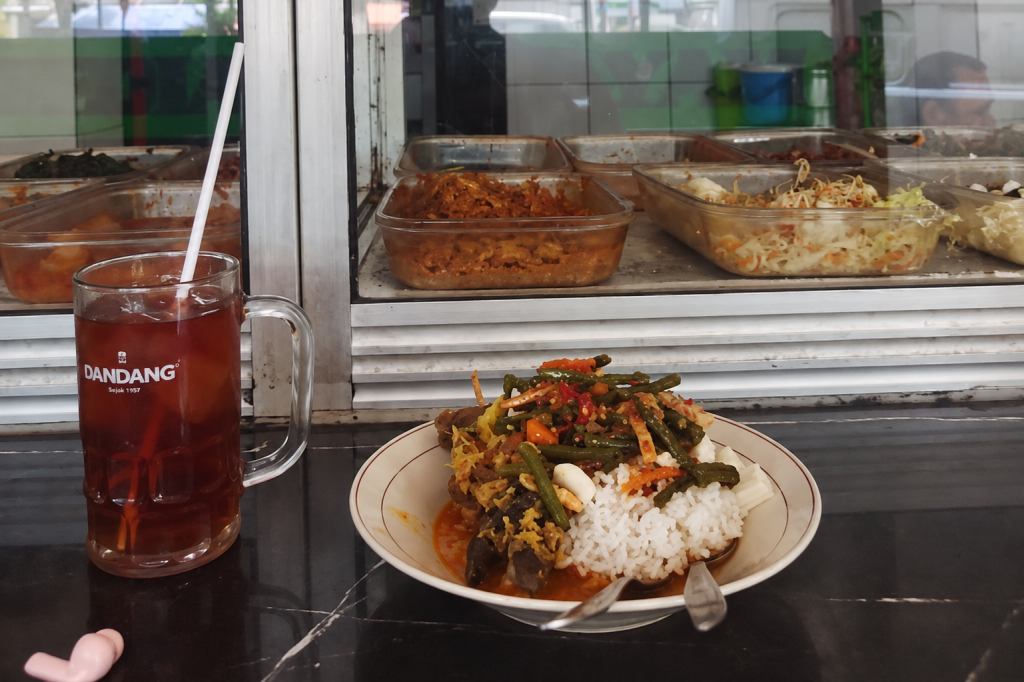
A plate of rice, vegetables and curry at a warteg, with trays visible behind the counter (Marylin Nnenna Igboke, 2026)
What struck me was not the food itself, generous and cheap as it was, but that small act of trust. A stranger, in my eyes, extending credit to someone he clearly saw not as a stranger at all. It felt like a glimpse into a different way of running a business, one built less on paperwork and more on memory, familiarity, and the quiet accumulation of goodwill over many small meals.
The Credit That Built a City
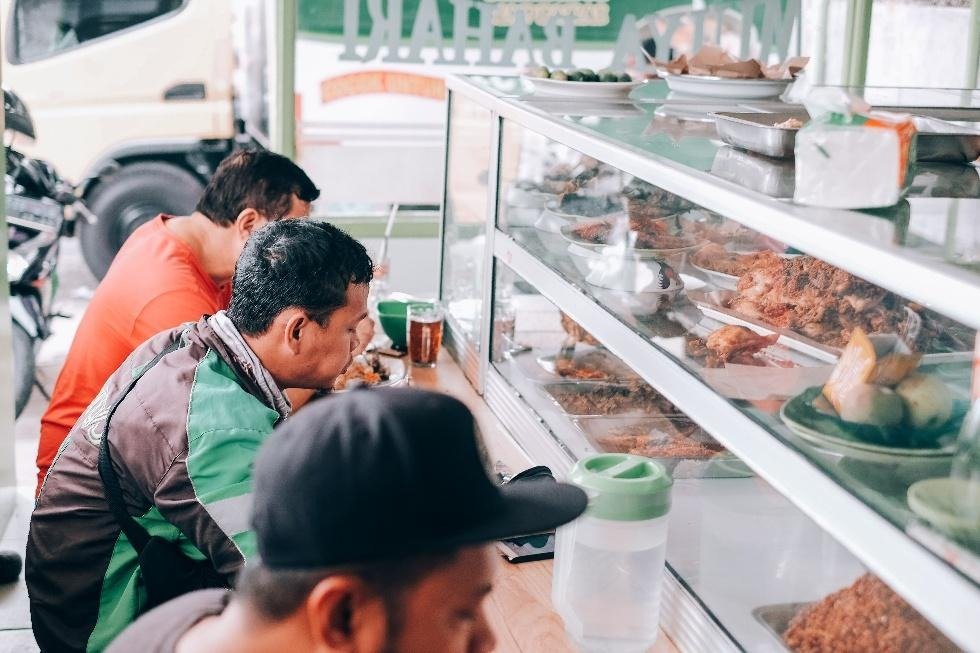
Men enjoying food at a warteg with various dishes displayed. (Pexels/Rakhmat Suwandi)
Warteg is short for Warung Tegal or “Tegal eatery”, and its origins trace back to the 1960s, when Jakarta was in the grip of a construction boom. Fadly Rahman, a food historian at Universitas Padjadjaran, has traced the beginnings of warteg directly to this period of urbanisation. As the city expanded and demand for labour grew, migrants from Tegal, on Java’s north coast, arrived in large numbers to work the building sites. Their wives came with them, and together they began opening small stalls to feed fellow labourers: simple, home-style food, sold cheaply, close to where the work was.
As Rahman has put it, warteg endures because it offers a “rumahan”, home-style, menu that people of any class can enjoy, one reason it has never quite been displaced despite decades of competition from newer, flashier food trends.
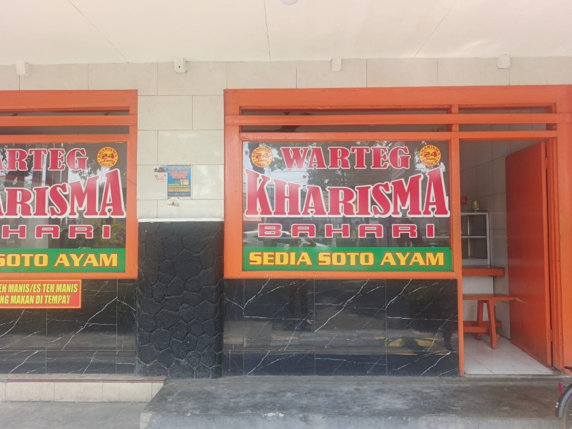
The exterior of Warteg Kharisma Bahari, South Jakarta (Marylin Nnenna Igboke)
The ngutang system appears to have grown up alongside this economy almost naturally, an informal credit arrangement built on relationship rather than paperwork, allowing dependable regulars to eat now and pay later. I was not able to speak directly with the owner of the warteg from that second visit, but Marylin, a Jakartan and a regular customer of ngutang culture herself, offered a rare window into how the system looks from a customer’s side of the exchange. It would be a mistake, though, to treat ngutang as a fixed, unchanging tradition. When I asked her how common the practice still is, her answer was more complicated than I expected.
“There’s a lot of warung now that doesn’t accept kasbon,” she told me, using another local word for a running tab. “It has been a culture, previously, but not anymore.” She described the shift plainly: some stall owners have simply grown tired of chasing unpaid debts, tired of the awkward conversations and the occasional customer who never quite pays it all back. One photograph Marylin sent me, taken at a small warung, makes the point better than any explanation could.
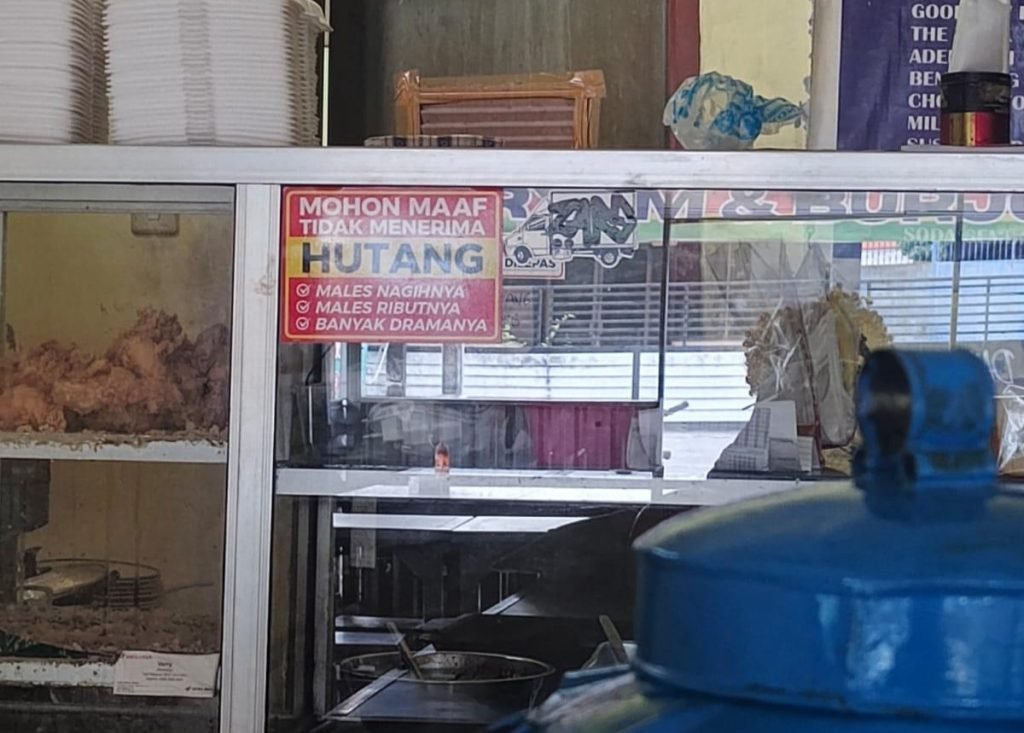
A handwritten sign reading “Mohon maaf tidak menerima hutang”, sorry, we do not accept credit, listing three reasons: the effort of chasing it, the arguing, the drama (Marylin Nnenna Igboke)
The sign is almost comic in its honesty, but it says something real: ngutang is not a fixed cultural inheritance, evenly distributed across every warteg in the country. It survives unevenly, sustained in specific relationships, at specific stalls, between specific people, and increasingly, it seems, in retreat.
Where it does survive, it depends on something that cannot be printed on a sign or written into a contract: familiarity built slowly, meal by meal. “You have to build some sort of conversation with the person who cooks there,” Marylin explained, describing a small staall near her university that she visits late at night. Three men work there in rotating shifts, and over time, each one came to recognise her, to know her order before she said it, even to ask after her if she had been away for a while. “That level of connection that we built, they already know what you’re going to order,” she said. “I haven’t tried to ngutang ten thousand Indonesian rupiah (0.56 US dollar), but I try.” Her own ngutang experience is modest, a thousand or two rupiah short, quietly waved off by an owner who trusted she would pay it back.
That trust, however, is not infinite or unconditional. I asked Marylin what happens if someone stops paying altogether. Her answer was blunt: at some point, an owner will simply stop taking the person’s order. “If you’re going to ngutang, I’m not taking your order,” she said, describing how the arrangement can end as quietly as it began, without confrontation, just a withdrawal of the privilege.
This is where the comparison with Malaysia becomes useful, and where it also needs to be handled honestly. Malaysia has its own migrant, working-class food story in nasi kandar. In nineteenth-century Penang, Tamil Muslim traders carried rice and curry on shoulder poles, known as kandar, to sell to dock labourers at Weld Quay. Like warteg, nasi kandar began as an affordable, portable meal for a colonial-era working class, and evolved into a fixture of everyday life sold today in mamak shops. Shamsul Amri Baharuddin, a socio-anthropologist and director of the Institute of Ethnic Studies at Universiti Kebangsaan Malaysia, has described mamak stalls as one of the few places in Malaysia where people of every income, race and religion still meet on equal footing.
About The Author