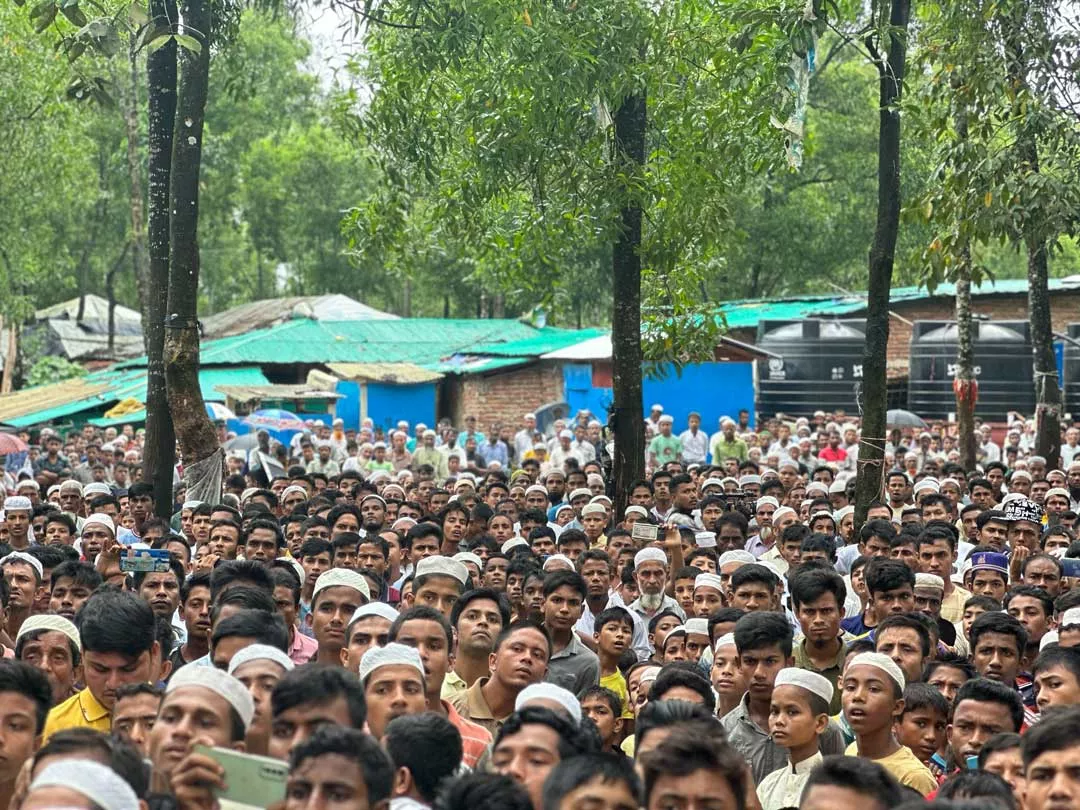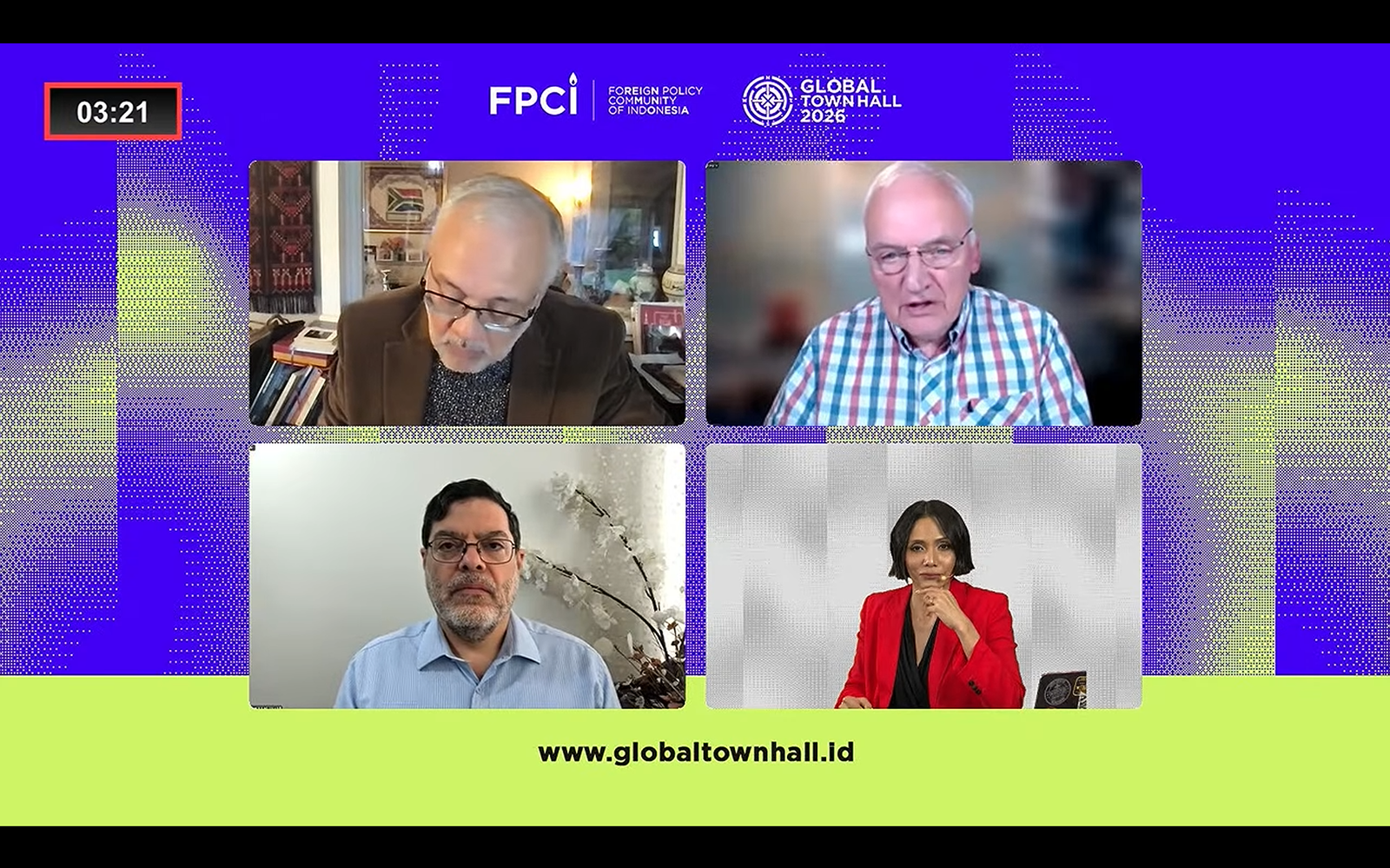
Session 2 of Global Town Hall, “Reality Check: How to Live in the Age of Mass Manipulation and Deception,” September 19. (FPCI)
The Foreign Policy Community of Indonesia (FPCI) on September 19 convened its seventh annual Global Town Hall, featuring the prominent theme, “Calling for a Global U-Turn: Recentering Development, Reclaiming Humanity, Restoring Justice in a Crazi(er) World”.
The discussions kicked off with the first panel outlining the current state of the world. Bilahari Kausikan highlighted that the world is indeed “not in its best shape,” but also “not at its worst,” arguing that “our countries have been through far worse with far less capability”.
The former Ambassador-at-Large at the Ministry of Foreign Affairs of Singapore also observed how the Trump administration’s “threats and unilateralism” are “not new” and have “always been part of American diplomatic culture, to some degree, that cast a very dark shadow”. In manoeuvring accordingly, Bilahari argued that Southeast Asian countries are less “upset” as the region “has always been aware of the shadow,” juxtaposing it with the US’ staunch Western allies, such as European nations and Canada.
Nevertheless, Southeast Asian governments are not immune to the danger of what Nik Gowing termed the “tyranny of realtime”. The former main presenter of the BBC World News argued that governments and institutions “simply do not get yet,” the power of information, “even with all the warnings”.
Nik introduced a practical illustration of Myanmar’s “sky full of lies” propaganda; a catchphrase coined by the military junta to dismiss and discredit reports of their human rights abuses. He explained the “logic of the government”, putting it; “if it’s happening, and you don’t like it, you call it a lie”.
Discussant Nazim Zehra further explained how information torrents, which move “at the speed of sound”, have become a “far more lethal warfare tool” that have “more impact than conventional weapons”. Such intangible streams have triggered the “most consequential outcome and impact on human civilisation,” she noted.
It is therefore non-negotiable, as the Secretary General of the International Association of Press Clubs (IAPC) Jaroslaw Włodarczyk asserted, to treat professional journalism as a “critical infrastructure”, particularly for a democracy. He warned governments not to merely focus on “protecting energy networks, telecommunications and cybersecurity,” which are indeed critical, arguing that an equally substantial investment must be directed towards securing independent, authenticated information.
That said, this is even more intricate for the Global South, including Southeast Asian nations, as Gurjit Singh, former Ambassador of India to Germany, asserted, “reclaiming humanity means reclaiming the ability to tell its own story”. The former Ambassador of South Africa to the US, Ebrahim Rasool, best captured these high stakes, arguing that the mindset should not be focused on “taking the battle to the tech owners”, but rather on “arming our own citizens”.
About The Author