

Cambodians on scooters during clashes in Banteay Meanchey province bordering Thailand on Wednesday. Courtesy of Agence Kampuchea Presse (AKP)/EPA
A Legacy of Tension
On November 11, the Prime Minister of Thailand, Anutin Charnvirakul, announced a suspension of the terms outlined in its Joint Declaration with Cambodia—that paused earlier clashes between the two countries—following a mine explosion a day earlier that gravely injured a Royal Thai Army (RTA) serviceman. Merely 24 hours after the statement, gunfire was reported across the border, wounding three Cambodian civilians and killing one.
These incidents unfolded less than three weeks after Cambodia and Thailand signed the heavily mediatised Joint Declaration during the 47th Association of Southeast Asian Nations (ASEAN) Summit on October 26 in Kuala Lumpur, Malaysia. Aimed at halting the clashes, its key provisions include the withdrawal of heavy artillery from border areas, bilateral cooperation on landmine clearance, and the replacement of missing border markers. The agreement is a culmination of diplomatic efforts by various stakeholders—notably the United States (US) and Malaysia, which acted as the 2025 ASEAN Chair—since the border conflict first flared up last May. The reconciliation process first started when US President Donald Trump threatened a 36% tariff on products from both warring states on July 7, before the Prime Minister of Malaysia, Anwar Ibrahim, publicly offered to mediate the conflict on July 27—leading to the first ceasefire agreement in Kuala Lumpur the day after.
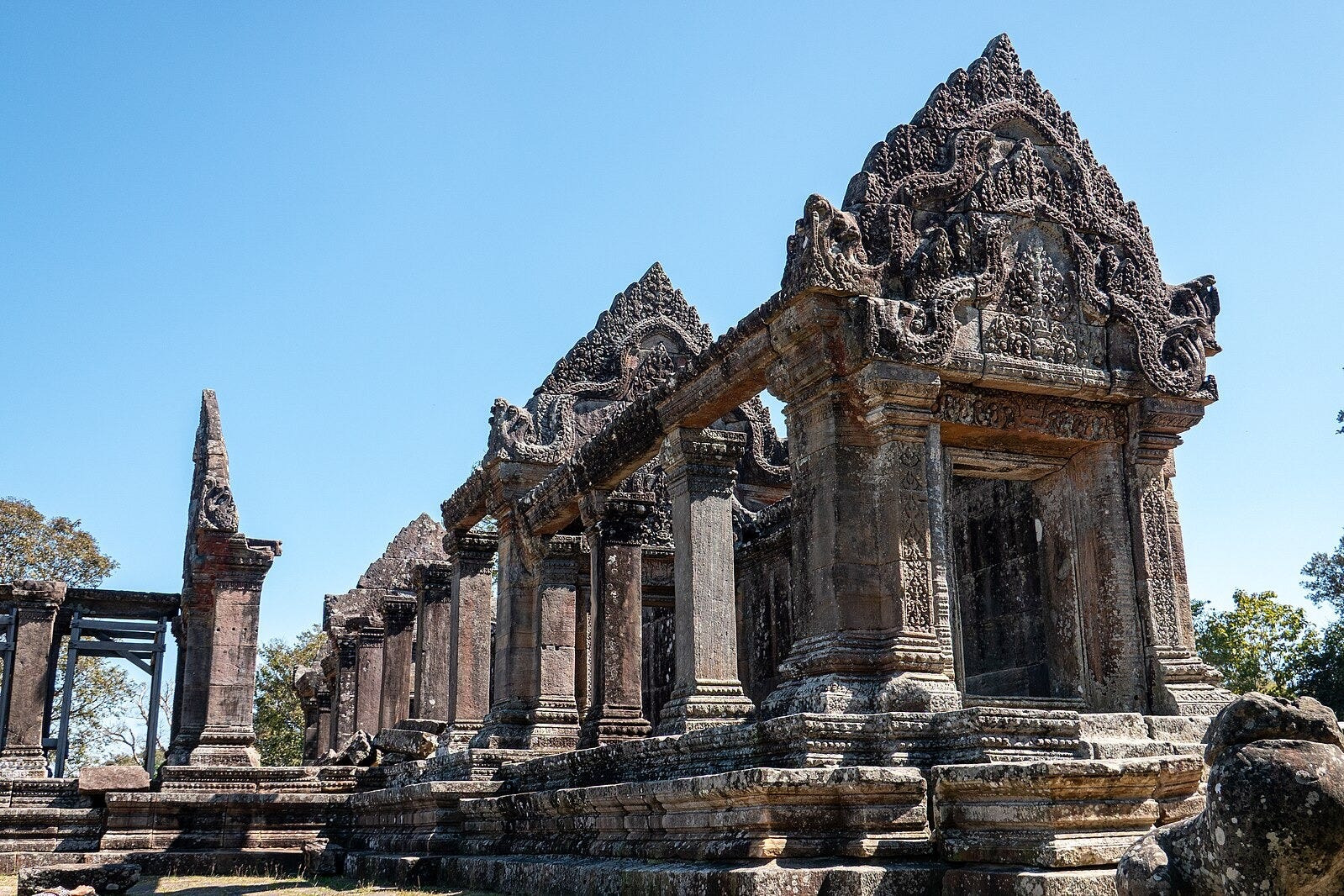
Despite these talks, continuing skirmishes demonstrated the fragility of the ceasefires aiming to end the century old conflict. The longstanding Thai-Cambodian border tension stems from a disputed 1909 French delimitation map around the Preah Vihear temple. In 1962, the International Court of Justice (ICJ) awarded the temple to Cambodia, but did not comment on the adjacent land to the north. The lack of agreement on this area has repeatedly become a point of contention, resulting in multiple clashes, not few fatal.
Patterns of Limited Border Skirmishes
Although minor flare-ups periodically occurred since 1962, major clashes took place in 2008-2011 and in 2025. In 2008, UNESCO’s approval of Cambodia’s nomination of Preah Vihear temple as a World Heritage Site prompted a political crisis in Thailand. While the latter’s ruling People Power Party (PPP) supported Cambodia’s nomination, the influential nationalist pressure group People’s Alliance for Democracy (PAD) opposed it. The situation worsened when Cambodian authorities arrested three Thai nationals who had attempted to plant a Thai flag in the area, leading to significant military deployment by both countries. The military build-up resulted in border firefights that would eventually cause 22 casualties on the Cambodian side and 18 on the Thai side by 2011. Talks during the period were mostly restricted to bilateral meetings on the operational military level, leading to fragile ceasefires that often broke down after days. While ASEAN and neighbouring countries called for restraint, concrete actions were limited. It was only in February 2011, during an ASEAN meeting in Jakarta, that both countries agreed to the deployment of independent Indonesian observers, greatly reducing hostilities.
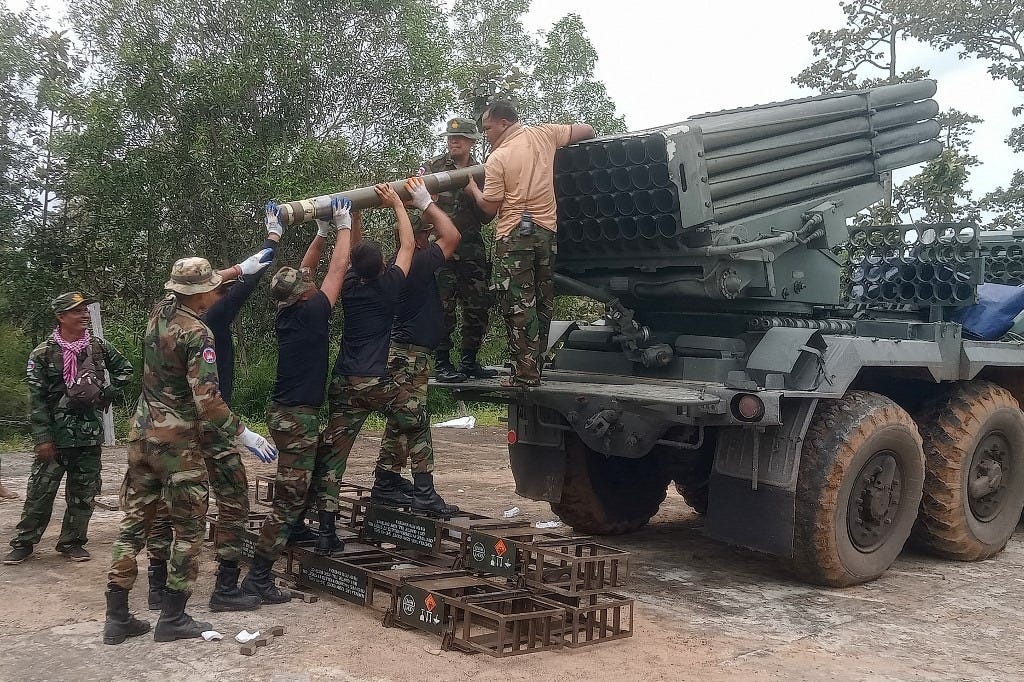
Although both sides withdrew troops from the border area in December 2011, the conflict merely froze without clear resolutions on the underlying issue of demarcation, creating a situation prone to further escalations. Accordingly, in May 2025, another skirmish took place, killing a Royal Cambodian Army (RCA) serviceman. The cause was not well-established as both sides exchanged blame. Nevertheless, it quickly led to escalation, with UAVs, BM-21 Grad rocket launchers, and F-16 jets launched, resulting in significant military casualties and hundreds of thousands of internally displaced persons (IDPs). Trump’s tariff threats and international condemnations eventually brought both parties to the negotiating table in July and October. However, renewed gunfire cast doubt on the October Joint Declaration. As of November 2025, at least 80 soldiers and civilians have been killed and almost 300,000 civilians displaced.
These escalations illustrate a recurring pattern in the Thai-Cambodian border conflict, which tends to be reactionary and limited. Clashes often take place due to differences in border delimitation, which prompted either side to open fire and triggered the other side to react accordingly. Escalations are primarily caused by ambiguous border markings—which risk military missteps—exacerbated by heavy and poorly-monitored military presence.
Unresolved Demarcations
Although tensions rose during the 2025 standoff, the Thai-Cambodian border conflict is unlikely to expand beyond its current, limited scale. This is first due to operational reasons as the border area is heavily forested and mountainous. Therefore, a full-scale invasion by Thailand on Cambodia—which is not out of the question given the former’s military advantage over the latter—would be very costly. This thus explains why past conflicts were limited to small-unit skirmishes and long-range aerial attacks.
Secondly, Cambodia and Thailand have limited economic and diplomatic leverage, making them prone to external pressure. For instance, the 2008-2011 conflict immediately stopped after the ICJ published a legal order for both countries to stop hostilities, which illustrated their limited diplomatic bargaining power. Furthermore, the two countries’ exports and imports are valued at over 50% of their gross domestic product (GDP), demonstrating their dependence on international trade. As a result, Trump’s tariffs threats managed to bring Cambodia and Thailand to the first ceasefire talks last July. Notably, 35.7% and 17.2% of Cambodia’s and Thailand’s exports were destined for the US in 2023, respectively. This vulnerability to international pressure is in contrast, for example, to Russia’s continued attacks on Ukraine despite condemnations and sanctions, which attests to its more abundant diplomatic and economic capital.
Based on these factors, both countries tend to avoid prolonged open conflict. However, their governments are constantly pressured by domestic nationalist narratives. Both sides understand that continued tensions along the border are costly. Yet, territorial disputes tied to temple sites provoke strong nationalist sentiment, which have led to various political crises—especially in Thailand—and created a reluctance to address the underlying issue of demarcations. Therefore, the border tension with the same pattern of limited skirmishes is likely to persist.
In sum, the 2025 border clashes are part of a larger Thai-Cambodian border conflict spanning over a century. While international pressure has been proven to bring a pause in these longstanding hostilities, none have resulted in agreement over the underlying issues of territorial demarcation along the border. Until this concern is addressed, the trend of reactionary conflicts limited to the border area are likely to remain.
Protasius Isyudanto is the Lead Editor of Southeast Asia Daily.
About The Author

One thought on “Suspended Peace: Why the Thai-Cambodian Border Conflict Persists”