
A semiconductor production process. (Singaporean Economic Development Board)
US export controls are accelerating a regional division of labour that may ultimately strengthen Southeast Asia’s semiconductor ecosystem rather than fragment it.
For much of the past three years, discussions about Southeast Asia’s semiconductor ambitions have revolved around a single question: which country will emerge as the region’s next semiconductor powerhouse?
Governments have announced ambitious industrial strategies. Singapore continues attracting high-value investments in advanced manufacturing and chip design. Malaysia is expanding its long-established semiconductor packaging and testing industry. Vietnam is attracting major back-end semiconductor investments, including Amkor’s 1.6 billion US dollar packaging facility and Hana Micron’s planned expansion of about 930 million US dollar, as companies diversify production away from China.
At first glance, the picture appears straightforward. Every government seems to be competing for the same factories, the same investors and the same technologies.
The reality, however, is becoming far more interesting.
Rather than creating a group of direct competitors, recent geopolitical developments—particularly US export controls on advanced semiconductor technologies and the restructuring of global supply chains—are gradually pushing ASEAN towards a functionally integrated semiconductor ecosystem. US controls since 2022 have restricted advanced chips and manufacturing equipment exports to China, while firms have simultaneously expanded semiconductor back-end and manufacturing capacity in Vietnam, Malaysia and Singapore.
This shift has received surprisingly little attention. Most analysis continues to focus on geopolitical competition between Washington and Beijing or on whether Southeast Asia can replace China as the world’s next manufacturing centre. Those debates matter. Yet they overlook an equally important structural transformation taking place inside ASEAN itself. Instead of building identical industries, member states are increasingly specialising in different segments of semiconductor production.
Singapore is consolidating its position in research, chip design, advanced fabrication and regional corporate headquarters. Malaysia is reinforcing its global leadership in outsourced semiconductor assembly and testing (OSAT), already accounting for an estimated 13% of the global market and hosting major operations of Intel, Infineon, ASE, Micron and Texas Instruments. Vietnam is rapidly expanding its back-end semiconductor capacity. Amkor is investing 1.6 billion US dollar in an advanced packaging facility, Hana Micron plans roughly 930 million US dollar of investment, while Intel already operates a major assembly and testing facility in the country. The Philippines remains specialised in semiconductor assembly, testing and packaging, which sit at the core of an electronics sector responsible for 56.9% of the country’s merchandise exports in 2023. Thailand is linking semiconductor investment with advanced electronics and its existing automotive manufacturing base.
Viewed individually, these developments appear to represent national industrial policies. Viewed together, they reveal something much larger.
Southeast Asia is no longer developing five competing semiconductor industries. It is gradually constructing one regional production ecosystem.
Ironically, this transformation has been accelerated by policies that were never intended to strengthen the region.
Since October 2022, successive rounds of US export controls have sought to limit China’s access to advanced semiconductor technologies, manufacturing equipment and high-performance computing. Combined with growing geopolitical uncertainty and efforts by multinational companies to diversify production beyond China, these measures have fundamentally changed corporate investment strategies across Asia.
Rather than relocating entire supply chains into a single alternative country, semiconductor firms are increasingly distributing different stages of production across several Southeast Asian economies. Research and headquarters functions concentrate where highly skilled talent and financial services already exist. Packaging and testing expand where industrial capabilities have matured over decades. Assembly follows locations offering competitive labour costs, improving infrastructure and favourable investment conditions.
The result is not fragmentation, but rather specialisation
For businesses, this distinction matters enormously.
Companies planning future investments increasingly face the wrong question. Instead of asking which ASEAN country offers the best semiconductor ecosystem, they should ask which part of the regional ecosystem best matches their position within the semiconductor value chain. That subtle difference may become one of Southeast Asia’s most important competitive advantages over the coming decade.
From Competition to Complementarity
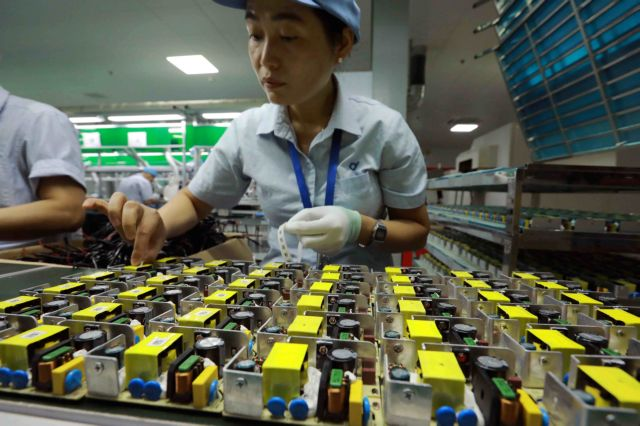
An assembly line at a Taiwanese-invested company in Vietnam, specialising in plastic products and electronic components for the printing industry, which puts the country in a unique position within the regional supply chain. (VNA)
The emerging division of labour is already visible in investment patterns, industrial capabilities and government strategies across ASEAN.
Singapore remains the region’s technological anchor. The semiconductor industry contributes around 6% of Singapore’s gross domestic product (GDP) and employs more than 35,000 highly skilled workers. Singapore hosts nine of the world’s 15 largest semiconductor companies, including major manufacturing operations by GlobalFoundries, Micron and Infineon. Rather than competing for labour-intensive assembly, Singapore is moving further up the value chain by investing in wafer fabrication, advanced packaging, artificial intelligence chips and semiconductor research. The Singapore Economic Development Board has simultaneously expanded engineering education and mid-career conversion programmes to address growing demand for semiconductor talent.
Malaysia occupies a very different position. Often overlooked outside the industry, the country has become one of the world’s most important centres for outsourced semiconductor assembly and testing (OSAT). Today, Malaysia accounts for approximately 13% of global semiconductor packaging and testing, while Penang alone hosts production facilities operated by Intel, ASE, Bosch, Infineon, Micron, Texas Instruments and several other multinational firms. In 2024, the Malaysian Government launched the National Semiconductor Strategy (NSS), committing more than 25 billion Malaysian ringgit (5.3 billion US dollar) to strengthen domestic capabilities, develop local suppliers and train 60,000 semiconductor engineers over the next decade.
Vietnam has chosen another path. Rather than replicating Singapore’s research ecosystem or Malaysia’s mature OSAT sector, Hanoi has focused on attracting electronics manufacturing, assembly operations and new investment into semiconductor production. The country’s semiconductor industry has expanded rapidly as multinational companies diversify production beyond China. The country currently employs roughly 15,000 semiconductor engineers, but estimates that demand could exceed 50,000 engineers by 2030. To close that gap, the government has launched a national programme to train tens of thousands of additional engineers while expanding partnerships with universities, foreign technology firms and international investors.
The Philippines, despite receiving less international attention, remains an essential component of ASEAN’s semiconductor landscape. Electronics account for more than half of the country’s merchandise exports, with semiconductor assembly, testing and packaging forming the backbone of the sector. Companies including Texas Instruments, Analog Devices, Onsemi and NXP Semiconductors have maintained manufacturing operations there for decades. Rather than competing directly with Singapore or Malaysia, the Philippines continues to strengthen its role in back-end manufacturing while attempting to attract higher-value activities.
Thailand completes the picture by linking semiconductor development with its established automotive and industrial manufacturing sectors. As electric vehicles become more sophisticated and semiconductor content per vehicle continues to rise, Bangkok is positioning itself as a regional hub for automotive electronics rather than general-purpose chip manufacturing.
Individually, these national strategies appear different. Collectively, they are increasingly complementary.
This represents a significant departure from the traditional assumption that every ASEAN economy must compete for identical investments. Instead, multinational companies are beginning to distribute different stages of semiconductor production according to each country’s comparative advantages.
The result is a regional value chain that resembles an integrated production network rather than a collection of isolated national industries. US export controls have unintentionally accelerated this evolution. As restrictions increased uncertainty surrounding advanced semiconductor production in China, multinational firms did not simply relocate entire supply chains to one alternative country. Instead, they diversified risk by spreading operations across several ASEAN economies. Design functions remain concentrated where advanced engineering talent is available. Packaging and testing expand where decades of industrial experience already exist. Labour-intensive manufacturing follows countries offering competitive costs and expanding industrial infrastructure.
For businesses, this shift fundamentally changes investment strategy.
Selecting a manufacturing location is no longer solely a question of identifying the country with the lowest costs or the largest incentives. Increasingly, companies must evaluate how each location fits within a broader regional production ecosystem.
The competitive advantage no longer belongs to the country that attempts to perform every stage of semiconductor manufacturing, but rather to the region that performs every stage better together.
The Human Question
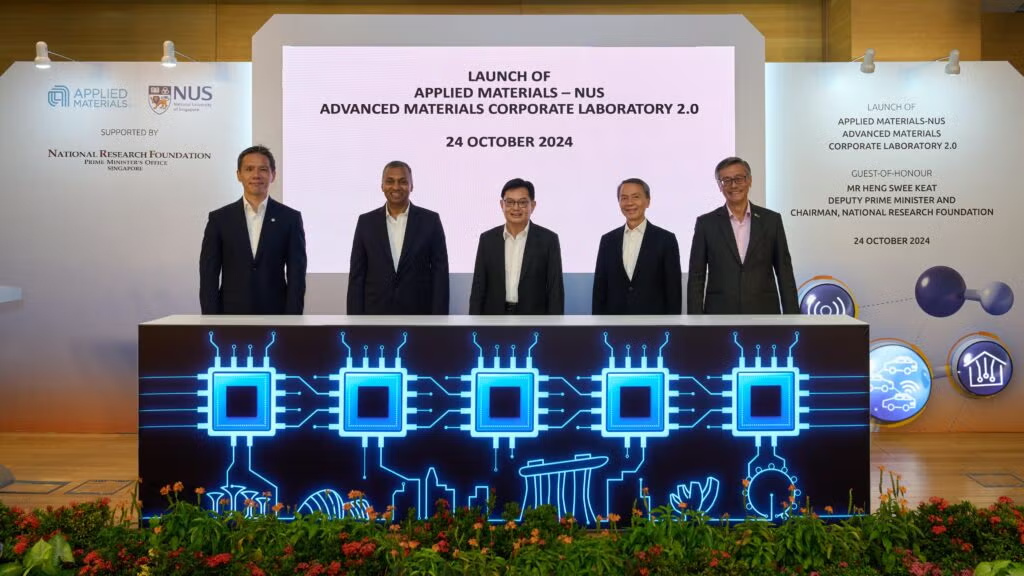
The launch of advanced materials corporate laboratory 2.0 of the National University of Singapore (NUS) in 2024. Some Southeast Asian countries are investing more than others in semiconductor-adjacent education, which risks creating a human capital gap in the regional supply chain. (National University of Singapore)
The emergence of an integrated ASEAN semiconductor ecosystem presents both opportunities and new strategic challenges for investors.
For years, many companies approached Southeast Asia as a collection of separate national markets. Investment decisions were often based on tax incentives, labour costs or political stability in a single country. That logic is becoming increasingly outdated.
As semiconductor production fragments across multiple specialised locations, corporate resilience will depend less on choosing the “best” country and more on designing the “best” regional production network.
For semiconductor manufacturers, this means that future competitiveness will increasingly depend on how effectively different ASEAN economies can be combined within a single supply chain. A company may design products in Singapore, source packaging services from Malaysia, assemble components in Vietnam, conduct testing in the Philippines and integrate finished products into Thailand’s automotive manufacturing sector.
This evolution also reduces concentration risk. Instead of relying on a single manufacturing base, firms can distribute production across several countries while remaining within one increasingly interconnected regional ecosystem. However, integration also creates new vulnerabilities, primarily of which is human capital.
Competition for experienced semiconductor engineers is intensifying across the region. Singapore, Malaysia and Vietnam are simultaneously expanding university programmes, launching scholarship schemes and attracting foreign specialists. Without significantly larger investments in education and workforce development, Southeast Asia’s semiconductor ambitions could ultimately be constrained not by technology or capital, but by the availability of skilled engineers.
Infrastructure presents another emerging constraint. Semiconductor manufacturing depends on reliable electricity, ultra-pure water, high-quality logistics and digital connectivity. As investment accelerates, governments will need to expand these supporting systems at the same pace as industrial development.
The next stage of ASEAN’s semiconductor success will therefore depend less on attracting another multinational investor than on ensuring that the regional ecosystem can support continued growth.
From Country Selection to Network Design
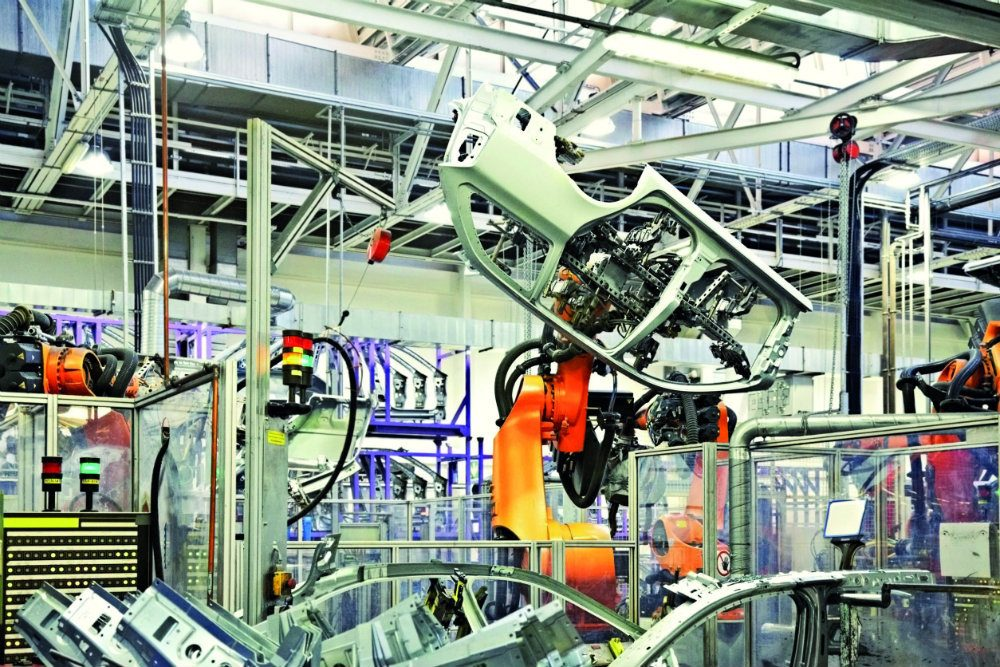
A Thai automotive factory, a building block of Bangkok’s position within the region’s semiconductor supply chain. (Thailand Board of Investment)
For investors, ASEAN should increasingly be evaluated as a regional manufacturing platform rather than as a collection of competing national markets. Investment decisions should focus on how individual countries complement one another across the semiconductor value chain instead of comparing incentives in isolation.
Technology companies should adopt a portfolio approach to regional expansion. Rather than concentrating manufacturing activities in a single location, firms should distribute different production stages according to each country’s comparative advantages while maintaining sufficient operational flexibility to respond to geopolitical or commercial disruptions.
Governments should likewise shift their priorities. While investment incentives remain important, long-term competitiveness will increasingly depend on expanding engineering education, facilitating cross-border labour mobility for highly skilled professionals, harmonising technical standards, and improving regional infrastructure. Cooperation in these areas is likely to generate greater economic returns than subsidy competition aimed at attracting the same investment projects.
Finally, policymakers should recognise that ASEAN’s greatest competitive advantage may lie precisely in its diversity. The region is unlikely to outperform East Asia or North America by replicating complete semiconductor supply chains within every individual country. It can, however, become the world’s most resilient semiconductor production ecosystem if each economy continues strengthening the segments where it already possesses comparative advantages.
In sum, much of today’s discussion about semiconductors remains dominated by geopolitics. Analysts debate export controls, technological rivalry and strategic competition between major powers. These issues are undeniably important.
Yet a quieter transformation is unfolding inside Southeast Asia. Rather than producing a fragmented landscape of competing national industries, recent geopolitical shifts are encouraging ASEAN economies to specialise, integrate and complement one another. What initially appeared to be a race between Singapore, Malaysia, Vietnam, Thailand and the Philippines increasingly resembles the construction of a regional industrial ecosystem.
Ironically, policies designed to restructure global semiconductor supply chains may be accelerating ASEAN’s own economic integration.
For businesses, this changes a fundamental assumption. The question is no longer which ASEAN country will become the region’s semiconductor leader. The more important question is whether ASEAN itself can become the world’s most competitive semiconductor ecosystem.
If current trends continue, the answer may depend less on geopolitics than on the region’s ability to transform complementary national strengths into a genuinely integrated industrial strategy.
About The Author