

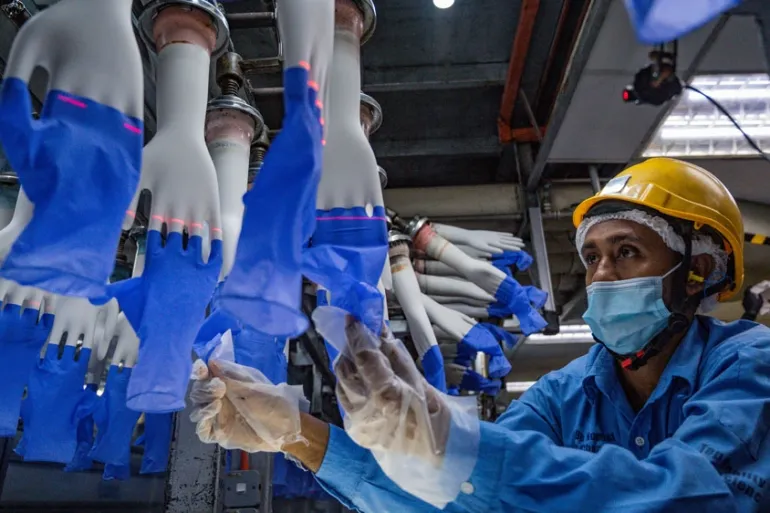
A textile factory in Indonesia’s East Java Province on April 20, 2020. (Jakarta Post)
The region’s emergence as a global manufacturing hub marks a structural shift in the world economy rather than a temporary relocation of production.
Geopolitics, resilience and, Southeast Asia’s strategic advantage
Escalating US–China trade tensions, rising labour costs in China and pandemic-era supply chain disruptions have accelerated the move towards “China plus one” strategies, placing Southeast Asian (SEA) economies at the centre of reconfigured global supply chains.
Supported by trade frameworks such as the Regional Comprehensive Economic Partnership (RCEP)—a trade framework encompassing 15 Asia-Pacific economies that together account for roughly 30 % of global trade and 35 % of global FDI flows—improving infrastructure, a large and expanding consumer base and competitive labour costs, the region has become a strategic destination for firms seeking resilience, flexibility and market access.
Capital flows, finance and the limits of growth
The manufacturing shift has been accompanied by sustained foreign investment and deeper financial markets, with SEA continuing to attract foreign direct investment (FDI) even as global inflows slow. As an illustration, the region’s average growth is stable between 4-5% annually from 2022. Capital is increasingly directed towards manufacturing-linked industries, renewable energy, logistics and digital infrastructure, reinforcing the region’s role in global value chains.
Multinationals and Chinese firms alike are directing capital into manufacturing, EV supply chains, electronics, and logistics, with fast-growing markets like Indonesia attracting around US$94 billion in manufacturing investment from 2022–2024.
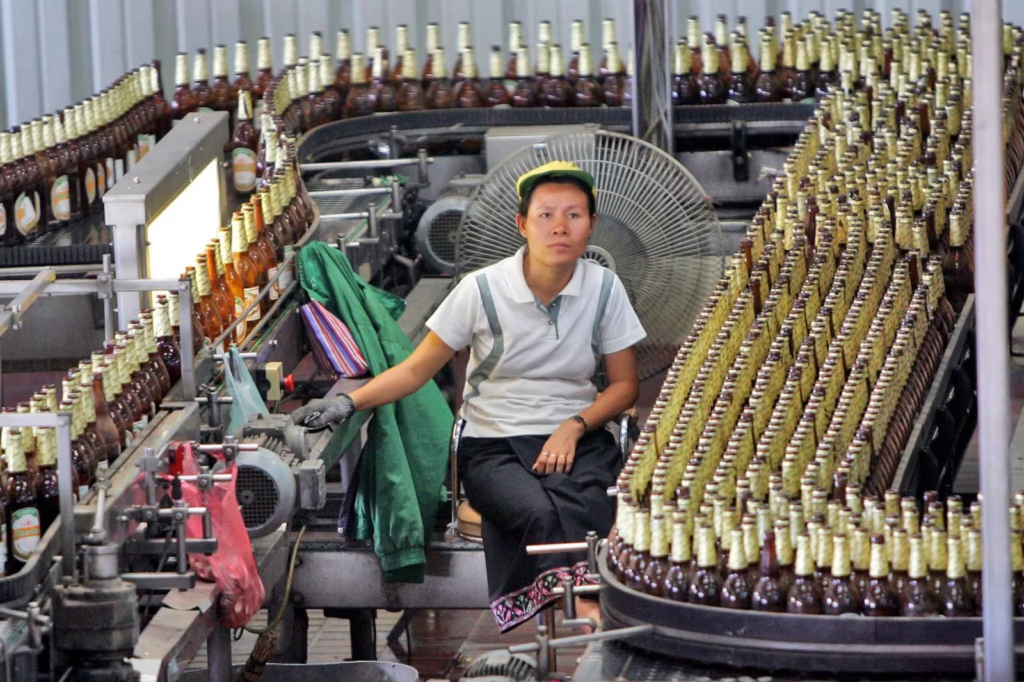
However, sustaining this momentum will depend on whether SEA economies can move beyond cost advantages towards higher productivity and value creation. Infrastructure gaps, skills mismatches and a more fragmented global environment remain constraints, but they also present a clear policy agenda.
About The Author



One thought on “Southeast Asia’s Manufacturing Rise: A Global Supply Chain Reset”