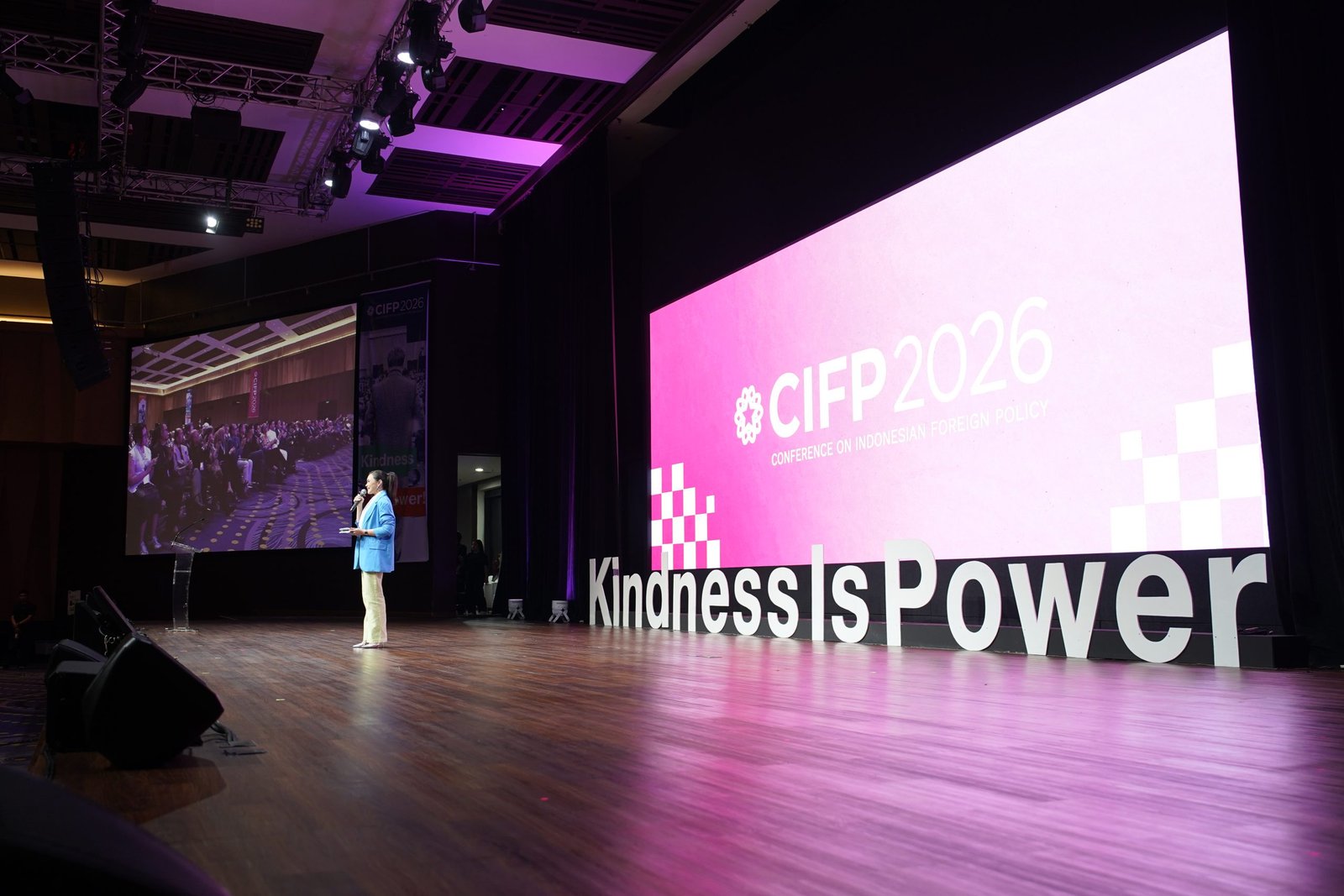
Conference on Indonesian Foreign Policy (CIFP), held on November 21, 2026 in Jakarta under the theme “Independent and Active Foreign Policy: How to Keep Indonesia, and the World Order, Moving in the Right Direction’, (FPCI)
Where should Indonesia stand as the international order undergoes profound changes? This central question shaped discussions at the 2026 Conference on Indonesian Foreign Policy (CIFP), which brought together policymakers, academics and foreign policy observers to examine Indonesia’s diplomatic direction and its role in responding to an increasingly complex global landscape.
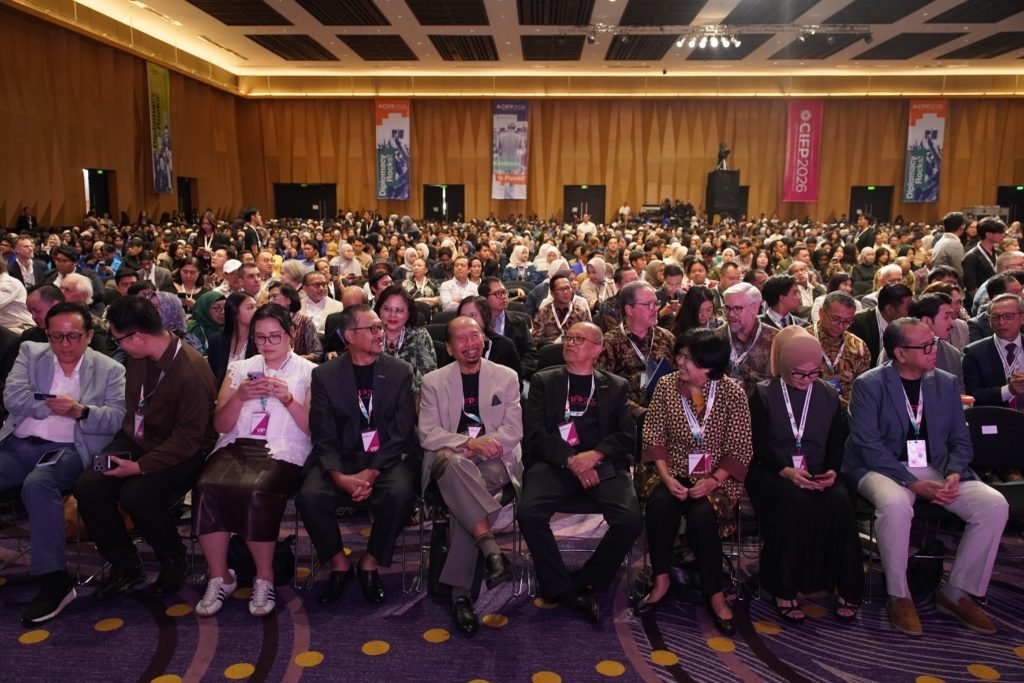
Policymakers, academics, foreign policy observers and students gathered at the CIFP 2026 (FPCI)
Organised by the Foreign Policy Community of Indonesia (FPCI), the annual conference took place on November 21, at The Kasablanka Hall, Kota Kasablanka, Jakarta. This year’s theme, ‘Independent and Active Foreign Policy: How to Keep Indonesia, and the World Order, Moving in the Right Direction’, highlighted the importance of Indonesia’s bebas aktif principle amid intensifying geopolitical rivalries, shifting global power dynamics and growing uncertainty over the future of international cooperation.
Opening the conference, FPCI Founder and Chairman Dr Dino Patti Djalal described the current international climate as a prolonged struggle over the direction of the world order. He warned that Indonesia must avoid following the same trajectory if the global landscape continues to move in the wrong direction. He also questioned how the country intends to exercise its independent and active foreign policy, emphasising the need for a clearer vision of Indonesia’s contribution to the next world order.
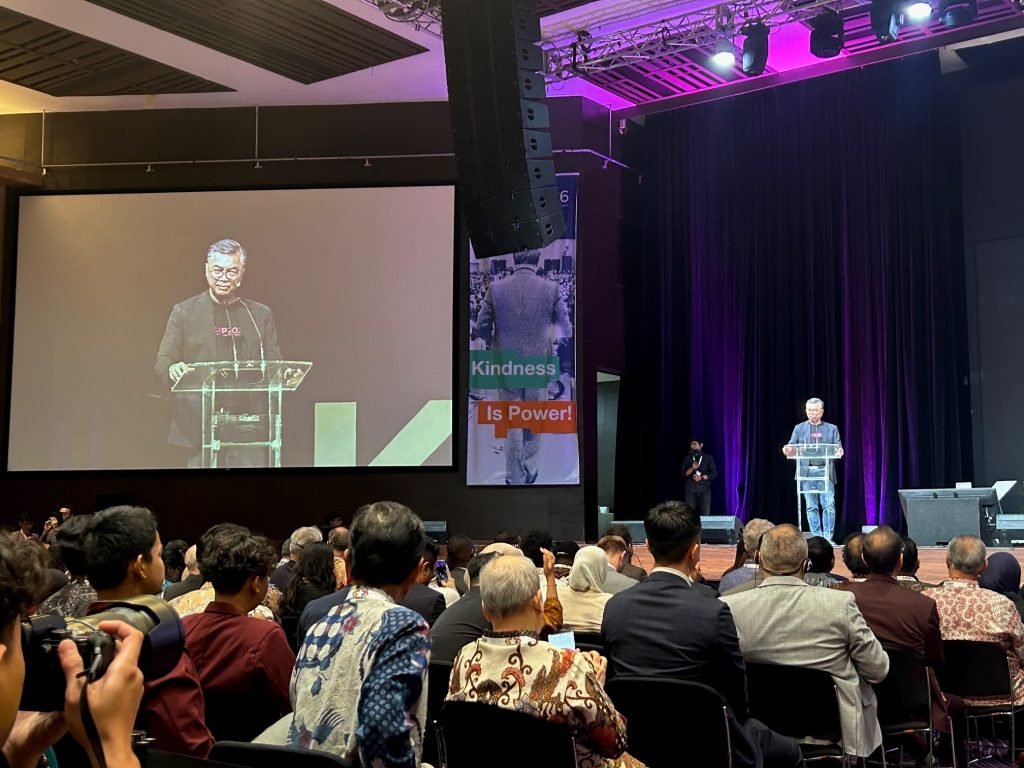
Dino Patti Djalal, FPCI Founder and Chairman during the opening plenary session at the Conference on Indonesian Foreign Policy (CIFP) 2026 (SEA Daily/ Michelle Fioretta)
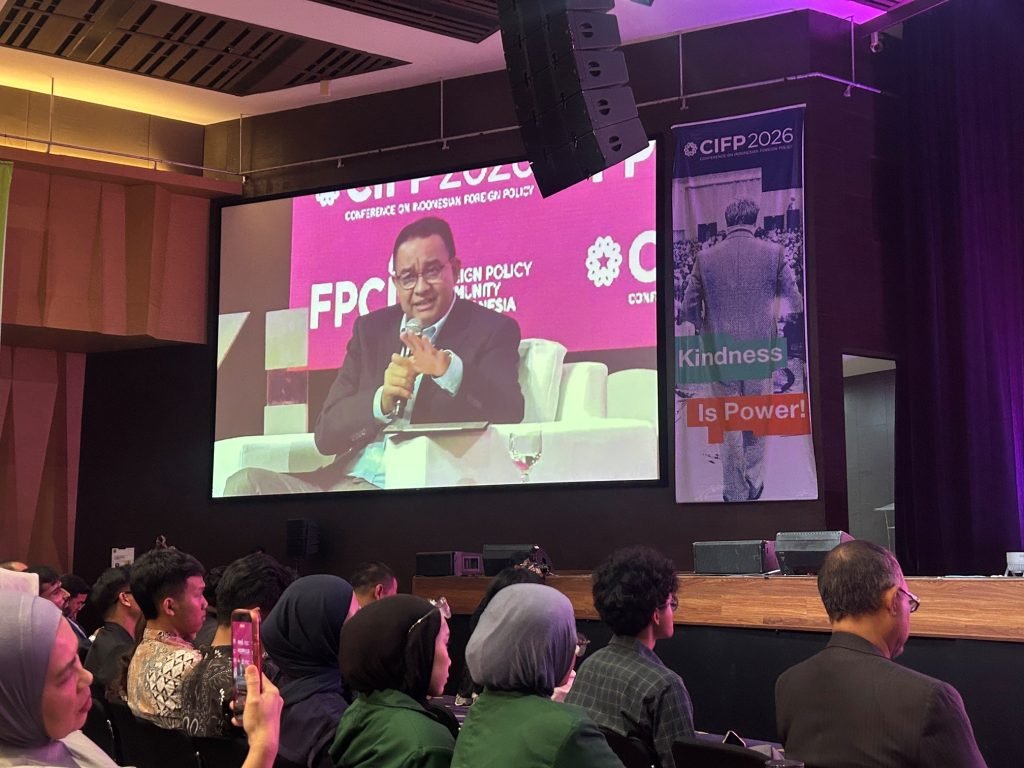
Former Governor of Jakarta, Anies Baswedan sharing his perspective in a session titled ‘Top Global That Worry Us / Give Us Hope’ (SEA Daily/ Michelle Fioretta)
The legacy of Indonesia’s diplomatic leadership was further explored in a session titled ‘Are We Forgetting About the Bandung Spirit? Why “Bandung” Principles Have Become Even More Relevant in Today’s World and How Indonesia Can Reclaim Ownership’. Marking seven decades since the 1955 Asian-African Conference, the discussion revisited the relevance of the Bandung Principles amid ongoing conflicts, double standards and growing disregard for international law. It also considered whether these principles could provide common ground for renewed cooperation between middle powers from the Global North and South, and whether a new ‘Bandung 2.0’ was necessary.
Meanwhile, ‘Two Years of Prabowo’s Foreign Policy: The Scorecard So Far and Anticipating the Next Three Years’ assessed the administration’s diplomatic priorities, achievements and challenges, while considering Indonesia’s international engagement over the next three years.
Regional cooperation also featured prominently in ‘Tackling Transboundary Haze in Southeast Asia: What Is the Right Response, How Should We Cooperate, and What Are the Lessons Learned?’. The discussion examined recurring forest and land fires, the effectiveness of Indonesia’s domestic prevention measures, including law enforcement and peatland restoration, and the limitations of ASEAN cooperation in ensuring regional accountability.
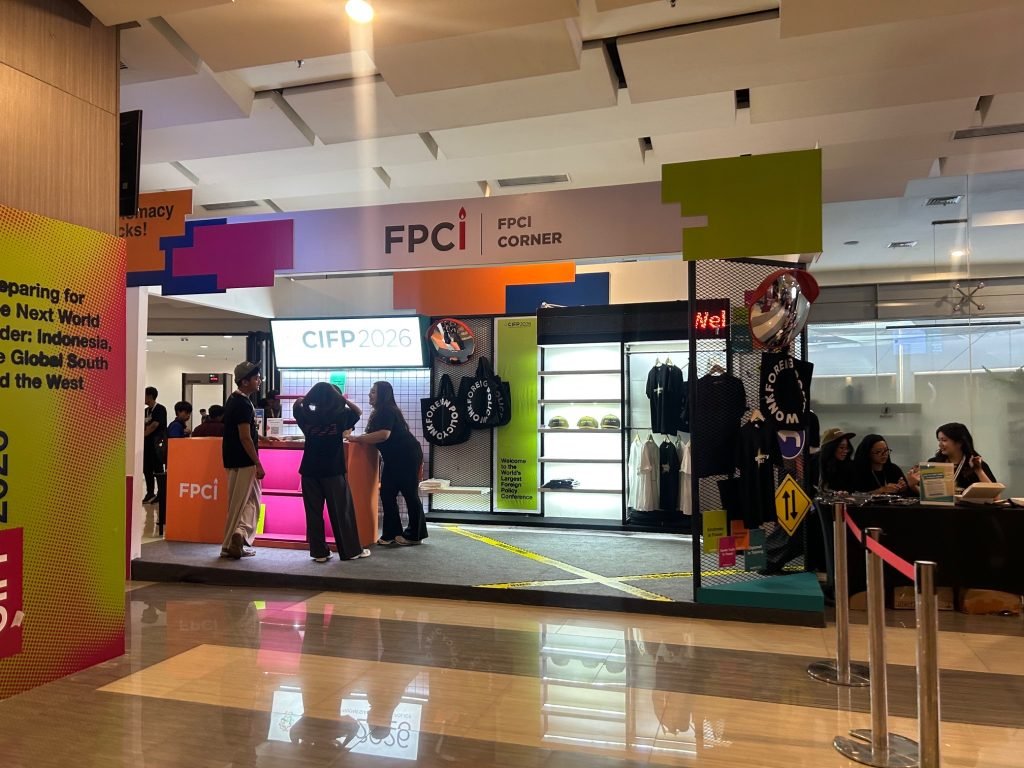
Attendees had the opportunity to visit the FPCI Corner during the conference (SEA Daily/ Michelle Fioretta)
Established in 2015, CIFP has grown into a major annual international relations conference, featuring more than 100 speakers across over 20 sessions and attracting upwards of 10,000 participants annually, according to the Indonesian Museum of Records.
About The Author