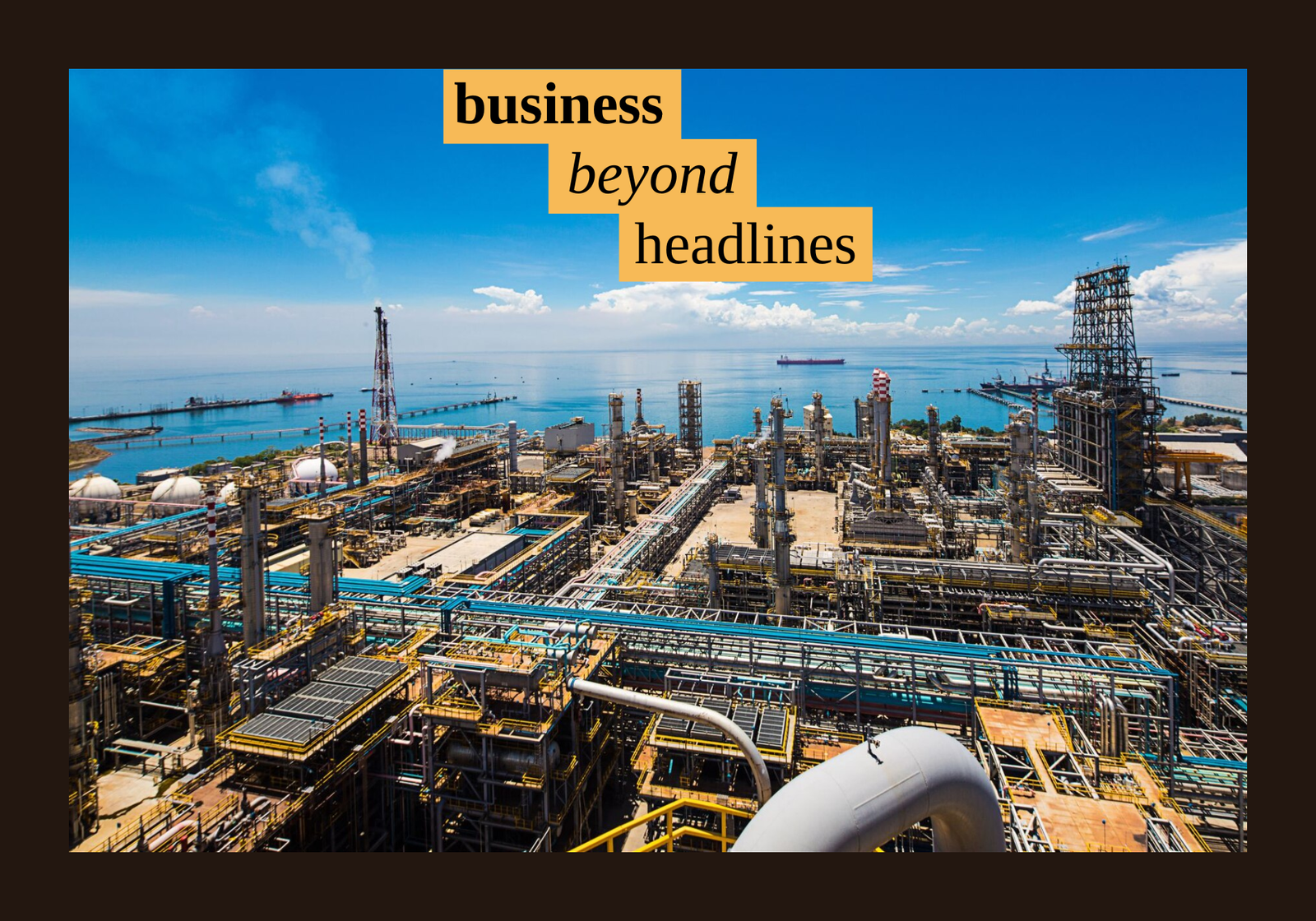
Petron Bataan Refinery facing Manila Bay. (Wikimedia/Makubex1985)
A Crisis Thousands of Kilometres Away
When jeepney drivers threatened mass transport stoppages across the Philippines in early 2026, the immediate cause was clear: fuel prices had become unaffordable. Diesel prices climbed as high as 147.6 Philippine pesos (2.44 US dollar) per litre, with some locations reporting prices exceeding 170 pesos (2.82 US dollar). Around 20% of jeepney operators suspended operations, while approximately 30,000 vehicles stopped running in Metro Manila alone. What appeared to be a transport crisis was in reality something much larger, something ressembling more a warning about the Philippines’ energy vulnerability.
The energy shock triggered by the disruption of shipping through the Strait of Hormuz exposed a structural weakness that had been building for decades. The Philippines imports the overwhelming majority of its oil requirements, and approximately 98% of those imports originate from the Middle East. As long as global supply chains function smoothly, this dependence remains largely invisible. When a major maritime chokepoint is disrupted, however, the consequences become immediate and severe.
The Strait of Hormuz handles roughly 20% of global petroleum consumption and remains one of the world’s most important maritime chokepoints. The escalation of tensions in the Gulf during 2026 disrupted shipping schedules, increased insurance costs and pushed global oil prices sharply higher.
For the Philippines, the impact was amplified by its dependence on imported energy. Petron, the country’s largest oil refiner and supplier, reported losing access to approximately 4 million barrels of Middle Eastern crude oil after two scheduled shipments of 2 million barrels each failed to arrive between late February and early March.
The disruption rapidly spread through the domestic economy. Fuel costs increased for transport operators, shipping companies, manufacturers, airlines and agricultural producers. Higher transportation expenses contributed to rising food prices and broader inflationary pressures.
Inflation accelerated significantly. National inflation reached 7.2% in April 2026, compared with 4.1% just one month earlier. The increase reflected the extent to which energy costs affect nearly every sector of the economy.
For businesses, the crisis demonstrated how external geopolitical events can quickly become operational and financial risks. Companies with no direct exposure to the Middle East nevertheless faced higher logistics expenses, reduced margins, and increased uncertainty.
The Philippine experience offers an important lesson not only for Manila but for Southeast Asia as a whole. Energy security cannot be outsourced. Strategic alliances may enhance national security, but they cannot guarantee affordable fuel when global supply chains come under pressure.
The Limits of Strategic Alignment
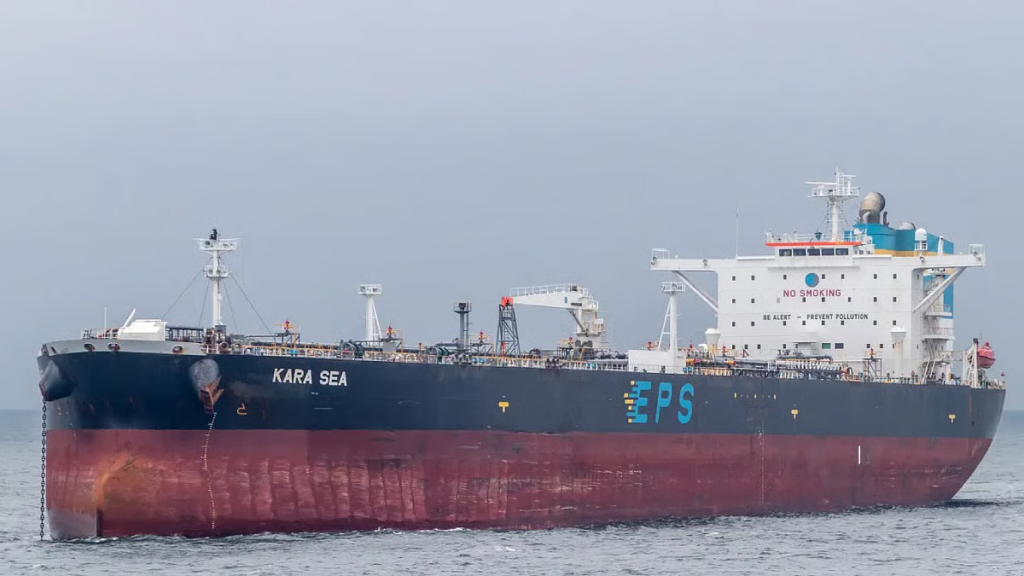
Oil tanker Kara Sea (later renamed Sara Sky), which brought the first batch of Russian oil imports to the Philippines following the energy crisis in the country, pictured here around 2024. (Marine Traffic)
In Asia, The Philippines maintains one of the closest security relationships with the US . The Enhanced Defense Cooperation Agreement, expanding military cooperation and access arrangements, has strengthened bilateral security ties considerably over the past decade.
Yet the energy crisis highlighted an important distinction: military alliances and energy resilience are not the same thing.
The US did provide energy assistance to the Philippines. In May 2026, the first shipment from the US Strategic Petroleum Reserve directed to Asia in more than three years arrived in the Philippines. The cargo included approximately 616,000 barrels of crude oil from the reserve, accompanied by an additional commercial shipment of roughly 700,000 barrels.
Nevertheless, the shipment did not solve the underlying problem. The Philippines remained dependent on imported energy and vulnerable to disruptions affecting global supply chains. Strategic partnerships helped manage the consequences of the crisis but could not eliminate the structural exposure that caused it.
This distinction matters because many governments assume that political alignment reduces economic vulnerability, but the events of 2026 suggest otherwise. Energy security ultimately depends on supply diversity, infrastructure resilience, storage capacity and market flexibility rather than diplomatic relationships alone.
The structure of the Philippine energy mix shows how deep this exposure runs. Oil sits at the centre of it, supplying close to a third of total energy consumption. Almost all of that oil is bought abroad. Domestic output runs at roughly 14,000 barrels a day, well under 3% of demand, and proven reserves amount to less than a year of consumption. In 2024, the country spent about 3.7 billion US dollars importing crude and a further 11 billion US dollars on refined petroleum products. Consequently, jeepneys, trucks, ships and aircraft run almost entirely on imported refined products, with negligible domestic crude alternatives. To make things worse, coal generates about 62% of national electricity (the largest share of any economy in Southeast Asia) with roughly 98% of that coal is also imported from Indonesia. That nearly mirrors the 98% reliance on Middle Eastern crude that triggered the present crisis, leaving the country exposed to the same concentration risk on two fronts. Geothermal, hydropower and a growing solar segment supply about a quarter of generation and provide a modest domestic cushion, but they cannot offset an energy economy that imports the bulk of its fossil fuels.
Faced with supply disruptions, Manila and private-sector energy companies adopted a pragmatic approach, which is common among Southeast Asian governments but not the Philippines.
Petron secured approximately 2.48 million barrels of Russian crude oil to compensate for lost Middle Eastern supplies. The company controls roughly 30% of the Philippine fuel market and argued that maintaining supply stability was essential to preventing further economic disruption.
The significance of this decision extends beyond the volume purchased. The Philippines ultimately sourced energy from both the US and Russia while continuing to seek additional alternatives elsewhere.
This was not a geopolitical shift. It was a demonstration of how energy markets function during emergencies. Countries facing shortages cannot rely exclusively on preferred suppliers. Resilience requires options.
The lesson is especially relevant for Southeast Asia. Many economies across the region remain heavily dependent on imported fuel and maritime trade routes. Future disruptions involving the Strait of Hormuz, the South China Sea, or other critical shipping corridors could produce similar pressures.
The Future of Philippine Energy Security

Demonstrators taking part in the nationwide “Mobilisation Against Oil Price Hike” on March 27, 2026. (Wikimedia/Kej Andrés)
For business leaders and investors, the clearest lesson of the Philippine emergency is that energy volatility is a permanent strategic risk rather than a passing anomaly, and one that has to be planned for rather than reacted to. The country’s own outlook makes the case. The International Energy Agency (IEA) expects the Philippines to remain one of Southeast Asia’s fastest-growing energy markets over the coming decade, driven by population growth, urbanisation and industrial expansion, even as domestic oil production stays negligible against demand of 500,000 to 600,000 barrels a day. On current trends its exposure widens rather than narrows.
What that exposure becomes is not fixed. The most useful way to plan around it is to read the country’s energy future through Dator’s Four Futures framework, the same foresight tool applied to Indonesia earlier in this series. Rather than forecasting a single outcome, it traces four divergent paths: continuation (business as usual), limits and discipline (adaptation under constraint), transformation (systemic reinvention) and collapse (breakdown under stress).
- Continuation
The continuation scenario is the path the outlook points to if nothing changes. Demand climbs with the economy, domestic output stays marginal and the gap is filled by ever-larger imports concentrated on a narrow group of Middle Eastern suppliers. The Philippines holds no dedicated strategic petroleum reserve and relies instead on mandatory minimum inventory requirements imposed on private oil firms, with national stocks at around fifty days of supply during the crisis and a mandatory floor of just fifteen days. Diversification could only take place in an opportunistic nature, the way Petron turned to Russian and American crude under pressure rather than as settled policy. Exposure does not hold steady on this path but rather deepens, while each future shock lands on a larger and more import-dependent economy.
- Limits-and-discipline
The limits-and-discipline scenario describes a forced adaptation. Inflation reached 7.2% in April 2026 and fuel relief stretched the budget and at some point the cost of thin buffers becomes unmanageable. Long-deferred proposals such as the Philippine Strategic Petroleum Reserve Act could advance through Congress, lifting the country from its fifteen-day floor toward the thirty days the IEA recommends, while Manila commits to an ASEAN-wide joint stockpile and offers to host part of it. Supplier contracts are diversified deliberately and logistics made more flexible. In this scenario, the structural dependence is managed rather than removed.
- Transformation
The transformation scenario treats the crisis as a prompt for reinvention. It pursues significant investment in alternative energy, domestic infrastructure and supply diversification by design rather than for necessity, and the Philippines has the endowment for it. The Department of Energy’s ten-year Green Energy Auction Programme aims to tender around 25 gigawatt (GW) of renewable capacity for delivery between 2027 and 2035, and its 2025 round alone awarded more than 10 GW of solar, wind and storage. The first offshore-wind auction put 3.3 GW out to bid, with San Miguel Bay and the Guimaras Strait identified as anchor zones, while large projects such as the Terra Solar complex in Central Luzon pair utility-scale solar with storage. If the targets of 35% renewables by 2030 and 50% by 2040 are met, demand growth is increasingly met from domestic sources and import exposure narrows even as the economy expands. In this case, the Philippines becomes a very interesting country for investors, with diversified supply, real reserves and modern infrastructure.
- Collapse
The collapse scenario shows how little it takes to break the current system. If another closure of the Strait of Hormuz takes place, through which nearly all Philippine crude passes, and outlasts domestic stocks with no reserve to release, shortages spread from transport into the wider economy. For an archipelago that moves almost everything by sea, the damage does not require oil flows to stop entirely. The sharp rise in shipping costs and maritime insurance premiums seen during the crisis is enough on its own to push landed fuel prices and inflation higher across the islands. Jeepney stoppages would generalise, food and freight costs climb, the peso weakens under a swelling import bill and the country shifts from managing a transition to rationing scarcity.
The four futures points to an important warning, that energy security and national security are related but fundamentally different challenges. Military alliances can provide deterrence, intelligence sharing and diplomatic support. They cannot hold fuel prices steady when a chokepoint closes, nor undo the risk of depending on a narrow set of suppliers. The economies that come through the next shock best will not be those with the strongest alliances but those with the most diversified suppliers, the deepest reserves and the most resilient generation mix. The next crisis may emerge from a different conflict, a different chokepoint or a different confrontation. In an era of growing geopolitical uncertainty, resilience depends less on who a country’s friends are and more on how many options it has when global supply chains begin to fail.
About The Author