
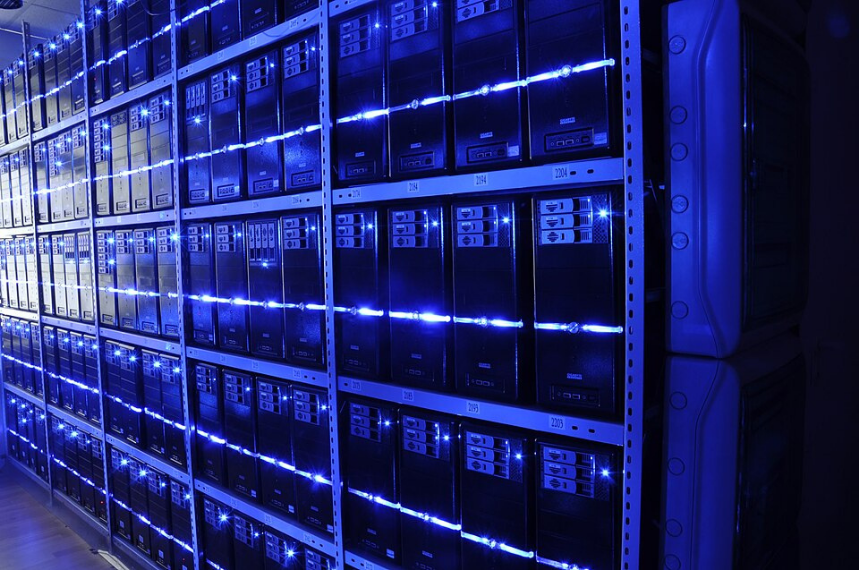
A server room at a data centre facility. (Wikimedia)
Thailand may have compromised too much in the regional artificial intelligence (AI) race, having voluntarily frozen the construction of 49 data centres.
The decision was announced by the Secretary-General of Thailand’s National Economic and Social Development Council, Danucha Pichayanan, on September 4. It follows the inaugural meeting of the country’s data centre supervision commission, which was chaired by Finance Minister Ekniti Nitithanprapas.
The bold move was driven by heightened concerns over the massive resource strain these AI infrastructures place on local electricity, water supplies and public safety. The Thai government subsequently pledged to hash out stricter regulatory frameworks to address these issues, a process projected to be concluded within a month.
The Finance Minister explained that the government’s decision must not be perceived as “closing the door to data centre investment,” as he described the sector as “critical to the country’s competitiveness”.
“We simply want clear and consistent standards in place to ensure the industry can grow sustainably,” he asserted.
Notably, the development highlighted a severely deficient regulatory framework. A formal definition of a data centre was only codified on August 13, despite the country having welcomed vast investments for its establishments years ago.
Reportedly, previous projects were categorised under standard “warehouse” building permits, resulting in resource-intensive infrastructure operating with impunity. Just two days ago on September 2, the Energy Ministry also suspended three data centre projects for a “fresh evaluation”.
What does this mean for businesses?
The policy pause directly clashes with a monumental investment wave: in the first half of 2026 alone, Thailand greenlit 88 AI development projects valued at 886 billion Thai baht (27 billion US dollar). Because this technological boom outpaced public policy, it triggered severe environmental and grid-capacity anxieties. The broader geopolitical fallout across Southeast Asia is clear: if Thailand’s impending framework proves overly punitive, fluid capital will likely pivot to rival tech hubs like Malaysia or Indonesia, which are aggressively competing to absorb the region’s AI workloads.
Kala Advisory helps investors navigate sudden regulatory shifts and evaluate grid-capacity dynamics to build targeted, country-by-country entry plans across Southeast Asia. Visit kala-advisory.com.
About The Author

One thought on “Thailand Halts 49 AI Data Centres, Vows Tough Regulatory Clampdown”