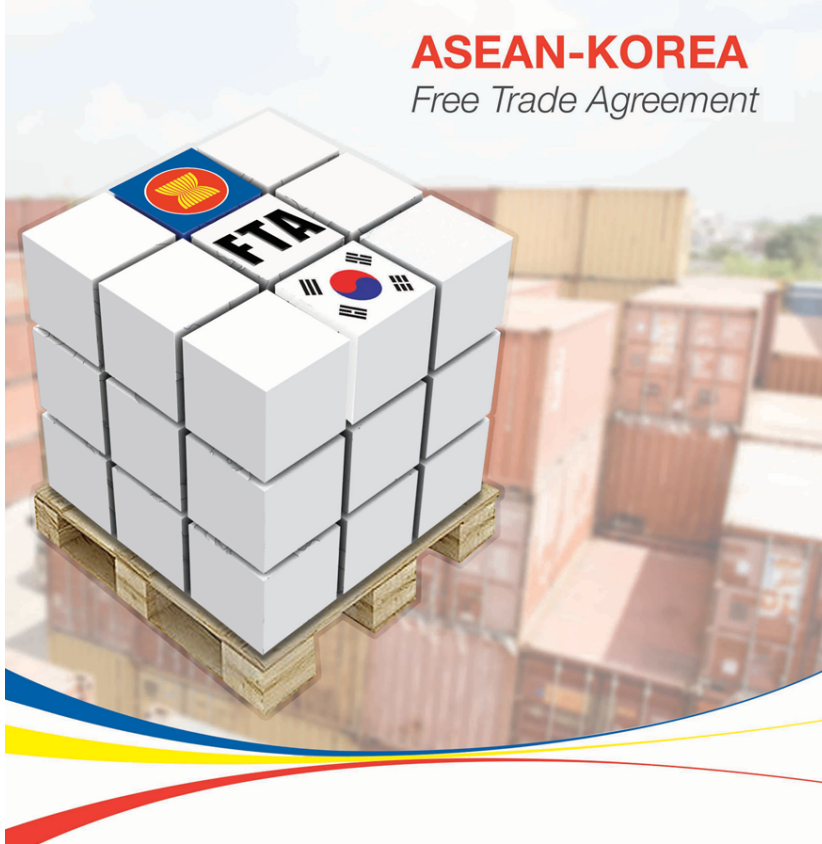
The cover of the ASEAN-Korea Free Trade Agreement guide, published by the ASEAN Secretariat in November 2013. (ASEAN Secretariat)
For context, the ASEAN-South Korea FTA originally entered into force in 2007, and today, the bloc is the third-largest trading partner of Seoul. Notably, at the ASEAN-South Korea Summit last year, both sides agreed to expand annual trade volumes to 300 billion US dollar by 2029.
The first round of the talks is scheduled to run until June 12 in Seoul, with a focus on expanding bilateral cooperation across 13 emerging areas, including critical minerals, supply chains as well as the digital economy.
South Korea’s Director General for Trade Agreement Policy at the Ministry of Trade, Industry and Energy, Park Geun-oh, will lead the Korean delegation, while ASEAN will be represented by its Director General of International Trade, Alpana Roy.
Director General Geun-oh noted that South Korea will “engage actively” throughout the negotiations to ensure “meaningful outcomes” in the critical areas.
Both parties will also convene a sideline meeting for the ASEAN-Korea FTA Joint Committee to assess implementation progress from their April preparatory talks and review the framework for the 13 negotiating subcommittees.
What does this mean for business?
Amid swelling geopolitical shifts, regional supply chains are actively restructuring. As global trade faces disruptions stemming from the Middle East, South Korea and Southeast Asian nations are modernising their trade frameworks to secure resilience. This matters immensely given that in 2025, Seoul exported 122.5 billion US dollar worth of goods to the bloc.
Through its “middle power” diplomacy, South Korea can leverage its technological edge to anchor itself as a vital economic ally in the region. However, due to ASEAN’s traditional consensus-based decision-making (which could potentially slow down multilateral execution) individual businesses and member states must actively pursue targeted bilateral corridors to fully tap into these new opportunities.
Kala Advisory helps investors tap openings like these as ASEAN modernises its trade frameworks across the region. Visit kala-advisory.com.
About The Author