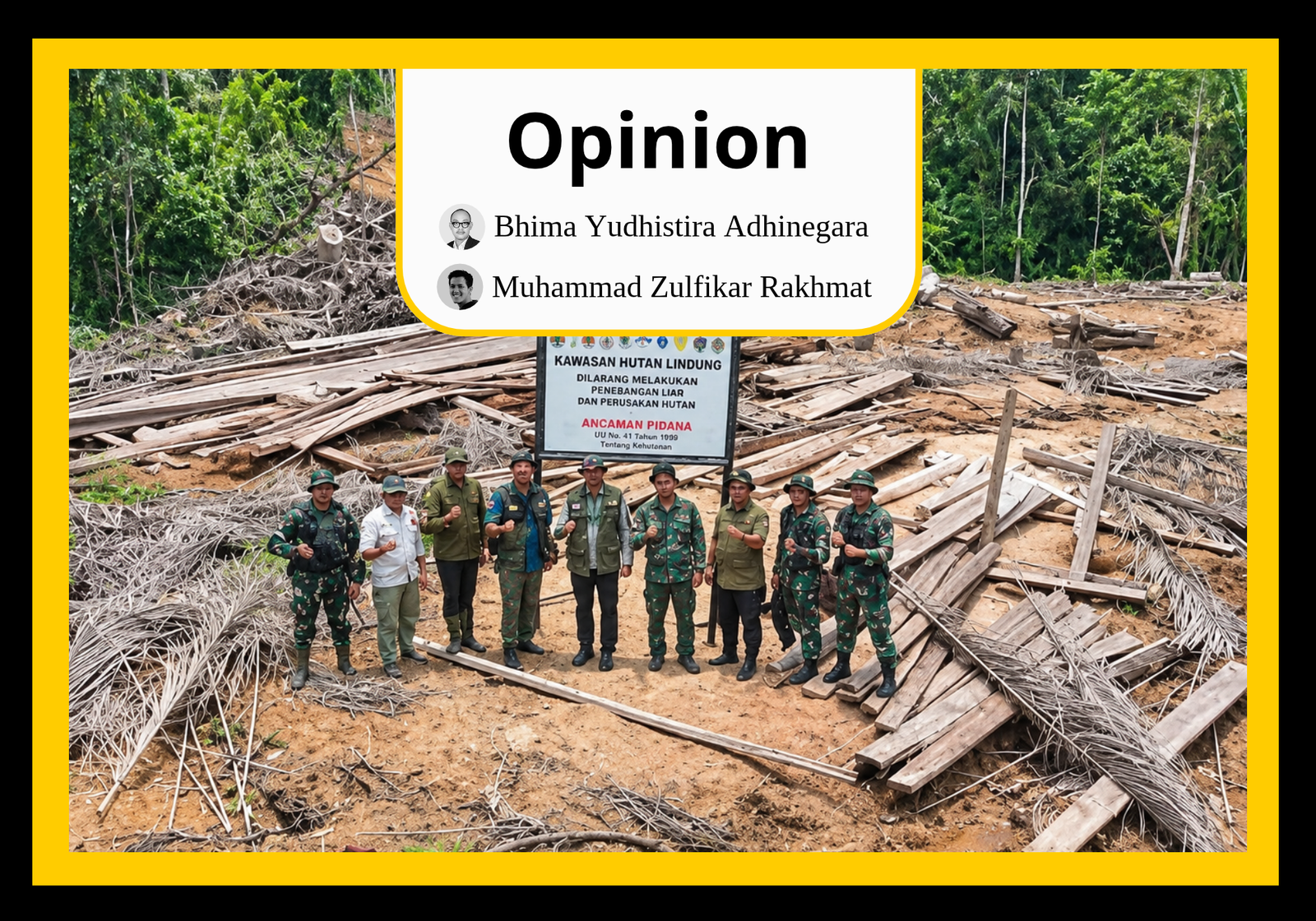
Indonesian Forestry Ministry personnel at a site of illegal logging. (Indonesian Forestry Ministry)
Bhima Yudhistira Adhinegara is the founder and Executive Director of the Center of Economic and Law Studies (CELIOS), an independent think tank based in Jakarta, Indonesia.
Muhammad Zulfikar Rakhmat is Director of the China-Indonesia Desk at CELIOS. His research focuses on the political economy of China’s relations with Indonesia and the Middle East.
The views expressed are the author’s own and do not represent SEA Daily or that of another organisation.
Policies That Made Deforestation The Cheapest Option
Every dry season, smoke covers parts of Indonesia’s biggest islands, Sumatra and Kalimantan, and the government recurrently blames the fires on smallholder farmers. But there is an ironic phenomenon that gets far less attention. Through subsidies and permits, the state pays for many of the conditions that lead to fires.
A subsidy is money the government spends to make something cheaper than its real cost, while a permit is the legal right to use land, for example to open a plantation or a mine. Both are common policy tools, but when they mostly reward clearing land for single crops and digging up resources, they push the economy toward the forest edge, and fire inherently follows.
Start with fuel. This year the government set aside 11.7 billion US dollar for energy subsidies, mainly for petrol, diesel, cooking gas and electricity. In April, the finance minister warned that this could increase by up to 5.6 billion US dollar because of rising global petrol prices. By June, spending on subsidies and related payments to state energy companies had reached 12.9 billion US dollar, 44% more than a year earlier. Not to mention, these subsidies are not well targeted, and so a large share helps better-off households who own cars and use more power.
Coal gets help too, even if it does not appear as a line in the budget. Mining companies must sell coal to the state power company at no more than 70 US dollar per tonne, far lower than the average global price tag of 152 US dollar per tonne in October. This keeps coal power looking cheap and makes it harder for solar and other clean power to compete. It also helps keep mines running, which many of them sit in forest areas.
Then there are the so-called green fuels (not sustainable ones, unfortunately). Since July, diesel must contain 50% biodiesel made from palm oil and the state pays to keep its price low at the pump. Yet, researchers estimated that this could require millions of hectares of new plantations. Power plants are also mixing wood chips and pellets with coal, a practice called biomass co-firing. The government has set aside more than 1.2 million hectares of forest land for energy plantations to supply it. If that wood comes from natural forest, the result is more clearing, not less.
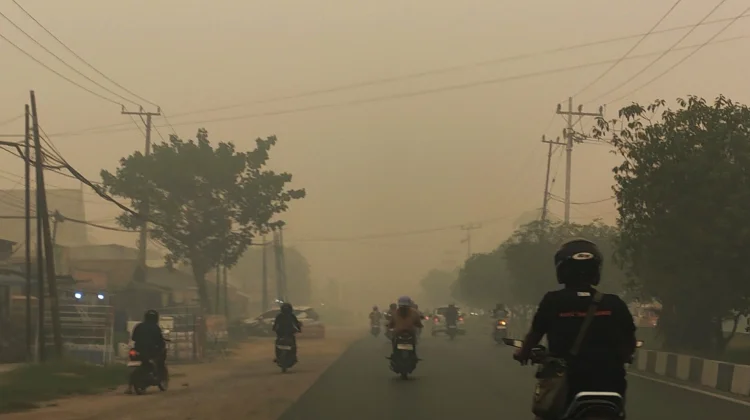
Haze covers the sky of Central Kalimantan, Indonesia on October 13, 2026. (RRI)
What Fire Costs The Country
Now count what fires cost. Researchers at the Center of Economic and Law Studies (CELIOS) estimated that fires between January and August this year cost the country between 2.2 and 6.8 billion US dollar, much of it in health care and lost work. In other words, the state pays once to support the activities that clear land, and then pays again to deal with the smoke.
There is a better use for this money, certainly. Agroforestry means growing crops such as coffee, cocoa or fruit among trees instead of on cleared land. Non-timber forest products are things people can harvest without cutting the forest down, such as honey, rattan, resin and nuts. Restoration means repairing damaged land, for example by rewetting dried peat and replanting. All three create work in rural areas and keep trees standing.
Initiatives at the subnational level are already demonstrating how forest-based resources can generate sustainable economic opportunities. Examples include the development of snakehead fish extract for food supplements in Siak, Riau, and butter alternatives derived from Tengkawang trees in West Kalimantan. These initiatives not only contribute to forest conservation but also create higher-value, export-oriented commodities, while ensuring that local communities remain the primary beneficiaries of the economic value generated.
The government’s own social forestry program, which gives villages legal rights to manage state forest, has supported more than 15,800 community businesses that have produced up to 220 million US dollar in economic value. That is real growth, on a budget that is tiny next to energy subsidies.
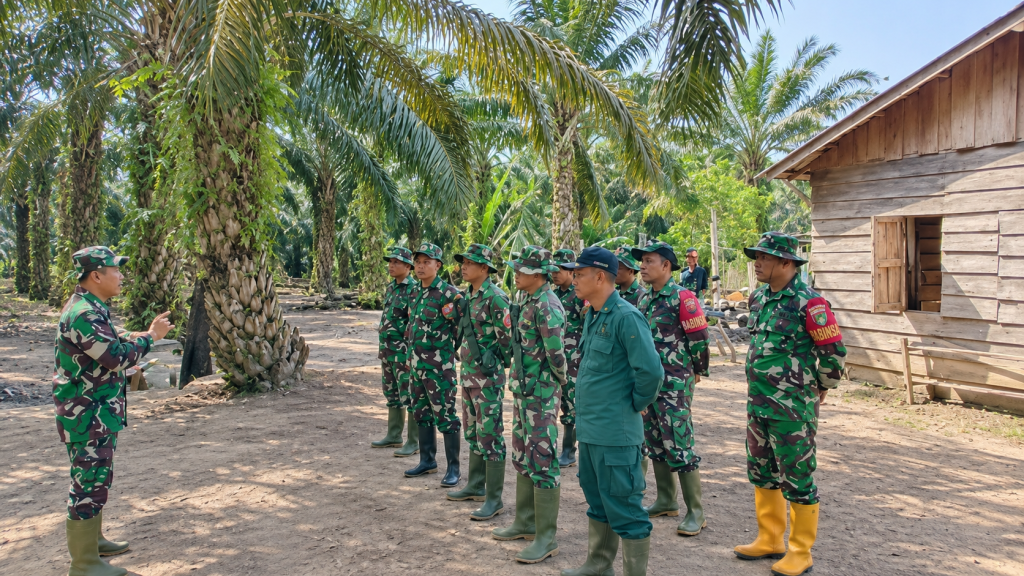
Forest rangers from the Indonesian Forestry Ministry being briefed in Riau, Indonesia in 2025. (Indonesian Forest Ministry)
Forest Jobs, Not Forest Fires
Reform does not mean taking help away from poor families overnight, but should include some mid- to long-term measures. First, target fuel and electricity subsidies to the households that truly need them, and move part of the savings into a forest livelihood fund. Second, raise the coal price for the power company step by step, and use part of the extra income from coal to fund forest jobs. The forest jobs refer to employment and income-generating opportunities that protect, and restore forests while strengthening local economies initiatives. These include community-based forest protection and fire prevention, reforestation and peatland restoration, and processing of non-timberforest products, agroforestry, and ecotourism.
Third, cut financial support to biodiesel or biomass that comes from forest, peat, or land claimed by local communities. Fourth, send the money to the local level through channels that already exist, such as village funds and the ecological transfer schemes that more than 40 districts and provinces now use to reward villages for protecting nature.
Shifting even a small share would matter. If just 5% percent of this year’s energy subsidy budget went to forest-based work, it would add more than 580 million US dollar, over twice the value the social forestry businesses have created so far. Reducing heavy reliance on energy subsidies would also insulate the state better from global oil price volatility.
As COP31, the United Nations climate summit, takes place in Antalya, Turkiye, Indonesia will ask rich countries for more climate money. Its case will be stronger if it also shows it is willing to stop paying for the conditions that cause fires, and start paying the people who prevent them.
About The Author