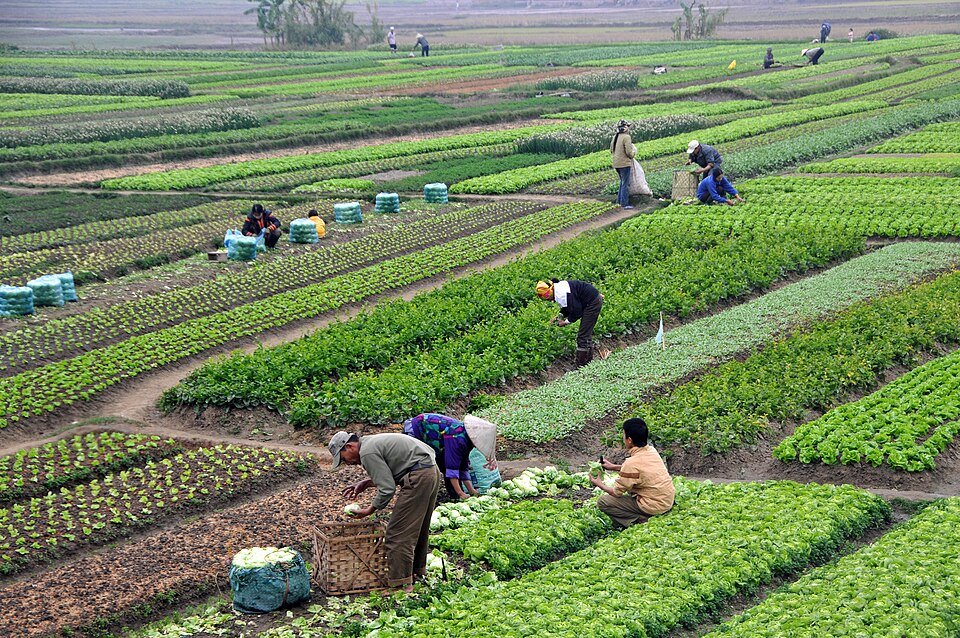
Farmers harvest leafy vegetables at an agricultural field in Vietnam. (Wikimedia)
On November 9 to 12, The US will send its largest-ever agricultural trade mission to Vietnam, seeking to expand exports and strengthen commercial partnerships in one of the region’s growing agricultural markets.
The US Department of Agriculture (USDA) announced that the delegation will be led by the Deputy Secretary of Agriculture Stephen Alexander Vaden to American exporters together with Vietnamese buyers, importers and distributors.
Vietnam was the seventh-largest market for US agricultural and related products in 2025, importing nearly 5.6 billion US dollars worth of goods. Meanwhile, American agricultural exports to the country increased by 38% compared with 2024.
The USDA identified Vietnam’s expanding biofuels sector and ethanol-blending requirements as potential areas for cooperation, particularly for US corn growers and ethanol producers. Growing demand from Vietnam’s livestock, food-processing and retail industries has created opportunities for American producers seeking to increase their presence in the market.
The mission will focus on expanding opportunities across several sectors of agribusiness, including cotton, soybeans, animal feed, fruit, dairy and meat products. Moreover, it also forms a US’ broader effort to expand agricultural trade across Southeast Asia, following a separate US trade mission to Vietnam.
During the four-day visit, delegates will participate in business-to-business meetings, market briefings, site visits and promotional activities to establish commercial partnerships and introduce American agricultural products to Vietnamese consumers.
The scale of the delegation highlights Vietnam’s growing importance to US agricultural exporters as Washington seeks to diversify overseas markets and strengthen commercial links in Southeast Asia. For Vietnam, increased access to American agricultural products could support its expanding food and livestock industries. However, the mission also reflects the importance of balancing import diversification with domestic agricultural interests and supply-chain resilience.
About The Author