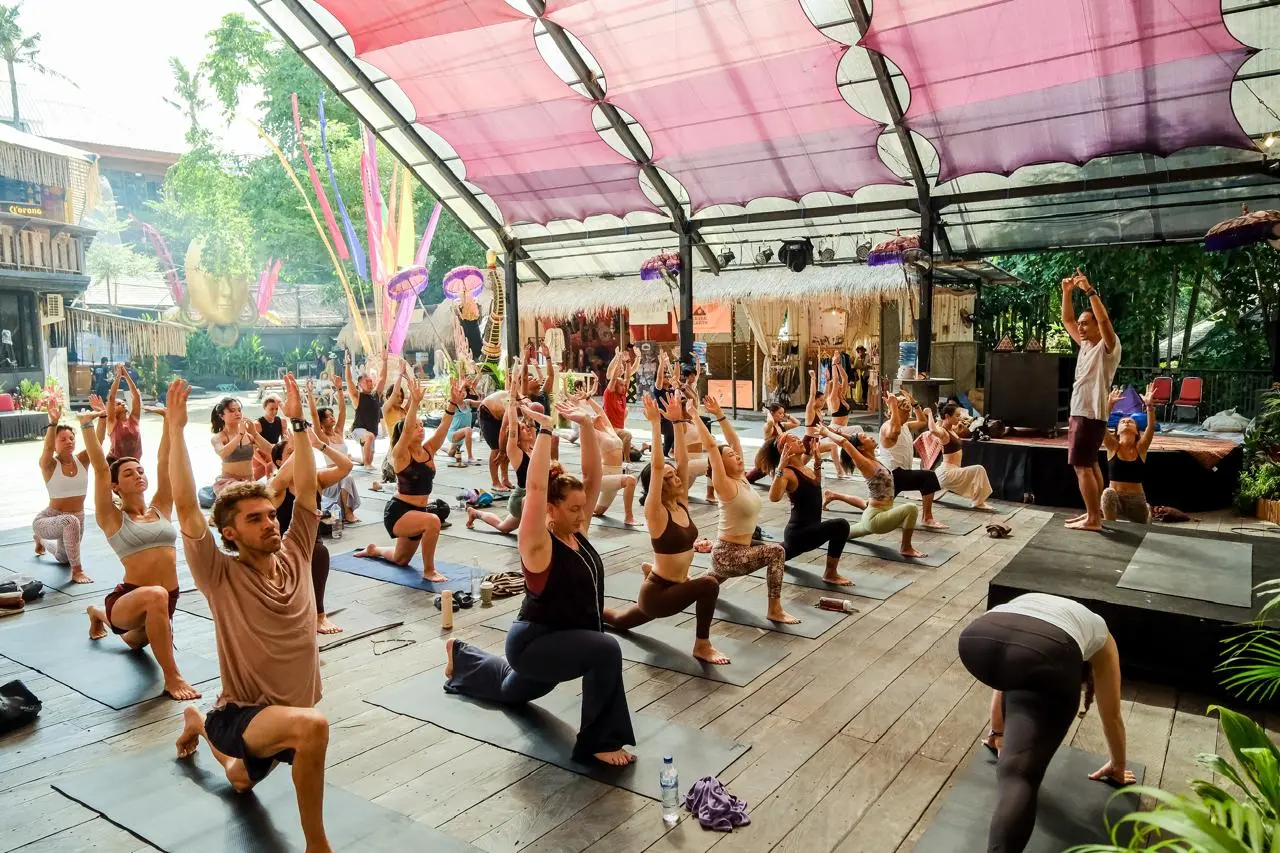
Participants practise yoga during the Bali Spirit Festival at The Yoga Barn in Ubud, Bali. (Kementerian Pariwisata RI)
The Bali Spirit Festival, widely recognised as one of Southeast Asia’s pioneering international yoga and wellness gatherings, returns this year under the theme “Welcome Home.” The event blends yoga, dance, music and traditional healing practices into a holistic programme designed to nurture both physical and spiritual wellbeing.
Held from April 15 to 19 in Ubud, Bali, the festival highlights wellness and sustainability through a number of environmentally responsible initiatives. These include reducing single-use plastics, strengthening waste management systems and introducing composting toilets as part of the event’s eco-friendly infrastructure.
The festival’s economic impact has also proven significant. During its 2025 edition, the Bali Spirit Festival generated an estimated 6.7 billion Indonesian rupiah (413,000 US dollar) in economic circulation, benefiting a wide range of sectors such as accommodation providers, food and beverage businesses, cultural performers and local workers.
Indonesia’s tourism minister, Widiyanti Putri Wardhana, emphasised the festival’s growing international profile. She noted that participation from visitors representing more than 60 countries demonstrates the event’s increasing global appeal and reinforces its status as one of Indonesia’s leading international wellness events, as well as one of the largest in Southeast Asia.
The programme features more than 150 workshops, performances and activities. Visitors can join yoga sessions suitable for all levels, led by internationally recognised instructors covering styles such as yin yoga, kundalini, flying yoga and yoga nidra.
Special evening events, as well as pre- and post-festival gatherings, further extend the experience beyond the festival’s five official days, allowing participants to immerse themselves more deeply in Bali’s vibrant wellness community. In addition, the tourism minister also affirmed that festivals should serve as a key instrument in strengthening the competitiveness and overall quality of Indonesia’s tourism sector, highlighting their role in attracting international visitors while promoting the country’s cultural and creative assets.
About The Author