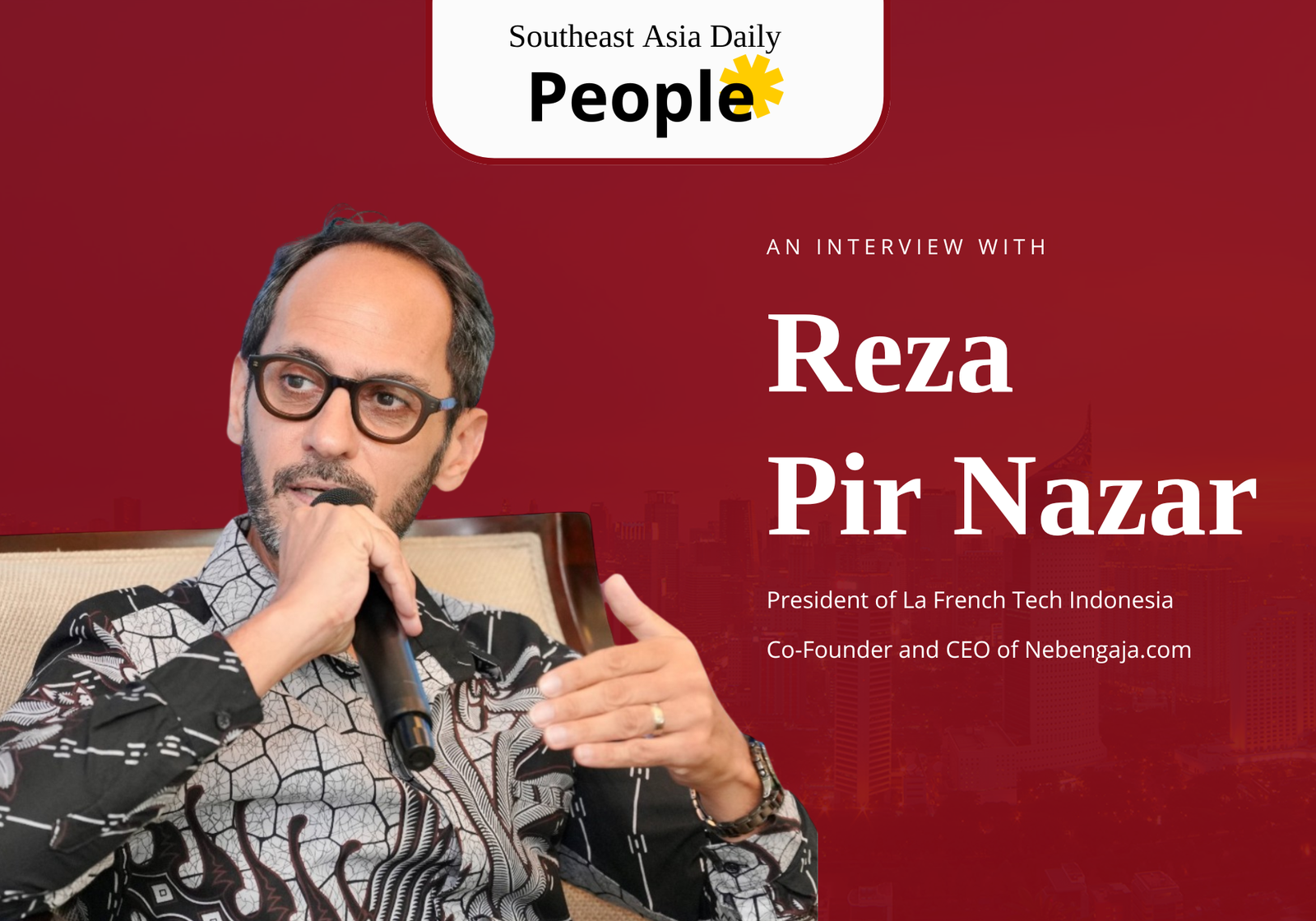
Having lived in Indonesia for the past 14 years, Jakarta-based French entrepreneur and President of La French Tech Indonesia, Reza Pir Nazar, views Southeast Asia’s largest economy as an “interesting destination” for global technological investment. However, Reza highlights a stark regional imbalance, noting that “Singapore is getting the most attention”.
Drawing from a deep commercial background in retail operations and corporate expatriate roles, Reza possesses a wealth of market experience—insights now manifested in his own ventures, Kadokita, an experience gift platform, and Nebeng Aja, a carpooling application. It is this dual lens of corporate tenure and local founder agility that empowers him to dissect the shifting stakes of French-Indonesian commerce, a subject SEA Daily sat down to explore directly with him.
La French Tech Indonesia is the officially labelled Indonesian chapter of France’s government-backed startup network, a community spanning Jakarta and Bali that connects French and Indonesian founders, investors and talent to grow the French entrepreneurial footprint in the market. Through it, Reza endeavours to develop an inclusive ecosystem that advances French entrepreneurial initiatives across Southeast Asia, and in particular, to catalyse the French-Indonesian technology ecosystem.
“Anybody can join,” Reza explains. “From the moment that you are interested in technology, aiming to create value and looking to gain some value in return, you’re welcome to join us”.
As France-Indonesia relations hit an all-time high, momentum to strengthen economic ties has surged, particularly in attracting the French capital into the archipelago. Coupled with the nearing operationalisation of the Indonesia-European Union Comprehensive Economic Partnership Agreement (IEU-CEPA), Reza believes 2027 is on track to be a highly lucrative period for investment.
IIt will not be easy, and much remains to be done. But first, why Indonesia?
An Imperfect Market with Unmissable Momentum
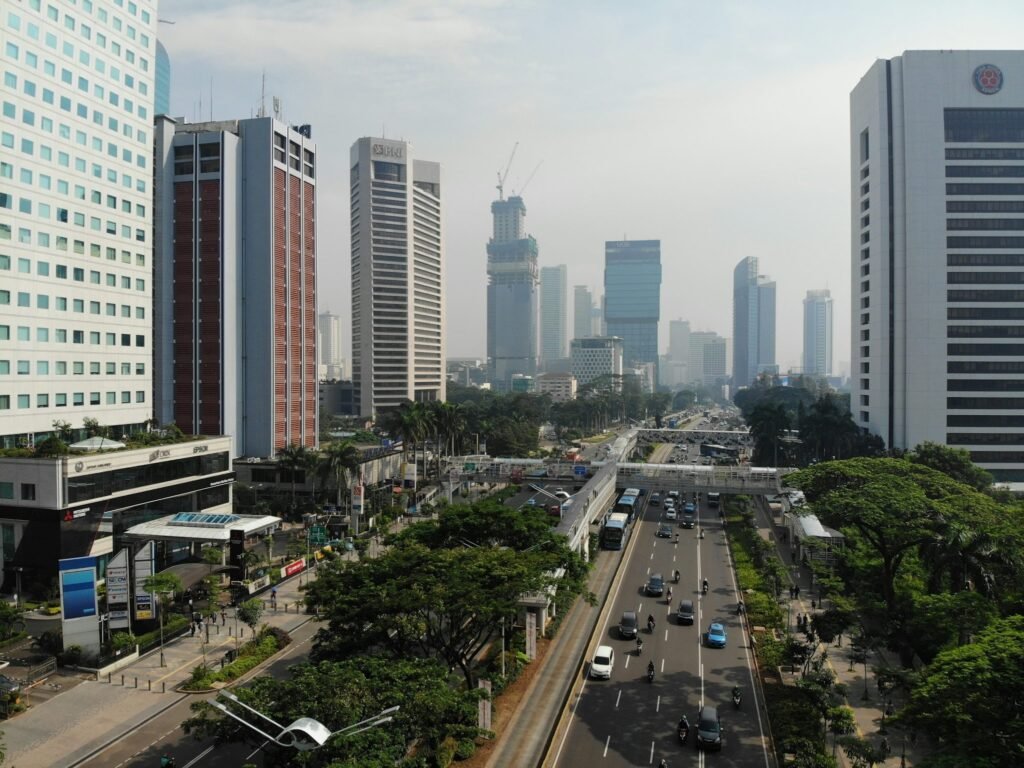
Kuningan business district in Indonesia’s capital of Jakarta, showcasing the city’s modern skyline and busy urban landscape. (Unsplash/Afif)
According to Reza, while most regional startups traditionally flock to Singapore, his mission is to shift that focus towards Indonesia. He argues that “coming to Indonesia will be more interesting” for companies as the market presents an attractive proposition regarding talent and operational costs, though he admits that Singapore offers “many benefits” where Indonesia is “still not yet at that level”.
Indonesia possesses a considerably resilient economy, having proven its capability to weather continuous macroeconomic shocks, most notably the COVID-19 pandemic. Such an economic resilience is anchored by robust household consumption across a population exceeding 275 million population, which features an expanding middle-class. Another significant support—albeit one subject to volatility—was historically driven by foreign direct investment (FDI) directed into large-scale infrastructure and heavy industrial sectors. These intertwining factors contribute significantly to Indonesia’s gross domestic product (GDP) of over 1.5 trillion US dollar, which accounts for more than one-third of the total economic output of the entire ASEAN region.
Moving forward, Indonesia recognises that attracting international capital requires proactive institutional initiatives rather than a passive reliance on its massive consumer base, particularly as the forthcoming investment paradigm becomes deeply underpinned by advanced technology. This shifts the prerequisites for the nation’s economic strategy, necessitating a structural transition towards high-value, innovation-driven growth while moving away from commodity dependency and low-cost manufacturing.
Reza observes that a genuine appetite exists within traditional Indonesian businesses and corporate enterprises to absorb and integrate these high-tech capabilities.
This is exactly what La French Tech Indonesia is currently working to facilitate. By aligning local corporate demand with French innovation, Reza emphasises, “we need to put more effort to put Indonesia much more on the French startups radar”.
The Three Blueprints for Tomorrow
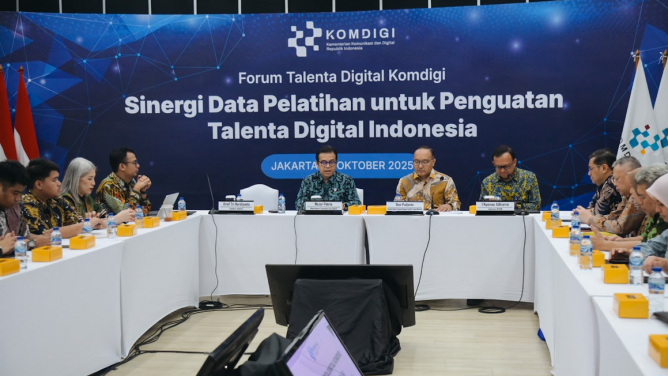
A forum on enhancement of Indonesia’s human resources on digital issues led by the Indonesian Ministry for Digital and Information Affairs. (Indonesian Ministry for Digital and Information Affairs)
Data center, cybersecurity and artificial intelligence (AI).
Those are the three pivotal sectors pointed out by the President of La French Tech Indonesia when identifying where the most complementary arenas of cooperation between France and Indonesia lie.
The expansion of data centres constitutes the most fundamental infrastructure requirement to accommodate the nation’s digital transformation. This is an evolution required to safeguard national security and maintain economic competitiveness. Leveraging its position as a more advanced tech economy, France is already actively working with Indonesia in this space through multinational giants Legrand and Schneider Electric. These corporations, which possess extensive global exposure to data infrastructure, are providing Indonesia with critical cabling and physical infrastructure powering Indonesia’s digital backbone.
Concurrently, severe and frequent cyberattacks (most notably the massive public database breaches of 2024) served as a stark wake-up call, underscoring that sophisticated cybersecurity is a non-negotiable prerequisite for economic stability. Such incidents exposed gaps in Indonesia’s data governance framework, a vulnerability that inherently diminishes the market’s appeal for risk-averse international capital. Consequently, deploying targeted capital into cybersecurity has become an urgent national priority, thus pushing investment there.
Ultimately, robust AI deployment will serve as the cognitive engine running these data centres. Reza highlighted the regional presence of French frontrunner Mistral AI, noting that the European unicorn presents a compelling “third option” to rival existing Chinese and American behemoths. “This third road can be more neutral than the two giant countries,” he added.
Collectively, the three pillars dictate that the stakes are incredibly high for Indonesia; building a robust, secure digital ecosystem is no longer optional if the country wants to remain competitive and shield itself from evolving threats.
Three Missions in Motion
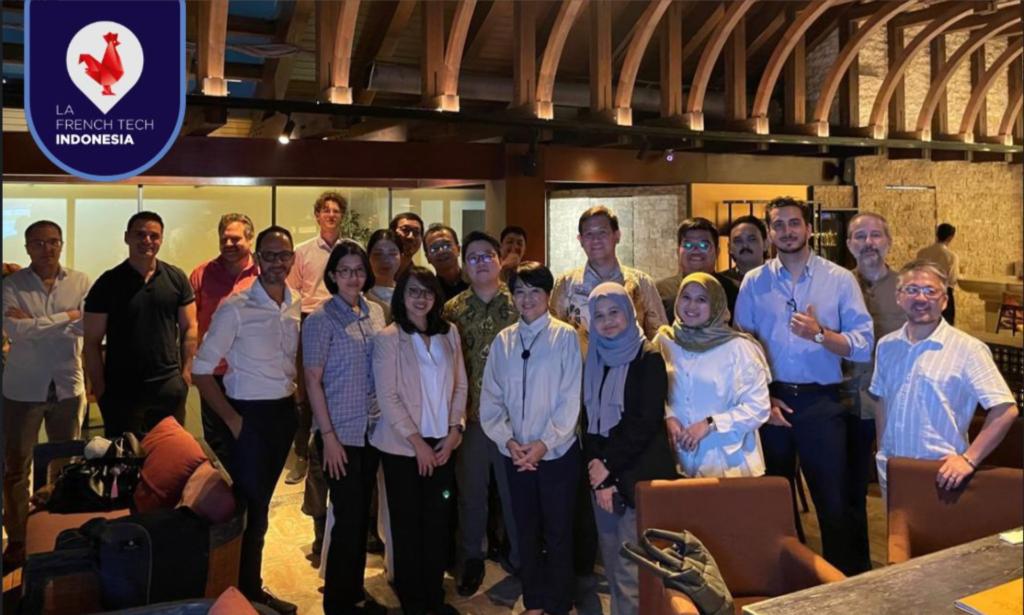
La French Tech Indonesia’s 6 August masterclass explored corporate criminal liability and governance in Indonesia. (La French Tech Indonesia)
“We basically gather people,” said Reza, putting the work of the hub he leads into simple terms.
First labelled in 2023, La French Tech Indonesia is an international French Tech Community within the global network coordinated by Mission French Tech, the French government administration under the Ministry of Economy, Finance and Industrial, Energy and Digital Sovereignty.
On the ground, the community anchors its work in Indonesia around three distinct, locally contextualised missions: building an ecosystem around founders, strengthening connections between France and Indonesia, and bridging local startups with corporate enterprises.
Beginning solely with French founders three years ago, Reza swiftly orchestrated an effort to tap into the Indonesia local community, firmly believing that “if we keep it between French people, after 30 people, we just have that. That’s it. So, we are open to the local ecosystem”.
To help entrepreneurs grow, La French Tech Indonesia builds an ecosystem around them, bringing together notaries, lawyers, business and marketing consultants, agencies, accountants and chief financial officers (CFOs).
This foundation serves as a robust springboard for the second mission of bridging and fostering both nations’ business ties. “We are the door for them,” Reza notes, explaining that the hub accelerates market entry by connecting them with the “right people, the right businesses, the right partner, the right financial institutions and the right government bodies” to facilitate enterprise growth. Intertwined with this objective is his final mission: interlinking Indonesian local startups directly with established domestic corporate companies.
However, navigating this cross-border pipeline reveals a glaring contemporary hurdle that currently dominates the President’s focus; “fundraising in Indonesia is very, very difficult”.
“Back to Basics”
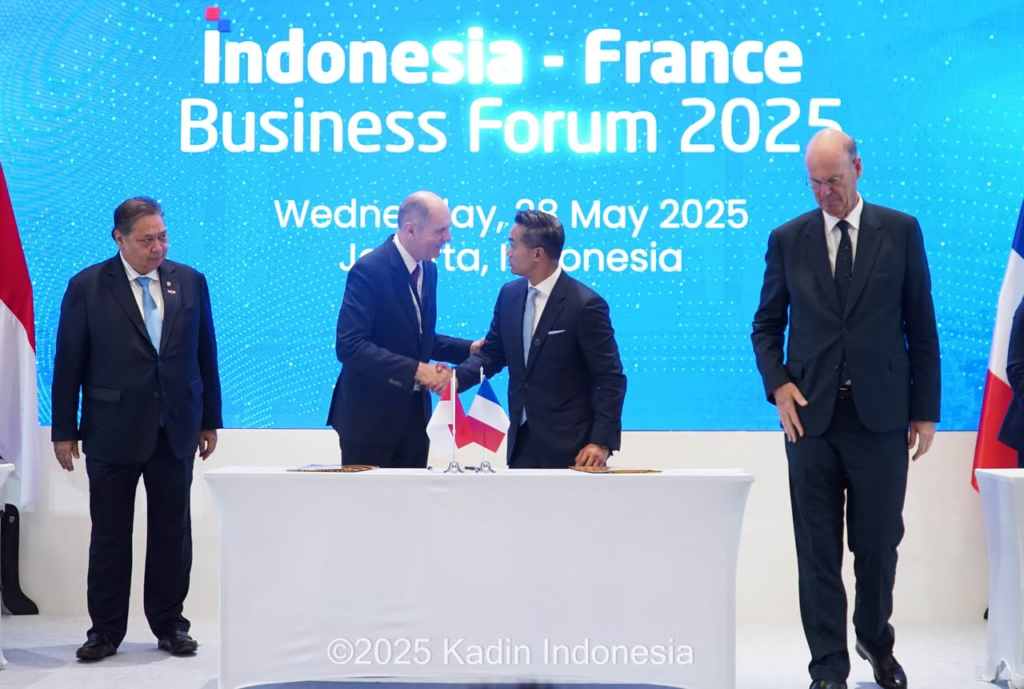
Indonesia-France Business Forum 2025 in Jakarta, Indonesia. (Indonesian Chamber of Commerce)
For Indonesian startups, the funding environment has become increasingly difficult. Reza points to a sharp contraction in startup fundraising compared with previous years: “We are at minus 90% compared to three years ago. So, in 2021–2022, we used to raise 2.5 billion US dollar for startups in Indonesia. Today, in the first six months of 2026, we are only at 50 million US dollar.”
At the current pace, this would translate into roughly 100 million US dollar in total startup funding for 2026. This represents a dramatic contraction from the levels seen just a few years ago.
It signals that investors now evaluate potential through a lens of capital efficiency, sidelining the legacy model of large companies with long-term growth operating initially on a deficit. In this climate, raw operational size is secondary to a transparent, accelerated path to profitability.
In response, La French Tech Indonesia is taking a more practical approach. Reza says the community is going “back to the basics” and returning to “the traditional way” of doing business. Rather than relying solely on fundraising, its third mission focuses on connecting startups within its ecosystem with established corporate companies.
The approach is already reflected in La French Tech Indonesia’s annual summit, which includes a “full afternoon of business matching” designed to bring startups into direct contact with corporate companies and institutional partners. The community also collaborates with organisations such as the Indonesian Chamber of Commerce (Kadin) and the Indonesian Association of Entrepreneurs (Apindo) to strengthen these connections.
For Reza, the objective is straightforward: “We are the bridge between everybody” – connecting founders with the ecosystem, France with Indonesia, and startups with the corporate world.
Because contemporary investment trends point to prolonged funding winters, the strategic imperative for startups has fundamentally shifted towards securing stable corporate contracts. This is precisely the transactional conduit La French Tech Indonesia is pursuing through its ecosystem-building initiatives.
La French Tech Indonesia has done this exactly through their annual, flagship summit. According to the President, they have a “full afternoon of business matching,” where they brought together founders, corporate leaders, institutional bodies (such as Kadin and BNI Ventures) and relevant sectors to close concrete, practical business deals.
The Future of the Frontier
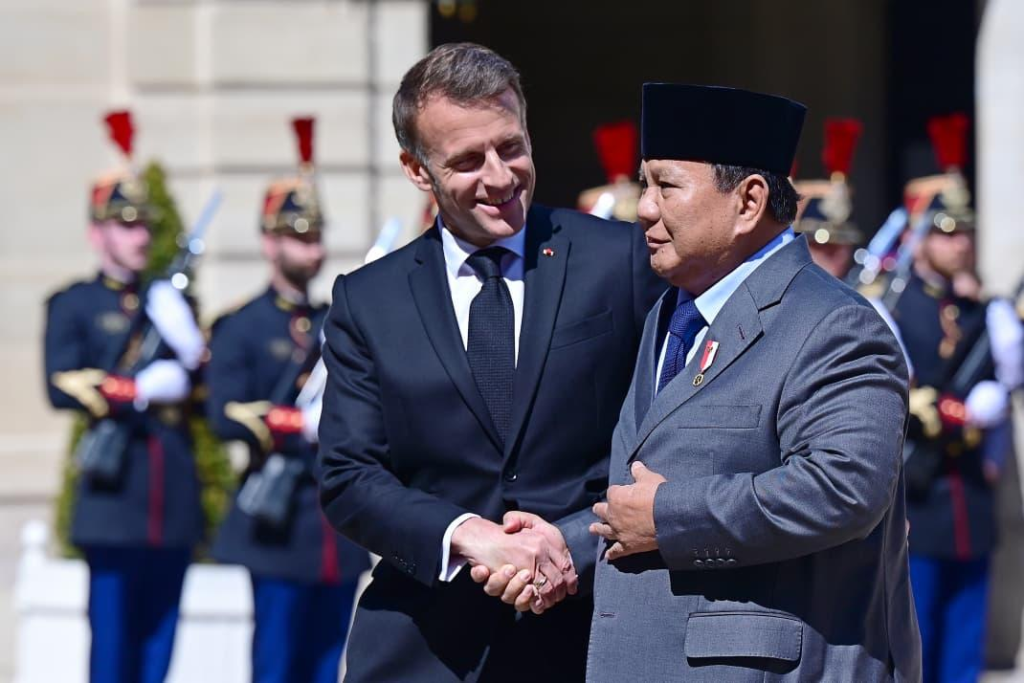
Indonesian President Prabowo Subianto with French President Emmanuel Macron during the former’s state visit to Paris in April 2026. High-level engagements between the two countries have increased recently. (Indonesian Presidential Secretariat)
Indonesia, which Reza fondly describes as “the country of smiles”, presents an optimistic outlook, yet this potential can only be realised if the state remains committed to systemic regulatory reforms.
As he acknowledges, Indonesia is still maturing its business regulations. For instance, corporate tax rates remain notably higher than those in neighboring Singapore. However, he notes that “many things are actually improving” on the ground, highlighting steady operational advancements in company incorporation procedures, tax administrative workflows and related corporate services.
Nevertheless, when evaluated strictly through a high-tech lens, the ecosystem remains embryonic. It is still exceptionally rare for “pure” French technology startups to physically operate within Indonesia, or vice versa, especially when contrasted with the deep-rooted footprint of industrial giants like Thales, which has operated in the country for over 45 years. “We still don’t have that much collaboration,” Reza observes. This makes sense, though, given that FDI inflows into middle-income economies like Indonesia historically tilt heavily towards conventional manufacturing. This pattern is clearly mirrored in existing bilateral engagements, which are dominated by traditional French legacy corporations such as Airbus, Thales, and BNP Paribas.
As the operational parametres for entrepreneurs continue to shift, constructing a highly accommodative investment environment now hinges decisively on state-level execution. With Indonesian President Prabowo Subianto’s administration explicitly targeting an ambitious 8% economic growth mandate, the stakes for institutional reform have never been higher. Crucially, early structural deployments are already yielding measurable data: the establishment of the Danantara super sovereign wealth fund to centralise national investments, alongside a doubling down on mineral downstreaming and massive infrastructure projects, propelled realised investment to reach over 500 trillion Indonesian rupiah (30 billion US dollar) in the second quarter of 2026 alone.
Nonetheless, a cautious undercurrent persists within the investment community, with observers increasingly scrutinising fiscal prioritisation and monetary independence. Concerns have mounted over the potential reallocation of critical education and upskilling funds towards separate state-backed initiatives—such as the massive Free Nutritious Meal (Makan Bergizi Gratis/MBG) programme. For risk-averse global venture funds, these budgetary shifts introduce a layer of fiscal ambiguity that could challenge the archipelago’s long-term attractiveness as a premier high-tech investment hub.
About The Author