
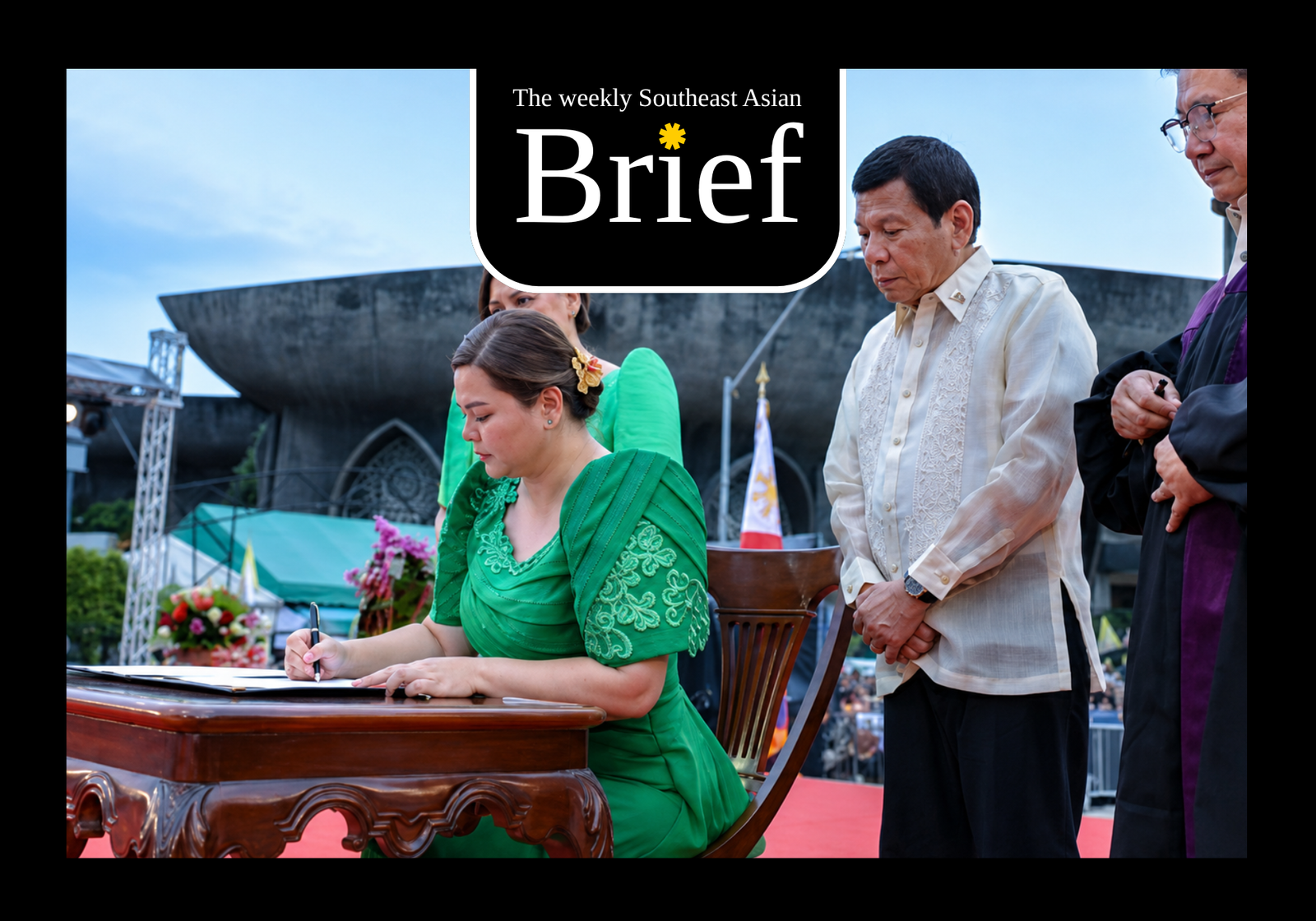
Vice president‑elect Sara Duterte takes her oath at San Pedro Square, Davao City, in 2022. (City Government of Davao)
In early July, The Philippine Senate officially opened the impeachment trial of Vice President Sara Duterte, marking the start of a historic political and legal process in the country. As the first sitting vice president in the country’s history to face an impeachment trial, Sara Duterte stands accused of misusing millions of dollars in confidential government funds and making threats against President Ferdinand Marcos Jr. She has firmly denied all allegations, with her legal team arguing that the case is politically motivated and aimed at removing her from office.
Under the Philippine Constitution, at least 16 of the 24 senators must vote to convict Duterte for her to be removed from office and permanently disqualified from holding any future public position. During the opening session, prosecutors described the trial as a necessary step to uphold accountability, while the defence insisted it was driven by political interests rather than legal merit.
The proceedings have captured nationwide attention, with hearings being live streamed and security heightened in anticipation of possible demonstrations. The trial also comes amid escalating tensions between the opposing Marcos and Duterte camps, following the collapse of their once-powerful political alliance. Just hours before the Senate convened, authorities arrested a senator allied with Duterte on separate plunder charges, further intensifying the political atmosphere. Senators have set a maximum time frame of 92 days to complete the impeachment trial, ensuring that the outcome could have significant implications for Philippine politics ahead of the 2028 presidential election.
Although this case is officially about legal accountability, it could be seen as a challenge towards the Philippines’ political status quo.
One reason is the dramatic collapse of the Marcos-Duterte alliance. During the 2022 elections, Ferdinand Marcos Jr. and Sara Duterte formed one of the strongest political alliances in Philippine history. Marcos won the presidency, while Duterte won the vice presidency by a large margin. Their partnership united two powerful political families and helped deliver a landslide victory.
However, the alliance did not last long. Differences over government priorities, political appointments and growing competition between their allies gradually weakened their relationship.
The situation became more serious when Duterte resigned as Education Secretary in 2024. Since then, tensions between the two camps have become increasingly public, with both sides openly criticising each other. By the time the impeachment complaint reached Congress, many analysts viewed it as another sign that the alliance had completely fallen apart.
Because of this political background, many Filipinos are asking whether the impeachment is purely about accountability or whether it is also being used to weaken a major political rival before the next presidential election.
This is why the impeachment has become an important test of political accountability and public trust in the Philippines. Supporters of the impeachment argue that public officials should be investigated if there are serious allegations of misconduct. In their view, the case shows that even senior leaders can be held accountable through constitutional processes.
Others see the situation differently. Duterte’s backers argue that the impeachment is politically motivated and designed to prevent her from becoming a strong presidential candidate in 2028. For them, the case reflects the country’s long-standing problem of political rivalry rather than a genuine effort to fight corruption.
Public opinion remains divided. Some Filipinos advocate for the investigation, especially because it involves the use of confidential government funds. Others are skeptical and question whether the House and Senate can remain politically neutral during such a high-profile case. Rather than focusing only on whether Duterte is guilty or innocent, many people are also paying attention to whether the impeachment process itself is fair, transparent, and free from political interference.
The Senate’s final decision will have major political consequences.
If Duterte is convicted, she will be removed from office and barred from running for future public office. This would significantly change the political landscape ahead of the 2028 presidential election by removing one of the country’s strongest potential candidates.
If she is acquitted, Duterte could become politically stronger. She may argue that the allegations were not supported by sufficient evidence and use the verdict to strengthen her image before the next election.
Regardless of the outcome, the impeachment will likely influence Philippine politics for years to come. More importantly, it will test whether democratic institutions can fairly handle politically sensitive cases involving powerful leaders. The credibility of the process, not just the final verdict, which will have a significant role in shaping public trust in the country’s democratic institutions.
About The Author




One thought on “Sara Duterte’s Trial Is A Test of Philippine Political Status Quo”