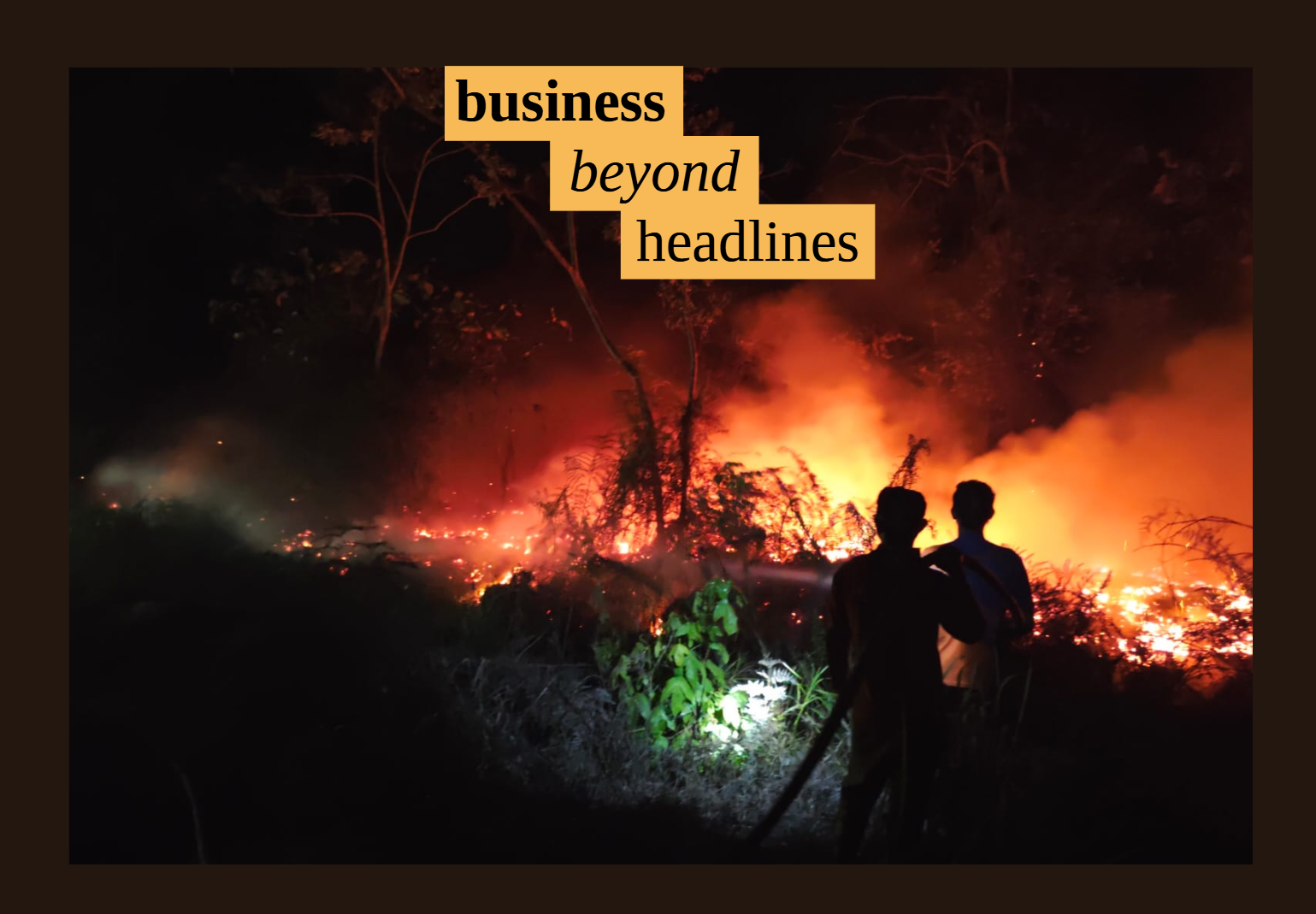
Firefighters battle a peatland blaze in North Kalimantan, Indonesia, in August 2026. (BPBD Kabupaten Bulungan)
A Region on the Brink
On September 26, Bangkok was declared a disaster zone. Nearly 300 millimetres of rain fell in about 48 hours, and floodwaters cut off main roads at 37 locations across the capital. The deluge came as the region was already reeling from the El Niño, which has wreaked havoc across multiple Southeast Asian countries in recent weeks .The climate-vulnerable region is now forced to grapple with a Super El Niño experts dubbed as “strongest in living memory”, while still reeling from the aftermath of the global energy crisis triggered by the Hormuz disruptions. Scientists have pointed out how the distressing inflation driven by rising retail fuel prices has inevitably “planted” a non-transitory effect, meaning, regretfully, for agrarian economies like many of the Southeast Asian nations, the next harvest is set to charge households higher. Food security risks are therefore hard-coded and thus mismanagement will catalyse the worst case scenario of civil unrest projected to unfold in 2027.
Just a month into its onset, the El Niño has undoubtedly exacerbated severe drought, flooding and water scarcity across the region. Media outlets recurrently correlate Indonesia’s historic-high wildfires record—which has peaked since August, devastating more than 1,350,000 hectares (3.4 million acres) of land throughout the year—with these extreme weather patterns. Yet, the crisis runs far deeper than this mere tip of the iceberg. But first and foremost, it is essential to grasp the hazardous magnitude of the burning.
The blaze triggers the detonation of a “carbon bomb” as it engulfs peatlands that naturally function to sequester carbon. Hence, the moment the peatland fires ignited, they released massive amounts of carbon that had been trapped underground for thousands of years. To put it into perspective, the fire outbreaks in just the first week of September exceeded Russian emission at the same period levels tenfold. Worse, it is on track to be on par with the nation’s worst fire season this century in 2015, where it generated more daily emissions than the entire US economy and cumulative emissions that surpassed the EU’s fossil-fuel emissions that year. Notably, the conflagration is hard to extinguish because it smoulders underground. As of late September, the Indonesian government remains occupied in combating the intense fires, with the burning expected to last until late October or early November as the El Niño has delayed the monsoon rainfall.
Over 170,000 cases of acute respiratory infections have been recorded domestically, with more than 5 million people directly exposed to hazardous haze, prompting more than 1.4 million students to study remotely. Healthcare costs from the toxic air pollution range from 9 trillion Indonesian rupiah (540 million US dollar) to a worst-case scenario escalating tenfold to 93.5 trillion Indonesian rupiah (5.20 billion US dollar).
Economic loss related to the wildfires is expected to reach 29.54 trillion Indonesian rupiah (1.6 billion US dollar), equivalent to roughly 0.23% of the nation’s gross domestic product (GDP). The figures were calculated from the physical destruction of land, forests, crops and infrastructure swallowed by the flames, as well as disrupted business and production activity due to the haze.
Unfortunately, these already massive fallout projections represent a strict market-economy number that does not account for the most severe, irreversible environmental externalities, such as rampant biodiversity loss and the collapse of ecosystem services. Such an incomprehensible scale of devastation should prompt the question of whether the crisis was forewarned, and, more importantly, whether it can actually be managed to be less destructive.
A Crisis Foretold
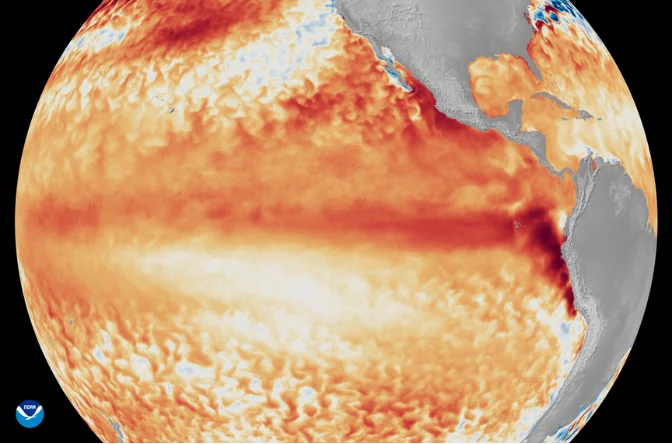
Satellite imagery shows above-average sea surface temperatures in the tropical Pacific Ocean during the first week of June 2026, indicating the emergence of a powerful El Niño. (NOAA Satelites)
During the “El Niño update” press conference on September 3, World Meteorological Organisation (WMO) Secretary-General Celeste Saulo concluded her address by saying, “We have the forecast, the foresight to save lives and protect livelihoods,” and reasserted that “the science is clear. We have the knowledge and tools to prevent El Niño-related hazards becoming a crisis”.
This makes it unequivocal that governments are thoroughly clued-up on the unfolding El Nino; they are aware of its arrival window, the catastrophic impacts it brings and certainly the countermeasures.
The anomalous, fatal surge in Indonesia’s record-breaking hotspots thus signals a red flag, exposing chronic, structural problems, which must be confronted before holding a periodic weather event accountable. Thereby, without downplaying the substantial effort orchestrated by firefighters on ground, it must be acknowledged that the wildfires wouldn’t be nearly as destructive had the government exercised the political will to authorise stringent precautionary measures. Regrettably, it seems that the “political will” required to safeguard the environment has consistently been outrivalled by a profit-driven mindset—which in the end benefits only a few and leaves the people, especially the indigenous community, to continue to live on degraded land. One glaring irony of this crisis lies in the initial 75% budget slashing endured by the National Disaster Management Agency (BNPB). With merely less than 500 billion Indonesian rupiah (28 million US dollar), 2026 marked a historic-low funding for the agency.
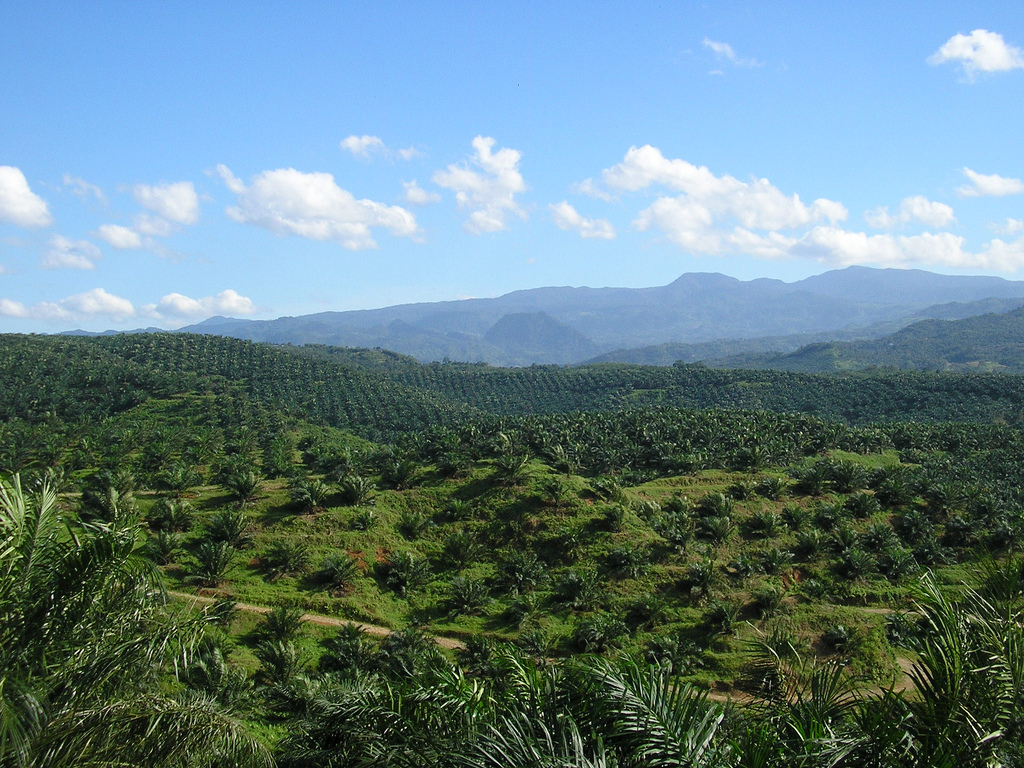
A monoculture palm oil plantation in Indonesia. (Wikimedia/Achmad Rabin Taim)
In the case of the peatland fires, widespread allegations have surfaced that this “super” El Niño is being used as a straw man to explain unprecedented hotspots, as investigations have later revealed that the illegal practice of “slash and burn” land clearing is being resumed. Palm monoculture planting became an increasingly common practice to leverage profits in the country crowned the world’s largest producer and exporter of palm oil. The cheapest way to clear lands for these plantations, for businesses, is none other than to ignite fire. Of note, such a commercial exploitation of the agriculture technique has been taking place since at least the 1990s, during which President Soeharto’s food self-sufficiency programmes had turned the country’s “unproductive” peatlands dry to accommodate rice cultivation. It adds an explanation as to why the damaged peat swamp is very prone to fire in the face of the current heat.
Accordingly, now shifting focus from the root cause, the next question relates to the actual feasibility of adequate disaster management measures within developing nations—recognising that data shows how developed nations generally cope better with “natural” disasters as they possess greater financial resources, advanced technology, etc. Before addressing that, it might be necessary to gain more understanding from neighbouring states experiencing comparable circumstances; the Philippines.
The country made alarming headlines throughout late August, as Metro Manila was badly affected by transboundary haze from its neighbour’s ongoing fires, while simultaneously battling their annual fight against severe flooding.
A skin-deep evaluation will encounter a recurring narrative that the enhanced yearly southwest monsoon, and ceaseless typhoons are the primary drivers of the nation’s inundation. A critical assessment would offer a demystifying understanding at how acute corruptions have persistently undermined the full implementation of the country’s vast, yet largely fraudulent flood control projects.
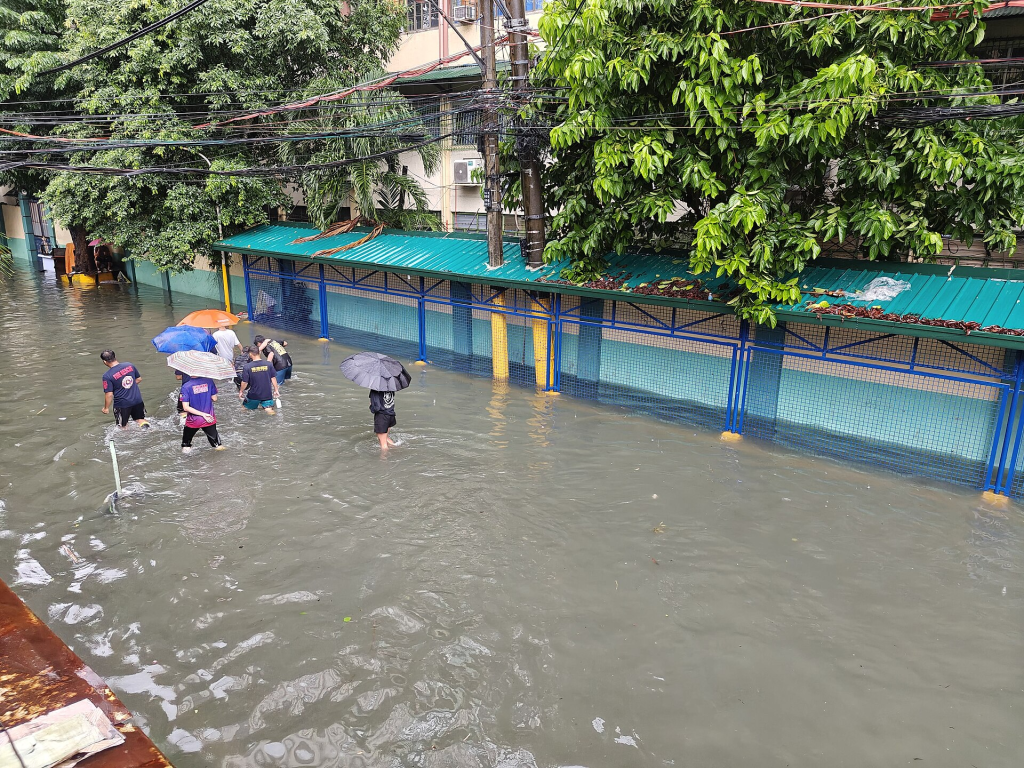
Knee-deep flood lashes Quiapo district in the City of Manila due to southwest monsoon (Habagat) induced by Typhoon Carina in 2024. (Wikimedia/Michael Peronce)
Notably, the notorious flood control corruption scandal—exposed during President Ferdinand Macros Jr. ‘s 2025 state address—revealed a mounting loss of 118 billion Philippine peso (2 billion US dollar) allegedly pocketed by compromised contractors and authorities between 2023 and 2025. While the country supposedly ran over 5,000 flood control projects in parallel, subsequent investigations disclosed that many of them are “ghost” projects.
Crucially, the majority of these proposed flood management schemes were haphazardly concentrated on gray infrastructure, while, ironically, foundational and foremost priorities, namely ecosystem preservation, were left severely underfunded.
Drawing from this case, a vivid deduction is that the money is actually available; and, moreover, financial constraints won’t make a valid argument as scientists have substantiated that there exists a “better”, significantly less expensive approach for disaster management, specifically through nature-based solutions.
That said, candidly, what are the actual prospects for environmental preservation beyond disaster mitigation?
The Economics of Preservation

A peatland forest in Berbak National Park in Indonesia. (Wikimedia/James Maiden)
Empirically speaking, studies in ecological economics show that preserving forests delivers significantly higher economic benefits than deforesting them. It is certainly impossible to quantify (or directly compare) the exact trade-offs of land conversion against its alternatives. Research can merely offer conservative estimates, often by weighing the ecosystem services; the benefits that humans freely obtain from healthy, functioning natural ecosystems, including both direct (such as water, food and raw materials) and “invisible” (like water purification, carbon storage, flood protection, climate regulation etc.).
Broadly speaking for Southeast Asia, should the business-as-usual deforestation continue, environmental projections anticipate a near-total conversion of natural forest into agricultural land, forest plantation and other non-forested uses before 2050. Groundbreaking research by ecological economist van Beukering et al. specified their modeling on Leuser National Park, one of the oldest and most significant nature conservation areas in Indonesia, spanning over 800,000 hectares across Aceh and North Sumatera). It indicates that over a 30-year timeframe, sustained deforestation will yield a total economic value (TEV) of 7 billion US dollar (excluding the ecosystem services lost and the catastrophic losses had hazards turned into disaster). On the other hand, a conservation scenario is projected to “return” an equivalent of 9.5 billion US dollar, delivered through an invaluable life-support system and, patently, disaster mitigation.
Nevertheless, the global economic system has wired society to drive for short-term private profits and overlooked long-term, “abstract” societal and environmental goods.
That said, a practical “middle ground” to address that systemic flaw might be the ecological economics approach. Unlike the environmental economics and other neoclassical economic branches that persist in compromising nature to accommodate growth, the notion of ecological economics centres on the argument that on a finite planet, infinite growth is just physically impossible. And for a region known as the world’s most natural disaster-prone, Southeast Asia should have comprehended this truth better.
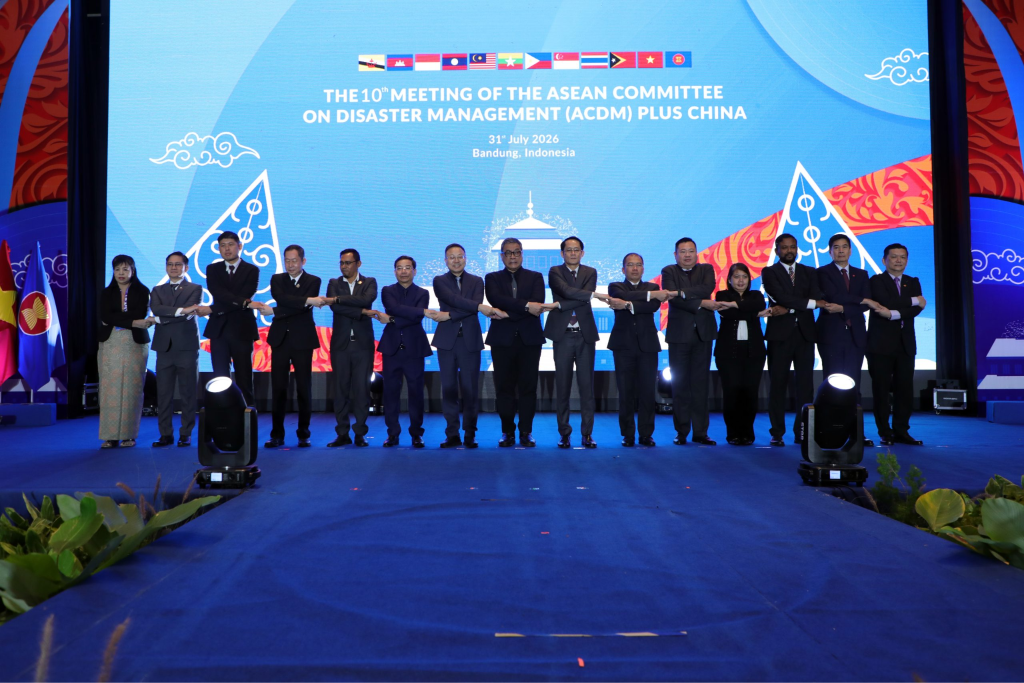
The 10th Meeting of the ASEAN Committee on Disaster Management (ACDM) Plus China in Indonesia in July 2026. (ASEAN Secretariat)
At the regional level, ASEAN does have a comprehensive disaster management blueprint expanding from the establishment of the Committee on Disaster Management (ACDM) since 2003, the legally binding Agreement on Disaster Management and Emergency Response (AADMER) which entered into force in 2009, as well as the aid-deploying Coordinating Centre for Humanitarian Assistance on Disaster Management (AHA Centre). Such measures have indeed been instrumental, especially in terms of shaping policy priorities and conducting capacity building programmes. However, it is clear from the regional philosophy of “One ASEAN, One Response,” that those institutional mechanisms are designed to manage the consequences of a crisis after the physical threshold has already been breached and not as tools for proactive disaster risk mitigation. Research underscored that there are thousands of manageable hazards across the region that regularly devolve into disasters. According to the UNESCAP Asia-Pacific Disaster Report, between 1970 and 2024, disasters in Southeast Asia affected 580 million people and triggered 235 billion US dollar in estimated economic damages. The remedial measures are further compromised by the top-down bureaucracy that bypasses meaningful grassroots participation and local community engagement
Crucially, future projections signal that natural disasters will unfold with greater intensity and frequency across Southeast Asia. Thus, should the region merely push its gross domestic product (GDP) growth objective while sidelining ecological stewardship, it risks precipitating the worst-case scenario experts have forewarned. A myopic view, regrettably, indicates that Southeast Asia is off track and risks missing the seven global targets of disaster management by 2030; the Sendai Framework.
Business-as-usual practices therefore non-negotiably demand systemic reformation.
About The Author