
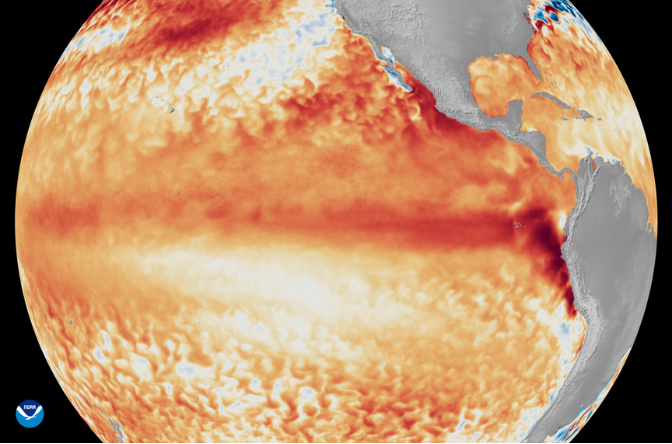
Satellite imagery shows above-average sea surface temperatures in the tropical Pacific Ocean during the first week of June 2026, indicating the emergence of a powerful El Niño. (NOAA Satelites)
Earlier this June, the National Oceanic and Atmospheric Administration (NOAA) confirmed that a powerful El Niño has begun to emerge above the Pacific Ocean. Analysts warned that the phenomenon will threaten Southeast Asia with severe drought and critical agricultural shocks.
The term “El Niño”, originally a Spanish phrase translating to “little boy”, is a climate phenomenon characterised by unusually warm ocean surface temperatures in the central and eastern tropical Pacific. Occurring every two to seven years, it weakens the trade winds that normally blow from east to west, pushing warm water toward the Americas and instigating significant shifts in global weather patterns.
Reportedly, the upcoming El Niño could become one of the worst recorded and may temporarily push the average global temperature up by 2°C.
The United Nations (UN) weather agency, the World Meteorological Organisation (WMO), disclosed that El Niño will emerge this summer and is expected to continue at least until November.
For Southeast Asia, as the region enters its dry season, this development will instigate widespread disruptions within agricultural sectors. Furthermore, the subsequent rainy season may be delayed or weakened by climate change.
Analysts said the region’s agricultural sector is exceptionally vulnerable to El Niño, a vulnerability also exacerbated by the already damaging Middle East crisis that is driving inflation. This confluence of factors threatens to spill over into a systemic food price surge.
About The Author




3 thoughts on “Powerful El Niño emerges, threatening Southeast Asian agriculture and food security ”