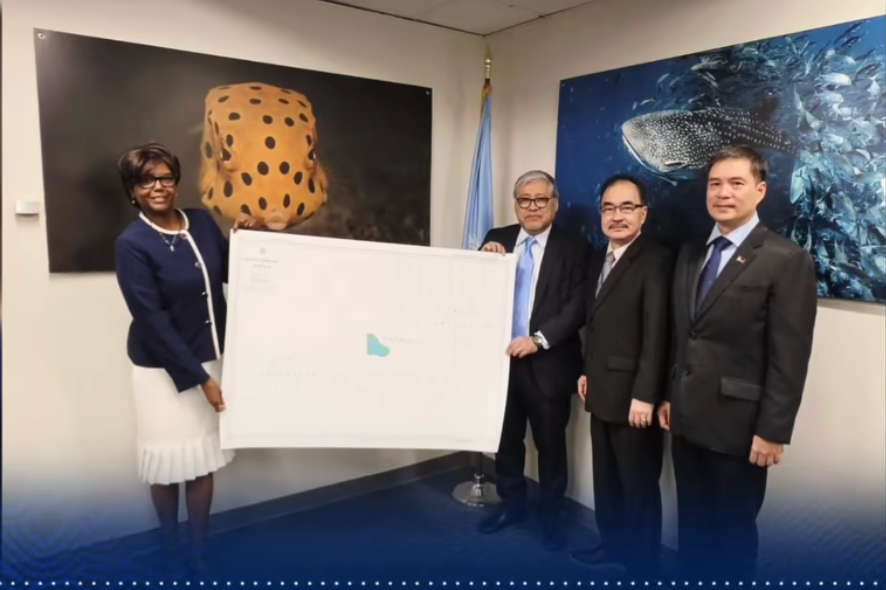
UN officials received the Bajo de Masinloc Chart from the Philippines during an official meeting on July 29. (Department of Foreign Affairs)
On July 29, the Philippines formally deposited its official nautical chart of Bajo de Masinloc and its surrounding maritime zones with the United Nations (UN) Secretariat, reinforcing its efforts to uphold international law and strengthen the legal certainty of its maritime entitlements.
The Department of Foreign Affairs (DFA) described the submission as another milestone in the country’s efforts to place its official maritime information on the international legal record. The deposit was made pursuant to Article 16 of the 1982 UN Convention on the Law of the Sea (UNCLOS), which requires coastal states to publicise official charts or geographical coordinates showing the baselines from which the breadth of the territorial sea is measured.
The Philippine delegation was led by Ambassador and Permanent Representative to the UN Enrique A. Manalo, who presented National Mapping and Resource Information Authority (NAMRIA) Chart No. 1567, titled Bajo de Masinloc and Approach, to Alice Hicuburundi, Deputy Director of the UN Division for Ocean Affairs and the Law of the Sea (DOALOS).
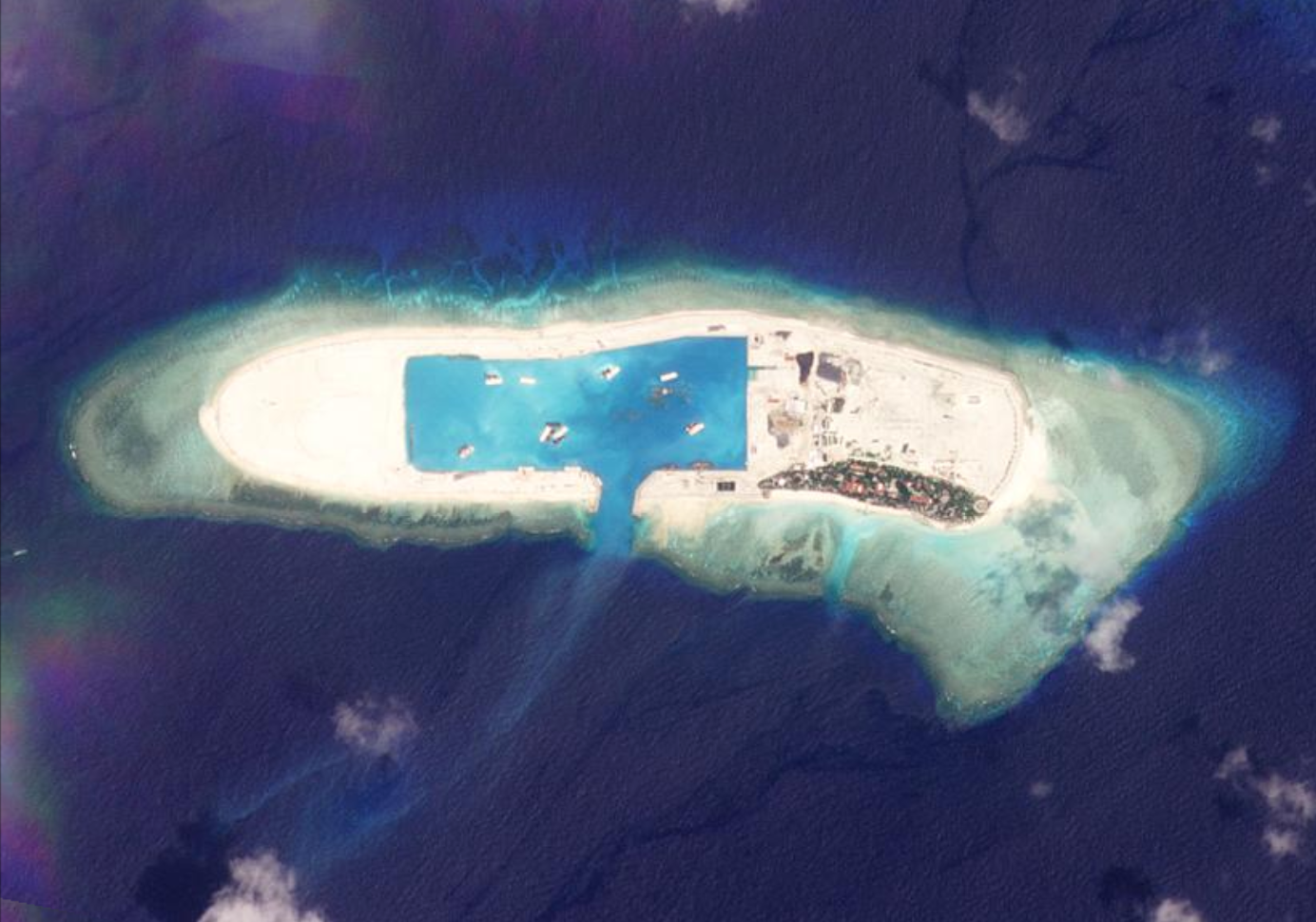
The DFA said Bajo de Masinloc has long formed an integral part of Philippine territory. Under the Philippine Maritime Zones Act, relevant provisions of UNCLOS and the 2016 South China Sea (SCS) Arbitral Award, the feature generates a territorial sea extending up to 12 nautical miles from its normal baselines and a contiguous zone extending from 12 to 24 nautical miles.
The deposit formally notifies the international community of the Philippines’ normal baselines and the geographical extent of its authority and jurisdiction over Bajo de Masinloc. The department added that preserving official nautical charts and baseline information with the UN is particularly significant in the context of climate change and sea-level rise, as it helps maintain a permanent and internationally recognised legal record of maritime entitlements established under international law.
Although the submission does not alter the status of competing claims in the South China Sea, it forms part of the Philippines’ broader approach of combining legal and diplomatic mechanisms with enhanced maritime cooperation and greater transparency in response to continuing developments in the disputed waters. This reflects the country’s continued emphasis on advancing its maritime position through rules-based processes while maintaining support for the peaceful settlement of disputes.
About The Author