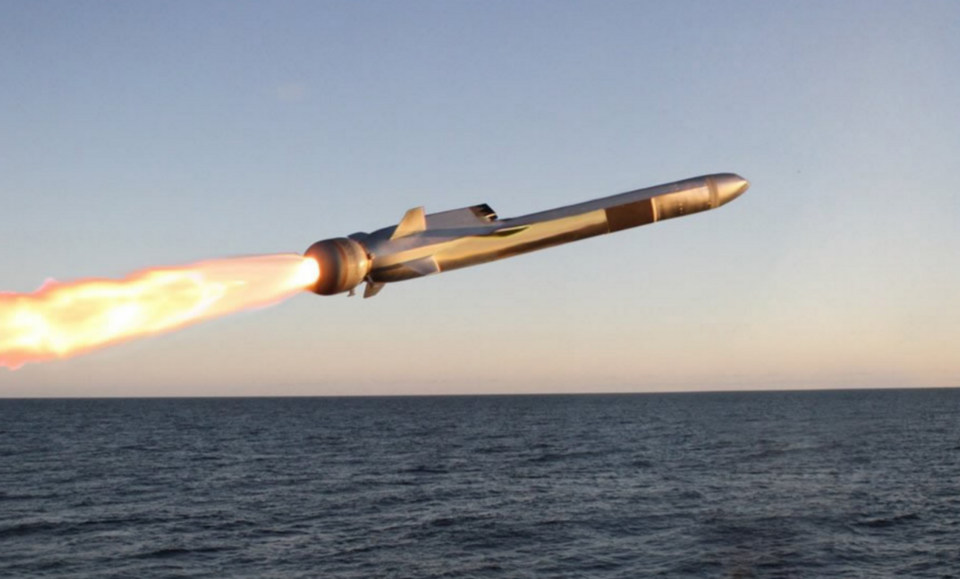
A Naval Strike Missile during a test fire. (Wikimedia)
On May 19, Malaysian Defence Minister Datuk Seri Mohamed Khaled Nordin commissioned the Royal Malaysian Navy (RMN) to research alternative missile vendors, following Norway’s revocation of their bilateral defence agreement signed in 2018.
This came as a follow-up after Kuala Lumpur condemned Oslo’s unilateral decision to revoke the export licence of its Naval Strike Missile (NSM) system to Malaysia on May 13.
For context, the NSM was originally earmarked for the Littoral Combat Ship (LCS) programme, a key modernisation initiative for Malaysia’s naval fleet.
Beyond finding a substitute vendor, Kuala Lumpur faces a deeper, layered challenge: economic constraint.
Minister Khaled noted that replacing the NSM system would cost Malaysia considerably more, as the armed forces would need to retrain personnel and adapt any new weapons system to fit existing vessels, a process that is neither quick nor cheap.
This concern is compounded by the fact that Malaysia’s defence ministry had already disbursed 95% of the contract value to the Norwegian producer Kongsberg Defence and Aerospace.
Although Prime Minister Anwar announced that Malaysia intends to file a claim seeking over 1 billion Malaysian ringgit (250 million US dollars) in damages, the sunk cost has significantly constrained the government’s fiscal flexibility to manoeuvre.
These cumulative direct and indirect costs are weighing heavily on Kuala Lumpur’s defence economy.
What does this mean for business?
Norway’s revocation lays bare a structural vulnerability in business-to-government (B2G) defence procurement. When a supplier-side government unilaterally rescinds an export agreement, the buyer is left absorbing costs well beyond the contract itself, spanning retraining, re-engineering, retendering and reputational uncertainty.
The episode also sits uncomfortably against Europe’s rhetoric of deepening partnerships with Southeast Asia, signalling to regional businesses that supplier reliability is no longer merely a technical question, but a geopolitical risk variable that procurement officers and investors must price in.
For Malaysia, the immediate lesson is clear: defence supply chain diversification is a business risk imperative, not an afterthought. Single-vendor dependency (particularly on suppliers subject to shifting domestic political pressures) creates contractual, financial and operational exposure that is difficult to hedge mid-programme.
About The Author