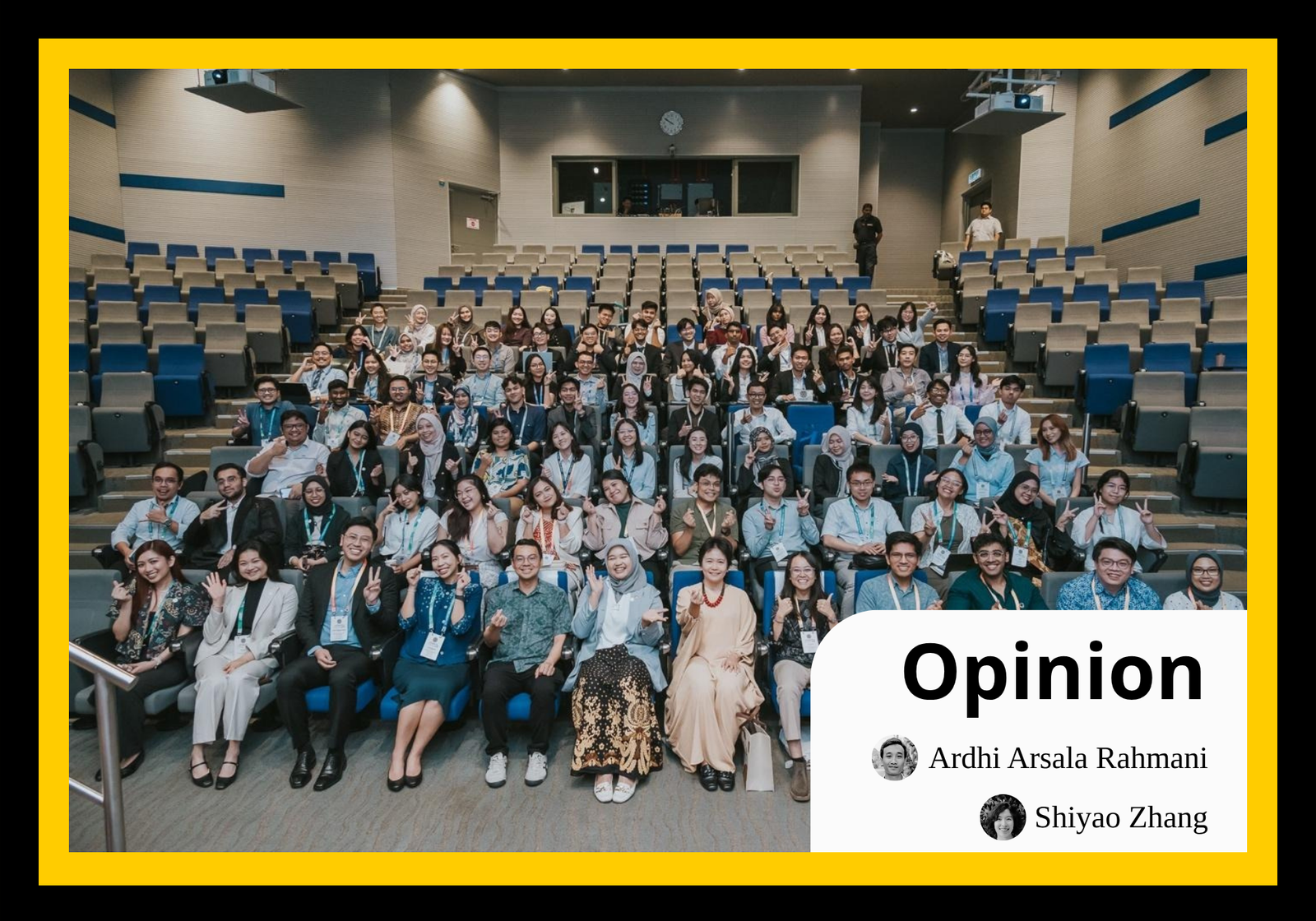
Delegates at the Southeast Asia Youth Energy Forum (SAYEF) 2025 in Malaysia. The forum brought together young energy professionals and stakeholders from across the region to advance youth participation in climate and energy governance. (Youth for Energy – Southeast Asia (Y4E-SEA))
Ardhi Arsala Rahmani is a research director at Youth for Energy – Southeast Asia (Y4E-SEA) is a regional network focused on youth participation in energy policy and climate governance.
Shiyao Zhang is a youth energy and climate communications consultant.
The ASEAN Declaration on the Empowerment of Youth in Climate Action and Disaster Resilience, adopted at the 48th ASEAN Summit in Cebu on May 8, is a welcome signal. For a region where roughly one-third of the population is aged 15 to 34 and youth numbers are projected to peak at over 220 million by 2038, the decision to place young people at the centre of climate governance is timely.
The declaration covers nine points, spanning youth-led innovation platforms and intergenerational mentorship to a proposed Youth Advisory Board under the Senior Officials Meeting on Youth. These read as a genuine attempt to move beyond symbolism. But Southeast Asian youth have seen encouraging words before. What they have seen far less of is the machinery that turns those words into measurable outcomes.
China’s experience offers a practical reference here.
From promises to proof
Since 2017, China has operated under the Medium- and Long-term Youth Development Plan (2016-2025), one of the first national-level policy frameworks of its kind. The plan covers ten priority areas spanning education, employment, health and social participation. It comes with a built-in delivery mechanism: a ministerial-level joint meeting involving 51 ministries and commissions reviews implementation regularly, with the Communist Youth League of China serving as the convener. Coordination mechanisms replicate this structure at every level from province to county, so youth policy is threaded across governments rather than confined to a single ministry.
The plan is also measured. The Central Committee of the Communist Youth League and the National Bureau of Statistics publish periodic statistical monitoring reports that track youth development indicators against defined targets. Some indicators have already been met ahead of schedule. The act of publishing data itself creates accountability. It tells young people and the institutions serving them, exactly where progress stands.
ASEAN’s declaration references the (ASEAN Socio-Cultural Community) ASCC Results Framework and annual reviews. That is a useful starting point. But to match intent with impact, it would be ideal for ASEAN member states to adopt a structured indicator system—one that tracks whether youth programmes deliver real outcomes, as opposed to simply existing on paper.
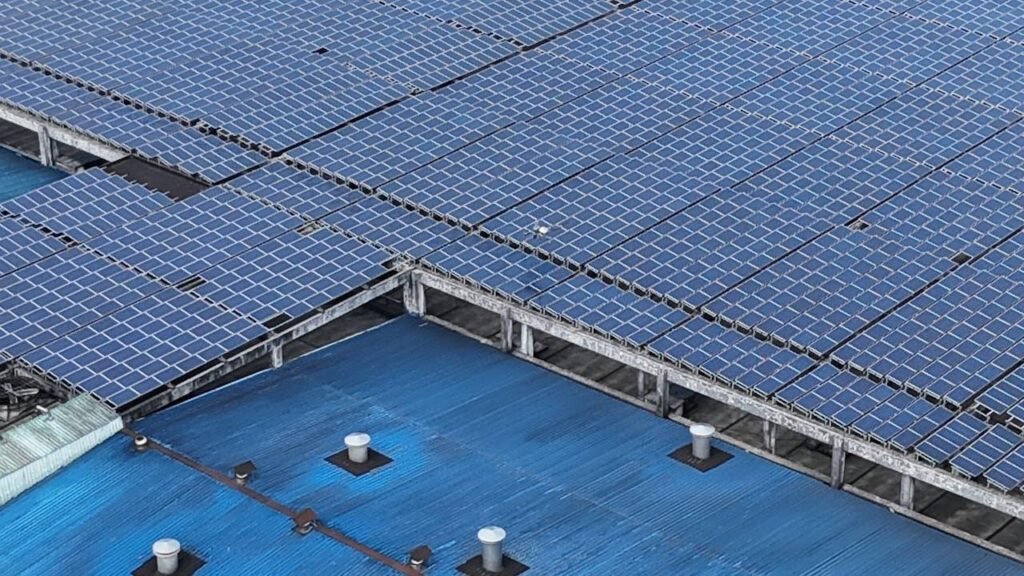
Solar panels installed on an industrial rooftop in Changsha, China. China’s large-scale deployment of renewable energy infrastructure underscores what institutional follow-through on climate commitments looks like in practice. (Pexels/China Yu)
Measuring what matters builds accountability
In 2025, Y4E-SEA contributed to the International Energy Agency (IEA)’s Southeast Asia Indicators Handbook for Just and Inclusive Energy Transitions by developing a set of youth-specific indicators. The approach took its cue from gender and diversity tracking: disaggregate by age, then ask who is in the room when decisions are made, and whether resources actually reach them. The resulting metrics include youth participation rates in energy policy consultations, the availability of green skills training programmes, the share of climate finance flowing to youth-led enterprises and stakeholder engagement quality split by age and gender. These are offered as a starting point. ASEAN member states can use them directly or modify them for local conditions.
Our research with the ASEAN Youth Organisation reveals precisely why such measurement matters. Eight in ten young Southeast Asians believe their country should adopt a decarbonisation target, yet they rank government political will and the absence of enabling policies as the biggest barriers. Even more starkly, 84% say skills training for clean energy jobs is unavailable. Young people are left on the sidelines because opportunity is missing, even though interest is plentiful. Closing that gap takes declarations backed by dashboards.
Speaking with youth, not over them
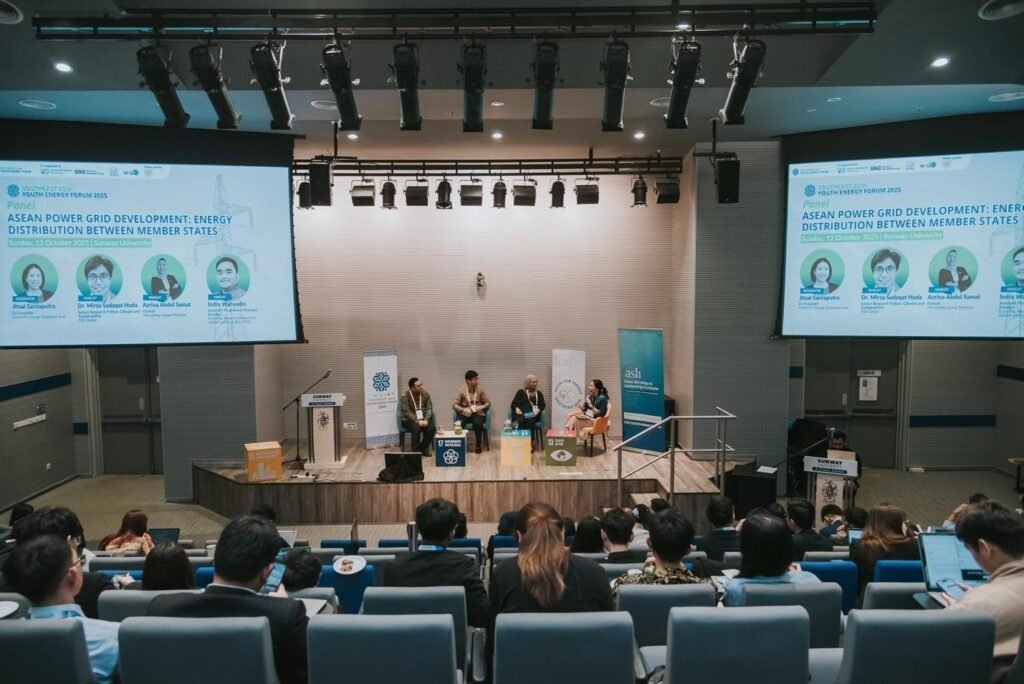
A panel discussion on ASEAN Power Grid development at the Southeast Asia Youth Energy Forum (SAYEF) 2025 at Sunway University, Malaysia. Young energy professionals explored cross-border energy distribution and regional grid integration. (Youth for Energy – Southeast Asia (Y4E-SEA))
China’s communications approach dedicated to the youth on the most pressing national issues such as climate and energy is also something worth taking a look at. Through China Youth Daily, the official newspaper of the Communist Youth League, reporters cover complex energy policy and translate it for a youth audience. In March, a China Youth Daily article presented a detailed analysis of China’s 15th Five-Year Plan energy security provisions, interviewing officials at the National Energy Administration and the China Development Forum. The piece addressed geopolitical supply disruptions, the new “energy power” target, and what it means for young professionals entering the sector. When a youth newspaper treats energy security as front-page material, it signals to young readers that their voice on these issues is expected and valued.
The paper also convened the “2025 Energy Youth and Media Global Multi-dimensional Dialogue” in Beijing, bringing together young energy professionals from nine countries with media representatives from across Africa, the Arab world and China. This was followed with a five-language joint initiative on energy civilisation exchange.
Youth empowerment without youth-facing communication is empowerment that never reaches its audience. China Youth Daily functions as a channel where climate and energy policy is translated for young people, and where their feedback travels back upward. It keeps climate policy from becoming a conversation held above young people’s heads.
ASEAN has no equivalent regional platform. Youth climate communication is scattered: the occasional institutional press release here, an uneven social media post there, a summit side event with no follow-through. Y4E-SEA is working to fill this gap through the Southeast Asia Youth Energy Forum (SAYEF), a regional platform designed to connect young energy professionals, policymakers and media across the region in sustained dialogue. We are building it because we believe the missing link is less about policy intent and more about a reliable channel through which that intent reaches young people and through which they can speak back.
We have much to learn and strengthen. China remains an important reference point, particularly on how to institutionalise communication alongside policy delivery.
None of this is to suggest that China’s model should be copied wholesale. China’s governance structure, demographic profile and political system are different from Southeast Asia’s diverse architectures. The underlying principles still apply: institutionalise delivery, measure progress publicly, and maintain clear two-way communication with young people.
The youth declaration in Cebu is an opportunity. Opportunities close quickly. One way for it to produce more than goodwill is for ASEAN member states to task the Senior Officials Meeting on Youth (SOMY)-supported Youth Advisory Board with tracking as well as advising. Pick two indicators to start. Test them in one ministry, or one province. Publish the results. Let young people see where their region stands.
Declarations open doors. Only institutions keep them open.
About The Author