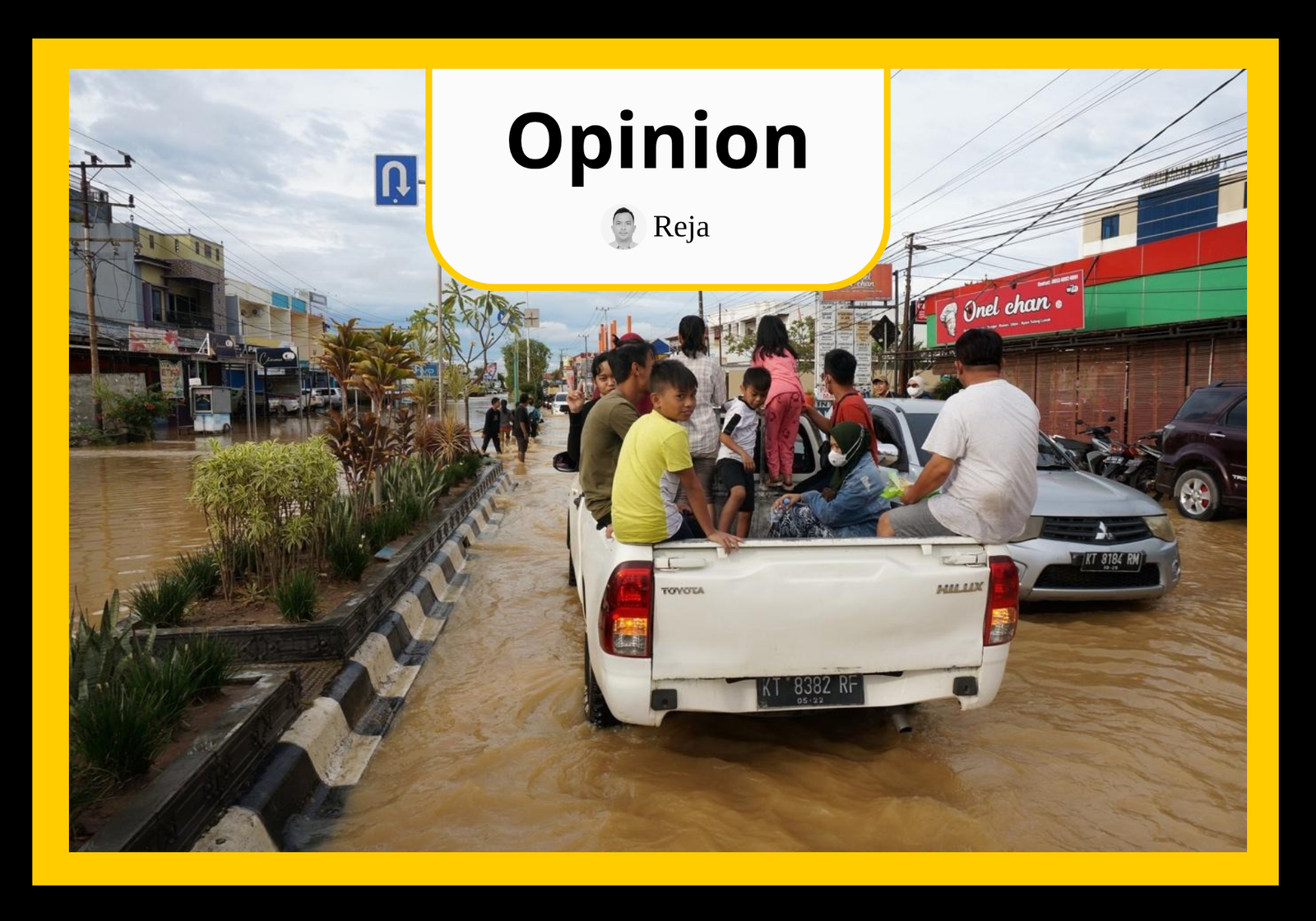
Floods hit homes and highways due to high rainfall and high tide of sea water in Indonesia in 2022. (Vecteezy/Sukarman)
Reja is a lecturer at the Political Science Department of Universitas Pembangunan Nasional “Veteran” Jakarta. The views expressed are the author’s own and do not represent SEA Daily or that of another organisation.
Disaster resilience in this economy depends not only on emergency preparedness and institutional capacity, but also on its accuracy, integration and reliability. The COVID-19 pandemic demonstrated how essential these are when responding to large-scale crises and ensuring that assistance reaches those who need it most. In Indonesia, the pandemic exposed significant weaknesses in data governance and inter-agency coordination. In 2021, the Minister of Social Affairs identified at least 21 million duplicate records that had not been properly updated by the relevant government agencies. This situation created substantial challenges in the distribution of social assistance, as the government relied on the Integrated Social Welfare Data to identify eligible recipients.
The problems became more apparent through cases concerning alleged corruption in COVID-19 social assistance funds and weaknesses in the distribution process. Inadequate distribution mechanisms, limited coordination among government institutions and inaccuracies in identifying eligible recipients contributed to gaps in assistance delivery. Reports from affected communities also indicated that some recipients received aid packages that were considered inappropriate or whose value was substantially lower than the amount stipulated by the government. These circumstances illustrate that disaster resilience requires more than rapid emergency intervention. It also requires an integrated and accountable system capable of supporting accurate decision-making, effective coordination, transparent resource distribution and the protection of vulnerable communities during times of crisis.
Institutional Challenges, the Case of Aceh
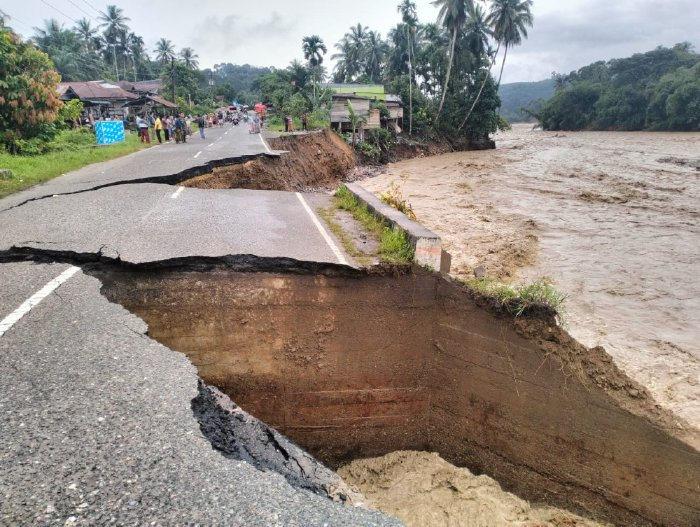
Severely damaged road in Aceh due to flooding in December 2026. (Aceh Regional Disaster Management Agency)
Aceh, Indonesia’s westernmost province, once again faced serious disaster challenges throughout 2025. Based on data from the Aceh Disaster Management Agency, 387 disaster events were recorded across various areas of Aceh, ranging from residential fires, floods, forest and land fires, tornadoes, landslides, earthquakes and coastal abrasion. One of the most significant events was the hydrometeorological flooding that occurred at the end of November 2025. The disaster affected 18 regencies/cities, with 15 regencies/cities declaring a disaster emergency response status as a measure to accelerate emergency response efforts on the ground.
The process of collecting data on victims and disbursing assistance in Aceh Tamiang Regency continues to generate complaints from the public. Repeated surveys, changes to beneficiary data and delays in assistance verification have been seen as evidence that data systems between regional government organisations within the regency have not yet been properly integrated. The issue has also drawn strong scrutiny from the Aceh Tamiang Regional House of Representatives towards the regency’s Office of Communication, Informatics and Encryption, prompting calls for the head of the Office’s resignation.
Preventing Forest and Land Fires
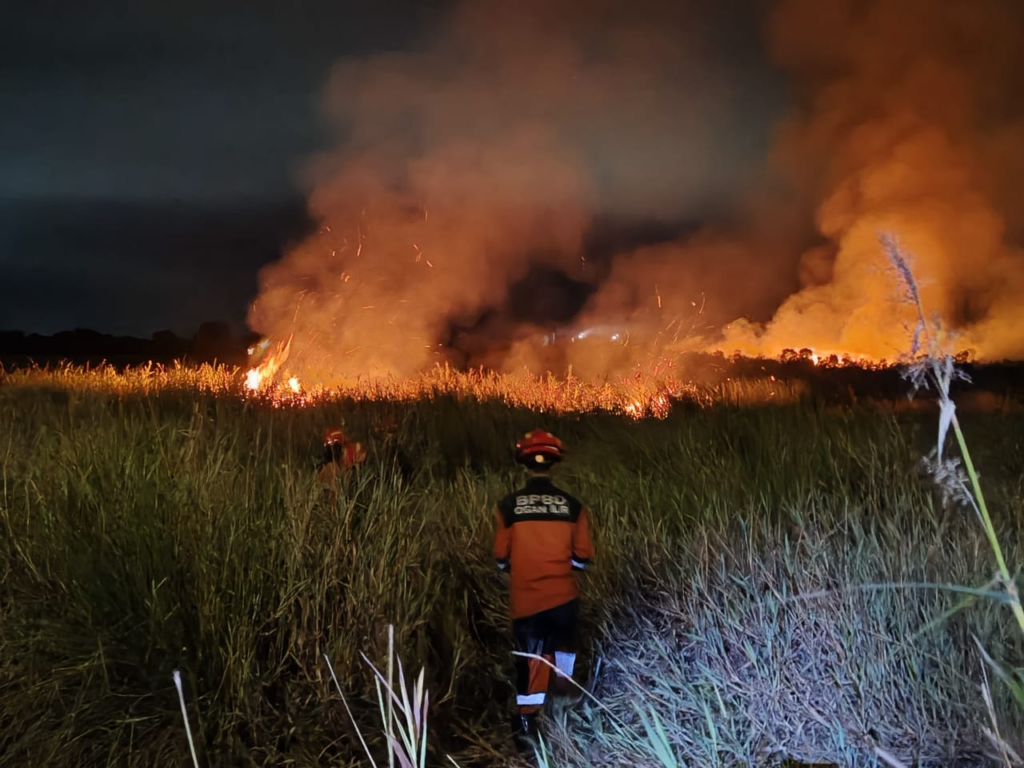
Disaster Management personnel fighting forest fires in South Sumatra in April 2026. (Ogan Ilir Regency Disaster Management Agency)
Every year, when the dry season arrives, Indonesia appears to enter the same ritual. The sky turns yellow with smoke, schools are closed because of deteriorating air quality, and reports of hotspots fill social media feeds. Forest and land fires are often framed as natural disasters. Yet, if we are to be honest, most of these fires are caused by human activity, whether deliberately or through negligence. Data from the Ministry of Forestry shows that the national area affected by forest and land fires in the first half of 2026 alone had exceeded 107,000 hectares, with West Kalimantan, Riau and East Nusa Tenggara being the worst-affected areas. By July 2026, the figure was reportedly more than 200,000 hectares nationwide. The solution is not simply to increase the number of personnel once fires have already grown out of control, but to develop data-driven human resource planning based on clearly defined seasonal cycles and to map staffing requirements in high-risk areas well in advance.
The message element is at the heart of the risk communication process, as messages serve as the medium connecting information providers and recipients and play an important role in shaping perceptions, attitudes and responses to risk. For risk communication messages to be effective, they must meet several criteria: they must be based on accurate data; be delivered clearly and in a manner that is easy to understand, without confusing technical terminology; be relevant to the audience’s needs; be timely and originate from a credible and trustworthy source.
In the context of risk communication for forest and land fire prevention, the message element reflects the extent to which the public understands the threats they face. This exchange of information gives rise to messages expressing concerns and threats. Messages of concern are generally conveyed by parties who are directly affected by the risk.
A Lesson from the Philippines
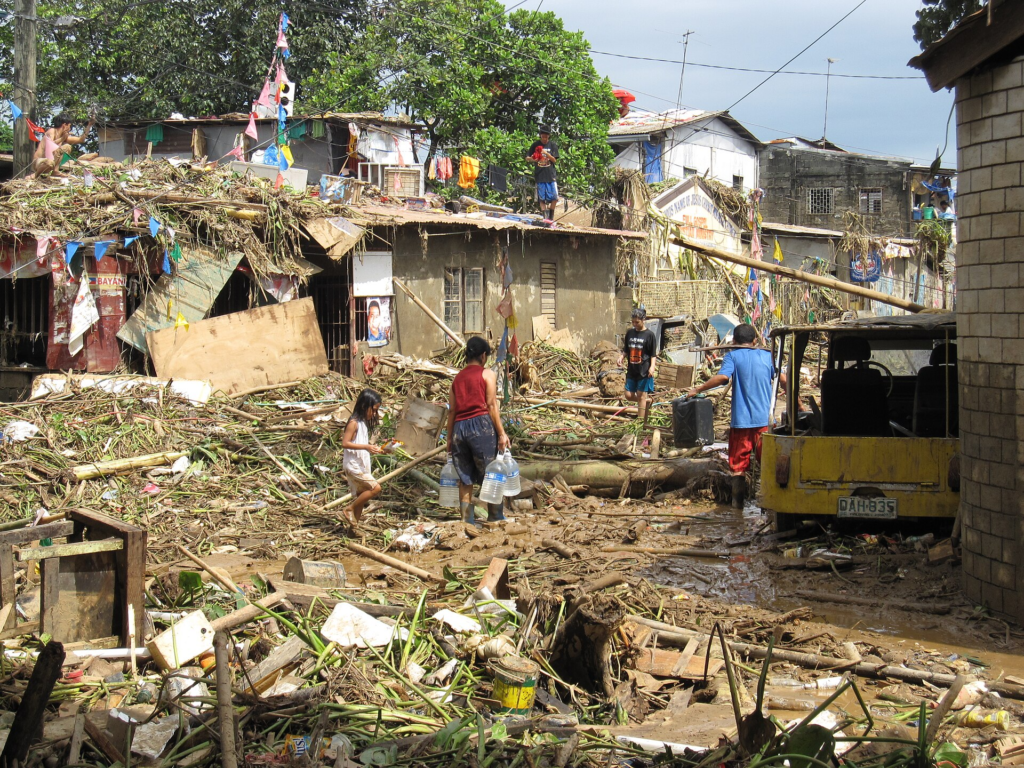
Fallout following Typhoon Ondoy (Ketsana) in the Philippines in 2009. (Department of Foreign Affairs and Trade)
In the face of increasingly frequent and severe natural disasters in Indonesia, the government needs to adopt a more proactive rather than reactive approach to disaster management. Natural calamities such as floods, landslides, earthquakes, volcanic eruptions and extreme weather events can cause significant disruption to communities and public services. Therefore, disaster management should not only focus on emergency response after a disaster occurs, but also on preparedness, prevention, risk reduction and the protection of human life. Effective communication, coordination, and collaboration between government institutions, local authorities, communities and emergency agencies are essential in addressing these challenges.
A useful comparative example can be found in the Philippines. The country is situated directly within the Pacific Typhoon Belt and experiences an average of around 20 tropical cyclones each year. As a result, heavy rainfall, flooding, strong winds, landslides and other related hazards have become recurring challenges for Filipino communities. This geographical reality has encouraged the Philippines to develop disaster-management practices that place considerable emphasis on preparedness, early warning systems, evacuation and community resilience. Rather than waiting until a disaster has already caused extensive damage, authorities can take preventive measures when severe weather is forecast.
One important aspect of this approach is the prioritisation of human safety. When a particularly severe typhoon is approaching, the Philippine government may implement precautionary measures, including the suspension of classes, work, and certain government operations in affected areas. Essential and emergency services, however, continue to operate to ensure that critical needs are addressed. Such measures demonstrate a more humane approach to disaster governance because they recognise that protecting people’s lives and wellbeing should take precedence over maintaining normal economic and administrative activities during extreme circumstances. This principle could provide an important lesson for Indonesia.
The concept of societal resilience should also become an important component of Indonesia’s disaster-management strategy. Resilience is not simply the ability of communities to recover after a disaster; it also involves their capacity to anticipate risks, prepare in advance, respond effectively and adapt to changing circumstances. Governments should therefore strengthen cooperation with local communities, schools, businesses, civil-society organisations and emergency-response institutions. Disaster preparedness should become part of everyday public awareness rather than something that is considered only when a crisis has already occurred.
Technology for Disaster Preparedness and Risk Mitigation

Discussion with Muhamad Hidayat, Senior Expert in Risk, Crisis and Disaster at the Communications Agency of the Republic of Indonesia (Author’s Personal Archive)
Technology can make a significant contribution to strengthening government capacity and building disaster-resilient communities by improving communication, coordination, transparency, efficiency and public access to information. In the context of disaster risk management, digital technologies can support governments in identifying potential hazards at an early stage, issuing timely warnings, coordinating emergency responses, mobilising resources and reaching affected communities more effectively. However, technological capacity must be accompanied by strong institutional preparedness and meaningful public participation. A resilient disaster-management system requires cooperation between national and local governments, emergency agencies, communities, civil society, and other relevant stakeholders to ensure that preventive measures and emergency responses are implemented effectively.
Muhamad Hidayat, Senior Expert at the Communications Agency of the Republic of Indonesia, emphasised the importance of mitigating the risks associated with disasters. He said that he was particularly pleased with President Prabowo’s recent statement concerning “mitigation”. An integrated data system is one of the tools that can be used to mitigate disaster risks on the ground, enabling the government to respond quickly and accurately and to ensure that its actions are properly targeted.
“The cost of dealing with disasters is far higher than the cost of preventive measures. Japan is another example of a country that has successfully mitigated risks at a much lower cost using technology. Japan uses an advanced Earthquake Early Warning (EEW) for earthquakes and its people have to live with disasters on a daily basis,” Muhamad said during a discussion with The Kertanegara Institute on Sunday afternoon, 13 September 2026.
Strengthening disaster resilience should therefore become an integral part of Indonesia’s national development strategy. Government policies need to move beyond a predominantly reactive approach towards prevention, preparedness, mitigation and long-term recovery. This includes investing in resilient infrastructure, strengthening early-warning mechanisms, improving emergency coordination, developing community preparedness programmes and ensuring that public institutions have sufficient resources and trained personnel before disasters occur. A stronger legal and institutional framework can further support these efforts by establishing clear responsibilities, accountability and coordination mechanisms across levels of government. Ultimately, disaster resilience should be understood not merely as the capacity to respond when a crisis occurs, but as the ability of government and society to anticipate risks, protect human life, maintain essential services and recover effectively from disasters.
About The Author