Jason Fernando is an independent researcher in international relations and a Community Outreach & Empowerment Officer at Indonesia Carbon Trade Association for Youth (IDCTA Youth). The views expressed are his own and do not represent SEA Daily or that of another organisation.
China Built the Model That Traps Laos
Laos is not simply facing a debt crisis. It is hitting the structural ceiling of a development model built on large-scale Chinese finance, where rapid infrastructure expansion has come at the expense of fiscal resilience, productive capacity and economic flexibility. What once appeared as a fast route to transformation has instead produced sectoral overcapacity, weak revenue generation and entrenched external dependence. This system was co-produced over two decades of policy decisions in Vientiane and lending choices in Beijing, and it cannot be unwound without significant economic cost. The longer adjustment is delayed, the more likely Laos is to be locked into stagnation rather than recovery.
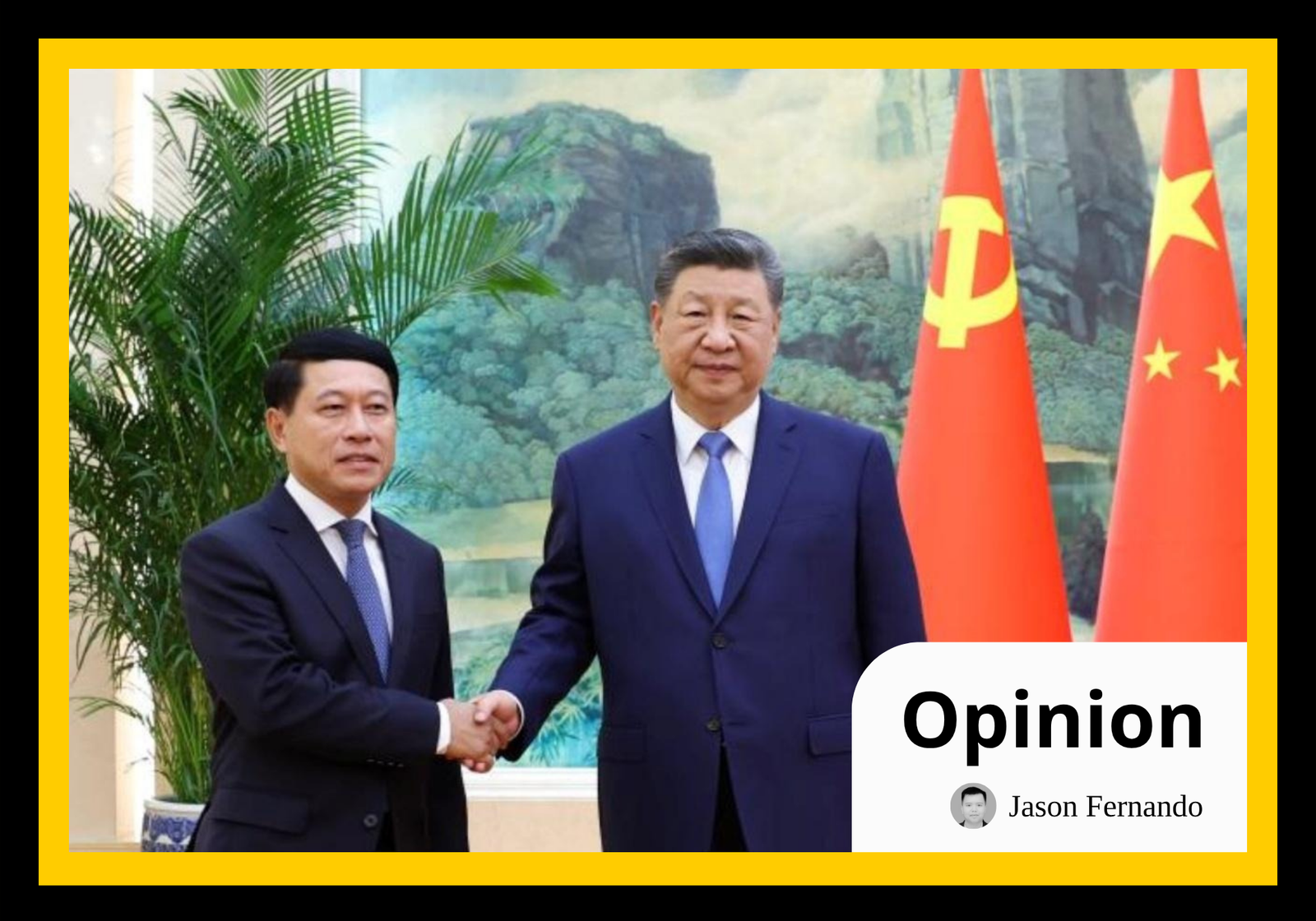
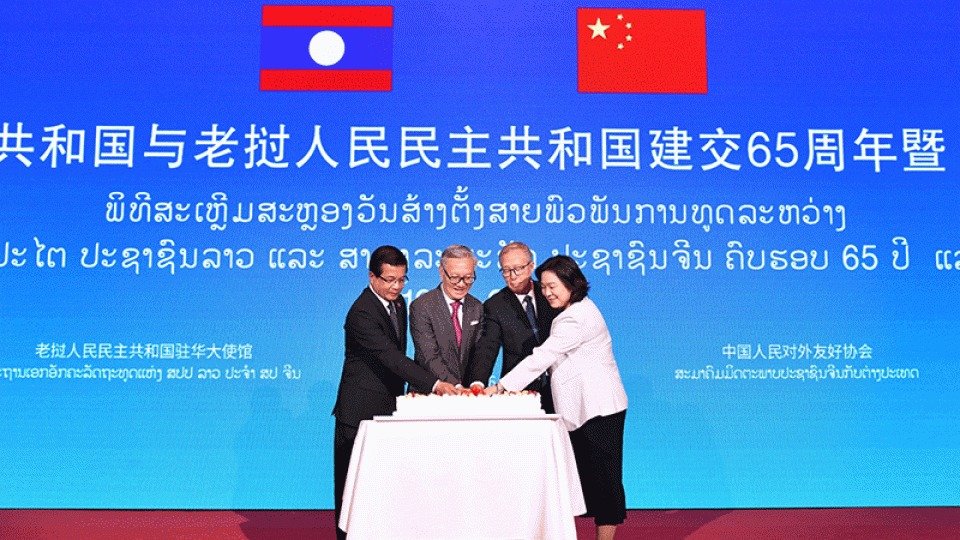
China’s leadership continues to frame the relationship in long-term strategic terms, grounded in shared destiny and the “four goods” principle of good neighbours, friends, comrades and partners. The 65th anniversary of diplomatic relations, marked in Beijing in April 2026, was used to reaffirm continuity through successive cooperation plans, including the 2024–2028 framework. Yet beneath this language of alignment lies a more entrenched structural imbalance, as Laos has become deeply embedded in a creditor-debtor relationship dominated by China. Repeated debt deferrals have increasingly replaced genuine restructuring, leaving core vulnerabilities unresolved and fiscal exposure persistently high.
This trajectory predates the current crisis. For over two decades, Laos has relied heavily on foreign capital to drive its transformation, particularly in natural resources and infrastructure. The model was captured in slogans such as ‘From land-locked to land-linked’, reflecting a belief that connectivity and energy exports would anchor long-term growth. Hydropower dams, transmission networks and large-scale infrastructure expanded rapidly under complex public–private arrangements. The gains were visible in rural development and declining poverty, but the foundations of this growth proved more fragile than anticipated.
A narrow opening for recalibration now exists. Rather than relying on short-term deferrals, both sides could move towards a debt-for-development approach linking partial relief to energy sector reform, improved revenue transparency and investment in export-oriented and climate-resilient infrastructure. Embedded in existing cooperation frameworks, this could combine Chinese restructuring with multilateral technical oversight. It would allow Beijing to signal responsible creditor leadership while giving Laos fiscal space without abandoning its state-led model. Without such a shift, the language of partnership risks remaining symbolic as structural imbalances continue to deepen.
From Investment-Led Expansion to Debt Accumulation
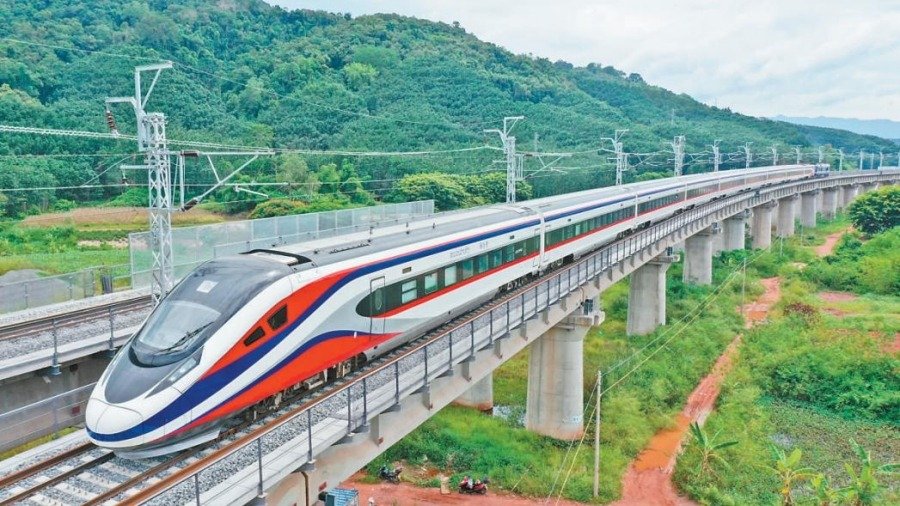
A pivotal moment came in 2010, when Laos signed a memorandum of understanding with China to develop what would later become the Laos-China Railway, three years before the Belt and Road Initiative was formally launched. The project was designed to link Vientiane to China via the border town of Boten across 417 kilometres (km), and ultimately form part of a wider corridor connecting Kunming to Singapore. Early financing envisaged Chinese loans covering the full project cost of around 7 billion US dollar, with Laos expected to assume ownership backed by project revenues and mining royalties. After delays and renegotiations, a revised agreement in 2016 established a joint venture with 70% Chinese equity and 30% Lao participation, reducing estimated costs to 5.95 billion US dollar and triggering construction.
Completed in 2021, the railway was presented as a symbol of inclusive globalisation and mutual benefit. With trains travelling at up to 160 km per hour for passengers and 120 km per hour for freight, passing through 72 tunnels and over 170 bridges, it marked an unprecedented leap for a country with no prior significant rail network. Yet the distribution of benefits has been uneven. Chinese firms captured much of the construction value, while Laos assumed substantial financial obligations. Labour dynamics underscored this imbalance. Of the 17,115 workers employed by December 2018, only 4,032 were Lao nationals, with the majority imported from China.
The economic rationale has also been contested. Projections of increased transit revenue, tourism and investment were framed as immediate gains, alongside longer-term promises of industrialisation and technology transfer. However, Laos risks functioning primarily as a transit corridor rather than a fully integrated beneficiary. Increased connectivity may expose domestic producers to stronger regional competition, while larger economies capture disproportionate gains.
This model accelerated through the 2010s as Laos became one of the heaviest borrowers under China’s Belt and Road Initiative. By 2019, Chinese loans had reached approximately 5.25 billion US dollar, supporting projects across energy and transport. External public debt more than doubled, rising from under 4 billion US dollar in 2010 to over 10 billion US dollar by 2019, before reaching around 17 billion US dollar (or 112% of GDP) by 2023. Debt peaked at 115.7% of GDP in 2022, underscoring the scale of imbalance.
Fiscal capacity moved in the opposite direction. Government revenue declined from 20% of GDP in 2013 to 15.4% in 2019, driven by exemptions, weak compliance and policy choices prioritising investment inflows. At the same time, borrowing shifted towards non-concessional terms, increasing exposure to higher interest rates and shorter maturities. State-owned enterprises, particularly Électricité du Laos, accumulated liabilities exceeding 6 billion US dollar, embedding systemic risk in the public balance sheet.
The vulnerabilities became acute during the COVID-19 shock. With foreign exchange reserves at around 1 billion US dollar in 2019, or just 1.4 months of imports, buffers were minimal. Lao currency, the kip, depreciated sharply, losing roughly half its value since 2022, while inflation surged and credit access narrowed following rating downgrades.
Debt servicing pressures escalated from under 375 million US dollar in 2016 to 1.7 billion US dollar in 2023, with more than half of government revenue absorbed by repayments even after Chinese deferrals totalling about 2.5 billion US dollar. Avoiding default has depended less on solvency than on repeated liquidity support from the country’s dominant creditor. China’s role is therefore dual. It has stabilised Laos through deferrals and a 6 billion Chinese renminbi (about 900 million US dollar) swap line, but its lending has concentrated in sectors generating weak foreign currency returns, particularly energy.
Structural Dependence and the Limits of Adjustment
Hydropower expansion, central to the “battery of Southeast Asia” vision, increased installed capacity fourteen-fold between 2009 and 2023, backed by 23 billion US dollar in investment. Yet much of this capacity serves domestic demand rather than export markets. Surplus generation is projected at up to 1,930 megawatts by 2025, equivalent to roughly 3.9 billion US dollar in idle assets.
Risk has been absorbed by the state through take-or-pay contracts requiring Électricité du Laos to purchase output regardless of demand. Combined with low tariffs, seasonal import dependence and currency depreciation, this has generated persistent losses, including nearly 1 billion US dollar between 2015 and 2019. Domestic policy choices have compounded these pressures. Borrowing expanded despite weakening fiscal fundamentals, while tax concessions eroded revenue. Governance gaps, limited transparency and weak project selection further intensified exposure.
Policy responses have focused on stabilisation: tighter monetary policy, foreign exchange controls, asset sales, and incremental reforms in the energy sector. More recently, authorities have advanced the concept of a “self-reliant economy”, formalised in 2026, aimed at strengthening resilience without altering the underlying model.
These measures remain insufficient. Asset sales trade future income for short-term liquidity, while domestic borrowing shifts pressure into the financial system without resolving external constraints. Continued dependence on Chinese deferrals leaves Laos exposed to any change in policy stance. Without them, debt servicing could absorb a level equivalent to around 90% of foreign exchange reserves. Growth is projected to slow to around 2.5% by 2029, with persistent inflation, labour outmigration, and weak investment. Even optimistic scenarios, including a return to 7% growth, do not restore debt sustainability. The notion that Laos can grow out of its crisis is no longer credible.
Substantial debt relief is therefore unavoidable. Estimates suggest a reduction of more than 60% in external debt service over this decade, alongside at least a one-third cut in the present value of external public debt. This requires meaningful participation from China as the dominant creditor, whether bilaterally or through a broader framework.
Laos thus illustrates a wider shift in global finance: a small, opaque economy bound into a highly asymmetrical creditor relationship that constrains its development path. Without decisive restructuring, it risks remaining trapped between dependence and instability, with its development ambitions increasingly outpaced by the weight of its own financing model.
About The Author