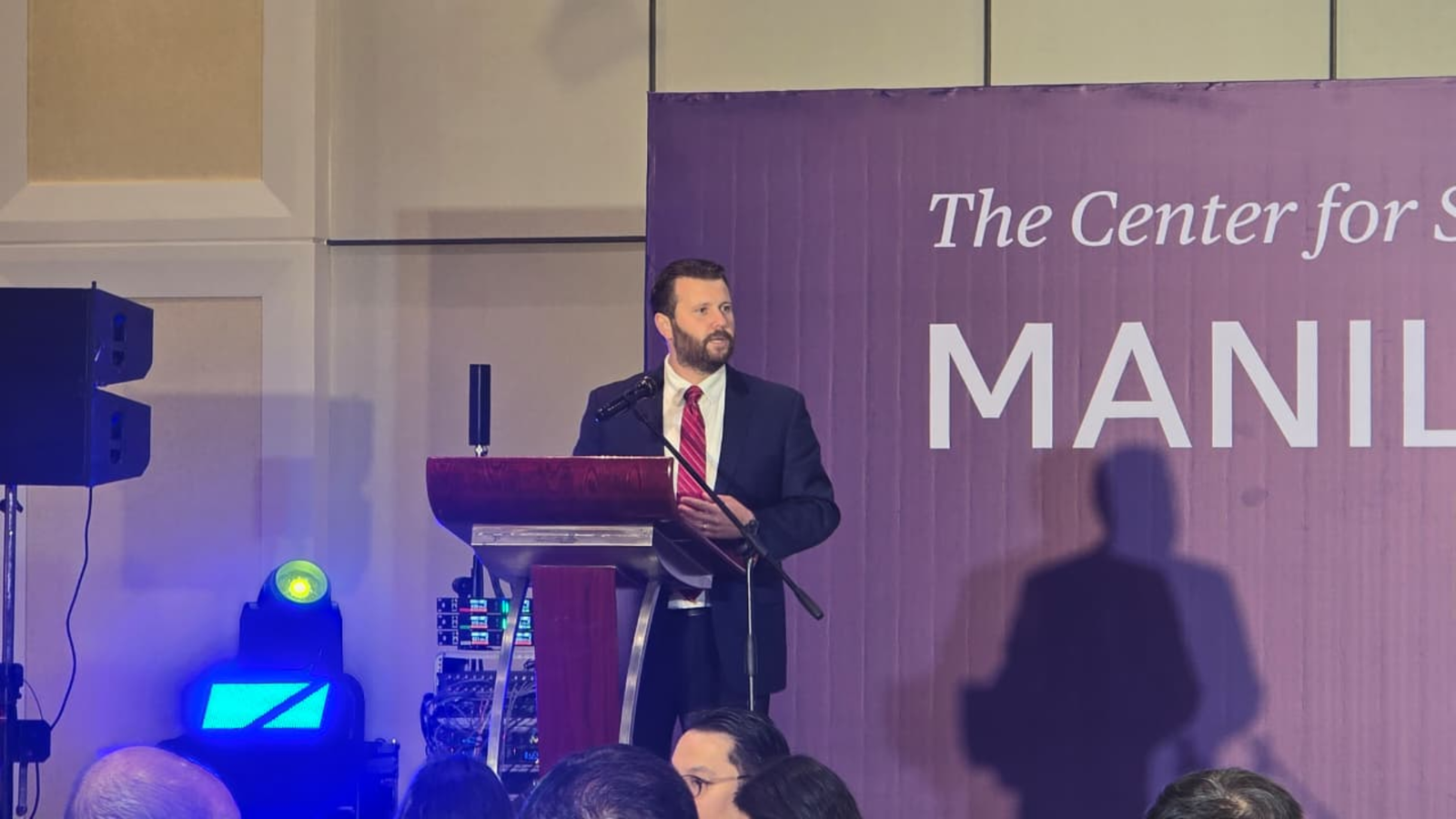
Gregory B. Poling, Senior Fellow and Director for the Southeast Asia Program and Asia Maritime Transparency Initiative at CSIS, formally opens the 2026 Manila Strategy Forum on September 9. (SEA Daily/Elisabeth Xaviera)
On September 9 to 10, the second annual instalment of the 2026 Manila Strategy Forum went underway. The two-day conference gathers government officials, policy analysts, top public and private sector leaders to deep dive into key convergence areas for strategic, military, economic and technological collaboration, especially between the 2026 ASEAN Chair, the Philippines, and its long-standing ally, the US.
Organised by the Southeast Asia Programme at the Centre for Strategic and International Studies (CSIS), the forum began with a keynote address by Philippine Department of Foreign Affairs (DFA) Secretary Theresa Lazaro.
With projections to become the world’s fourth-largest economy by the next decade, Southeast Asia continues to nurture its export-driven growth confidently, bolstered by robust intra-regional consumption among its population of roughly 700 million.
However, external shifts have proven to be unfavourable, forcing the region to grapple with scope creep as it navigates an uncertain, fragmenting world order flooded with geopolitical and geoeconomic pressure.
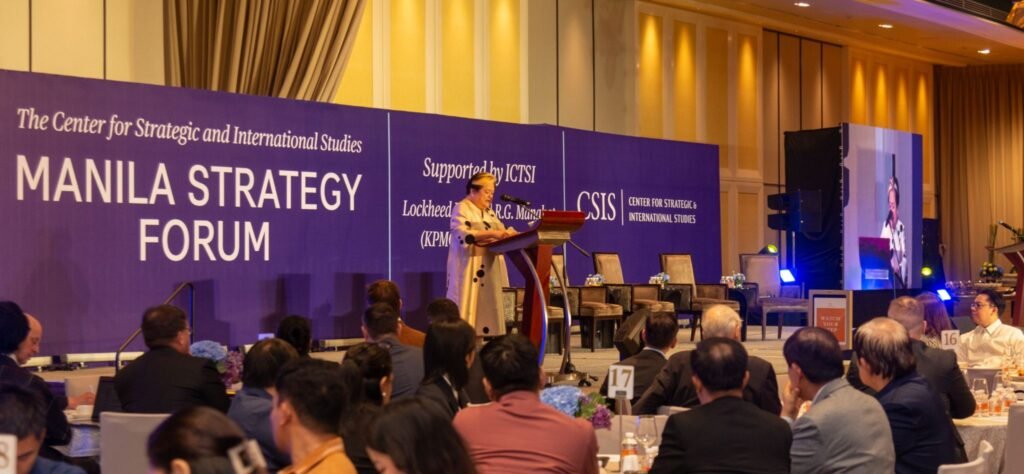
Philippines’ Department of Foreign Affairs (DFA) Secretary, Theresa Lazaro, delivers a keynote address for the 2026 Manila Strategy Forum, on September 9. (Amador Research Services)
The common ground acknowledged since the start was that a substantial decline in US credibility has engineered unprecedented uncertainty and fragmentation in the world order, at least since the second Trump administration announced the “Liberation Day” tariff early last year.
The DFA secretary urged nations to “avoid over-dependence on any single partner” by investing in strategic resilience, asserting that “a nation with diversified relationships possesses greater diplomatic manoeuvrability”.
Assessing such circumstances requires sharp analytical scrutiny, because they have evidently opened windows of opportunity waiting to be seized. Victor Cha, President of Geopolitics and Foreign Policy and Korea Chair at CSIS described this critical juncture as a “high-risk, high-reward scenario”.
Victor elaborated on how eroding trust toward the US has forced nations to push past their limits and convenience zones to engage in cross-border cooperation. He argued that such a situation serves as a “good investment” for the US as these nations consequently evolve into “more capable allies” for the hegemonic power.
A stark example has been demonstrated by the host country, an old friend of the US, the Philippines, with Manila attempting to expand its “diplomatic footprint”, as claimed by Secretary Theresa.
This behavioural pattern is occurring across the region, meaning that efforts to advance strategic autonomy are evident. However, it is equally important for these mid-sized nations to invest in refining their capacity for collective action to cultivate bargaining power amidst the absence of a great power. Hence, it is non-negotiable for the bloc to develop its long-standing organisational framework, ASEAN.
Mely Caballero-Anthony, Professor of International Relations at the S. Rajaratnam School of International Studies (RSIS) elaborated on this best. She argued that a tearing-apart world is exactly why “we cannot afford to be fragmented”.
But for Mely, the Southeast Asians are fragmenting to a considerable degree. And, if the leaders were to be negligent in convening at the bargaining table, she reminded them of Canadian Prime Minister Mark Carney’s catchphrase: “if we’re not at the table, we’re on the menu”.
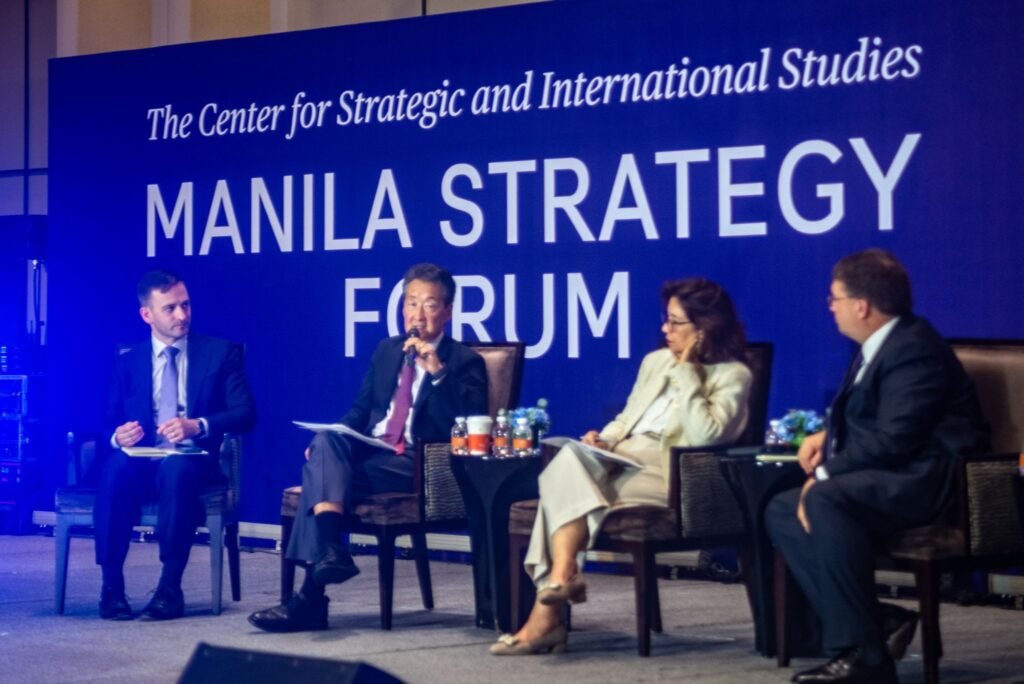
Victor Cha, President of Geopolitics and Foreign Policy and Korea Chair at CSIS, speaks during the kick off panel, “Latest Shifts in the International Order”. (Amador Research Services)
Nevertheless, an optimistic atmosphere lingers. Deborah Elms, Head of Trade Policy at the Hinrich Foundation, claimed that “ASEAN has the set up,” meaning factually they are well propped by the “infrastructure and experience” to negotiate problems.
Deborah pointed to a salient case regarding the consequences of US reciprocal tariffs on Southeast Asian nations—measures that, indeed, caused “some damage” but “it has not stopped trade”. In fact, Southeast Asia has “continued to rise and unaffected,” she asserted.
Drawing upon this case, she maintained that ASEAN possesses a “functioning institutional network” that allows its member states to regularly deal with their counterparts, whilst its neighbouring region South Asia doesn’t.
“Even if you’re not actually coordinating, you still have some clear sense,” in terms of defining, at least, “what are the problems we’re facing,” Deborah told SEA Daily reporter. So, on any issue, ASEAN need not “start from a blank piece of paper,” she affirmed, adding that the coalition has “a nice inventory [of tools]”.
Deborah subsequently mentioned ASEAN’s Digital Economy Framework Agreement (DEFA), which is awaiting signature this November. According to her, this pending digital accord introduces another substantial asset to the region’s inventory—one that must be further leveraged to “recraft the future”.
Under the aforementioned parameters, Southeast Asia is “one of those areas where business should be looking,” Deborah concluded.
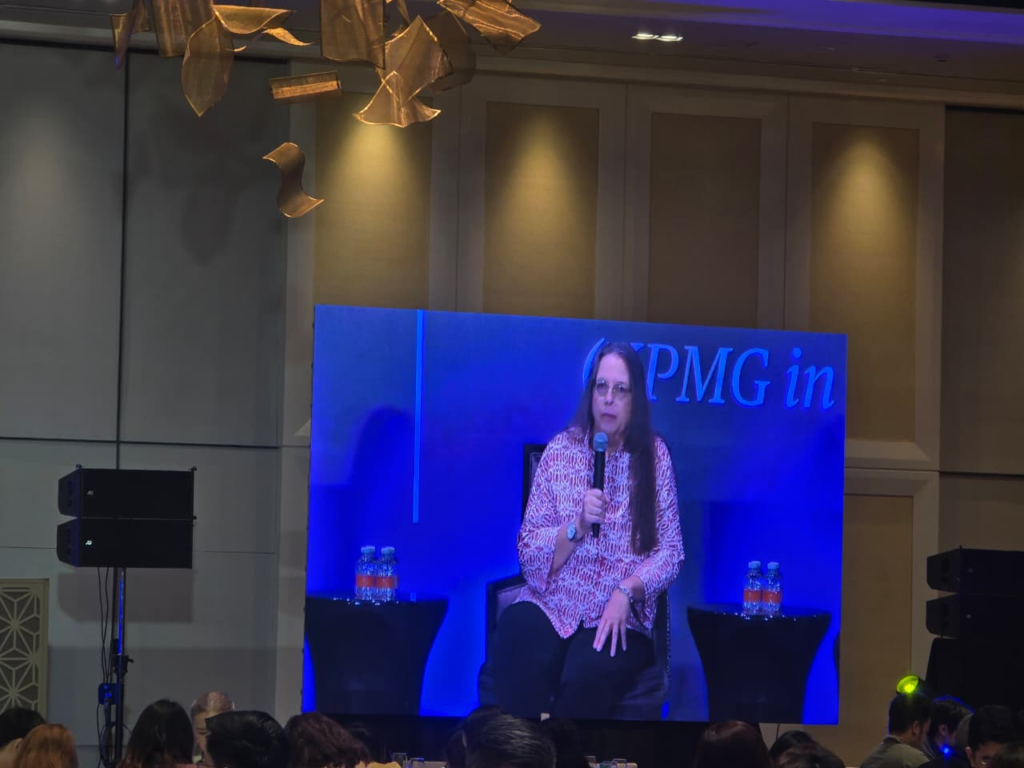
Deborah Elms, Head of Trade Policy at the Hinrich Foundation, speaks during Panel 4, “Tariffs, Trade Deals and International Geoeconomic Shocks. (SEA Daily/Elisabeth Xaviera)
The 2026 United Nations Conference Trade and Development (UNCTAD) World Investment Report disclosed vividly a shift in global capital incentives, targeting green energy, digital infrastructure, advanced manufacturing and critical minerals. That said, policymaking must also undergo a shift to determine a country’s capacity to attract foreign direct investment (FDI), and more importantly, to translate these funds into tangible socioeconomic benefits for its people.
Governments across Southeast Asia were being reminded firmly of this tension during the concluding panel, themed “Building the Industries of the Future”. Francis Initorio, the Chairman of the Trade and Investments Committee (North Luzon) at the American Chamber of Commerce, shared his take based on his assessment that “governments tend to operate vertically, but investors experience government horizontally”.
He explained that “when you’re trying to bring an investment from initial interest to actual operation, the investor is rarely dealing with just one issue,” mentioning central considerations such as infrastructure, logistics, permits, workers, incentives and local government.
For investors, all these elements form one investment environment. “So institutional coordination isn’t simply a governance issue, it is a competitiveness issue,” he concluded.
Echoing the sentiment, Josephine Romero, ASEAN BAC Senior Adviser and PCORP President, posed the foundational question, “how do we win?”. By investing in education and training, she answered.
The forum ends, but the uncertainty it was convened to address does not.
About The Author