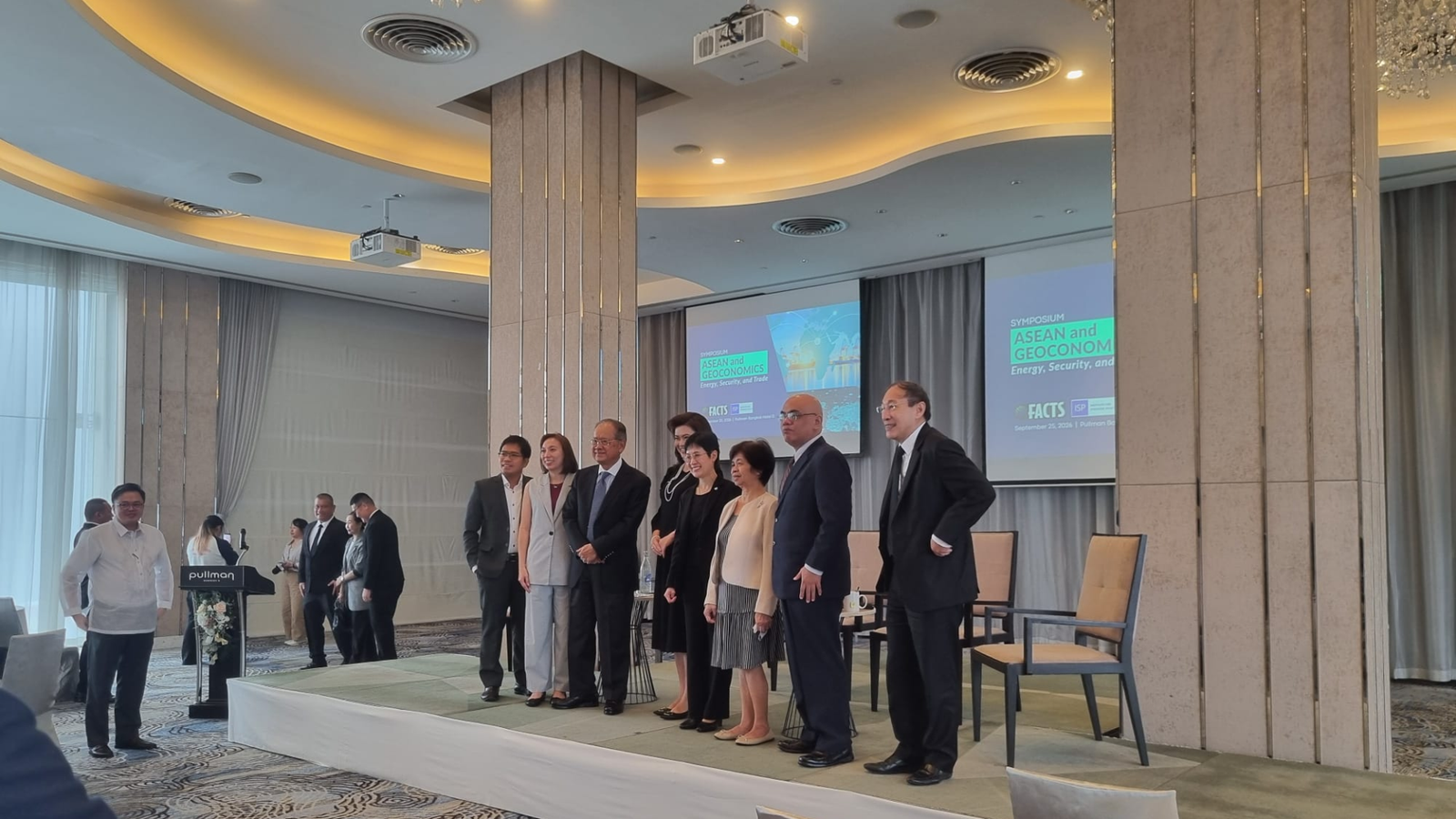
Featured speakers Kirida Bhaopichitr, Salinee Phonprapai, Laura Q. Del Rosario, and Neil Simoun Silva, participate in a formal panel discussion, joined by the session coordinators. (SEA Daily/Puttipat Sawatdee)
Southeast Asia’s stake in an increasingly polarised global trading system came under discussion at the ASEAN & Geoeconomics: Energy Security and Trade Symposium in Bangkok, on September 25. The event brought together policymakers and regional experts to examine the challenges confronting the region’s trade and economic relationships. The panel discussions sternly defined how changing global trade patterns and growing competition among major economic powers are distressing the region. Significant emphasis was also placed on practical pathways for ASEAN to maintain economic resilience and continue to strengthen regional cooperation.
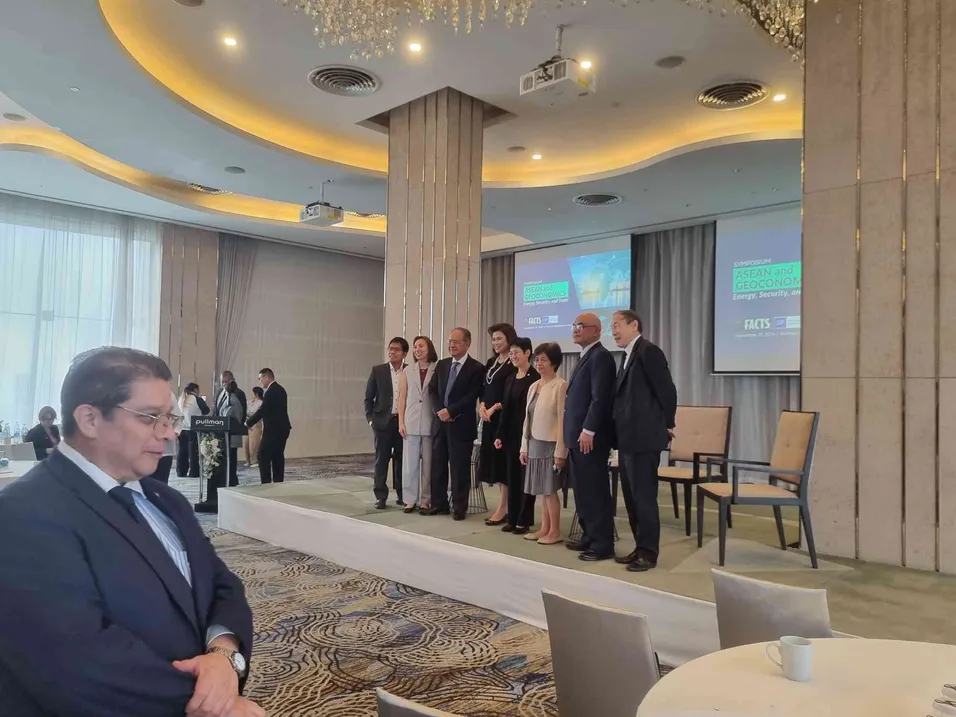
Featured speakers Kirida Bhaopichitr, Salinee Phonprapai, Laura Q. Del Rosario, and Neil Simoun Silva, participate in a formal panel discussion, joined by the session coordinators. (SEA Daily/Puttipat Sawatdee)
The panel discussion was commenced by remarks from Vice Minister of Commerce Kirida Bhaopichitr. She elaborated on the escalating effects of protectionism and shifting trade policies on the global economy. Notably, she noted that these changes are appearing more intricate to address for countries that are highly dependent on international trade, including Thailand and other ASEAN member states. She asserted the importance of advancing and completing Thailand’s trade agreements as countries adapt to changes in the global trading system. Strengthening these agreements could help Thailand maintain access to international markets, while supporting opportunities for Thai businesses amid an increasingly fragmented global economy. She concluded by highlighting the importance of maintaining Thailand’s trade relationships as global economic conditions continue to change, particularly as countries adjust their policies in response to increasing protectionism and competition.
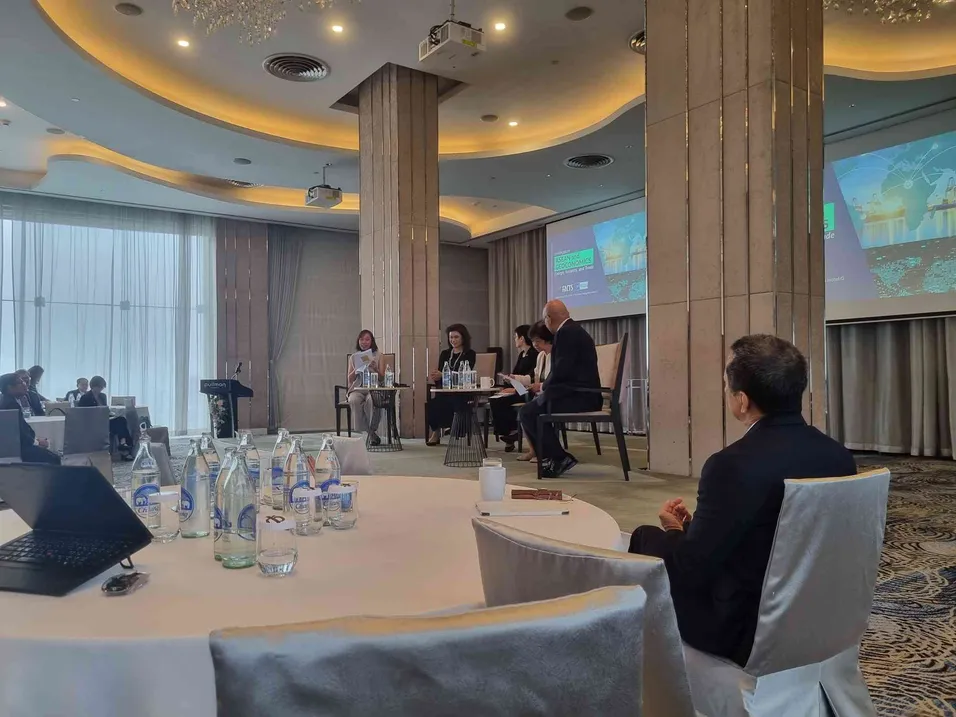
Speakers engaging in a formal panel discussion on the state of international trade & multipolarity. (SEA Daily/Puttipat Sawatdee)
The discussion continued with retired ambassador and trustee of the Foundation for National Interest of the Philippines, Laura Q. Del Rosario, who reflected on her diplomatic career and the Philippines’ long history of engagement with the wider region. While drawing from her insights in international relations, she discussed how the Philippines’ historical development and relationships with other countries have shaped its position within the international system, while also linking these experiences to the changing international trading environment and the growing influence of different powers.
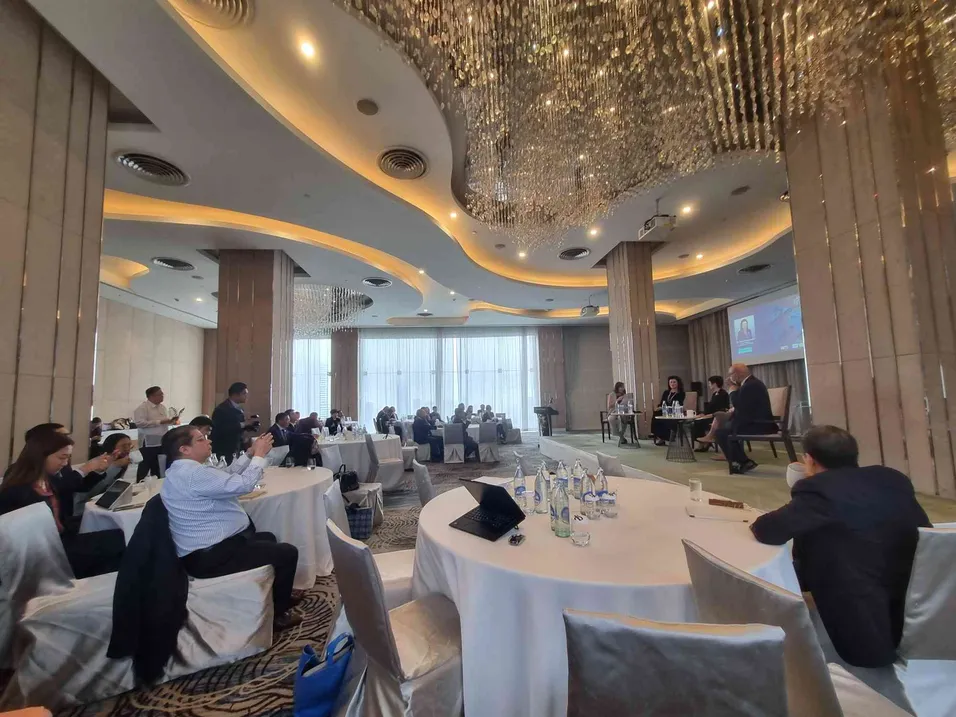
Participants gather for a formal academic discussion, engaging with the panel from across the conference room. (SEA Daily/Puttipat Sawatdee)
Subsequently, Neil Simoun Silva breached the broader topic, focusing on the role of hegemonies and the changing balance of power within the international system. In his presentation on ASEAN’s normative role in a phase transition, he discussed how ASEAN can maintain its role and influence as the international system undergoes changes in the balance of power. He also discussed China’s growing influence in the global economy and the challenges that its increasing role could create for other countries, while highlighting the importance of developing mechanisms to respond to these shifts in power. With sufficient frameworks in place, countries could better manage their relationships with major powers while maintaining their economic interests within an increasingly multipolar global trading system.
As the global trading environment becomes increasingly fragmented, ASEAN faces the critical challenge of preserving its economic relationships while balancing the competing interests of major powers. Strengthening regional cooperation, upholding open trade relationships and developing robust mechanisms to mitigate external pressures will remain paramount for the bloc as it seeks to safeguard its economic interests and secure its position within the international trading system.
About The Author