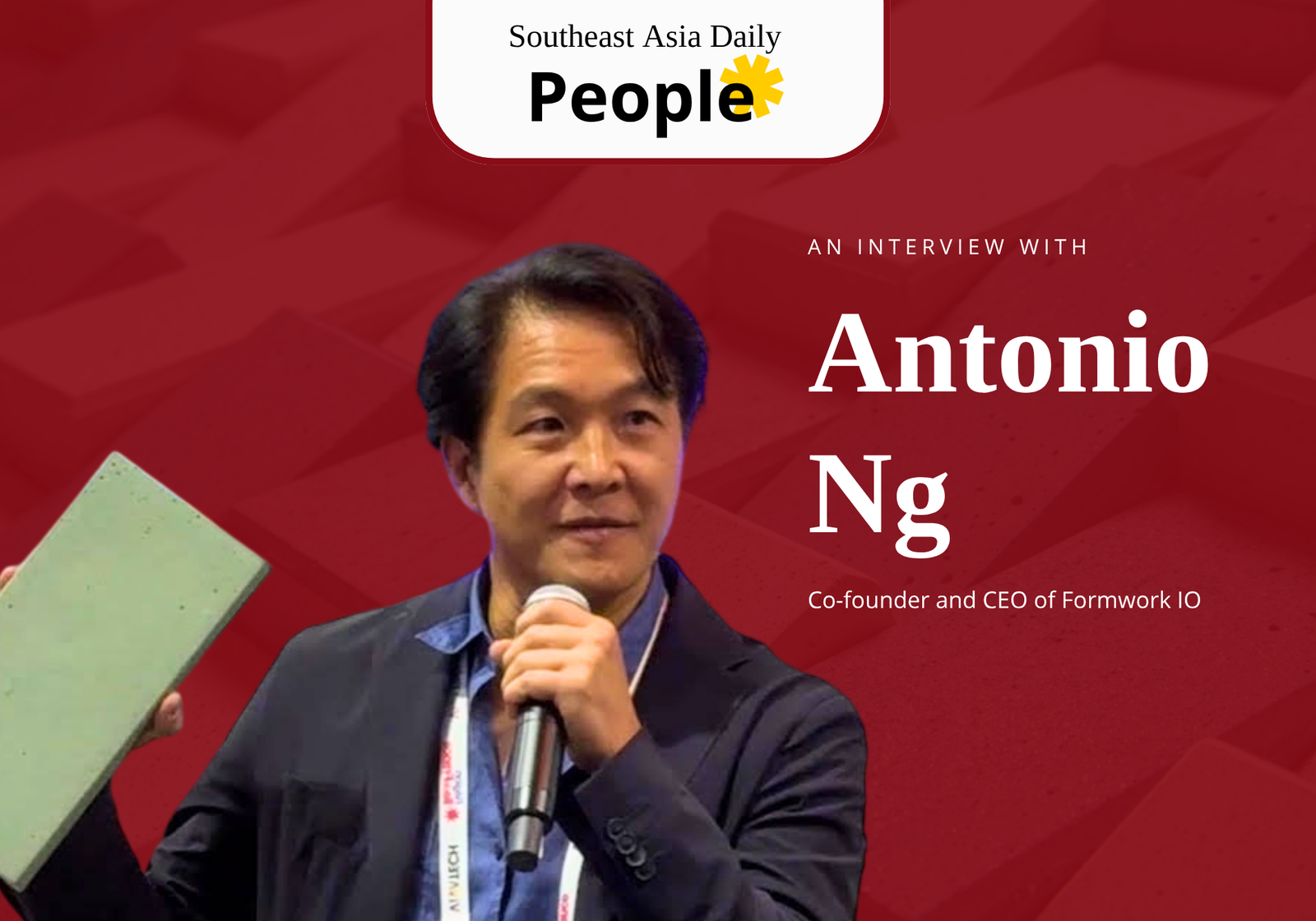
Antonio Ng spent four years working on a building he was sure was part of the answer to climate change. He worked on the California Academy of Sciences in San Francisco which was the first museum in the world to earn LEED platinum certification twice over, the industry’s highest green rating, and it is still the largest building to hold that distinction. Its roof is covered in living plants, fresh air moves through it in place of air conditioning and its energy use was planned in more detail than almost any building of its era.
Years later he looked again at what the certification had actually measured. The ratings covered how the building performed once it was occupied, the energy it used, the water it consumed and the maintenance it required. They did not count the carbon emitted to manufacture the concrete, steel and glass, transport them to the site and assemble them. He carried on designing green buildings after that but the sector’s global emissions barely moved.
Now, Antonio is co-founder and chief executive of Formwork IO, founded in the UK and now based at the GreenTech Hub at Hong Kong Science and Technology Parks, which makes precast concrete elements that trap carbon dioxide or CO2 (the main greenhouse gas behind climate change) inside the material itself. Several companies are working on the same problem and the problem matters more here than any one solution to it. A large share of a building’s emissions is locked in before anyone moves in, something known as embodied carbon, though the proportion varies enormously with the building and the grid it sits on. Almost nothing in the building rules, including the green ratings and the financial incentives, pushes anyone to reduce that share.
The Part You Cannot Undo
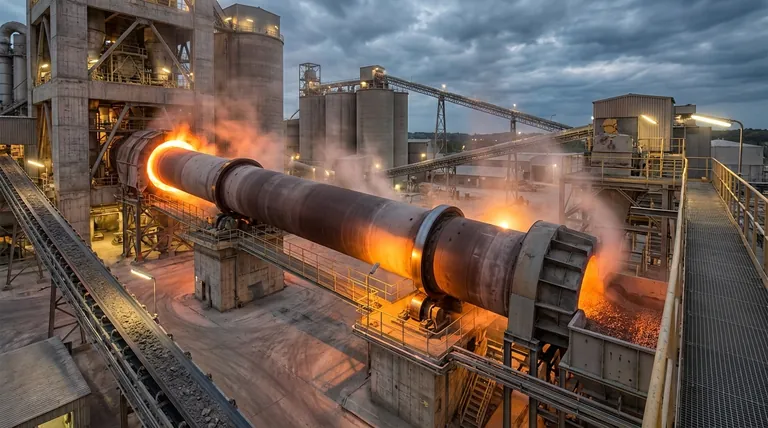
A rotary kiln, the industrial furnace at the heart of every cement plant, where limestone is heated until it breaks down into lime and CO2. This chemical reaction, not the fuel burned to power it, is the source of roughly half of cement’s carbon emissions. (Kintek Furnace)
Buildings and construction account for around 37% of global CO2 emissions and close to half of all material extraction. Those emissions split into two categories that behave very differently. Operational carbon is the energy a building uses once it is running, the air conditioning, the lifts, the lighting, the hot water, etc. Embodied carbon is everything spent before occupation, making the materials, moving them, assembling them and eventually demolishing them. The latter is mainly generated by the production of two materials, namely steel and cement.
Cement alone is responsible for around 8% of global CO2 emissions. Most people assume this comes from burning coal to heat the kiln, but that is only half of the problem. The other half is chemistry. Heating limestone breaks it apart into lime and CO2, and that carbon escapes no matter what powers the kiln. Even a plant running on clean electricity would still emit half of what it does today. “So it’s a chemistry problem and a fuel problem for the embodied carbon,” Antonio said.
The two halves also move in opposite directions. Operational carbon falls a little every year as more renewable energy plants are integrated into the power grid, which is the result of three decades of sustained work. However, embodied carbon is generated on day one and stays for the life of the structure. “When you pour it, it’s poured, it’s done,” as Antonio put it.
Embodied carbon gets less attention than operational carbon in the push to cut emissions, partly because operational problems can be fixed later and embodied carbon cannot. A building that wastes energy can have solar panels added, its chillers swapped or its facade replaced. But embodied carbon cannot be decreased once the building is put in place. It is locked in early, the moment someone chooses a material and signs off the bill of quantities.
Measurement is not the obstacle. Life cycle analysis and environmental product declarations have been in use for years and the footprint of a given concrete mix has been calculable for a long time.
“No one’s paying for the embodied carbon,” he said. “Operational carbon, you get compensated, the economics is there. But embodied carbon, no one has to pay for it, so no one really cares.”
Green building rating systems reflect that reality. Most award a few points for embodied carbon while the weight of the assessment stays on operational performance, so the incentive points at the half of the problem that was already improving. Antonio does not think the industry fixes this on its own and says the system has to make someone pay before companies will actually address embodied carbon.
Carbon That Turns Into Stone
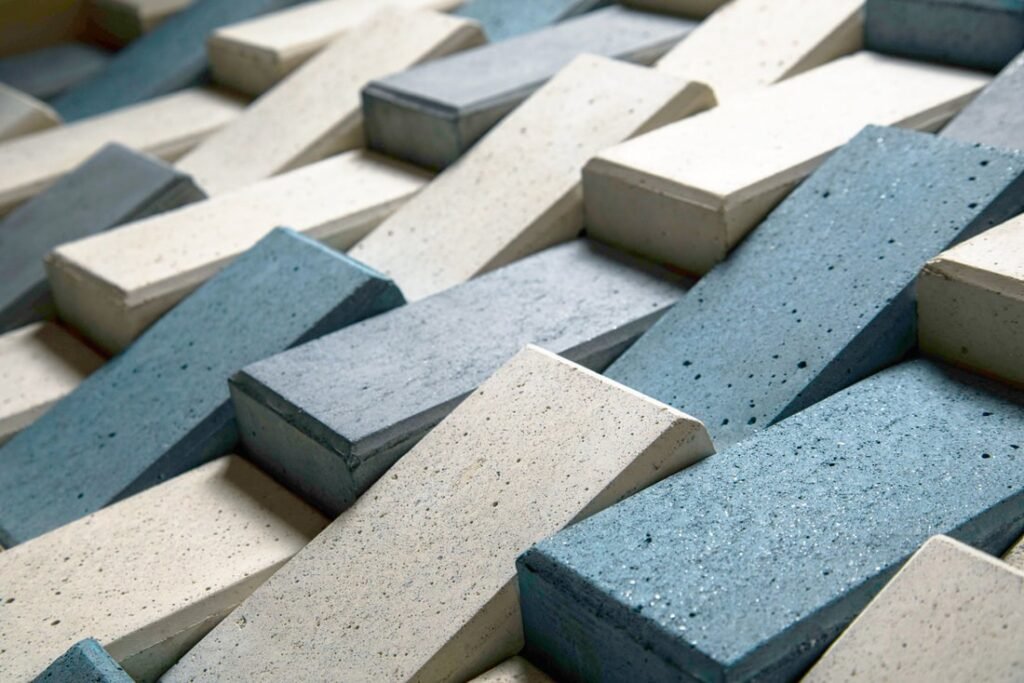
AtmosBrick™ units in a sawtooth arrangement at Nan Fung Group’s AIRSIDE office in Hong Kong. The semi-structural bricks meet the same code requirements as precast pavers, and their blue and cream tones come from bio-pigments made from organic waste rather than synthetic dyes. (Formwork IO)
Aiming to be a part of the solution to this problem, Formwork makes precast elements that capture and store CO2. Antonio describes it as a set of tools rather than a single method, chosen by use case. Most companies working on carbon in concrete use one, usually CO2 curing, a technique where fresh concrete is exposed to CO2 gas in a sealed chamber instead of just water and the gas reacts with the cement and gets locked into the material as it hardens.
Curing has a limit, which is what it costs to run. It needs a sealed reactor, extra heat and extra pressure, all of which take energy, and energy means carbon. “You might be able to capture carbon, but you end up generating more CO2 in the process,” Antonio said. “Then you’re asking yourself, is that worth it?” The answer depends on where the gas comes from. For a client that already has a concentrated source of CO2 to work with, such as a cement plant or an oil and gas site, curing is the route that makes sense.
Where there is no concentrated source, the company uses direct air mineralisation, which pulls CO2 straight out of the air and locks it inside the material. Both have patents filed, one on CO2 curing and one on atmospheric mineralisation. The certified figures so far come from the curing route: minus 63.7 kg of CO2 per cubic metre against plus 657.7 for the conventional precast baseline, certified by Hong Kong Polytechnic University. Formwork has matched that result in-house on the atmospheric route, but it has not yet been certified by a third party.
Once the CO2 is inside, it reacts with the material and turns into a solid mineral, the same process that forms limestone and seashells over time. That’s why Antonio is confident it won’t escape again. Reversing it would mean heating the material to over 900°C, which isn’t going to happen by accident.
Formwork also builds circularity into what goes into the mix. Alongside CO2 pulled from the air, it uses waste from steelmaking, which helps the reaction along and crushed demolition waste as filler. A third input is organic waste, which is what Antonio showed off at VivaTech in Paris this year, where Formwork won a Top 30 Tech for Change award. There, matcha leftover, byproduct from matcha tea production, was turned into a plant-based colouring that replaces synthetic dyes, so the colour carries no volatile organic compounds (VOCs) and no heavy-metal pigments.
A Region Still Being Built
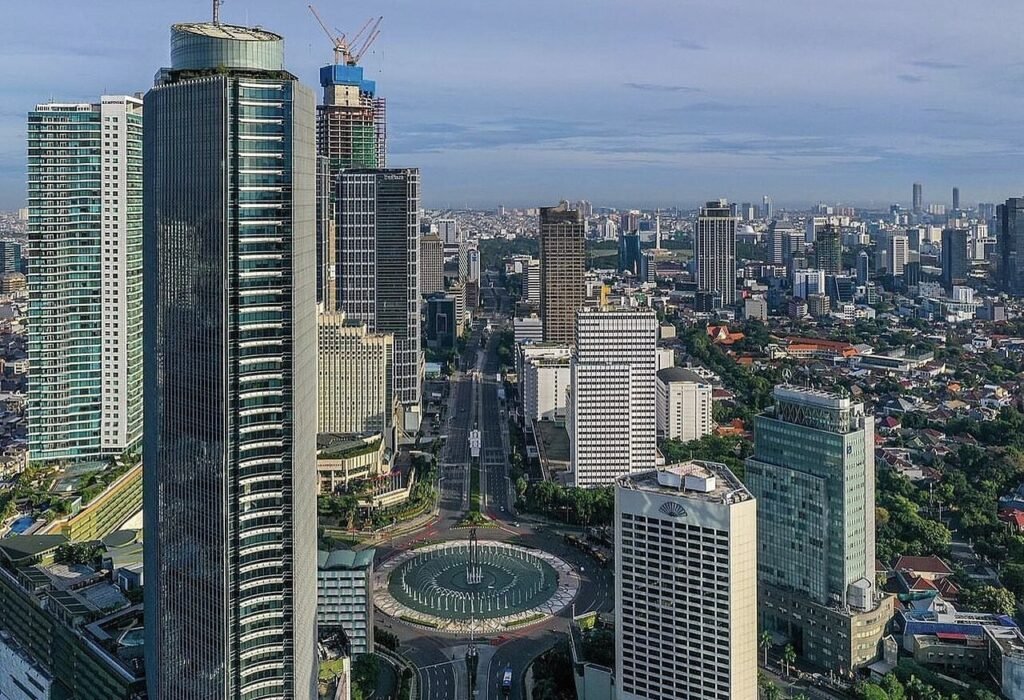
Indonesia’s capital, Jakarta, was named the world’s most populous city by the UN in 2025, with nearly 42 million residents and rising. (Wikimedia/JakartaDunia)
Southeast Asia is among the regions pouring the most concrete, with the largest volume still to build over the next two to three decades. Cement demand keeps climbing on infrastructure programmes and urbanisation, with Indonesia and Vietnam among the main growth centres. The region already has the precast factories and the capability to run them.
The waste side of the equation may matter just as much as the demand side. Formwork’s process runs on industrial byproducts and biomass, and Southeast Asia generates large volumes of both, particularly crop waste. The benefit is circularity. Inputs that would otherwise be discarded take the place of virgin feedstock and the colouring comes from food and agricultural byproducts instead of virgin dye feedstock.
Antonio described two kinds of buyers. Compliance-driven customers are listed developers and asset managers who report what’s called Scope 3 emissions to their investors, the carbon a company is responsible for indirectly, through its supply chain and the materials it buys, rather than the carbon it produces directly. Those investors have started asking harder questions about that number. On the other hand, conviction-based customers are driven by personal climate commitments and by a time horizon longer than any reporting cycle. Southeast Asia, in Antonio’s experience, still has few of the first kind and plenty of the second.
Formwork’s first paying customer was that kind of buyer, just not from the region yet. Nan Fung Group, one of Hong Kong’s largest privately held conglomerates and under no obligation to report Scope 3 to anyone, commissioned a 15 square metre AtmosBrick™ wall, one of three product lines alongside AtmosPave™ and AtmosTile™, for the lobby of its headquarters at AIRSIDE in Kai Tak. The product is semi-structural rather than decorative, meeting the compressive strength and code requirements that apply to precast concrete pavers, and the wall was installed by a standard contractor crew working with the material for the first time and using no new equipment. Antonio puts the decision down to time horizon, a long-term owner with the family name attached to the building and a view measured in generations rather than reporting cycles, the same profile he expects to find across Southeast Asia’s own family-run developers before regulation arrives.
Looking Ahead
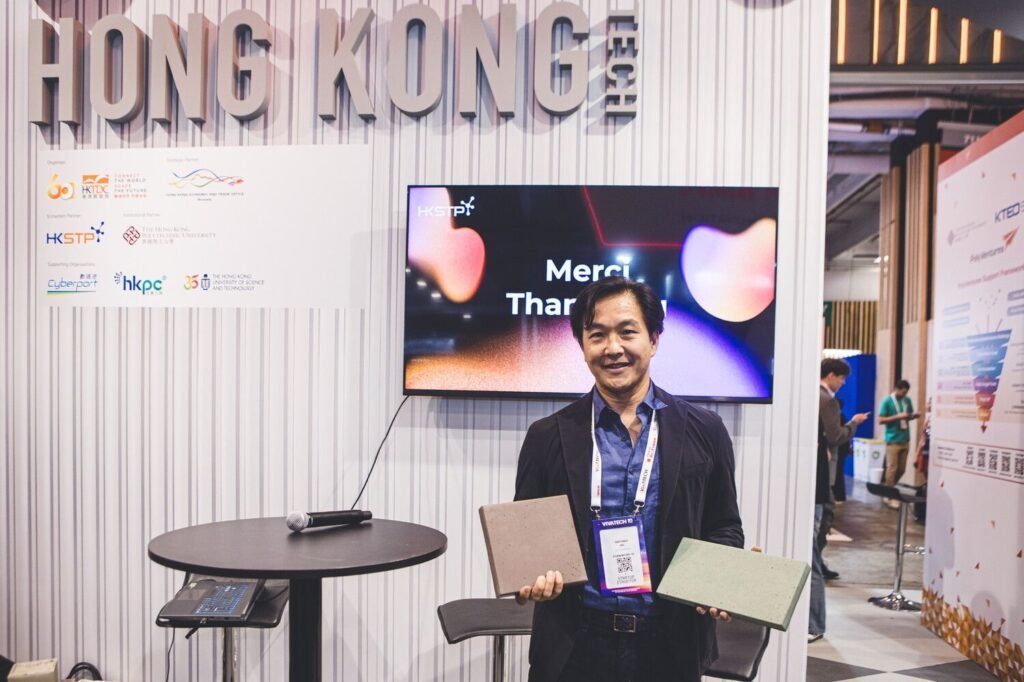
Antonio Ng, founder and CEO of Formwork IO, during Vivatech in Paris, where the SEA Daily team met him. (Formwork IO)
What comes next for the carbon-negative material Formwork develops depends less on chemistry than on four ordinary constraints of doing business somewhere new.
Scaling into a new region starts with price. Precast economics run on volume, and Formwork currently produces small, close to made-to-order batches, which leaves it costing more than low-carbon products already made at scale. In the majority of cases, the gap is <10% above basic low-carbon products, which have been selling under a dollar a unit for two decades, and on paving the absolute difference is small. It narrows as batch sizes grow. Getting that price down means growing volume, and that means rebuilding in a new place the supply chain the company assembled in Mainland China, sourcing inputs and setting up logistics from scratch. Each new market also means new approvals. Formwork complies with Hong Kong code, derived from British standards, so Australia and Singapore look plausible on paper. Southeast Asia, though, is a collection of jurisdictions rather than one. “From Ho Chi Minh to Jakarta would be a different type of rules and a different type of game,” Antonio said. And underneath all of it is the fact that the company is young, a risk he acknowledges customers take on, offset as far as possible with testing and certification.
Formwork’s answer is to scale through manufacturing partners rather than build its own plant, since that’s the faster route into new markets. The arrangement asks little of the partner. Formwork brings the process and the certified figure, the partner brings installed capacity, distribution and local approvals, and the partner keeps its own plant and its own customers. Nothing new has to be built. The harder part is finding partners willing to hold a below-zero claim on production lines they already run their own way. If a Southeast Asian deal follows, it will need to be worked out there.
That work matters most in the places where a material like this could do the most good and least easily. A material that costs more at pilot volume and needs separate approval in each market is easiest to sell to buyers who need the least persuading, wealthy owners with long horizons and a reputation attached to the building. The places with the most to gain from getting embodied carbon right from the outset, fast-growing markets building at scale for the first time, are also the most price-sensitive. Closing that gap is the actual task ahead.
Antonio also has a longer-term ambition for the region specifically. Coastal construction will absorb enormous quantities of concrete over the coming decades, much of it poured to defend against rising seas, and each pour adds to the emissions driving the rise. He believes Formwork’s material could extend into marine use, though he won’t promise it yet.
What ties all of this together is timing. The decision that sets a building’s embodied carbon is made once, early, by whoever signs off the specification and it can’t be revisited afterwards. In a region where most of the built environment hasn’t been built yet, that decision is where the reduction has to happen, if it happens at all. Southeast Asia counts its forests and its peatlands as carbon sinks. It does not count its buildings, the one carbon store it adds to every day. Right now, very little in the rules or the economics asks the person making that call to think about carbon.
About The Author