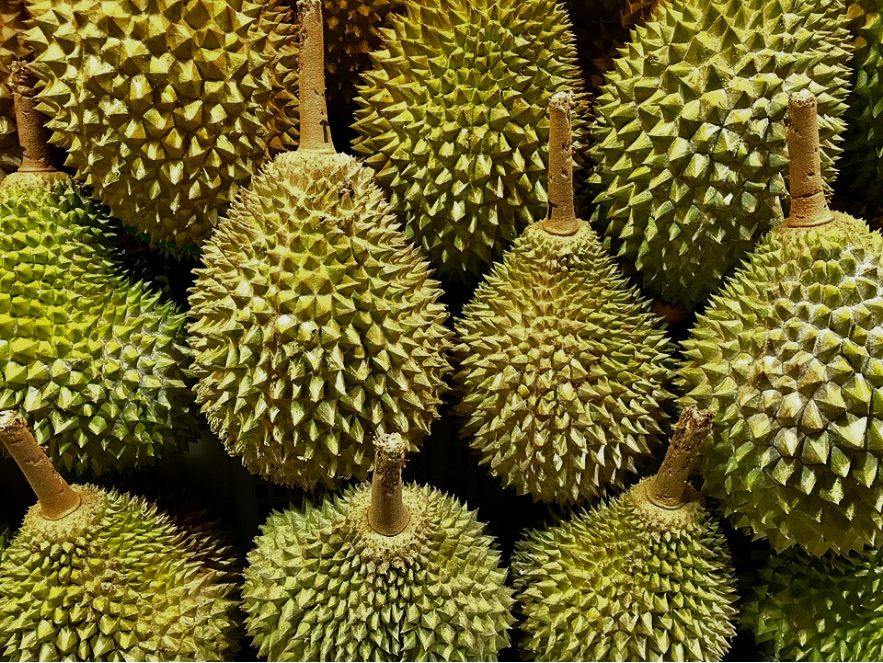
Illustration of Durian. (Wikimedia)
On July 2, Malaysia’s Department of Agriculture (DOA) confirmed a ban on the export of fresh durians to China via overland routes, following clarification from Chinese customs authorities that such shipments fall outside the scope of the current bilateral export protocol.
In a statement issued on July 1, the department said it had received confirmation from the General Administration of Customs of China (GACC) that transporting Malaysian fresh durians through third countries is not permitted under the existing agreement governing exports between the two nations. Until a revised protocol or amendments to the current arrangement are formally endorsed by both governments, overland shipments will not be authorised.
The DOA stressed that all agricultural exports must comply with mutually agreed legal and technical requirements, noting that the present protocol only covers export routes that have been jointly approved by Malaysia and China. It reaffirmed its commitment to maintaining international standards while safeguarding Malaysia’s access to key export markets.
To pave the way for potential overland exports in the future, the department said discussions with GACC would continue on developing a new protocol addressing shipments through transit countries. According to the DOA, negotiations are essential to ensure compliance with traceability requirements, biosecurity measures, phytosanitary standards and supply chain integrity across multiple jurisdictions.
The department also plans to engage with Malaysia’s Ministry of Transport and the Malaysian Agricultural Office in Bangkok to obtain detailed information on cross-border logistics, transit procedures, regulatory requirements and operational arrangements should overland exports eventually be introduced.
Meanwhile, the DOA acknowledged growing industry interest in value-added durian products, including pre-cut fresh durians for overseas markets. However, it emphasised that any proposal must be supported by comprehensive scientific and technical research to guarantee product quality, food safety and shelf life throughout distribution. The Malaysian Agricultural Research and Development Institute (MARDI) has been tasked with conducting the necessary studies before any proposal is submitted to Chinese authorities for consideration.
About The Author