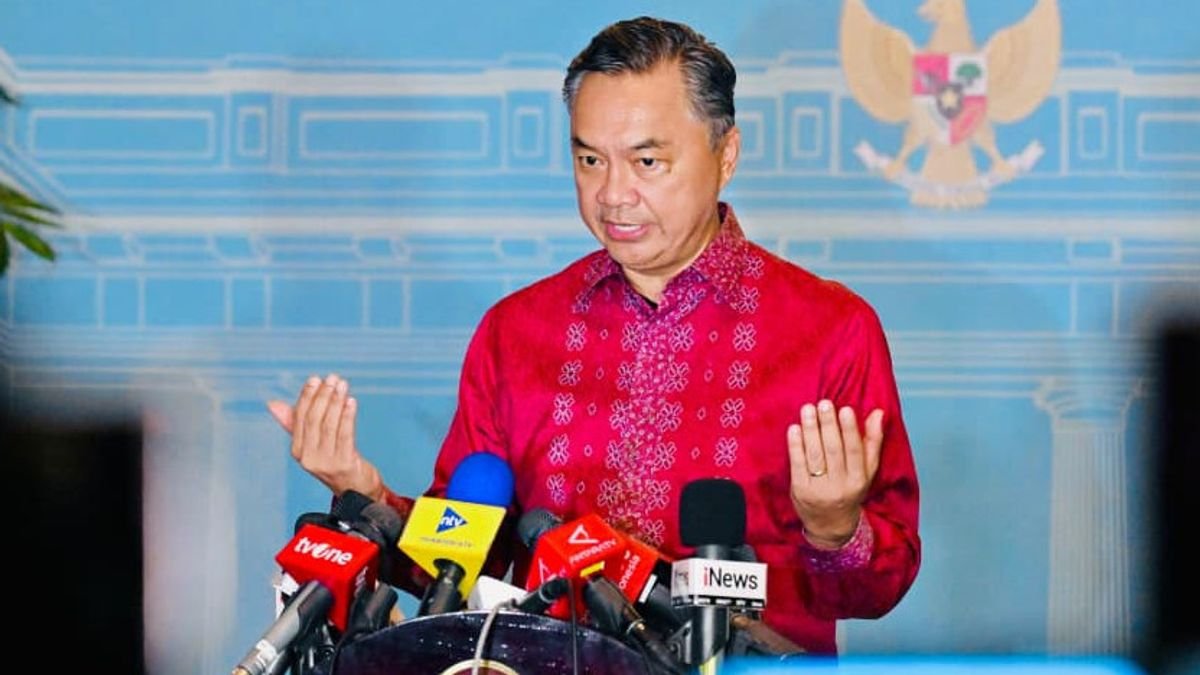
Datuk Seri Anwar Ibrahim expressed his intention to table a bill in Parliament this year to repeal the Universities and University Colleges Act 1971 (AUKU) during the ‘Temu Anwar’ session and the launch ceremony of the International Youth Gathering (HAMKA) 2026. (Prime Minister’s Office)
Muhammad Haqim Hussin Bin Mohd Roslan is a final-year law student from Faculty of Syariah and Law, Universiti Sains Islam Malaysia. The views expressed are his own and do not represent SEA Daily or that of another organisation.
The Universities and University Colleges Act 1971 (Akta Universiti dan Kolej Universiti 1971), or known locally with its abbreviation AUKU, has been in operation for over half a century in Malaysia. It was enacted with the purpose of providing a legal mechanism for the establishment, administration and governance for public universities, but gradually became intertwined with a larger debate on student activism, political participation, freedom of expression and academic freedom. The turning point was the 1975 amendment, introduced after the Baling demonstrations, which restricted students from joining or supporting political parties and trade unions and made expulsion a possible consequence. While the Act has been amended in the Malaysian Parliament on a number of occasions, its relevance remains a source of concern. It has now reached a new stage of the debate with Prime Minister Anwar Ibrahim announcing that the government is repealing AUKU on 15 August 2026 to create more freedom and democracy in higher education for students; and later, confirmation from Ministry of Higher Education (MoHE) that a new and more comprehensive higher education legislation is under way. The Act should not remain the basis for university governance. Malaysia needs to gradually phase out AUKU and implement a new and improved, higher education system that focuses more on the autonomy of universities, academic freedom, freedom of expression and meaningful student engagement.
A Law Designed for a Different Era

Students of Universiti Malaya before 1980. (Universiti Malaya)
Malaysian higher education has undergone a deep transformation since the AUKU was put in place. Today’s students are growing up in a world dominated by social media, artificial intelligence (AI), globalisation and advances in technology. In minutes, students can share their opinion with millions of people, join in international discussions in the academic world and obtain direct feedback into a political or social discussion without depending on regular campus organisations. Universities are also expected to deliver graduates who can respond intelligently to complex social problems, analyse information and challenge assumptions. Although a body of laws regulating university is still needed, the philosophy that underlies this body of laws should be consistent with the realities of today. A law from over 50 years ago should have no influence on the intellectual and democratic life of universities, merely so much because it is administratively intuitive.
This is an important reflection because of AUKU’s history. Historically, the restrictions imposed by the Act had a negative impact on students’ political participation and political organisations and these restrictions have fuelled a long-standing debate on the extent of the limits of student participation. Students might refrain from expressing political opinions considered controversial, even if permitted, for fear of disciplinary measures. Rather, the university ought to be a place where students can explore challenging issues and debate different viewpoints.
Reform Indeed, But Not Enough
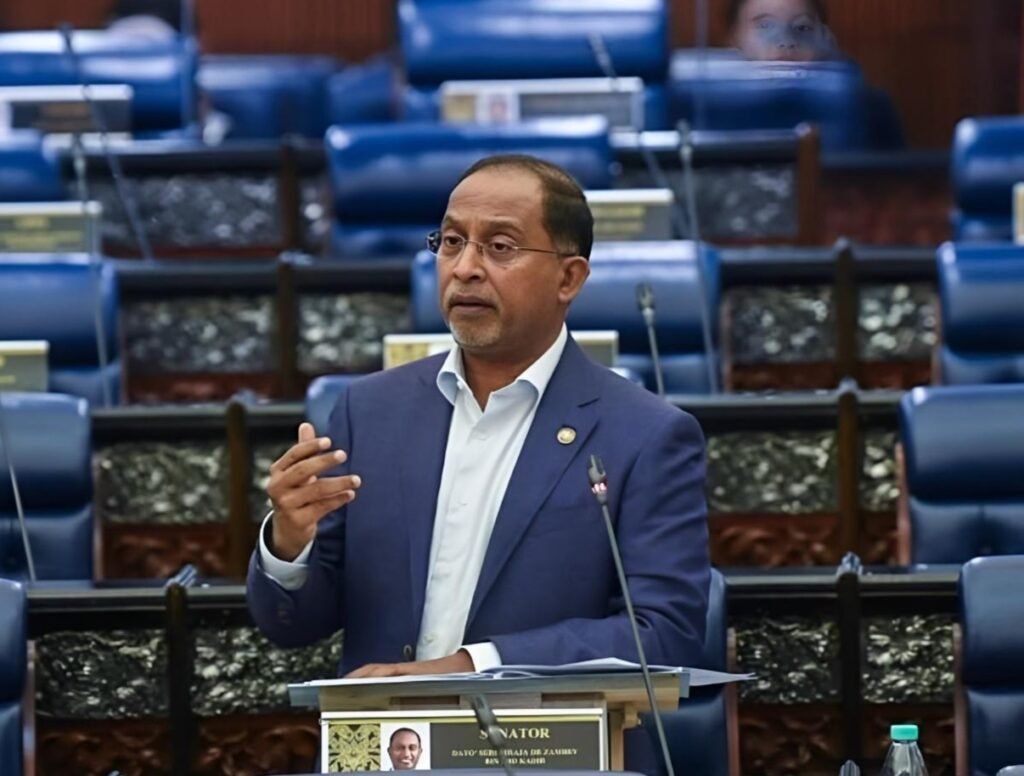
Minister of Higher Education, Datuk Seri Dr Zambry Kadir proposed the enactment of a new law to replace the Universities and University Colleges Act 1971 (AUKU). (Instagram/ Zambry Abd Kadir)
To say that AUKU has not changed at all would be wrong. There have been major changes, especially with regard to student involvement. In 2018, the abolition of Section 15(2)(c), which limits student participation in political activities, was a significant move towards increased political freedom in the campuses. Changes relating to student organisations and their financial management were also made in 2024. The changes are state acknowledgement that students deserve more autonomy to express themselves through public engagement and organisation. Recent discussion surrounding the proposed repeal has reinforced this point, with Malaysian academics calling for stronger university autonomy and clear protection for academic freedom.
But there is a bigger issue here, as well. If Malaysia has to go on changing and updating AUKU to keep it in line with today’s expectations of students’ freedom and autonomy of the university, maybe it should ask whether AUKU itself has become outdated. The replacement framework is crucial because the MoHE has recognised that AUKU is not just about what happens to students, but about the legal underpinning of setting up and running universities. Malaysia does not need to choose between AUKU or an absence of legal regulation foruniversities. It can instead establish a statute that is contemporary and upholds viable governance yet gets rid of any needless constraints on intellectual and democratic involvement.
The situation is even more apparent, when looking at the participation of young Malaysians in a democratic system. Malaysia’s voting age was lowered from 21 to 18 in the Constitution, and the change was implemented in conjunction with the automatic voter registration, thus involving many university students in the national democratic process. A Malaysian student, therefore, can now vote in Malaysia and determine who will lead the country, but a historical reality is that the same student might find themself being prevented from engaging in political activities when in a university environment. This demonstrates a political irony. Once young Malaysians are given the liberty to vote in the national elections, they should be given the same opportunity to talk about politics in the places they are being educated.
The Replacement Must Not Become AUKU 2.0
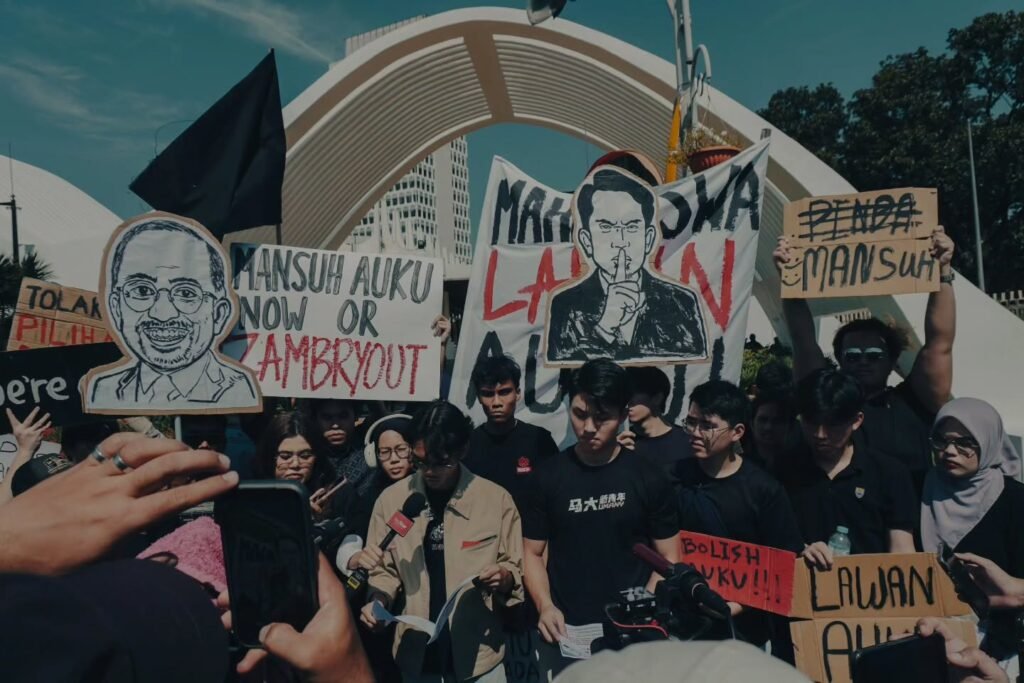
A demonstration by the Malaysian Students’ League (Liga Mahasiswa Malaysia) against AUKU in February 2026. (Liga Mahasiswa Malaysia)
The key question is not if it is just time to get rid of AUKU, but what to do in lieu of AUKU. The Malaysian Qualifications Agency has stated that a repeal should come with a suitable legal system to guarantee the continuity of governance and quality. The government has now announced the stepping up of a new legislation with the concept of One Higher Education Act via the Malaysia Higher Education Plan 2026-2035. This offers a valuable chance in clearly establishing a frame of mind which is based on a completely different set of principles than AUKU.
University autonomy, academic freedom and students’ participation should be explicitly mentioned in the new framework. Universities need to hold real power in academic and research issues and be also held accountable for public funds. Students should be granted a right of freedom of expression and opportunity of association subject only to reasonable restrictions which are necessary for the protection of safety and for the protection of the rights of others. Refer to the disciplinary procedures, they should be transparent and fair, have substrates for punishment and avenues of appeal. Student representation groups should be eligible to engage in genuine decision making at the university, and academics should be treated with dignity for engaging in legitimate research and teaching, without repercussions, regardless of the outcome of their work. The cancellation of AUKU should not just be a repeat of another similarly constrictive law, as repeatedly pointed out by the Deputy Minister of Higher Education.
A Chance to Reset Malaysian Higher Education

A Universiti Sains Islam Malaysia campus. (Universiti Sains Islam Malaysia)
AUKU has been a long-running topic of debate, and indeed, the struggle for control versus autonomy has been a decades-long issue. Over the years, student freedoms have been increased and yet calls for the abolition of the system continue to arise; incrementally changing the system may now be inadequate. Malaysia now has an opportunity to create a new relationship between the government, universities, academics, and students.
Therefore, the elimination of AUKU should not be interpreted as a step toward the elimination of university governance. It should imply a change in the obsolete structure to a more modern one that recognises the possibility of accountability and freedom coexisting. The government can keep itself involved in public financing, standards, and students’ safety, and at the same time give universities more autonomy and students more freedom to engage in public life.
It is unnecessary, then, to frame the future of Malaysian higher education in terms of developing a ‘better AUKU.’ It should be a matter of taking control out of the culture. While ending AUKU would be a significant legal move, the effectiveness of that move would rely on whether Malaysia would be able to replace it with a trust framework. It is not the role of universities to teach their students to avoid disagreements. They should be environments in which they learn to disagree in a responsible way, to challenge authority and to justify their opinions with arguments. This is not a challenge to democracy in Malaysia. It is the way that a more democratic system of government is nurtured.
About The Author