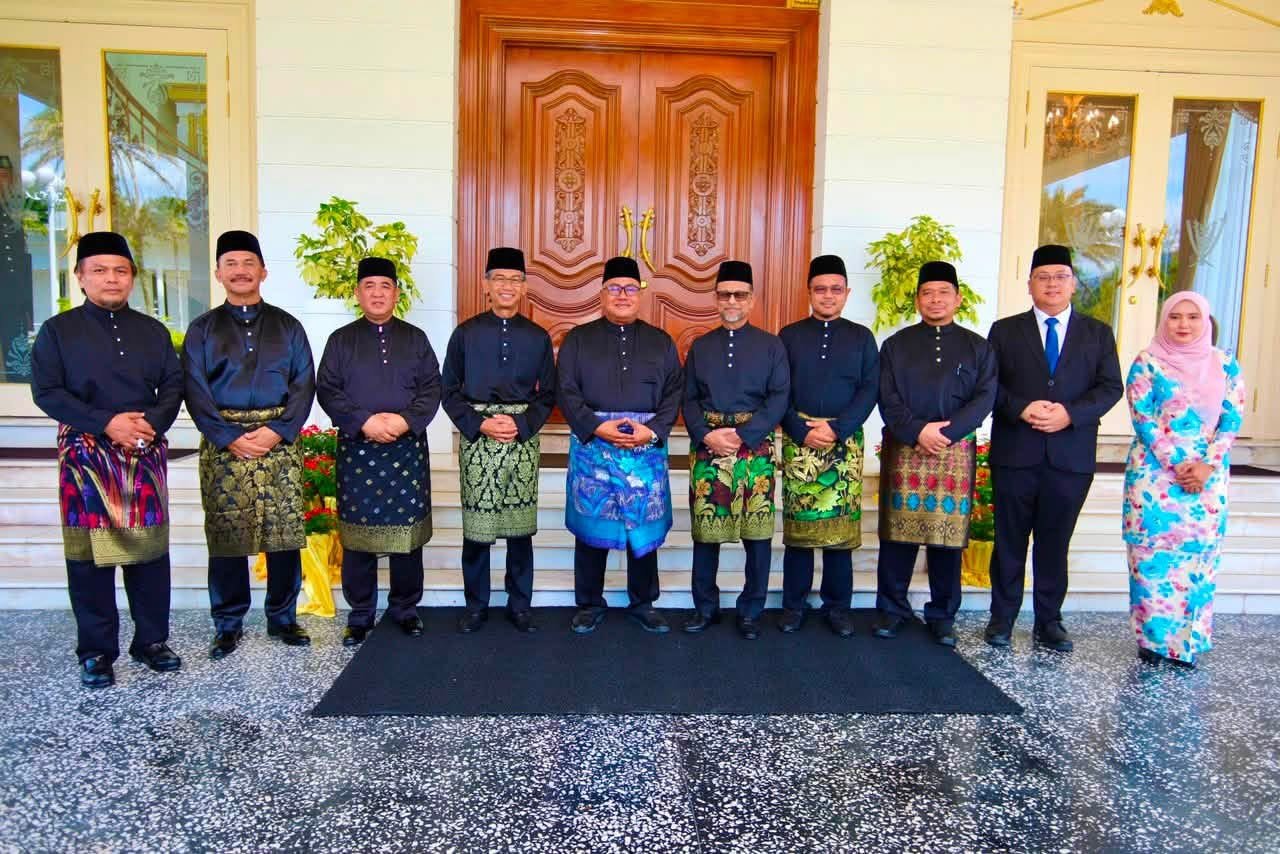
Newly appointed Negeri Sembilan State Executive Council members’ group photo following their swearing-in ceremony. (Facebook/Dato’ Ismail Bin Lasim)
On August 8, Negeri Sembilan’s newly appointed State Executive Council (Exco) members pledged to continue existing programmes and implement manifesto commitments following the state election, which returned Barisan Nasional (BN) as the dominant force in the 36-seat state legislature.
The election was held following the early dissolution of the Negeri Sembilan Legislative Assembly after the collapse of the previous state government in June. The poll was the second state election in Malaysia this year, following Johor’s election in July, and was closely watched as an indication of wider political trends ahead of the next general election expected in 2028.
BN won 18 seats while Perikatan Nasional (PN) secured seven, allowing the two coalitions to form the state government with a two-thirds majority. Following the election, all 10 state executive councillors took their oaths of office before Yang Dipertuan Besar of Negeri Sembilan Tuanku Muhriz Tuanku Munawir at Istana Besar Seri Menanti on August 7.
The new Exco members said their immediate priority would be maintaining policy continuity while improving development and public services.
Malaysian State Rural and Regional Development Committee Chairman Mohd Faizal Ramli said he would work with relevant agencies to strengthen rural development and welfare, particularly in communities such as Linggi. Meanwhile, Tourism, Arts, Culture and Heritage Committee Chairman Razali Abu Samah said he would review existing programmes and performance targets to further strengthen the state’s tourism agenda.
Local Government Development, Housing and Non-Islamic Affairs Committee Chairman Siow Kong Choon pledged to support the implementation of BN’s manifesto across different communities, while Youth and Sports Development Committee Chairman Datuk Mustapha Nagoor said preparations for the Negeri Sembilan contingent for the Malaysia Games (SUKMA), scheduled for August 15 to 24, would be an immediate priority.
The election campaign had been shaped by competition among BN, Pakatan Harapan (PH) and PN, alongside smaller parties including Malaysian United Democratic Alliance (MUDA) and Parti Bersama Malaysia (BERSAMA). Internal divisions within Parti Keadilan Rakyat (PKR) and the emergence of new political groupings added to the competitive landscape.
The formation of the new exco signals a shift from electoral competition to governance, with the BN-PN administration now under pressure to translate its electoral mandate into development and public-service delivery. The outcome also provides an indication of Malaysia’s evolving state-level political dynamics, where coalition arrangements and local governance increasingly shape political competition ahead of the 2028 general election.
About The Author