
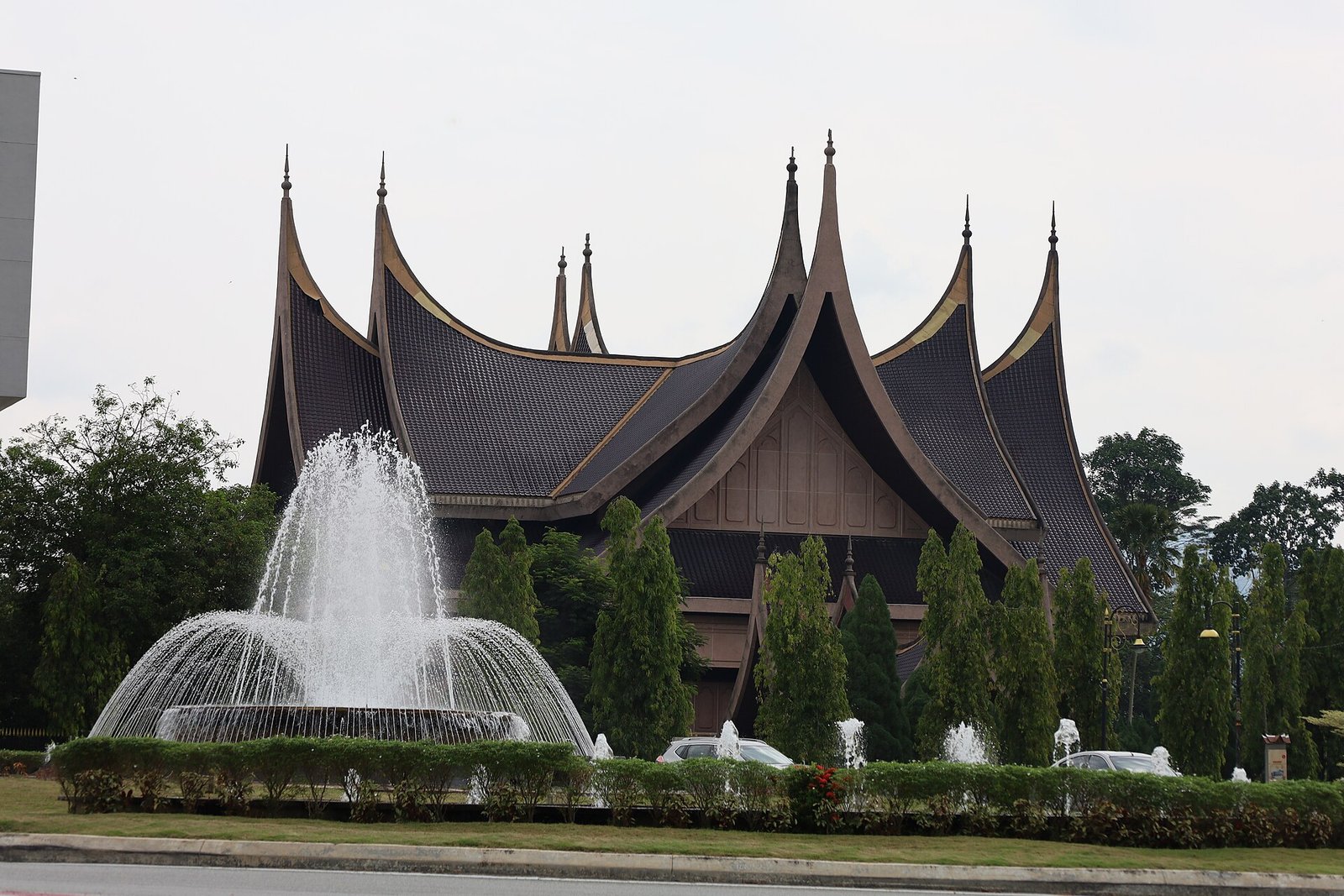
The Negeri Sembilan State Legislative Assembly building in Seremban, Malaysia. (Wikimedia)
The Negeri Sembilan state of Malaysia will head to the polls on August 1 in a snap state election following the early dissolution of its legislative assembly. This contest forms part of a series of state polls ahead of the country’s next general election scheduled for February 2028.
The snap election was triggered after the collapse of the state government on June 5 after Barisan Nasional’s (BN) abrupt withdrawal of support on April 27. It will be the year’s second state election, following Johor’s poll on July 11.
Three main political coalitions are expected to compete for control of the 36-seat state legislature. Pakatan Harapan (PH), led by Prime Minister Anwar Ibrahim, and Barisan Nasional, its partner in the federal Madani government, are contesting against one another despite governing together at the national level. The opposition coalition Perikatan Nasional (PN) is also fielding candidates, alongside smaller parties including the Malaysian United Democratic Alliance (MUDA) and the newly established Parti Bersama Malaysia (BERSAMA).
Crucially, the contest follows internal divisions within the Prime Minister’s People’s Justice Party (PKR), after former Economy Minister Rafizi Ramli and former Environment Minister Nik Nazmi Nik Ahmad left the party to establish BERSAMA, adding another element to an increasingly competitive electoral landscape.
The cost of living, economic management and local governance have emerged as key campaign issues. The poll also comes after a recent royal succession dispute in Negeri Sembilan, which has drawn attention to the role of the state’s constitutional monarchy.
Several constituencies are expected to attract particular attention, including Pertang, where Negeri Sembilan United Malays National Organisation (UMNO) Chairman Jalaluddin Alias is seeking re-election. Chennah and Linggi are also among the closely watched seats, where Democratic Action Party (DAP) Secretary-General Anthony Loke and Chief Minister Aminuddin Harun are contesting, respectively.
For context, Malaysia’s state elections determine the composition of state legislative assemblies rather than the federal Parliament. In Negeri Sembilan, a coalition must secure at least 19 of the assembly’s 36 seats to form the state government and nominate a Chief Minister subject to the assent of its grand ruler (Yang di-Pertuan Besar). While general and state elections have traditionally been held concurrently, legislatures may be dissolved independently within their five-year terms, allowing states to hold elections separately.
Following the Negeri Sembilan poll, attention is expected to shift to the remaining state elections in Melaka and Sarawak. Beyond determining the next state government, the election is expected to offer an indication of the country’s current political dynamics. It also reflects an evolving electoral landscape, with coalition partners competing against one another at the state level, new parties seeking to expand their support and local issues playing an increasingly prominent role.
About The Author



One thought on “Malaysia’s Negeri Sembilan Heads to Snap Polls Following State Assembly Dissolution”