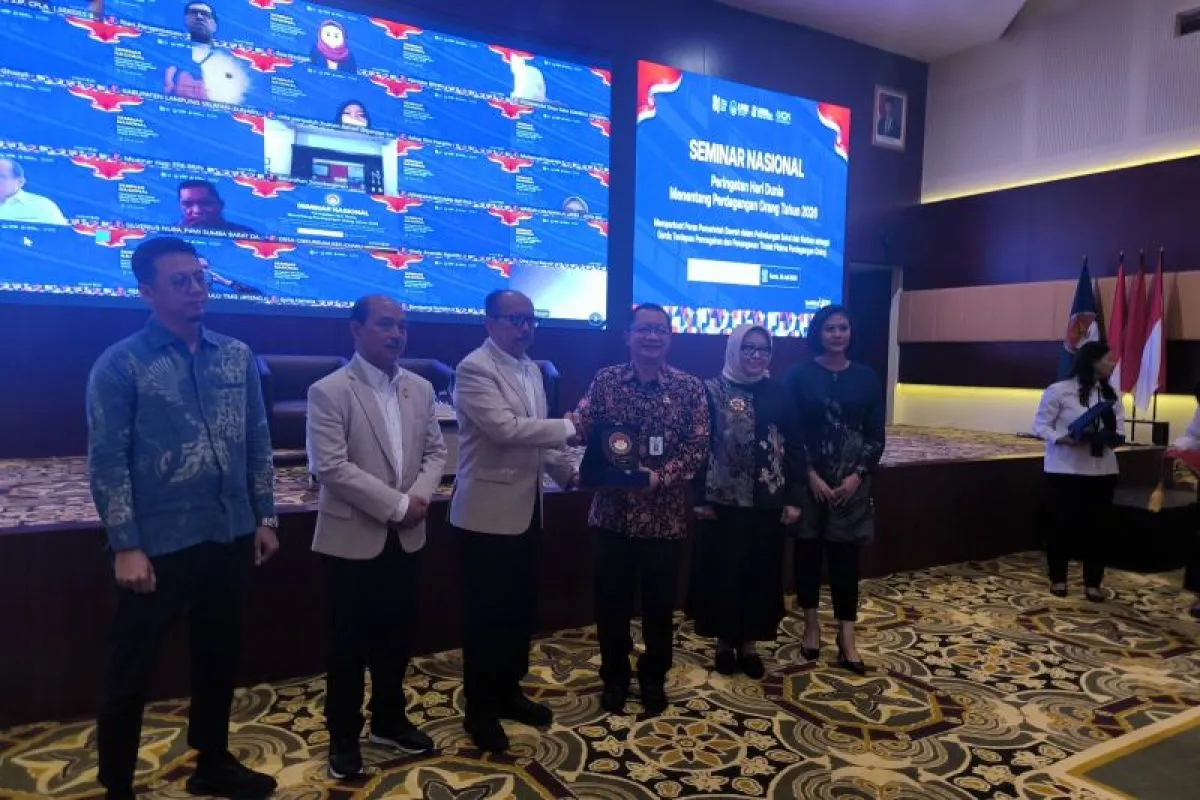
Officials attend the National Seminar on World Day Against Human Trafficking 2026 in Jakarta on 30 July. (ANTARA)
On July 30, Indonesia strengthened efforts to combat human trafficking by combining tougher victim protection measures with village-based prevention and economic empowerment programmes. Authorities warned that traffickers are increasingly exploiting digital technology to recruit victims, as the country marked World Day Against Human Trafficking 2026 in Jakarta.
The Victim Protection Agency (LPSK) Chairman Achmadi said many trafficking victims originate from rural communities and are often unaware that they have become targets of exploitation. He said breaking the cycle of human trafficking requires more than prosecuting offenders, stressing the need to prevent recruitment before it occurs.
Trafficking syndicates have increasingly shifted their recruitment online, using digital platforms and artificial intelligence (AI) to gain the trust of potential victims. The chairman said advances in technology have made fraudulent job offers more convincing and perpetrators more difficult to identify, highlighting the importance of strengthening digital literacy and public awareness in vulnerable communities.
He also pointed to Law No. 3 of Protection of 2026 on the Witnesses and Victims as an important legal framework for improving witness and victim protection, saying it provides clearer responsibilities for central and regional governments.
Complementing these efforts, the Ministry of Villages and Development of Disadvantaged Regions announced measures aimed at reducing the socio-economic conditions that make rural communities vulnerable to trafficking.
Indonesian Secretary General Taufik Madjid said the ministry is expanding the Women-Friendly and Child-Caring Village programme, developed with the Ministry of Women’s Empowerment and Child Protection (Kemen PPPA), to improve public awareness of human trafficking and violence against women and children. Village authorities are also being encouraged to identify residents seeking overseas employment and ensure they follow official recruitment procedures.
Alongside preventive measures, the ministry is also strengthening local employment opportunities through village cooperatives, village-owned enterprises (BUMDes), tourism villages, the advanced fishing villages programme and support for micro, small and medium-sized enterprises (MSMEs). These initiatives are intended to improve livelihoods and reduce the economic pressures that often drive unsafe migration.
The measures reflect Indonesia’s increasingly comprehensive approach to tackling human trafficking by addressing both criminal networks and the conditions that make communities vulnerable to exploitation. As recruitment methods become more technology-driven, authorities are placing greater emphasis on prevention through community awareness, digital literacy and local economic development.
This approach recognises that enforcement alone is unlikely to curb trafficking without reducing the factors that expose people to exploitation. It also aligns with Indonesia’s broader efforts to strengthen national security by limiting the activities of transnational criminal networks that operate across borders and online platforms.
About The Author