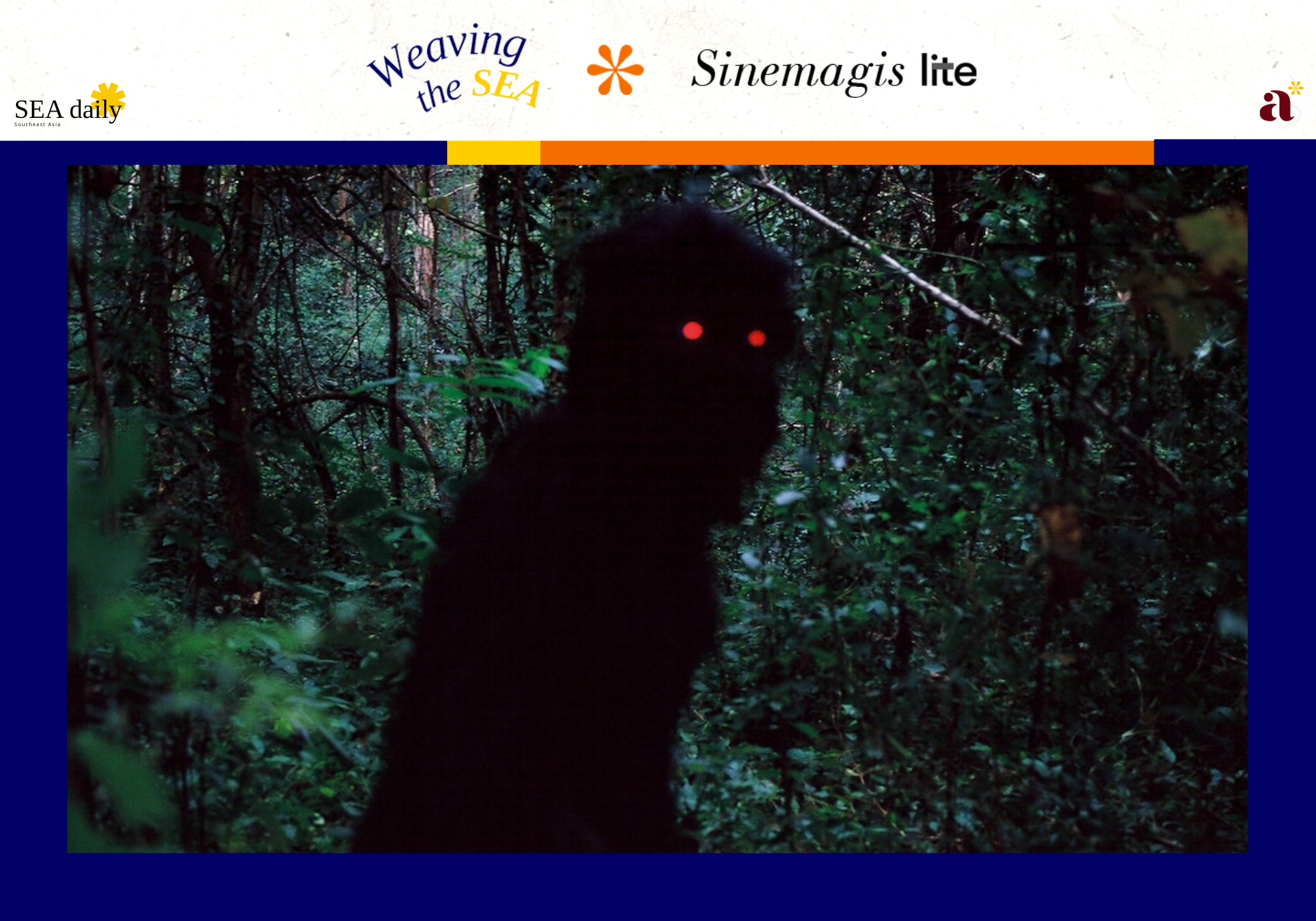
A clip from Uncle Boonmee Who Can Recall His Past Lives (Kick the Machine)
Uncle Boonmee Who Can Recall His Past Lives is a 2010 fantasy drama film produced, written and directed by Apichatpong Weerasethakul. It is inspired by a book titled “A Man Who Can Recall His Past Lives” by Phra Sripariyattiweti. The sixth film directed by Apichatpong, Uncle Boonmee is the first Thai film that won Palm D’Or in Cannes Film Festival 2010, regarded as one of the highest accolades in film circuit.
Uncle Boonmee is the final installment of a multi-platform art project titled “primitive”. It includes a seven-parts video installation; two short movies titled A Letter to Uncle Boonmee (2009) and Phantoms of Nabua (2009); and an artist’s book. The art project focused on the northeastern region in Thailand called Isaan, in the village called Nabua, where the shorts are filmed. Primitive centers around the theme of memories, extinction and transformation, including the feature film Uncle Boonmee.
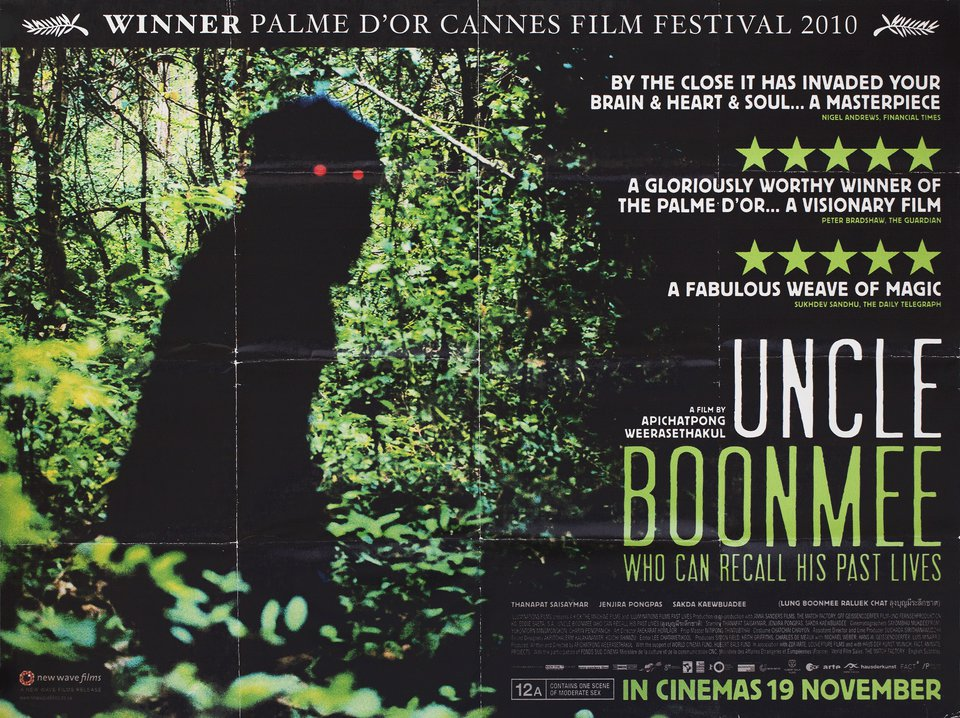
Official poster of Uncle Boonmee Who Can Recall His Past Lives (Kick the Machine)
As the title suggests, it follows the character of Boonmee, who is a widowed farmer, who lives in the rural northeast region in Thailand. He suffers from kidney failure and needs dialysis frequently, which is done by a Laotian immigrant. In the film, he was visited by his sister-in-law named Jen and his nephew named Tong. The film is not solely centered on Boonmee, but also includes several seemingly disconnected sequences, such as a few parts like an escaping buffalo, a princess’s story and even a montage of communist soldiers, that broaden its narrative scope.
Through Uncle Boonmee, the presence of spirits and non-human beings is not framed as something frightening, but as a natural extension of everyday life. The boundaries between the human, spiritual and natural worlds remain fluid rather than fixed. When Boonmee’s deceased wife quietly appears at the dinner table, the film presents spirituality as intimate and familiar rather than threatening. Likewise, the transformation of his son into a “monkey ghost” does not sever familial ties, suggesting that identity can transcend physical form. The “monkey ghost” and jungle imagery also evoke those erased or forced into hiding, while Boonmee’s rural life, illness and Laotian caregiver subtly reflect marginalisation, migration and inequality, linking personal karma to histories of political violence.
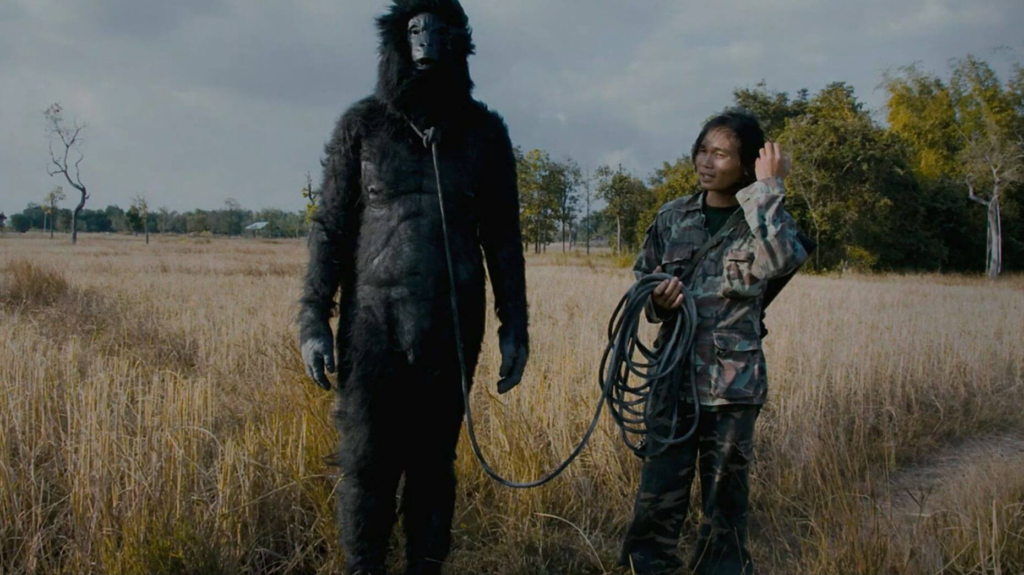
A clip from Uncle Boonmee Who Can Recall His Past Lives (Kick the Machine)
The film’s treatment of time further reflects the Buddhist belief in the cyclical nature of existence. Past lives, present experiences and memories appear to overlap, evoking the concept of Samsara, the endless cycle of death and rebirth that structures Buddhist cosmology. In interviews, Weerasethakul himself noted that cinema shares an affinity with reincarnation, describing film as a medium capable of creating “alternate universes” and other lives. This idea resonates with the tradition of Jataka Tales, narratives that recount the many past lives of Gautama Buddha before attaining enlightenment.
Just as these stories visualise moral and spiritual journeys across lifetimes, Uncle Boonmee reimagines this tradition in a contemporary context, presenting the recollections of an ordinary man whose memories span multiple forms of existence. Through its quiet pacing and mystical atmosphere, the film becomes less a conventional narrative than a contemplative experience.
About The Author