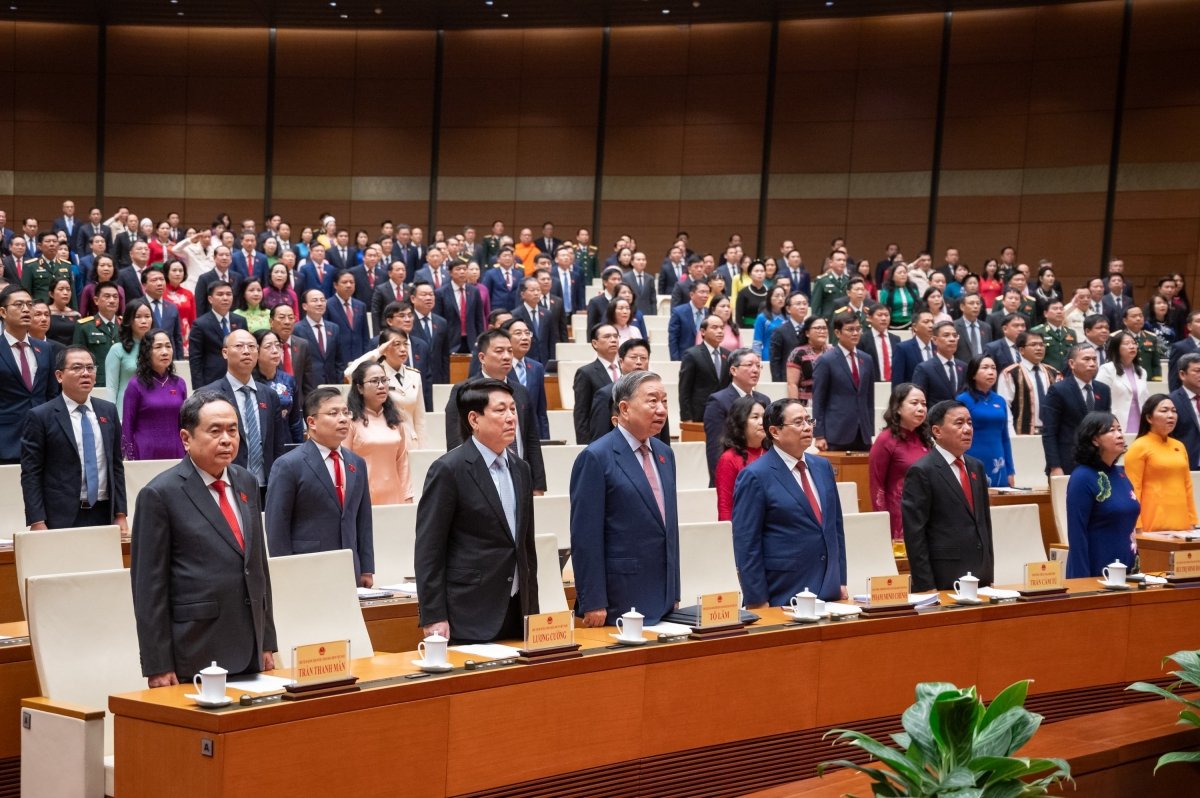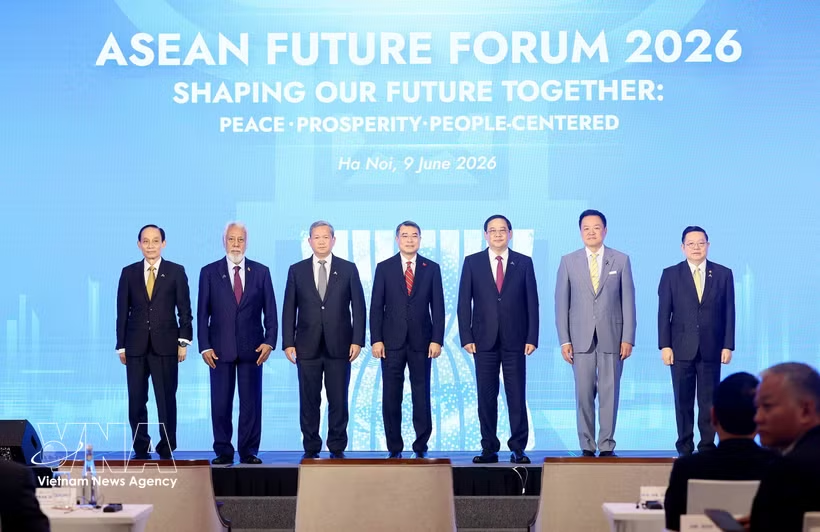
Vietnamese Prime Minister Le Minh Hung and leaders from Laos, Cambodia, Thailand and Timor-Leste attend the opening session of the ASEAN Future Forum 2026 in Hanoi, on June 9. (Vietnam News Agency)
Hanoi is currently hosting the 2026 ASEAN Future Forum (AFF) until June 10, gathering government leaders, business delegates as well as, for the first time, political parties and local authorities from across the Southeast Asia region to discuss actionable recommendations for the ASEAN Community Vision 2045.
For context, the AFF is a relatively new strategic diplomatic initiative proposed by Vietnam during the 43rd ASEAN Summit in 2023. At that time, ASEAN was preparing to transition from its 2025 community vision to the 2045 equivalent. Therefore, the main goal of the forum is to propose deliverables to achieve the bloc’s long-term vision.
In this third summit, themed “Shaping Our Future Together: Peace, Prosperity, People-Centered”, Vietnam is designing the dialogue to focus on deepening the region’s integration to shape a “peaceful and resilient future” amid global uncertainty.
During the summit’s first day on June 9, Vietnamese Prime Minister Lê Minh Hưng, alongside ASEAN member states’ leaders and senior United Nations (UN) officials, delivered a keynote speech.
Discussions heavily emphasised ensuring that sustainable economic prosperity leaves no one behind. Vietnam’s Deputy Prime Minister Nguyễn Văn Thắng proposed an initiative to establish a financial technology (fintech) ecosystem for the bloc that is “open, secure, transparent, inclusive and sustainable”. He underscored the crucial importance of such infrastructure in shaping the bloc’s digital future.
“Fintech is no longer confined to banking services or digital payments, but has become a key driver for economic growth, cross-border connectivity as well as trust-building for ASEAN’s digital economy,” he added.
What does this mean for business?
As ASEAN envisions developing its bloc into a single, highly competitive market and the premier epicentre of growth in the Indo-Pacific, developing an adequate, integrated fintech infrastructure is non-negotiable. The outlook remains highly optimistic, with the region’s digital economy projected to hit at maximum 2 trillion US dollar by 2030, positioning it as one of the fastest-growing digital markets globally.
However, the most prominent constraint comes from within the bloc, namely its traditional, consensus-based decision-making principle. Consequently, the individual political will of member nations carries immense weight. To overcome this, streamlined cross-party coordination among governments, policymakers, businesses and investors must be prioritised to transform these regional frameworks into commercial reality.
For investors, this regulatory fragmentation highlights a clear imperative that long-term capital must target markets that proactively harmonise their local fintech frameworks with regional interoperability standards.
________________________________
Kala Advisory helps investors turn openings like these in Southeast Asia’s fast-growing digital economy into a workable entry plan. Visit kala-advisory.com.
About The Author