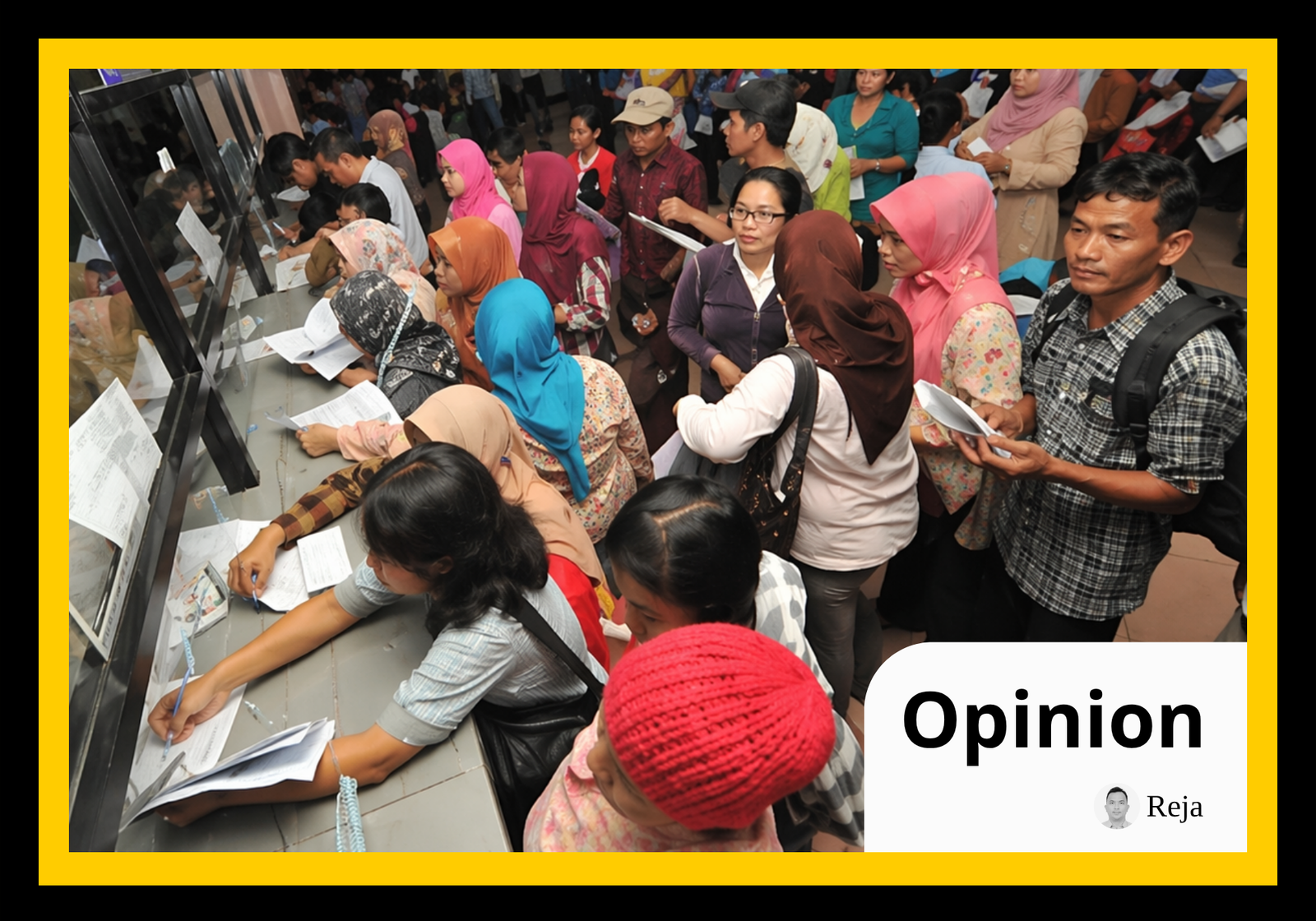
An illustration of Indonesia’s public service (Indonesian Ministry of State Apparatus Utilisation and Bureaucratic Reform)
Reja is a lecturer at the Political Science Department of Universitas Pembangunan Nasional “Veteran” Jakarta. The views expressed are his own and do not represent SEA Daily or that of another organisation.
Paradox Amid Indonesia’s Rapid Digital Boom
Indonesia was entrusted to be the leader of the multilateral economic cooperation forum, G-20 in 2022, when digital transformation was a key topic. Compared to other Southeast Asian nations, Indonesia has implemented digital public services remarkably swiftly. Today, services in various ministries, agencies, local governments, and institutions are thriving. According to a Kompas report, over 220 million Indonesians (about 80% of the population) are connected to the internet, with 95% using smartphones. This has spurred the government to prioritise policies advancing digital public services.
However, realities on the ground reveal a profound paradox: despite improving laws on digitalisation—notably the Personal Data Protection Law No. 27/2022—data breach resolutions remain arguably poorly handled. For instance, in February 2026, the Ministry of Communication and Digital inadvertently leaked job applicants’ data via an open Google Drive mechanism.
Manual Processes Persist in Digital Public Services
Likewise, disbursement of social funds and subsidies are arduous and often manual. In Bekasi city, West Java, the state health insurance platform, BPJS Health services, are highly digital and efficient, yet troubleshooting often reverts to manual processes. Consider civil servant candidate “RD”, who paid BPJS contributions personally before employment. After becoming a civil servant, double payments occurred—via auto-debit from “RD”’s bank account and salary deductions. Seeking a refund required three stamps, physical documents and days of processing at the Bekasi City Health Department’s office, despite payments able to be processed in seconds.
“I’m exasperated; the JKN mobile app (owned by the Health Department) marks me as overdue in payment due to BPJS bugs. I had to visit the office in person, and my overpayment takes weeks to refund,” “RD” stated firmly.
Additionally, the case of DSI’s (sharia peer-to-peer lending platform)CEO defrauding peer-to-peer digital lending victims has drawn public scrutiny. Despite OJK’s (Indonesia’s Financial Service Authority) operational approval and oversight, resolutions remain unclear, leaving thousands of lenders awaiting restitution. Document collection is not fully digital; services from Indonesia’s Criminal Investigation Agency (Bareskrim), OJK, to Indonesia’s Witness and Victim Protection Agency (LPSK) are a hybrid digital and manual processes.
“It’s heartbreaking: we invested hundreds of millions—even billions (of Indonesian rupiah)—in an OJK-verified digital platform, yet refunds could take years,” said victim Arief.
Another notable case demonstrating the gap in Indonesia’s digital landscape took place when state-owned bank Bank Negara Indonesia (BNI) completed the full repayment of 28 billion Indonesian rupiah (1.5 million US dollar) to members of the Credit Union at Saint Aek Nabara Catholic Parish in North Sumatra, after a fraud involving a former bank-linked official exposed weaknesses in oversight and financial governance despite ongoing digitalisation efforts.
Beyond these cases, many similar issues lurk beneath the surface. Digitalising public services remains a challenge in Indonesia. Even the currently debated Single Data Indonesia Bill in Parliament seems insufficient. Adequate infrastructure and skilled human resources in public digital domains must be prioritised, alongside leaders’ political will. Indonesians should not perpetually suffer as victims; all stakeholders must collaborate for a conducive digital environment serving the public good.
About The Author