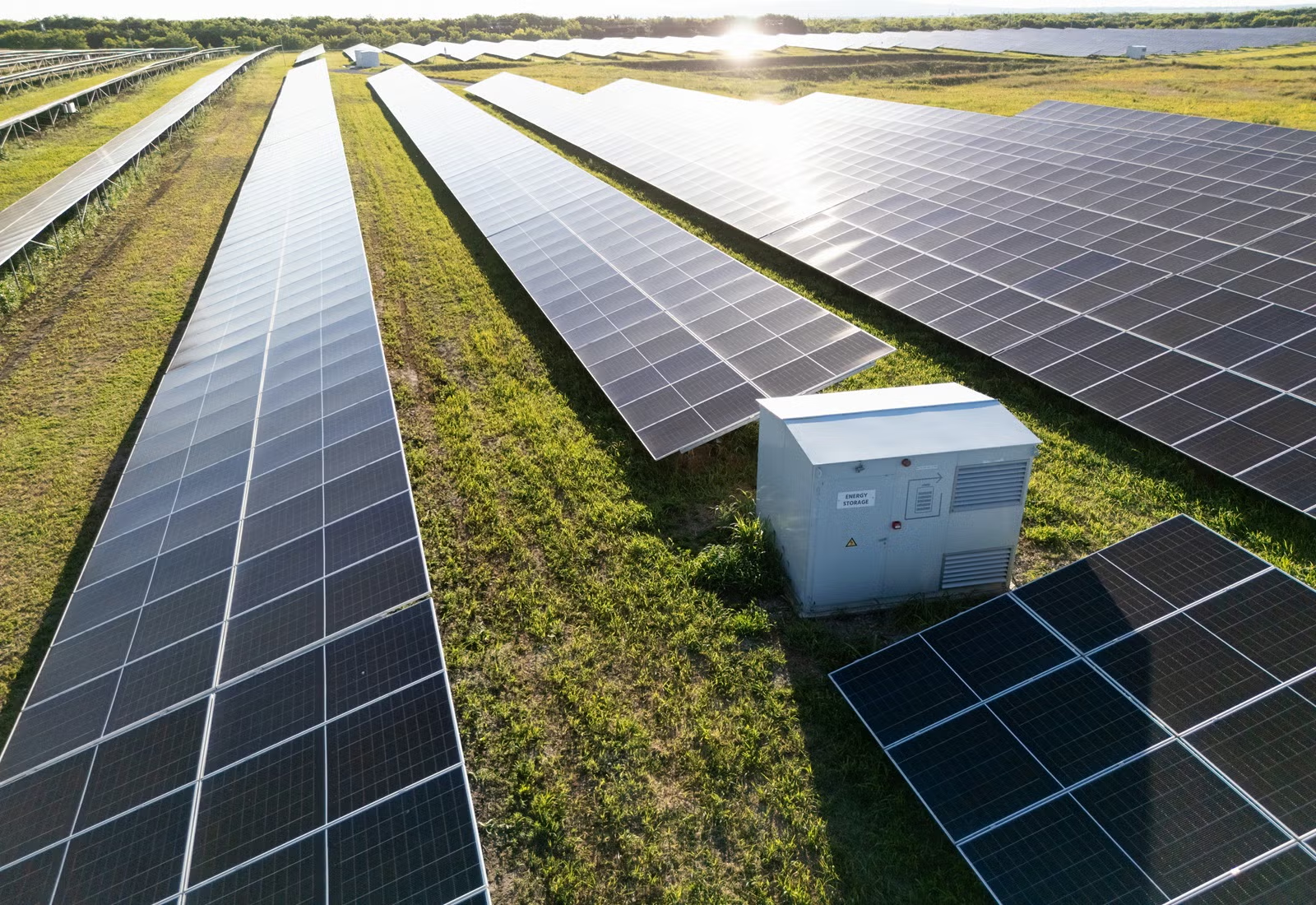
A solar photovoltaic installation in Timor-Leste. (MIGA/World Bank Group)
For context, MRP is a consortium comprising Électricité de France (EDF) Renewables, ITOCHU Corporation and I-Environment Investments. These developers aim to build Timor-Leste’s first utility-scale solar project in Lifau, Laleia (about 70 km from the capital Dili).
Reportedly, the investment is pledged at 107 million US dollar, featuring a 75-megawatt-peak (MWp) solar farm and an 85-megawatt-hour (MWh) BESS. According to MRP Executive Managing Director, Mark G. Argar, construction is expected to begin in August 2026 and finish by June 2028. The project is part of a strategic national investment as Timor-Leste accelerates its energy security agenda to substantially curb its fossil fuel dependence
Speaking at the signing ceremony following the endorsement, Minister of Justice Sérgio de Jesus Fernandes da Costa Hornai affirmed that this project will substantially strengthen national energy supply and resilience, while paving the way for a transition towards renewable power resourcing.
Also present at the ceremony were Electricidade de Timor-Leste (EDTL) Executive Committee President Paulo da Silva and Executive Commissioner for Corporate Services Júlio de Jesus Gonçalves. David Fredman represented the World Bank Group on behalf of both the International Finance Corporation (IFC) and the Multilateral Investment Guarantee Agency (MIGA).
Minister Hornai elaborated that the agreement demonstrated the government’s commitment to “strengthening legal certainty, promoting good governance and maintaining a stable, transparent and predictable investment environment”. He stressed that these acts will send a powerful, positive message to global markets regarding Timor-Leste’s economic readiness, which is projected to diversify its local economy and generate substantial new employment opportunities.
Finally, he expressed gratitude to the World Bank and other development partners for providing vital technical assistance throughout the drafting process. This collaborative support ensured that the final legal framework met strict international compliance standards, safeguarding the mutual interests of both the state and the private investors.
What does this mean for businesses?
Timor-Leste remains one of the world’s most petroleum-dependent nations. With domestic oil production having ceased entirely last year, Dili now relies on its sovereign wealth Petroleum Fund, which has dwindled to roughly 18.31 billion US dollars. This fiscal vulnerability underscores the urgency of building a post-oil economy. For international businesses, this landmark project serves as a green light, signaling that Timor-Leste is actively derisking its market through robust legal frameworks backed by the World Bank. It opens new avenues for foreign direct investment (FDI) in sustainable infrastructure, utilities and ancillary industries, proving that the country is ready for institutional-grade capital deployment.
Kala Advisory helps investors turn openings like these into targeted, country-by-country entry plans across Southeast Asia. Visit kala-advisory.com.
About The Author