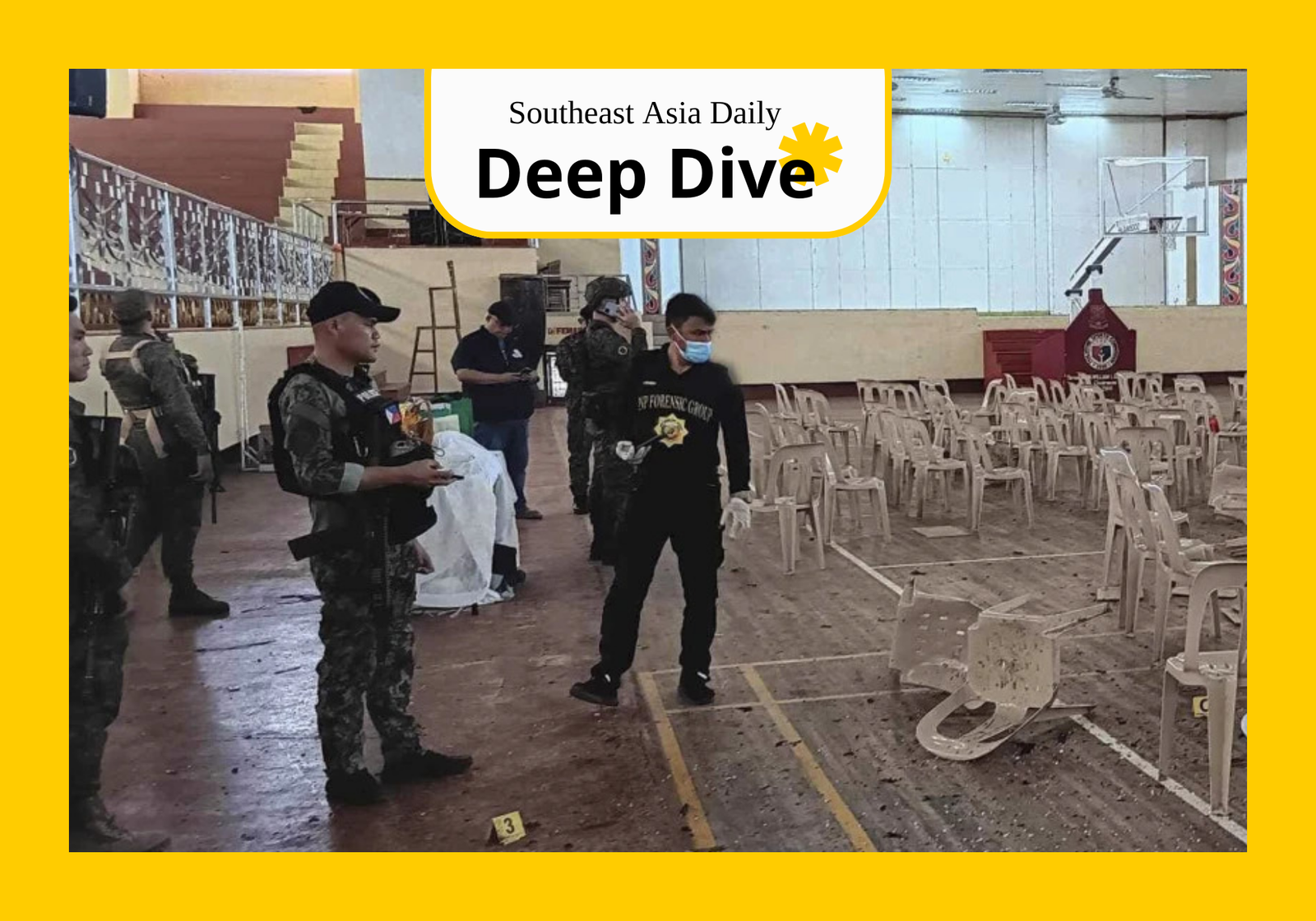
Law enforcers conduct an investigation at the site of an explosion in Marawi City, in December 2023. (Provincial Government of Lanao del Sur)
Nearly 2.4 million voters in the Philippines’ Bangsamoro Autonomous Region in Muslim Mindanao (BARMM) will cast ballots on September 14, 2026 in a watershed moment: the region’s first parliamentary elections. Bangsamoro voters will elect the representatives who will form their government and shape the policies and priorities that define their future. Yet, navigating these elections amid remnants of one of the world’s most protracted armed conflicts presents serious challenges. Women’s growing political participation points to whether the Bangsamoro can build genuinely inclusive governance or simply reproduce traditional hierarchies.
The Philippines and its neighbours face a litmus test of whether autonomous regions in Southeast Asia can sustain both security and inclusive politics after conflict. Southeast Asia is home to several highly distinct autonomous territories–and even more aspiring ones–born out of the region’s deep diversity. Myanmar’s ethnic armed organisations, Thailand’s southern separatists, and others are watching to see if this model works. The BARMM polls will determine whether peace agreements can produce stable, representative governance and can offer lessons about the viability of inclusive governance under pressure.
The BARMM is a self-governed, Muslim-majority autonomous region located in the southern Philippines. It comprises five provinces: Basilan, Lanao del Sur, Maguindanao del Norte, Maguindanao del Sur, and Tawi-Tawi, alongside Cotabato City and a Special Geographic Area. Though the Philippines is predominantly Catholic, this southern region is home to a sizable Muslim community that has long struggled for self-determination. For generations, the Bangsamoro experienced one of Southeast Asia’s most protracted armed conflicts, fraught with secessionist rebellion and worsening poverty. In 2014, the Philippine government and the Moro Islamic Liberation Front (MILF) signed the Comprehensive Agreement on the Bangsamoro (CAB), concluding 17 years of peace negotiations. This historic agreement outlined a strategy for genuine political reform and self-governance, offering a solution to decades of conflict by acknowledging and addressing historical injustices against the Bangsamoro people.
Transitioning a region from an armed rebellion into a functional democratic parliament proved highly complex, resulting in four separate election postponements over the last several years due to logistical challenges, the COVID-19 pandemic, boundary disputes, and legal complications. An appointed interim governing body called the Bangsamoro Transition Authority (BTA) has administered the region since 2019, but interim arrangements lack the permanence and voter mandate of elected government.
Republic Act No. 12317 finally locked in September 14, 2026, as the election date after years of postponement. The BARMM operates under a parliamentary-democratic system unique among Philippine regional units. Bangsamoro voters will elect an 80-member Parliament through a mixed electoral system: 40 seats for regional parliamentary parties, 32 single-district representatives, and 8 sectoral representatives for women, youth, traditional leaders, Ulama (Muslim religious leaders), settler communities, and non-Moro Indigenous Peoples. The newly elected Parliament will then choose a Chief Minister to lead the region.
This election marks a culmination of the Bangsamoro’s transition from seven years of appointed interim governance to a fully democratically elected system. It is a localised political experiment in parliamentary governance within a presidential nation, a devolution of executive and legislative powers, where former secessionist rebel fighters now compete as candidates. BARMM’s historic vote serves to legitimise the region’s decades-long peace process and will be the first time Bangsamoro voters have chosen their own leaders.
Security Risks and Voter Readiness
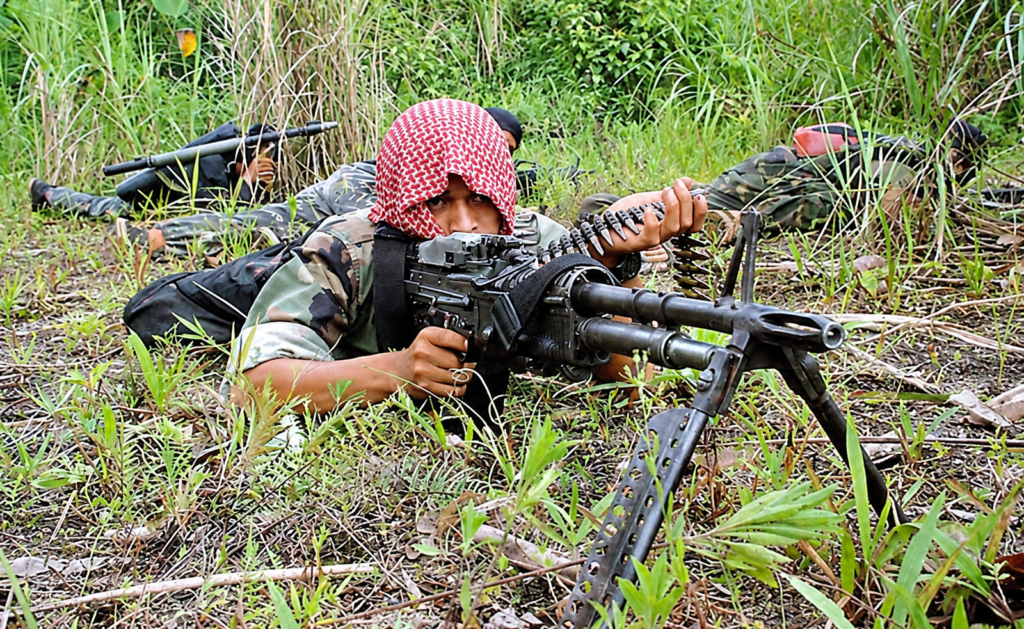
A Mindanao Islamic Liberation Front (MILF) fighter in 1999. (Keith Kristoffer Bacongco)
The Philippine Commission on Elections reports 95% completion of election requirements. The technical infrastructure for a successful election day is in place with the ballot printing finished, voting technology security-tested, and regional security control centers operational across all five provinces. However, security remains one of the biggest concerns facing the upcoming polls. Elections in Mindanao are historically tainted by periods of violence and clashes between local political rivalries and clan feuds (rido), spiking conflict and displacement in the region.
The campaign period exposed vulnerabilities in BARMM with at least 10 recorded gun-related incidents during the first two weeks of campaigning. Despite substantial security deployments–almost 10,000 police personnel, three Armed Forces of The Philippines battalions, and a nationwide gun ban–a high-profile ambush targeted the chief minister’s convoy last August 15. Provincial offices report force levels stretched across remote precincts. The Philippine National Police Chief assures that the security situation remains stable, especially after the Philippine government and the MILF’s recent signing of a Memorandum of Agreement committing to peaceful and orderly elections.
Security threats and voter confusion compound electoral risk simultaneously. In 2024, almost 60% of likely voters had no knowledge at all of the new electoral procedures. Proportional representation mechanics remain poorly grasped among rural constituencies. To combat widespread confusion on how the parliamentary ballot works, expanded voter education campaigns were rolled out in 2025 with an educational resource kit distribution in 2026. The United Nations Development Programme (UNDP) is supporting the BARMM in deploying inclusive, transparent, and tech-enabled electoral processes alongside targeted community-based voter education drives.
Average comprehension scores in remote provinces rose from 38% to 70%, while urban centers like Marawi and Cotabato achieved 95-98%. Voter preparedness could undermine the credibility of results, even if the election itself proceeds without disruption. If COMELEC accelerates voter education in underserved areas and security protocols hold steady, BARMM can deliver elections that voters understand and accept as legitimate. Whether the region achieves credible elections depends on maintaining momentum on both fronts simultaneously as the region enters the final campaign days.
Three Markers of Electoral Success
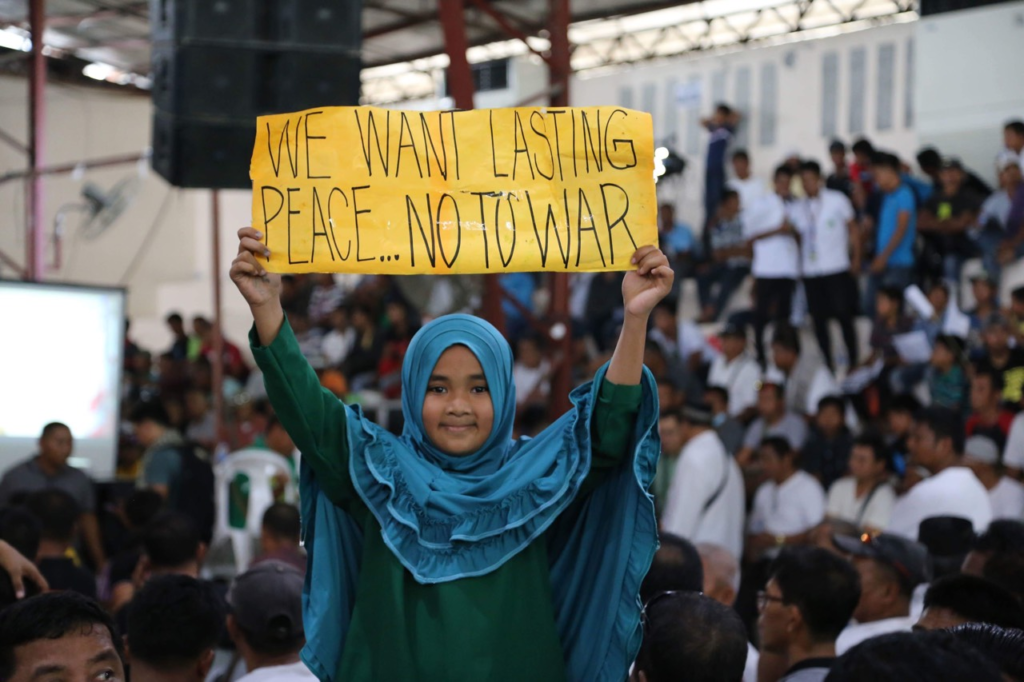
Bangsamoro citizens gathering to bid for the passage of the Bangsamoro Basic Law (BBL) during the Congressional hearing on the proposed bill in the Buluan Municipal Gym in Maguindanao in March 2018. (Office of the Presidential Adviser on Peace, Reconciliation and Unity)
As voters prepare for September 14, observers face a deeper question of what a successful election in BARMM looks like. First, a successful BARMM election would show that its foundational design principle–inclusive representation–translates into electoral outcomes. The Bangsamoro peace process is known for the unprecedented involvement of women as peace negotiators and signatories. The Bangsamoro Organic Law established inclusivity as a cornerstone, mandating sectoral representation for women, youth, religious leaders, traditional leaders, settler communities, and non-Moro Indigenous Peoples. The Bangsamoro Electoral Code mandates a 30% quota for women nominees and mandatory Women and Youth Committees. However, current data suggests such progress may not reflect in real life. Women comprise the majority of BARMM’s electorate but represent only 31.1% of candidates, exactly 196 out of 631 total candidates and nominees. Single-district races remain dominated by traditional male leaders. Structural barriers such as limited campaign financing, exclusion from political networks, and social pressure in conservative areas like Maguindanao constrain women’s participation beyond quota compliance.
Women’s participation matters in post-conflict governance. Evidence from Aceh, Indonesia’s autonomous province two decades into its democracy experiment suggests that regions where women consolidate political power develop more durable conflict-resolution mechanisms and higher satisfaction with governance. Conversely, regions where women occupy seats without power often experience regression toward patronage politics and factional violence. It is highly likely that the new BARMM government will be overwhelmingly male but those women who will be seated can pave the way for future legislative cycles where substantive representation becomes possible.
Success also requires voters to perceive the Parliament as genuinely representing their communities’ interests. Two former armed groups now compete electorally: the Moro Islamic Liberation Front (MILF) and Moro National Liberation Front (MNLF) who have transitioned from insurgency to electoral politics. MILF-affiliated candidates dominate party lists, raising concern that voting will simply legitimise MILF dominance rather than distribute power. The MNLF representation splinters further with one faction backing Labor Minister Muslimin Sema, the other loyal to founder Nur Misuari. Settler communities holding a minority of BARMM’s population field few candidates while indigenous candidates were selected through tribal processes instead.
If the Parliament is filled predominantly with former MILF commanders, communities outside MILF could question whether the vote is actually representative or just reflective of the existing group hierarchy. Early campaign messaging reveals competing visions: MILF candidates emphasise development and institutional building; MNLF candidates stress resource equity and combatant integration; and settler candidates highlight security guarantees and land rights protection. Social cohesion has always proved a challenge among the diverse communities in BARMM. A successful election would mean delivering on these competing promises or at minimum establishing accountability mechanisms where each community can demand results from their representatives.
Lastly, success means delivering economic development and good governance in a region long marked by conflict, violence, and poverty. Philippine President Marcos emphasised that his priority is ensuring BARMM succeeds as an autonomous government capable of delivering services and improving lives, asserting the election’s outcome as beneficial for the entire Philippines. Realising that vision requires both governments to deliver on peace agreement commitments. The government promised demobilised MILF combatants socio-economic packages including cash, health insurance, housing, education, and livelihood support. Manila must follow through on these obligations lest grievances among former fighters could destabilise the region. Meanwhile, the MILF must prevent internal factions from fracturing its political base.
It is important that BARMM and the Philippine national government strengthen mutual commitment and trust-building to capture the political gains of the elections. For Manila, success ultimately means the election proves autonomy is viable and stable as a governance model. It will serve as a de facto referendum on the peace process and define BARMM’s political and economic trajectory for years to come.
What the BARMM Elections Means for Southeast Asia
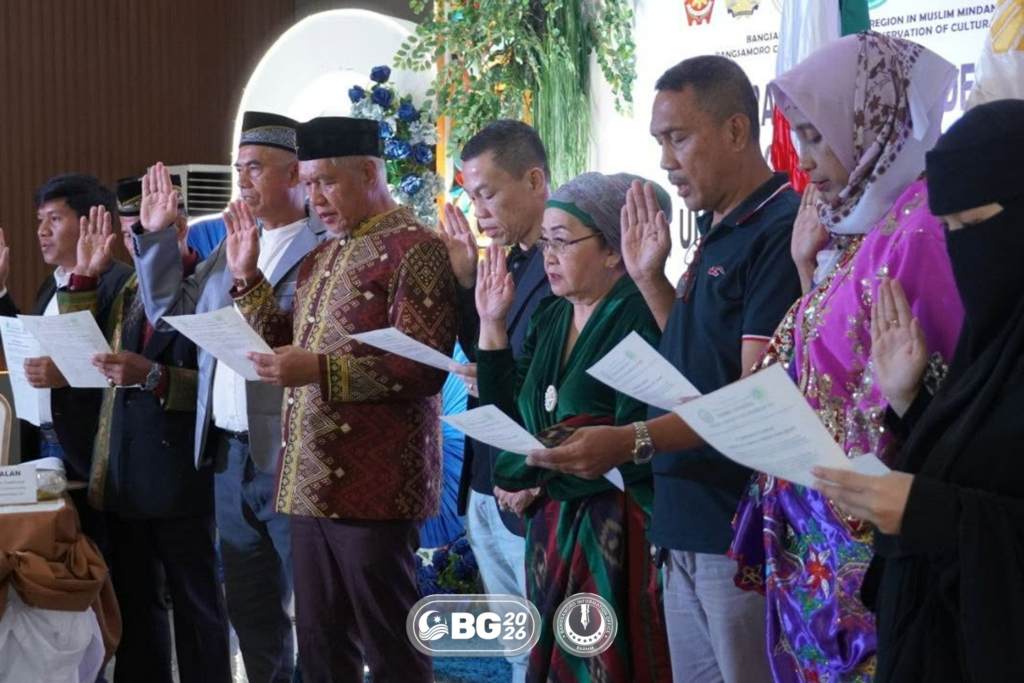
Traditional leaders’ sector from BARMM pledge their commitment during the Traditional Leaders’ Covenant for Peaceful and Credible 1st BARMM Parliamentary Elections in Cotabato City on July 16, 2026. (Bangsamoro Autonomous Region in Muslim Mindanao Government)
The significance of the BARMM elections extends beyond the borders of the Philippines. Questions of self-determination, territorial autonomy, and political recognition remain deeply contested across Southeast Asia. In several parts of the region, decades of conflict have pushed governments and armed movements between military confrontation and peace negotiations, with varying degrees of success in reaching lasting political settlements. For enduring peace, economic development and democratic institutions create the enabling foundations for peaceful coexistence in Southeast Asia’s plural societies.
The experiences of Aceh in Indonesia, southern Thailand, and Myanmar show that the transition from armed conflict to political participation is rarely straightforward and that formal autonomy alone does not guarantee inclusive or durable peace. BARMM, nonetheless, can provide a useful point of comparison for other conflict-affected regions seeking a way forward.
Aceh provides the closest regional comparison. Aceh and Bangsamoro represent the two major modern experiments in Islamic-adjacent regional autonomy and post-insurgency transitions in Southeast Asia. Both emerged from prolonged separatist conflicts in Muslim-majority regions, with peace frameworks for greater self-government. Two decades after the 2005 Helsinki Peace Agreement, the province gained control over its political and economic affairs with former combatants from the Free Aceh Movement (GAM or Gerakan Aceh Merdeka) entering politics. Despite substantial special autonomy funds, the province remains one of Indonesia’s poorest regions. Post-conflict governance in Aceh and Bangsamoro face similar pitfalls of entrenched patronage networks, kinship-based power, and the misuse of religion to legitimise power. Aceh’s experience shows the possibilities and limitations of such a transition while the BARMM elections can explore different autonomy arrangements possible to avoid the political concentration and exclusion that have emerged in Aceh.
Southern Thailand is a different case because it goes without the institutional framework that BARMM and Aceh developed through negotiated peace agreements. No comparable settlement governs Bangkok’s relationship with the Barisan Revolusi Nasional (BRN), and violence continues despite Malaysian-facilitated peace talks. Adding to Southern Thailand’s grievances, patriarchal structures in both state security frameworks and local conservative leadership have systematically left women out of formal political and mediation spaces. Minor breakthroughs–such as the landmark appointment of the region’s first female Muslim governor in Pattani and local women-led reconciliation efforts–offer glimpses of alternative approaches. With over 7,800 deaths since 2004 in Southern Thailand, BARMM’s integration of women in peace and security can inform how post-conflict frameworks can embed inclusionary politics. What matters for Thai-Malay women is that BARMM shows it is possible for women to take up political space even within patriarchal societies. Should BARMM prove that women’s political integration strengthens post-conflict governance, the model could influence how Thai women’s groups approach future negotiations and demand meaningful inclusion in any settlement.
Lastly, Myanmar presents a more difficult comparison given its fragmented conflict environment and absence of central government legitimacy following the 2021 military coup. More than 20 major ethnic armed organisations (EAOs) held more than one-third of territorial control even before the coup. Myanmar is one of the poorest and least developed countries in the region with nearly half of its population living in poverty due to cycles of economic mismanagement and ongoing conflict. BARMM could shed light on one concrete reference point through its normalisation process, which linked the decommissioning of MILF combatants and weapons to socioeconomic assistance, including livelihood, housing and education support. Manila’s follow-through on these promises will signal to Myanmar’s EAOs if negotiated settlements can actually produce tangible economic benefits that will reach all groups. Historically, however, ceasefires in Myanmar have failed because economic benefits were treated as transactional bargaining chips.
Even if economic benefits and reconstruction packages can provide powerful incentives for peace and are an important pillar of post-conflict stabilisation, the underlying causes of conflict cannot be addressed without credible institutions for sharing power. In BARMM’s case, the Philippine government and MILF had to manage the military, economic, and political dimensions of demobilisation together. If BARMM demonstrates that former combatants can receive the benefits promised and see meaningful improvements in their communities, Myanmar’s armed organisations may have greater reason to view peace negotiations as a viable alternative to continued armed struggle.
What Comes After September 14
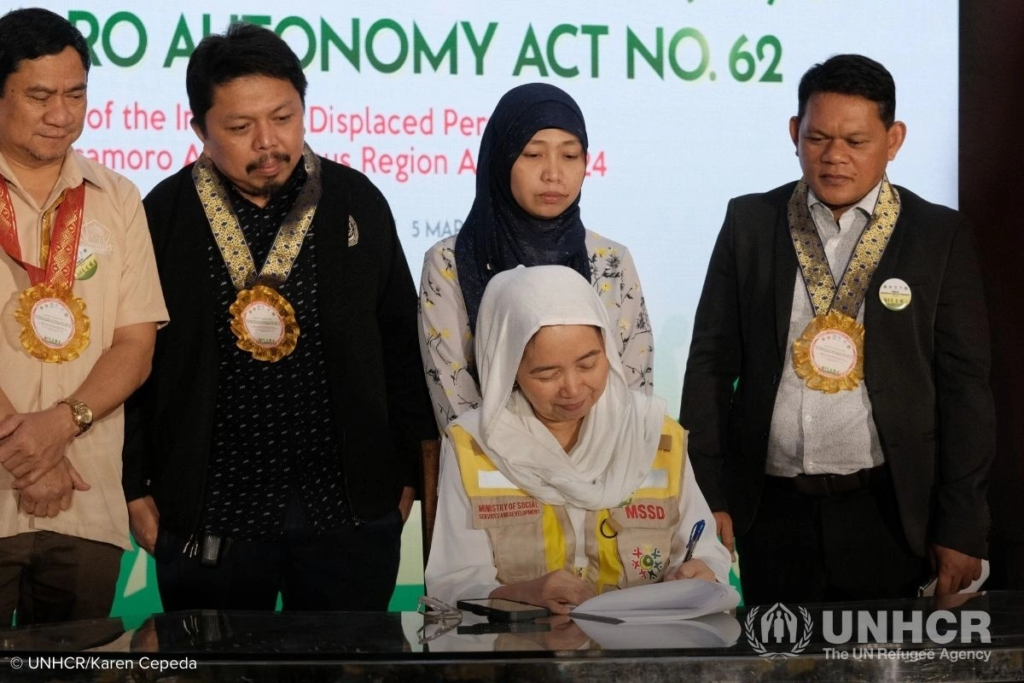
BARMM officials during the signing of the Implementing Rules and Regulations of the Bangsamoro Autonomy Act in April 2025. (UNHCR)
The Bangsamoro’s first parliamentary election is a high-stakes test of whether autonomy can translate a peace settlement into a functioning, representative political order. The newly elected Parliament will wield genuine legislative authority to tax the region, allocate resources, shape security policy, and set BARMM’s development direction. For women, Indigenous peoples, settler communities, former rebels, their ability to shape these decisions will offer an important indication of whether the commitments made during the peace process carry through into governance.
Southeast Asian regions confronting questions of self-governance can pick up lessons from BARMM about the political conditions needed to sustain autonomy after conflict. The durability of the Bangsamoro peace process will depend in part on how this new political system performs in practice, and whether people across the region come to see it as truly representative, responsive, and worth sustaining.
About The Author