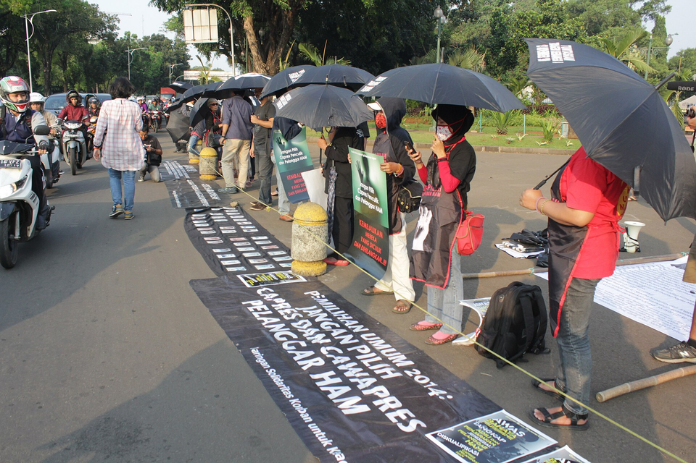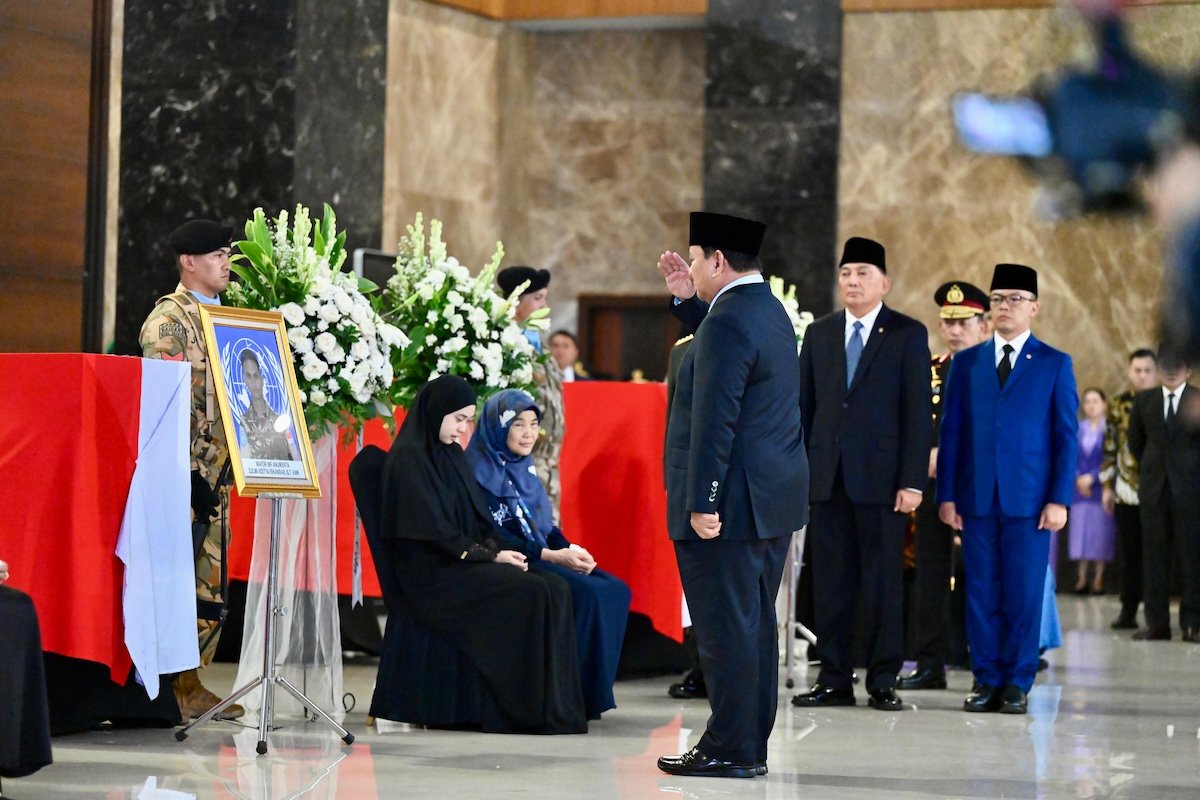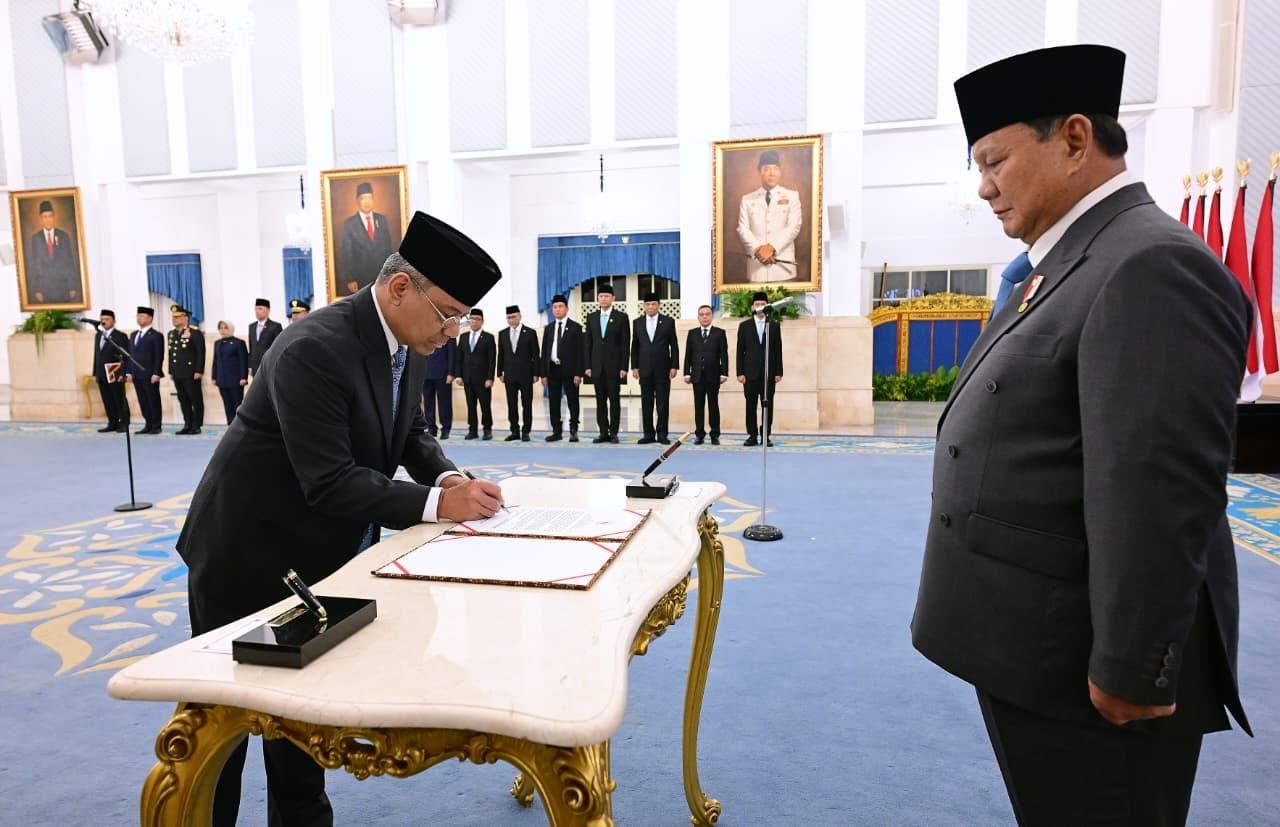
A free nutritious meal kitchen (SPPG) at Jenderal Besar Soedirman Air Base. It distributes thousands of free nutritious meal packages to students from kindergarten through junior high level in Purbalingga in Central Java, October 16, 2025. (TNI AU)
On June 9, the Indonesian House of Representatives passed the third amendment to the Police Law, sparking intense debate among the public and academia. One particular concern is that the new law will disparage the country’s longstanding Reformasi (literally meaning “reform”) attempt and revert to the legacy of the New Order.
Between 1966-1998, Indonesia’s second president, Soeharto, practically ruled the country in an authoritarian system in a period later known as the New Order. Following the fall of his regime in 1998, Reformasi attempted to introduce a clear benchmark for dismantling the authoritarian structure of the old administration. The post-Reformasi settlement established a fundamental restructuring of executive, legislative and judicial powers through direct elections, regional autonomy, human rights protections and the rule of law. For investors, it also introduced a more transparent and predictable governance environment.
One of Reformasi’s most important agendas was to remove the dual function of the armed forces, which were involved not only in state security but also in practical politics under the New Order. Under the incremental framework of security sector reform (SSR), the police (Polri) were separated from the military (TNI) and both were prevented from entering the civilian-led government. However, under the current president, Prabowo Subianto, many new policies seem to reverse this power separation, which might lead to the return of the security actors to civilian spaces.
The New Statute for the Men in Uniform
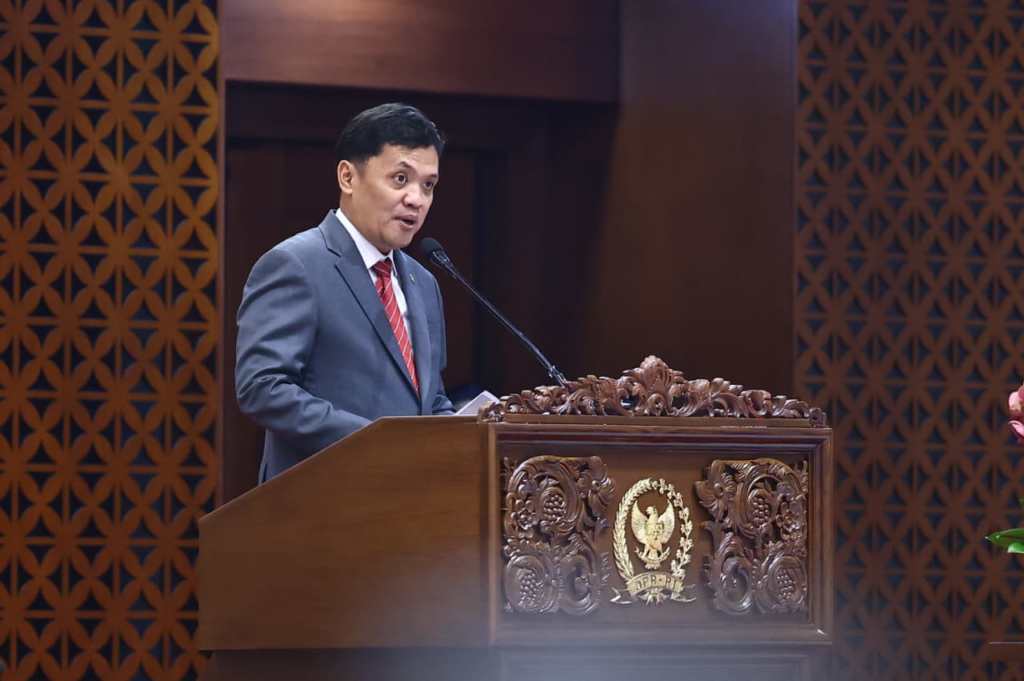
House Commission III Chair Habiburokhman delivers the commission’s report on the Police Bill during a plenary session at Nusantara II, Senayan, Jakarta, Tuesday, June 9, 2026. (DPR/Farhan/Andri)
One particular manifestation of this tendency is the introduction of new laws related to the military or the police. The revision of TNI Law No. 34/2004 illustrates the structural backsliding most clearly. The most widely criticised provision permits active-duty military officers to serve in fourteen civilian agencies, including the State Attorney General’s Office, the National Counterterrorism Agency (BNPT) and the National Cyber and Crypto Agency (BSSN). Beyond the immediate issue, assigning active military personnel who lack technical expertise in these areas may create institutional discrepancies, risks undermining the specialist effectiveness of each body.
Alongside this, the revised TNI Law also expands the scope of Military Operations Other Than War (MOOTW), allowing the military to handle a crisis or state of emergency across in six different task areas: (1) neutralising domestic threats like separatism, rebellion and terrorism; (2) securing national borders and vital strategic objects; (3) protecting VVIPs including the President, Vice President and state guests; (4) executing humanitarian missions such as disaster relief and Search and Rescue (SAR) operations; (5) assisting the police and local governments in maintaining public order; and (6) deploying troops for international peacekeeping operations. Coupled with the increase in the mandatory retirement age for high-ranking officers, these provisions have strengthened the military’s institutional capacity. As of the latest available data, 2.569 active military officers sit in multiple agencies and ministries.
A similar pattern is visible in the controversial June 2026 revisions to the Police Law (UU Polri). Passed under the speedy legislative timetable, the amended law increases the retirement age for all personnel ranks—lower-enlisted personnel (tamtama) and non-commissioned officers (bintara), as well as high-ranking officers (perwira)—to 59 and 60 years old, respectively. Exceptionally, the Police Chief’s term may be extended at the president’s discretion. The law also allowed approximately 300 Polri personnel to occupy managerial or structural positions outside the police institution itself.
Moreover, the new Polri Law extends the police’s authority to participate in national legal development, oversee cyber domains, and to “carry out other duties in accordance with the provisions of laws and regulations”, the latter risking overextending the police’s capacity in national institutions. More importantly, it demonstrates how participation in broader duties risks overlapping with other institutions, such as the National Legal Development Agency (BPHN) under the Ministry of Law and Human Rights.
The law also grants the Polri authority to “protect and secure national vital objects, including important installations, strategic natural resources and activities that have a significant impact on national stability”, a mandate that risks securitising development and displacing local and indigenous communities and legal entities in the process.
Soldier and Police Behind the Desk
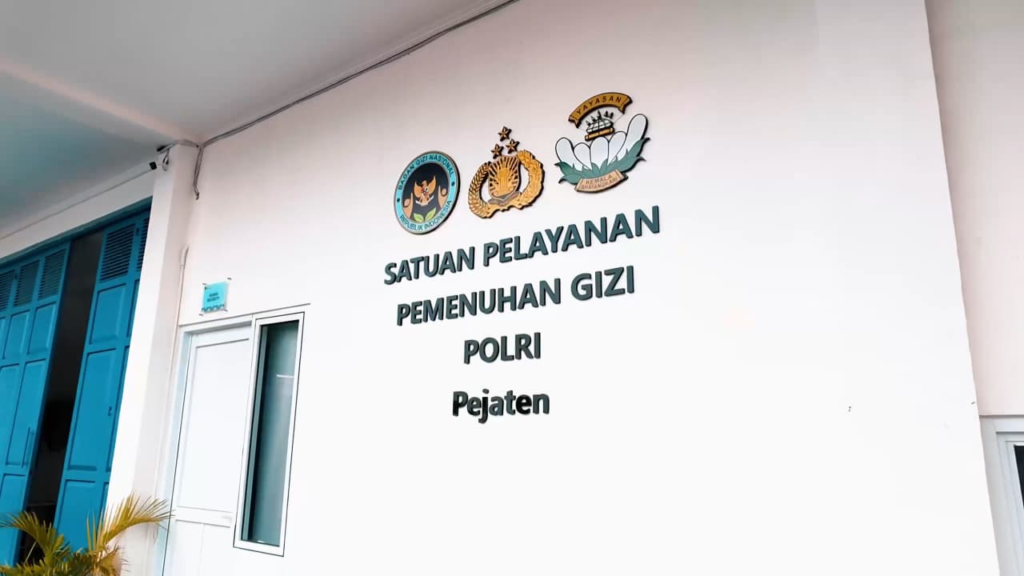
A police-owned free nutritious meal kitchen (SPPG) Pejaten in Jakarta has distributed about 3,400 meals daily to 10 schools, within the minimum threshold of 3,000 and maximum of 4,000 portions. (Polres Ternate)
Security institutions have already invested in the Prabowo administration’s flagship programmes—most importantly, the Free Meal Programme (MBG), national food self-sufficiency projects and the newly formed Territorial Development Infantry Battalions (BTP).
The Free Meal Programme (MBG)
Included as a strategic national project for the 2025-2029 presidential term, MBG meticulously involves the security institutions, from Polri, TNI, as well as the State Intelligence Agency (BIN), tasked with ensuring the programme’s effectiveness and supply security. The involvement of the security institutions was formally approved by the president himself. Notably, the police have also been granted authority to operate numerous MBG kitchens, despite food service management falling outside their core institutional expertise.
The resource commitment is significant as these security institutions are investing huge resources, land and personnel into the programme. Throughout Indonesia, Polri operates 1,072 MBG kitchens (SPPG), 18 food security warehouses and is constructing 107 nutrition fulfillment service units. Similarly, TNI owns 452 SPPG units across the country.
Food Estate and Agricultural Self-Sufficiency
TNI is also involved in several food estate projects, including opening lands for the production of rice, bioethanol, garlic, corn and shallots, as well as palm oil plantations to supply Indonesia’s biodiesel (B50) programme, where the government mandates the mixing of oil with plant-derived fuel. These projects span the provinces Aceh, Lampung, Central Kalimantan, North Kalimantan, South Sulawesi, Central Sulawesi, Southeast Sulawesi and Papua.
Directed by the high-level collaborative documents and presidential directives, the Ministry of Agriculture and the TNI Headquarters—particularly the Army and several regional heads of regencies—jointly oversee regional plantations. In a similar manner, Polri also received a mandate in the self-sufficiency projects, including the simultaneous corn planting program on January 19, 2024, and was given a quota of 1.7 million hectares.
The Territorial Development Infantry Battalions (BTP)
One precarious development under Prabowo Subianto’s administration was the formation of the Territorial Development Infantry Battalion (Yonif TP or BTP). Formally launched by the president on August 10, 2025, BTP embeds the MOOTW doctrine directly in regional development policy.
BTP’s primary mandate is to secure food reserves and build infrastructure in remote areas, as well as to secure National Strategic Project (PSN) sites. Diverging from standard warfare functions, BTP units include specialised internal components: Agriculture and Livestock Companies, Engineering and Construction Companies and Medical Companies. Unlike traditional infantry soldiers, active-duty officers in each BTP are cross-trained to serve as farmers, builders and medics. The soldiers from Yonif TP 801, 802, and 803 in South Papua, for example, operate massive excavators to clear forests for a 1-million-hectare mega-rice project and construct waterways.
Overall, there are 155 BTP across Indonesia, with the government pledging to build 150 BTP each year, aiming to establish 514, equal to the total of districts/cities nationwide. Ideally, the presence of each battalion will cover one district, contributing to social cohesion and stimulating economic activity through community interaction. Furthermore, the Ministry of Defence intends to fill each battalion with 500 to nearly 1,200 active soldiers, depending on the capacity and aerial size.
Governing Through A Chain of Command
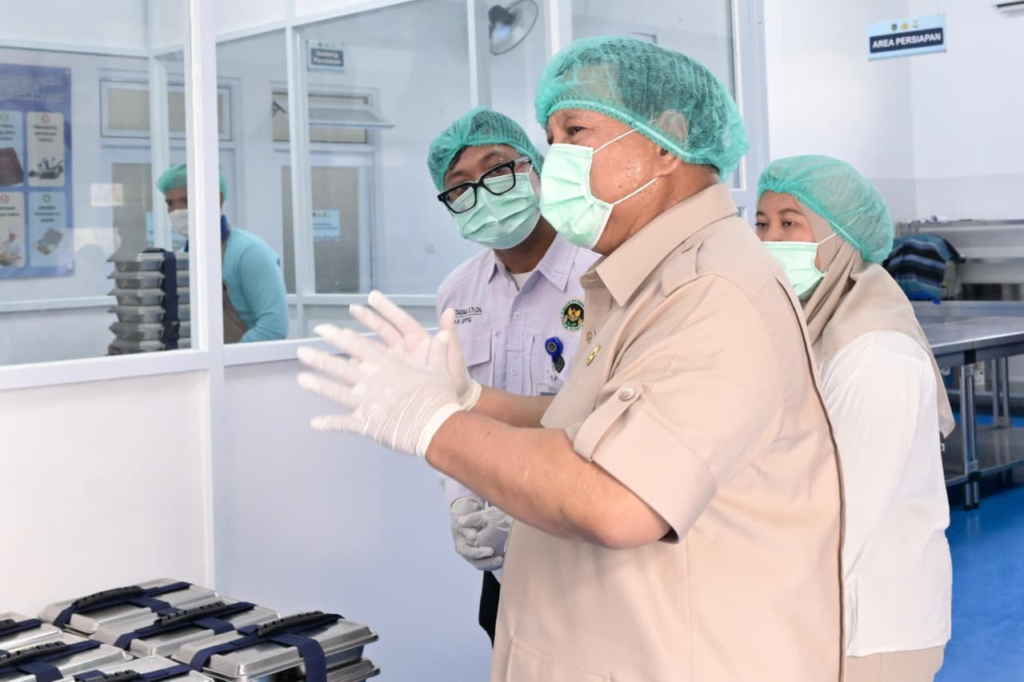
President Prabowo Subianto inspects a free nutritious meal kitchen (SPPG) in Palmerah, Jakarta, on June 2, 2026. (BPMI Setpres)
The institutional expansion described above reflects the state’s broader turn toward securitisation: a political process that frames administrative and social issues as an “existential national security threat.” When public policy is securitised, the consequence will be fundamental for democratic accountability and balance mechanisms are potentially irreversible. The growing security officers’ presence in public life also undermines transparency and accountability. Fundamental scarcity of data for public access means details on any progress or decline of a particular project are hard to find.
Moreover, the involvement of security officers in the civilian programme risks hollowing out the state bureaucracy. As a form of institutional governance, bureaucratic governance provides public service delivery through monitoring procedures, regulatory compliance, rules-based accountability and rules. Through bureaucratic mechanisms, a set of rules that may facilitate society-state-market interactions, development practices will be accommodated. However, the overriding men in uniform may bypass strict regulatory regimes. Therefore, the deployment security officers are for the sake of “developmental efficiency.” Oftentimes, the involvement of security apparatuses bypasses environmental impact assessments, labour rights and public consultations. This characterises the lack of transparency and civilian scrutiny.
For example, the Merauke food estate project in South Papua reportedly lacks an Environmental Impact Analysis document, which is a legal prerequisite under Government Regulation No. 22 of 2021. Apart from negligence of regulatory frameworks, the excessive use of force by the security apparatuses against indigenous communities in several places signifies a direct contravention of their rights under Indonesian law, international standards (particularly the ILO Convention 169), the UN Declaration on the Rights of Indigenous Peoples (of which Indonesia is a party) and the principles of healthy foreign investment (FDI).
On the rule of law, government oversight institutions, such as the Supreme Audit Agency (BPK) and the Corruption Eradication Commission (KPK), will face a mounting difficulty when attempting to examine or audit military-affiliated projects. Unlike ordinary civilian entities, the military has its own justice system. If there is a corruption case involving uniformed officers, KPK or BPK cannot simply conduct a raid or a sting operation. This structural loophole may create space for impunity and give the offending officers an escape from transparent prosecution based on civil law.
Consequently, expanded military authority over economic programmes produces a serious risk to accountability. Opaque institutional regulations, insulated from independent audit and control, erode institutional predictability that investors require. Subsequently, this scares away foreign investors who seek stability and certainty, disturbing the prospective domestic economic trajectory and growth. The cycle is clear: military authority over the economy weakens regulatory frameworks; the loss of accountability erodes investor trust, and the erosion of investor trust will drop economic growth.
If TNI and Polri are continuously tasked with implementing civilian programmes, a simple debate over a free meal programme or the environmental destruction of food estate projects will not be treated as a mere disagreement, but rather a security threat. Consequently, this will lead to a dichotomous category of threat and its antidote. Eventually, civil society groups, NGOs, or journalists who criticise the programmes are no longer treated as “citizens holding the government accountable.” Instead, they risk being labelled as an enemy to national development or “anti-state”.
These increased militarisation and securitisation of public spaces preserve the old legacy of the New Order. Ideally, under a democratic framework where security institutions serve under strict civilian oversight, the Indonesian public is granted rights to hold accountability of government-run projects. However, under the new revised regulations, security officers are posed more like club makers, stepping over legal certainty for the sake of accelerated development.
This phenomenon reflects a wider pattern of President Prabowo’s increasing reliance on security officers. Although the deployment of the military and police in development programmes may deliver short-term gains in efficiency, it risks undermining accountability, weakening civilian control and expanding the political and administrative influence of security institutions over the long term.
For business and investors currently operating or considering the archipelago, the threats are concrete. One reason is regulatory compliance, which assumes civilian oversight. Furthermore, the unclear Environment, Social and Governance (ESG) standards applied by security forces exacerbate this uncertainty. Indonesia’s economic potential remains relevant. However, realising that the current threats must rely on legal certainty and compliance with international standards.
Reformasi signifies an inseparability between democratic governance and long-run prosperity. Therefore, is Indonesia able to meet all the transparency standards as a prerequisite for healthy investment?
About The Author