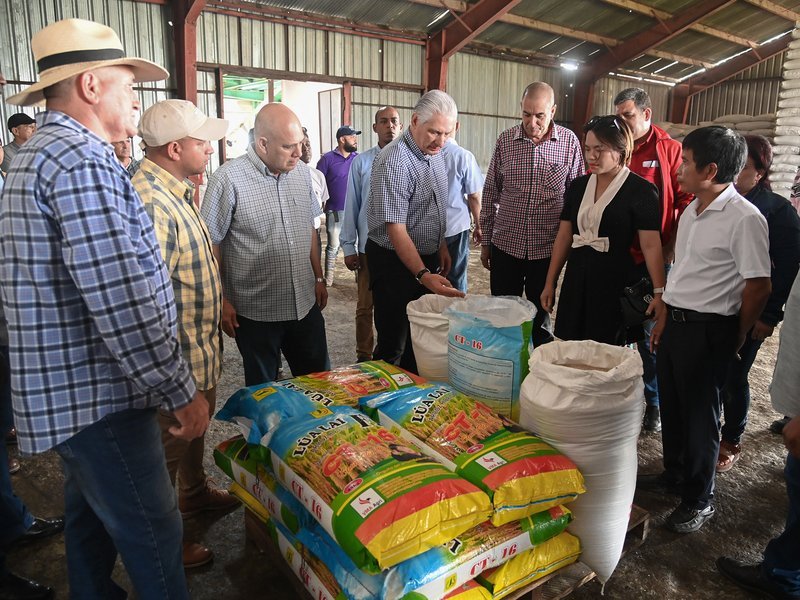
Lao people stand in an agricultural field, where 15% of the population lived below the national poverty line in 2024. (Asian Development Bank)
On June 16, the Lao Ministry of Finance, alongside multi-sectoral authorities, held a meeting in Vientiane to review and discuss the newly drafted National Agenda for Rural Development and Poverty Alleviation.
The document outlines five key priorities, including the upgrading of rural infrastructure and public services such as roads, clean water systems, telecommunications, irrigation, electricity networks, healthcare and education institutions.
It further targets the creation of stable jobs and the boosting of incomes by cultivating the country’s backbone sector through intensive agriculture, integrated farming and commercial crop production.
Meeting participants scrutinised the draft to ensure it is relevant and properly harmonised with national priorities. The overarching goal is to elevate rural development and poverty eradication to a coordinated national agenda, ensuring all policy measures strictly align with sector priorities and cross-government directives.
For context, this review follows an intensive series of technical-level consultations spearheaded by the Ministry of Agriculture and Forestry. This assessment will finalise the framework, which will subsequently be sent for consideration and approval to the Lao National Assembly.
What does this mean for business?
A recent 2025 poverty assessment revealed that 14.78% of households, 25.83% of villages, and 44.59% of districts nationwide remain affected by poverty. While these metrics indicate a gradual downward trend in overall national poverty headcounts, the disproportionately high district-level figure exposes severe, lingering geographical disparities between urban centres and remote provincial regions
For engineering, construction, and utility firms, the state’s focus on rural infrastructure translates directly into upcoming public procurement tenders for roads, clean water and electrical grids. Concurrently, the prioritisation of commercial agriculture unlocks significant opportunities for agribusinesses to invest in local processing, storage and supply chain logistics. Ultimately, as these high poverty rates are systematically lowered, businesses will gain access to a rapidly formalising rural consumer market, a more resilient local supply chain, and a highly skilled, stable workforce.
Kala Advisory helps investors move on rural infrastructure and agribusiness openings like these across Southeast Asia. Visit kala-advisory.com.
About The Author