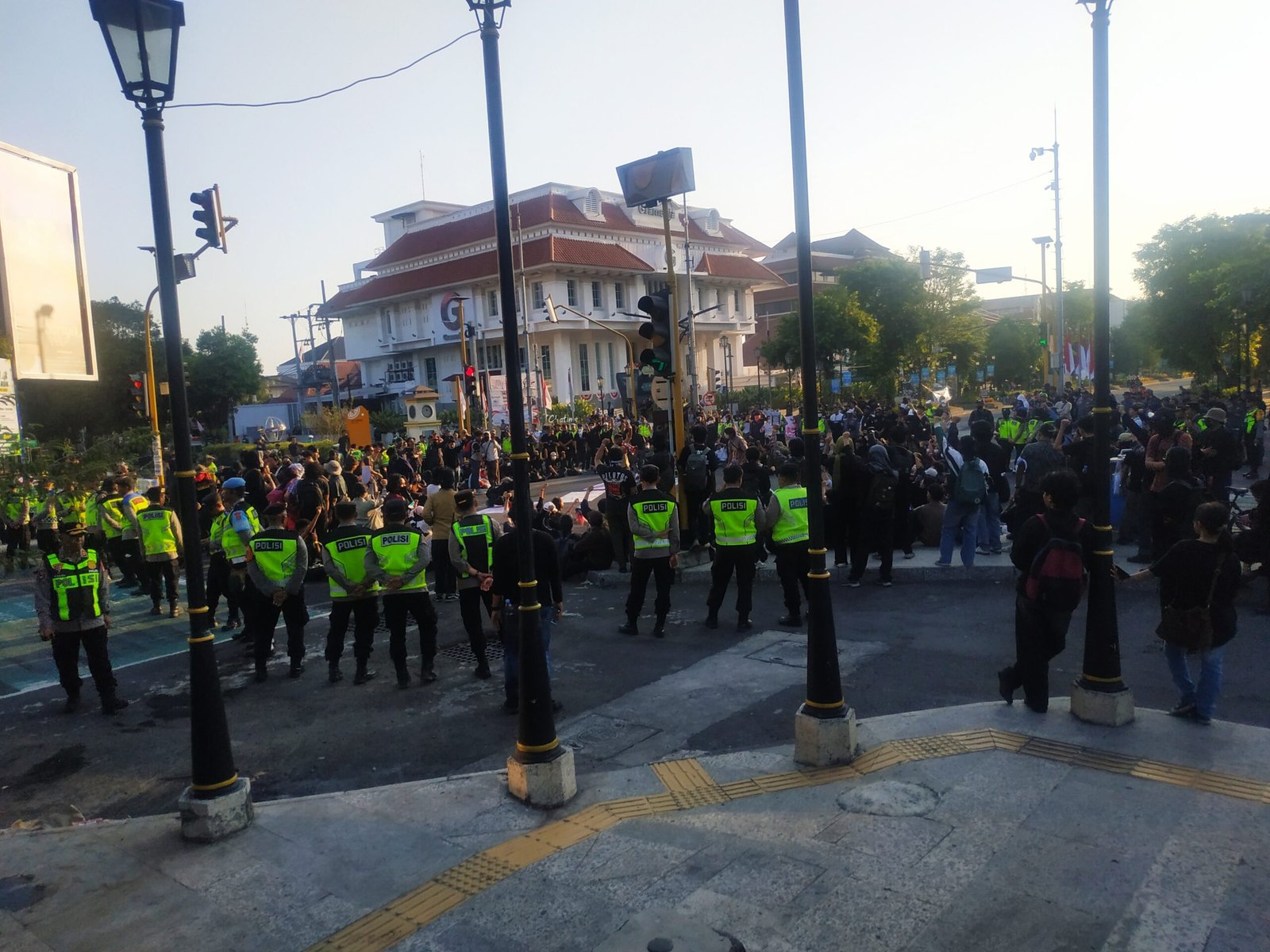
A press conference on the proliferation of online gambling platforms leading to the FIFA World Cup 2026 on May 10, 2026. (Indonesian National Police)
A recent police raid in Jakarta uncovered a large online gambling operation involving 320 non-Indonesian nationals and dozens of gambling website\s. The case quickly drew national attention because of the international scale of the network. Yet beyond the immediate law-enforcement response, the incident may signal something larger: Indonesia’s growing presence within a regional landscape of online gambling operations across Southeast Asia.
For much of the past decade, several countries in the region served as major bases for online gambling and scam operations. In particular, Cambodia and parts of Myanmar became widely known as hubs for these activities. Many of these operations were concentrated in casino towns and special economic zones such as Sihanoukville, where gambling complexes and online platforms flourished alongside rapid real-estate development. Investigations by journalists and international organisations have described an ecosystem involving organised crime networks, large-scale cyber fraud and in some cases the trafficking of workers forced to operate online scams or gambling platforms.
However, the geography of these operations has begun to shift. In recent years, authorities in Cambodia have faced growing international pressure to dismantle scam compounds and tighten regulations surrounding online gambling businesses. Crackdowns, raids and regulatory reforms have disrupted many operations that once operated openly in casino hubs and special economic zones. Yet organised crime rarely disappears when enforcement intensifies. Instead, these networks often relocate, seeking new jurisdictions where they can rebuild their operations.
When authorities disrupt one operational base, criminal networks adapt by moving their activities elsewhere rather than abandoning them entirely. Similar patterns have been documented in illicit industries ranging from drug trafficking to cyber fraud. Within Southeast Asia, this has meant that the centres of online scams and gambling operations can shift across borders depending on enforcement pressure and economic opportunities.
Against this regional backdrop, the Jakarta case raises questions about whether some of these networks are beginning to expand or relocate into Indonesia. Several indicators suggest this possibility. The presence of foreign nationals operating gambling platforms indicates that the network was not purely domestic. At the same time, digital infrastructure allows operators to run websites, manage payments and coordinate workers across multiple countries. Indonesia’s large internet population and rapidly expanding digital economy may therefore make the country both a lucrative market and a convenient operational base.
As Southeast Asia continues to grapple with the growth of online gambling and scam operations, the key challenge may lie in preventing criminal networks from simply moving from one jurisdiction to another. Without coordinated regional responses, each crackdown risks pushing these syndicates to their next destination. In that sense, the question raised by the Jakarta case is not only about law enforcement in Indonesia, but about how the region as a whole responds to the constantly shifting geography of the criminal networks.
About The Author