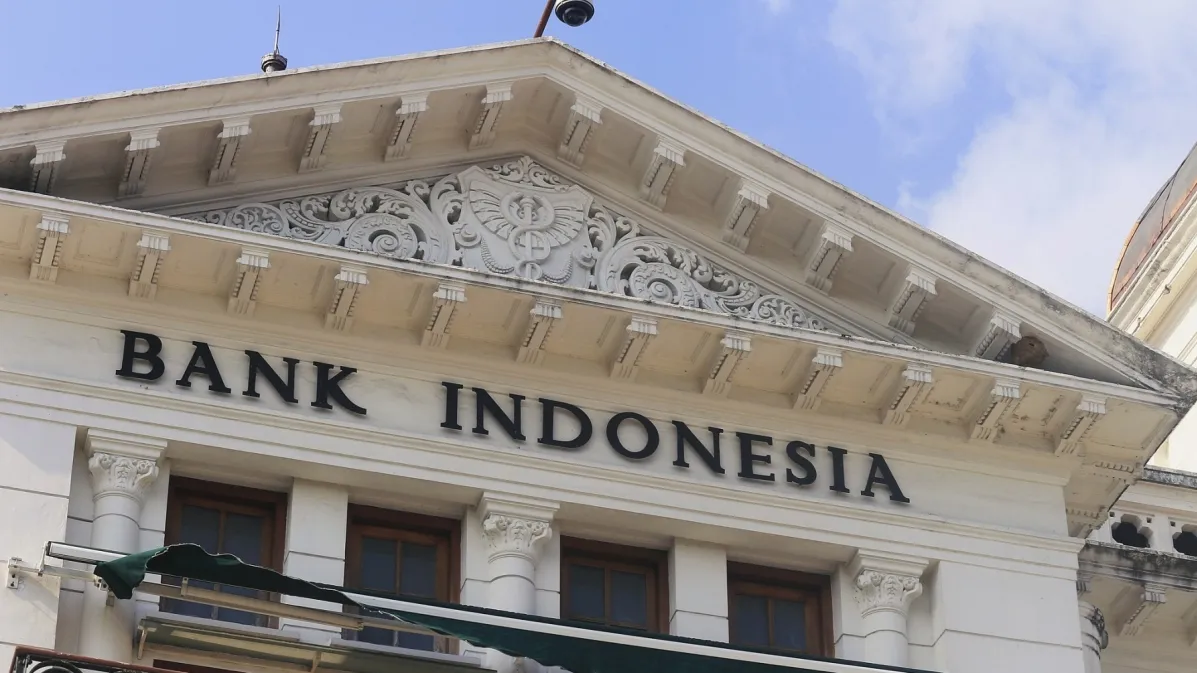
The Indonesian Central Bank building in Yogyakarta. (Wikimedia/Aldi Fauzan)
Following the announcement of the US-Iran peace agreement on June 15, a wave of confidence swept through the global market, including Southeast Asia’s largest economy, Indonesia. On the same day, the Indonesian rupiah saw an over-150-point appreciation, recovering from a historic low of 18,000 just a few days prior to trade at 17,700 rupiah per US dollar.
Analysts also attributed this 0.9% rally to Jakarta’s domestic measures, notably the decision by the central bank (Bank Indonesia, BI) to raise the interest rate to 5.50% during a pre-emptive meeting on June 9. This 25-basis-point increase assured foreign capital with assurance of higher investment returns (yields).
Alongside a deposit facility rate of 4.50% and a lending facility rate of 6.25%, global investors immediately reacted positively by purchasing Indonesian financial assets, absorbing a total of 26.9 trillion Indonesian rupiah (1.52 US dollars) via the sovereign wealth fund Danantara’s international obligation offering.
This optimistic response also manifested in a surge of capital inflow into BI Rupiah Securities (SBRI) and government bonds (SBN), which attracted 15.11 trillion Indonesian rupiah (850 million US dollars) on June 10, followed by an additional 3.91 trillion Indonesian rupiah (220 million US dollars) the next day.
BI Deputy Senior Governor Destry Damayanti explained that these figures signify growing investor confidence in Indonesia’s assets.
To remain highly competitive, BI also raised the interest rate structure of SRBI across all tenors (6, 9 and 12 months). In addition, a hedging initiative was introduced to offer a 10% discount for investors seeking to lock in the current exchange rate.
BI Governor Perry Warjiyo explained that this move was taken to strengthen rupiah’s exchange rate amidst persistent global uncertainty.
What does this mean for business?
As the US-Iran conflict eases, corporate confidence is returning, driving rallies across emerging currencies like the Thai baht, Malaysian ringgit and the Indonesian rupiah. However, executives should anticipate near-term rupiah fluctuations, with domestic policy acting as the core anchor.
This marks Jakarta’s first major turn of positive market sentiment this year. Consequently, corporate planners should look out for government priorities shifting toward structural fiscal discipline, as BI simultaneously collaborates with institutions like the People’s Bank of China (PBOC) and the Hong Kong Monetary Authority (HKMA) to optimize capital stability and evaluate large-budget state programmes.
Kala Advisory helps investors read shifts like these, from currency moves to changing fiscal priorities, before committing capital in Southeast Asia. Visit kala-advisory.com.
About The Author