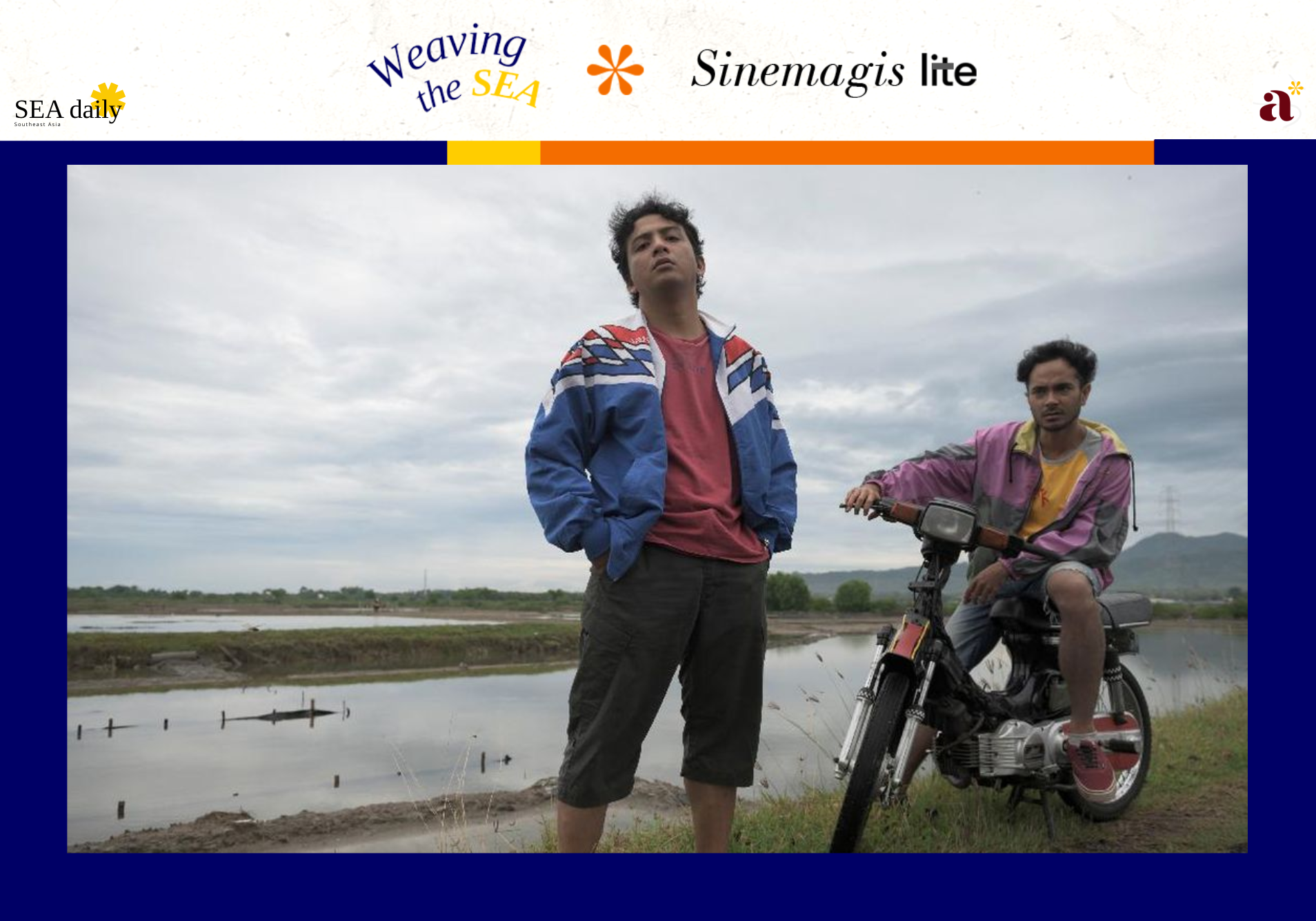
A clip from Vengeance Is Mine, All Others Pay Cash. (Palari Films)
Vengeance Is Mine, All Others Pay Cash is a dark action comedy-drama film set in the 1980s. Directed by Edwin, the film is an adaptation of the novel by Eka Kurniawan with the same title. The movie premiered at the Locarno Film Festival 2021 and became the first Indonesian film to win the Golden Leopard, the festival’s highest award. Besides Locarno, the film was also screened at several other prestigious film events, such as the Toronto International Film Festival, Busan International Film Festival and the BFI London Film Festival.
Vengeance Is Mine, All Others Pay Cash tells the story of Ajo Kawir’s revenge, an impotent tough guy who falls in love with Iteung, a female fighter. The dialogue in the film uses formal Indonesian similar to films from the 1980s. In addition, other aspects such as the staging of scenes also follow the filmmaking style of that era. Therefore, the film becomes a manifestation of the deconstruction of Asian action films from the 1980s.
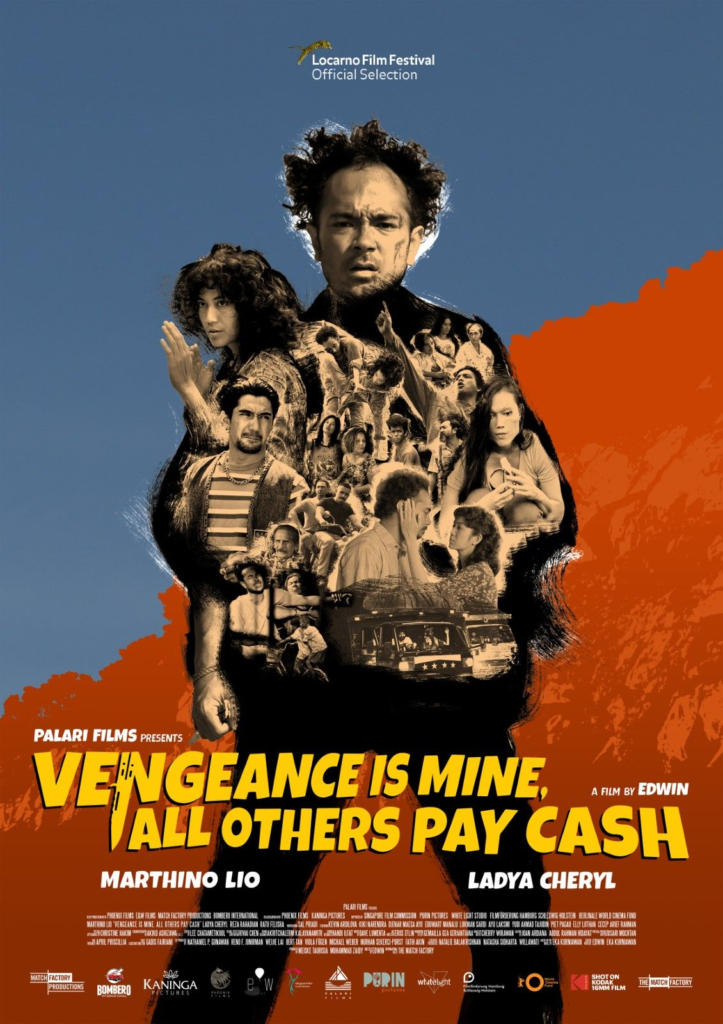
Official poster of Vengeance Is Mine, All Others Pay Cash. (Palari Films)
Deconstruction is a method of dismantling conventional boundaries or existing structures and creating new and unexpected meanings. Vengeance Is Mine, All Others Pay Cash deconstructs Asian action films from the 1980s such as A Better Tomorrow II (1987) and The Killer (1989) by director John Woo, as well as Si Buta Lawan Jaka Sembung (1984). The rather brutal action elements in Vengeance Is Mine, All Others Pay Cash can be associated with action films from that decade, which are then wrapped in local Sundanese cultural traditions, common in Indonesia’s West Java province, and complemented by mystical elements typical of Indonesia.
It is an embodiment of how the state fails to protect its citizens and how legitimisation of violence infiltrates deep into its people. The repression and domination of the regime ultimately lead to the birth of a form of masculinity whose logic is internalised by the character of Ajo Kawir. Traumatised from a young age by the depraved actions of two security officers, he grows up unwilling to confront himself and repeatedly risks his life in search of self-confidence.
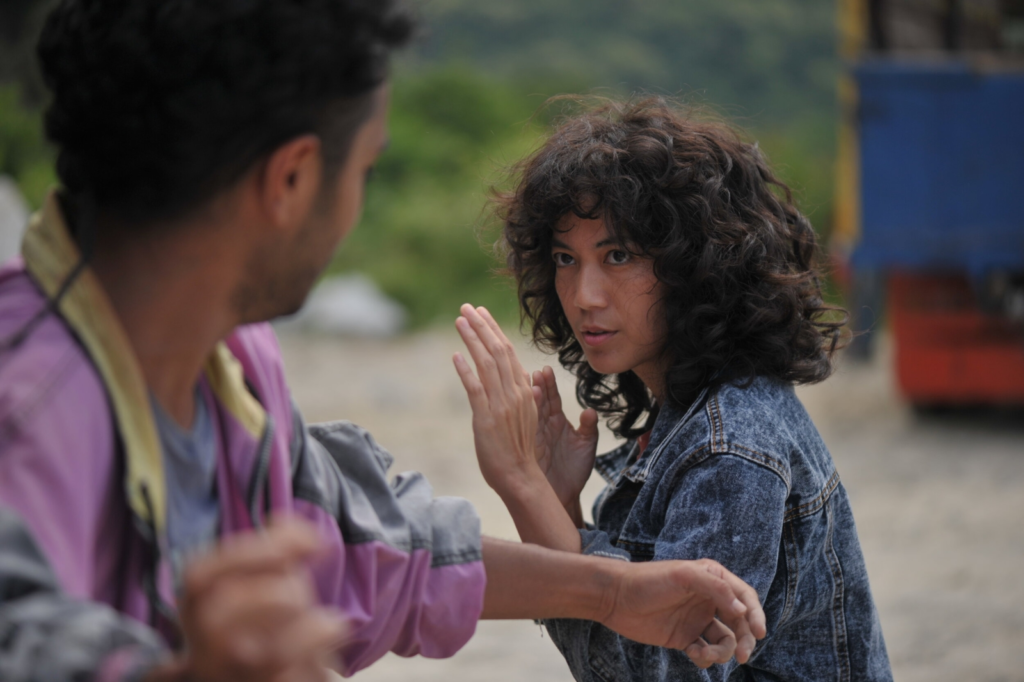
A clip from Vengeance Is Mine, All Others Pay Cash. (Palari Films)
In the end, aggressiveness and physical strength become the parameters of self-worth. By presenting Ajo Kawir’s impotence as the central conflict, the film attempts to explore the logic that associates male self-esteem with sexual ability and physical strength. The inner conflict experienced by Ajo Kawir shows how his body’s inability to fulfill the duties of a husband is able to envelop and deny his disappointment toward Iteung. This impotence is a challenge to the “masculinity” that has been perpetuated through violence. The presence of the body, which has always been considered taboo, is here presented as a form of propriety to bring forward honesty and male vulnerability, whose figure should not necessarily be dominant.
About The Author